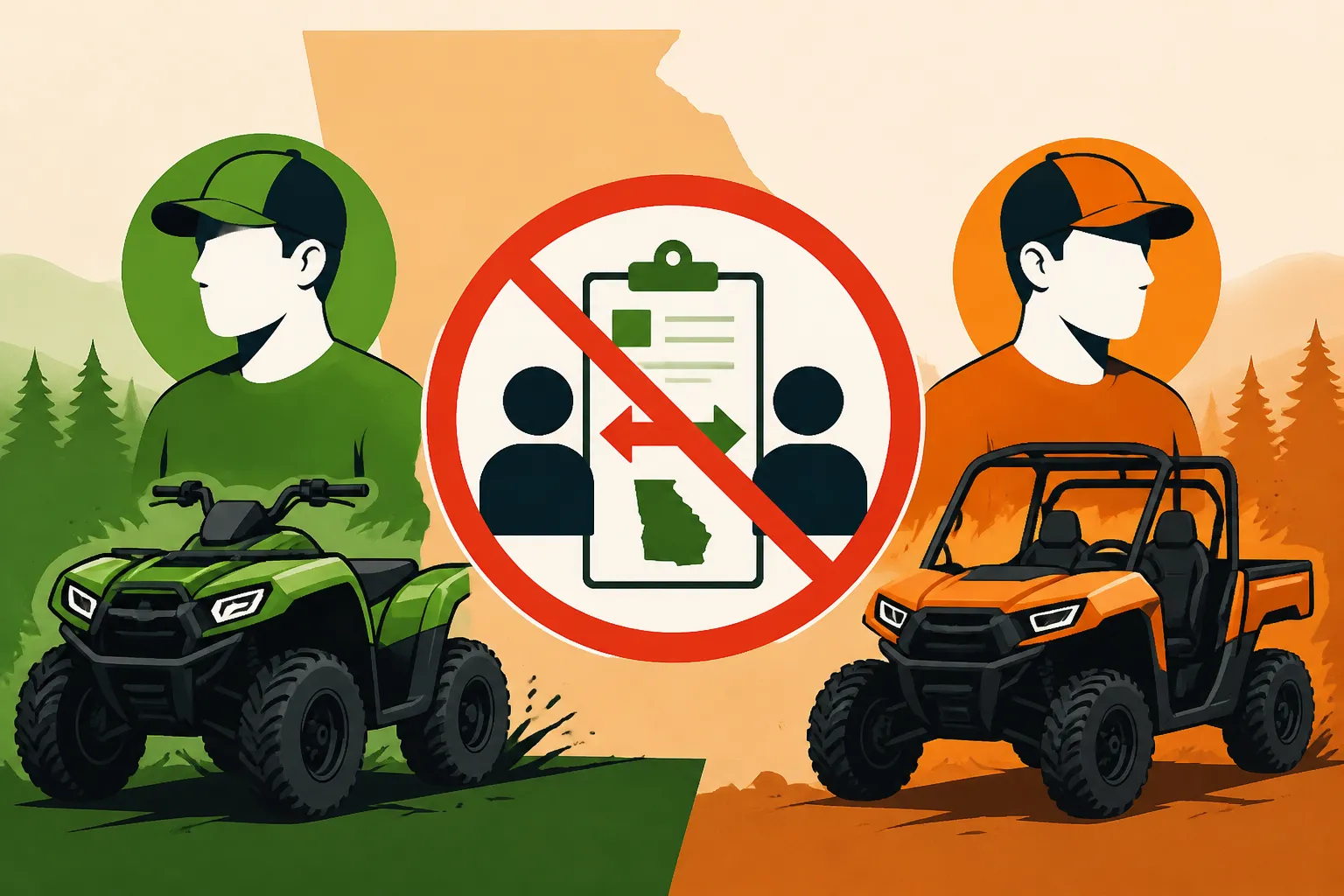
Georgia Permits Are Non-Transferable
A Georgia forest OHV permit is tied to the person operating the machine, not to the ATV or side-by-side. That distinction can trip up families and groups who plan to share one vehicle or take turns driving. Here’s what non-transferable means, who needs a separate permit, and how to avoid arriving at a trailhead with the wrong paperwork.
What “Non-Transferable” Means in Georgia
A non-transferable permit belongs to the operator it was issued to. You cannot use your permit in place of another rider’s permit, hand it to a friend for their ride, or treat it as a permit attached to one particular ATV or UTV.
That matters because Georgia’s National Forest OHV permits are organized around the person operating the machine. The permit is not a vehicle registration, a plate, or proof that a particular machine is approved for every road or trail. It is a separate requirement for riding on covered forest OHV systems.
For example, if one adult has a valid annual permit and takes a side-by-side out alone, that permit applies to that adult’s ride. If another adult takes the same machine later, the second adult needs a permit issued for them. The machine has not changed, but the operator has.
The same principle applies when several machines are involved. A rider who has a valid permit can operate different machines without the permit becoming attached to one of them. But the permit does not cover a second person who takes over the controls.
| Situation | Does one operator’s permit cover the other person? | What to plan for |
|---|---|---|
| One person rides one machine | Yes, for that operator, subject to the permit’s rules | Carry that operator’s valid permit |
| Two people take turns driving | No | Each person who operates needs their own permit |
| One permit holder operates while a passenger rides | The passenger does not need an operator permit just for being a passenger | The passenger needs a permit if they take over as operator |
| One person operates more than one machine during a ride | The permit follows that person, not a particular machine | Follow all machine and trail requirements |
| A friend borrows a permit holder’s machine | No | The friend needs a permit issued for them before operating |
| A family shares a machine on different days | No | Each family member who operates needs their own permit |
The table focuses on the operator-permit distinction. It does not replace the trail system’s other requirements. A permit may not authorize a machine on every route, and it does not override closures, trail-width limits, posted restrictions, or private-land rules.
It also helps to distinguish a forest OHV permit from other documents. A Georgia vehicle registration or a machine’s paperwork does not substitute for the required operator permit on a covered forest OHV trail. Likewise, an OHV permit does not make an off-highway machine street legal. For the broader permit rules, see Georgia OHV Permits: What You Need Before You Ride and Georgia’s Day and Annual Forest OHV Permits.
The permit follows the operator, not the machine
A common planning mistake is to think, “We only have one machine, so we only need one permit.” That confuses vehicle count with operator count. If two people will each operate the machine, plan on a separate permit for each person who will drive.
This is still true if the riders use the machine at different times. A permit holder cannot lend their permit to a spouse, relative, friend, or group member for a later ride. Nor does the permit become transferable because the other person is using the same machine, riding the same trail, or traveling with the permit holder.
The simplest way to plan is to count the people who expect to operate, not just the vehicles in the trailer. If a member of the group is a passenger only, that is different from someone who will take a turn driving. If there is a reasonable chance that a passenger may operate, confirm the applicable permit requirements and arrange that person’s permit before the ride.
The permit is separate from other rules
A forest OHV permit is only one part of trail preparation. Before setting out, check that the system is open, that the machine is allowed on the selected route, and that the required permit is valid for the rider. Different riding areas can have different access conditions, and a general permit does not open a closed road or trail.
For a comparison of forest permits, private-park requirements, and other access rules, see Georgia Private Park Waivers and Rules and Georgia WMA Rules for ATV Riders. These requirements serve different purposes; one should not be assumed to cover another.
Who Needs Their Own Permit
The practical test is whether the person will operate the machine on a trail system where the forest OHV permit is required. If yes, that person should have a permit issued to them. If they are only riding as a passenger and never take control, they are not the operator for that ride.
This distinction is useful for families, couples, clubs, and groups sharing a UTV. A passenger may ride along with the permitted operator, but the passenger’s presence does not expand the operator’s permit to cover them as a driver. If the passenger later drives, they need their own permit before doing so.
Families and shared machines
Families often rotate drivers during a long day. A parent may begin the ride, then let another adult take the wheel. If both adults will operate, each needs a permit. A child or teen who is permitted to operate under the applicable age and supervision rules also needs the required permit if they are the operator.
Do not assume that a parent’s permit automatically covers a minor. The permit is not a household pass. The age and supervision rules for a particular trail or riding situation are separate questions from whether the child needs an operator permit. Check both before leaving. The related articles Do Georgia Kids Need Their Own Permit? and Georgia Supervision Rules for Minors can help frame those questions.
If only one adult will operate throughout the ride, the other adult’s passenger status does not by itself make that passenger a second operator. But if the plan is flexible, and the passenger might drive, it is safer to resolve the permit question in advance rather than treating the existing permit as shareable.
Clubs and group rides
A group leader cannot use one permit to cover everyone in a group. Each person who operates needs a permit issued for them, even if the group travels together or follows a single itinerary.
For a club ride, build permit checks into the same planning step as machine fit, route selection, and trail-status checks. Ask each operator to confirm their own permit before the trip. A group leader can help members prepare, but should not assume that one person’s confirmation covers the whole group.
The number of machines is not a reliable way to estimate permit needs. Two riders might share a machine and each operate during the day, while a larger group might have passengers who never drive. Count operators instead.
Visitors from outside Georgia
A rider visiting from another state should not assume that an out-of-state registration, permit, or riding credential replaces the Georgia forest OHV permit. The permit requirement is tied to riding on the covered Georgia system, and the operator should check what is required there before arriving.
The same non-transferability rule applies to visitors. A local host’s permit cannot be loaned to an out-of-state guest who will operate. If several visitors plan to take turns, each operator should confirm their own permit arrangements. For more on visiting riders, see Do Visiting Riders Need a Georgia Forest Permit? and Georgia Visitors From Other States.
Buying and Carrying Permits for a Group
When several people will operate, handle permits as individual items rather than as one group purchase that everyone can share. A group may coordinate the process, but each permit must be associated with the correct operator and used by that person.
Forest OHV permits are available through the designated purchase channels, which include Recreation.gov and ranger district offices. The purchase process and available options can change, so check the current instructions before you pay. If buying permits for other people, make sure the information entered and the permit issued correspond to the actual operators.
Plan the operator list before checkout
Before purchasing, make a short list of everyone who expects to drive. Confirm who is a passenger only and who may take a turn operating. If the group has not decided, settle that before the trip or make sure each possible operator has the required permit.
For each operator, verify:
- The person will ride a system where the forest OHV permit is required.
- The permit type and validity period match the planned ride.
- The permit is issued for that person, not simply purchased by someone else for general group use.
- The operator knows how to show the permit if asked.
- The group has checked current trail access, machine restrictions, and closures separately.
Buying on behalf of a family member or group participant does not make a permit transferable. The key is that the permit is issued for the correct operator and is used by that operator. Read the checkout instructions carefully, especially if one person is arranging purchases for multiple riders.
Choose a permit based on the riding plan
Georgia offers day and annual forest OHV permits. Which option makes sense depends on how often the individual expects to ride, not how many machines that person owns or how many people are in the household.
A day permit is relevant to a limited outing; an annual permit may suit someone who expects to return. The permit’s non-transferable status applies either way. An annual permit does not become a family pass, and a day permit cannot be passed to the next person when one rider’s turn ends.
Permit prices and terms can change. Check the current provider information before purchase, including the permit’s validity dates and any requirements for carrying or displaying it. For help comparing options, see Georgia Day Permit vs Annual Permit Value. For purchase steps, see How to Buy a Georgia Forest OHV Permit.
Keep proof available to the operator
The operator should know where their permit is and how to show it under the current rules. Do not rely on another rider holding the only copy or having the only access to the purchase account. If the permit is stored electronically, confirm that the operator can access it at the trailhead and in areas where phone service may be limited. A printed backup can be useful if permitted by the current instructions.
If permits are purchased together, distribute or make accessible each person’s own proof. A group organizer may keep copies for planning, but the individual operator should not depend on the organizer being present or available to retrieve a permit during a ride.
You can check the current purchase and display directions through Recreation.gov Checkout for an Activity Pass or a relevant ranger district office. Before leaving, also review Printing a Permit Before You Leave and Carrying a Permit on the Trail.
What Happens When Riders Share or Change Machines
The non-transferable rule is easiest to apply when one person operates one machine all day. It can feel less obvious when people trade vehicles, swap drivers, or join different groups. In each case, return to the same question: who is operating, and is the permit issued to that person?
One operator, multiple machines
If one permitted rider changes from an ATV to a side-by-side, the permit does not become invalid merely because the machine changed. It remains that operator’s permit. The rider still has to confirm that the new machine is allowed on the route and meets any separate trail requirements.
This does not mean that one permit authorizes an entire fleet. It follows the person who holds it. If another person drives one of the machines, that second operator needs their own permit. A permit should not be treated as a vehicle tag that can be moved from machine to machine for whichever person happens to be driving.
Multiple operators, one machine
When a machine has two or more drivers during the day, each operator needs their own permit. A permit holder may not let the next driver use their permit after handing over the controls.
A useful pre-ride conversation is: “Who will drive, and does each driver have their own permit?” That is more reliable than asking whether the machine has a permit. It also catches the common situation where someone expects to be a passenger but later decides to drive.
A driver joins late or leaves early
A person who arrives after the group has started still needs their own permit before operating. They cannot borrow the permit of someone who has already ridden, even if that person leaves early or is no longer using the machine.
Similarly, leaving a ride does not make a permit available for another participant to use. The permit remains associated with its holder. If an operator has to leave unexpectedly, the remaining riders should continue only if the people who will drive have their own valid permits and the route remains open.
A machine is sold, borrowed, or rented
A machine changing hands does not transfer the previous owner’s forest OHV permit to the new operator. A buyer, borrower, or renter who will operate should confirm their own permit needs. Vehicle paperwork and permit status are separate matters.
A person borrowing a friend’s ATV cannot use the friend’s operator permit just because the friend owns the machine or accompanies the ride. A rental customer should also ask the rental provider what is included and what the customer must arrange separately. Do not assume the machine’s presence at a trailhead means every operator is covered.
Common Mistakes and a Simple Pre-Ride Check
Most permit confusion comes from treating the permit as a vehicle document or as a shared household purchase. A few straightforward checks can prevent that confusion and help the group avoid arriving without the right permit.
Mistakes to avoid
- Buying one permit for a shared machine. If more than one person operates, each operator needs their own permit.
- Handing a permit to the next driver. Non-transferable means the next person cannot use the first rider’s permit.
- Assuming an annual permit covers the household. Its longer validity does not make it transferable.
- Confusing a passenger with an operator. A passenger who never drives is different from someone who takes control during the ride.
- Treating the permit as registration. The operator permit and machine registration or ownership documents have different purposes.
- Assuming an out-of-state credential is enough. Visitors should verify Georgia’s requirements for the trail system they plan to use.
- Leaving permit access with one group organizer. Each operator should know how to show their own proof.
- Assuming a valid permit guarantees trail access. Closures, machine restrictions, and route-specific rules still apply.
A practical checklist
Use this sequence when preparing a group ride:
- Choose the riding area. Confirm that the intended trails are open and identify the permit rules for that system.
- List every possible operator. Include people who may take a turn, not just the person expected to drive first.
- Separate operators from passengers. A passenger does not need an operator permit solely for riding along, but does if they take over.
- Arrange a permit for each operator. Make sure each permit is associated with the person who will use it.
- Check the permit terms. Verify its validity period, purchase instructions, and current display requirements.
- Check the machine separately. Confirm that it is allowed on the route and complies with that trail system’s restrictions.
- Make proof accessible. Each operator should be able to show their own permit without relying on another person.
- Recheck before departure. Trail status and other requirements can change, so confirm current information close to the ride.
For related planning topics, see Georgia’s Per-Operator Permit, Not Per Vehicle, Georgia Annual Permits Valid at All Six Systems, and What an Operator Permit Does Not Cover. These distinctions help keep permit planning separate from the questions of which machine to bring and where it can ride.
Frequently Asked Questions
Can I let my spouse use my Georgia forest OHV permit?
No. The permit is non-transferable and belongs to the operator it was issued to. If your spouse will operate, they need their own permit.
Does a passenger need a separate permit?
A person who only rides as a passenger does not need an operator permit solely for being a passenger. If that person takes control of the machine, they are operating and need their own permit.
Can I use one permit on different machines?
The permit follows the operator rather than a specific machine. One person may use their permit while operating different machines, subject to the trail system’s separate machine and route rules. The permit does not cover another person who drives.
Can a group leader buy permits for everyone?
A group leader can help arrange purchases, but each permit must be issued for the correct operator and cannot be shared. Follow the current purchase instructions and make sure every person who will drive has their own permit.
Does a Georgia forest OHV permit let me ride any trail in Georgia?
No. It applies to the covered forest OHV system under its rules. It does not automatically allow riding on private trails, closed routes, public roads, or areas with separate permit requirements. Check the rules for the specific place you plan to ride.
Disclaimer
This article is for general informational purposes only and does not constitute professional advice. Laws, prices and regulations vary by location and change over time. Consult a qualified professional for guidance on your specific situation.