What Happens to Registrations at Sunset
The thought of your perfectly legal side-by-side, proudly sporting its Georgia MPOHV plate, suddenly losing its road privileges can feel like a punch to the gut. For many of us who rely on these machines for utility, farm work, or just connecting rural properties, the impending "sunset" date on Georgia's road access law brings a lot of uncertainty and frustration. This guide is here to cut through the confusion and explain exactly what will happen to your MPOHV registration when that crucial date arrives.
Understanding Georgia's MPOHV Road Access Law and Its Sunset Clause
When Georgia introduced the MPOHV registration program, it was a game-changer for many owners of utility terrain vehicles (UTVs) and side-by-sides. Finally, there was a legal pathway to operate these machines on designated county roads, bridging gaps between private properties, accessing hunting land, or even running a quick errand to the corner store where local ordinances allowed. It wasn't about making ATVs street legal in the traditional sense, but about recognizing the growing need for limited, responsible road access for specific types of off-highway vehicles.
The Genesis of Limited Road Access for Off-Highway Vehicles
Before the MPOHV program, the legality of riding a side-by-side on any public road in Georgia was a murky, often county-specific, and frequently illegal endeavor. People faced fines, impoundment, and a general sense of not knowing where they stood. The Georgia General Assembly, recognizing the increasing popularity and utility of these machines, especially in agricultural and recreational communities, sought to create a structured system. This system specifically focused on machines that had a steering wheel, not handlebars, and a non-straddle seat, effectively targeting UTVs and side-by-sides while largely excluding traditional quads and dirt bikes.
The intent was clear: provide a regulated, safer environment for these larger, more stable machines to operate on county roads, filling a niche between standard automobiles and purely off-road vehicles. This wasn't a free-for-all; it came with strict requirements regarding vehicle characteristics, insurance, and designated roads, as detailed in [Georgia MPOHV Registration Explained]. For many, it brought much-needed clarity and peace of mind, allowing them to use their machines more efficiently for tasks like checking fence lines, hauling tools across fields, or even just enjoying a scenic ride down a quiet dirt road that connected to a trail system. It was about creating practical access without turning every UTV into a highway-capable vehicle.
Pinpointing the Critical Sunset Date: July 1, 2027
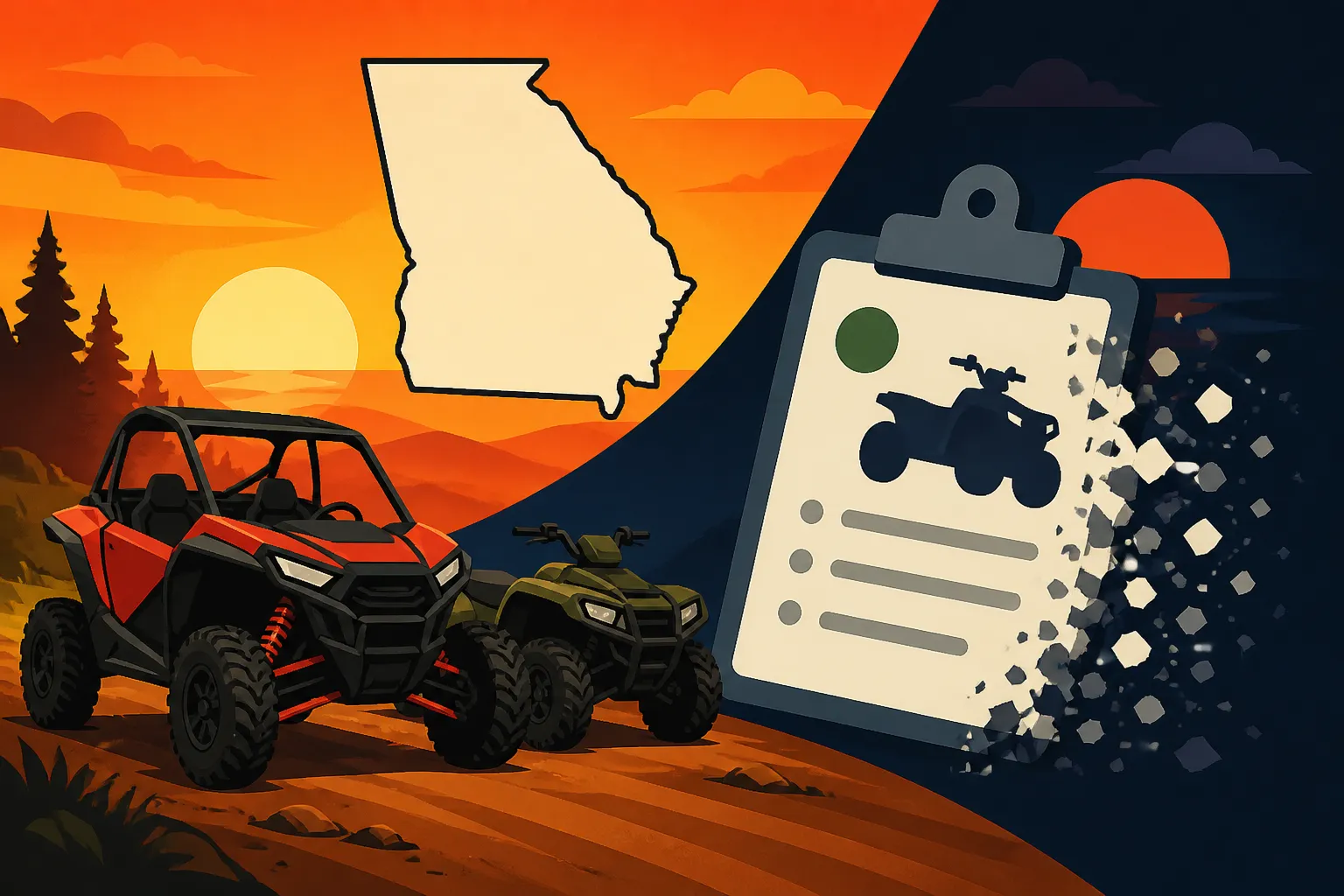
Here's the rub that has many MPOHV owners concerned: this limited road access was always intended to be temporary. The legislation that created the MPOHV registration program included a specific "sunset" provision, meaning the law as we know it will automatically expire unless further legislative action is taken. That crucial date is July 1, 2027. This wasn't an oversight or a forgotten detail; it was a deliberate choice by lawmakers to allow a trial period, gather data, and then re-evaluate the program's effectiveness and impact.
This date looms large for anyone who has invested in registering their machine, obtained the special "branded" certificate of registration, and has become accustomed to the convenience of riding on county roads. It means that the current framework allowing MPOHVs on certain public thoroughfares is set to vanish. Without new legislation, or an extension of the current law, the ability to operate your registered side-by-side on Georgia's county roads will simply cease to exist from that day forward. It's a hard deadline that requires owners to start thinking about their options and what their machines will be used for once the clock runs out.
The Direct Impact on Your Georgia MPOHV Registration When the Sunset Arrives
When July 1, 2027, rolls around, it won't be just a regular day for Georgia MPOHV owners. The statutory authority that allows these vehicles to share county roads will expire, leading to significant changes in how and where you can operate your machine. This isn't just a minor tweak; it's a fundamental shift that impacts the core reason many people sought MPOHV registration in the first place.
The Immediate Loss of County Road Riding Privileges
The most immediate and impactful consequence of the sunset date is the cessation of your MPOHV's legal ability to operate on Georgia's county road system. Even if your machine is fully registered with a current plate and decal, that registration will no longer confer the right to traverse public county roads. It means that what was perfectly legal one day will become illegal the next. Imagine the frustration: you’ve gone through all the steps at the county tag office, paid your annual fees as detailed in [Georgia's Annual Off-Highway Registration], and perhaps even upgraded your machine with road-friendly accessories from a company like SuperATV, only to have that hard-won privilege revoked by a calendar date.
This will likely mean a return to pre-MPOHV program days for many riders. Your side-by-side will still be your trusty companion for off-road adventures, hunting trips, and property maintenance, but its public road utility will be gone. If you're currently using your MPOHV to connect to a trail system via a short stretch of county road, or to run into town for supplies, those routes will be off-limits. The enforcement will then revert to treating your machine as an unregistered, off-highway vehicle on public roads, which can carry significant penalties. Understanding [Georgia MPOHV Road Rules: County Roads Only] today is critical, but come July 2027, those rules will fundamentally change.
What Happens to the Physical Plate and Decal?
This is a common question, and frankly, the law isn't explicitly clear on a recall process. It's highly probable that the Department of Revenue will simply declare the registrations invalid for road use from July 1, 2027, onwards, without requiring owners to return their physical plates or decals. The plate, though perhaps still physically affixed, will effectively become meaningless for road access. It would be similar to how an expired car tag is still on your car, but you can't legally drive it on public roads.
The "branded" certificate of registration, which your county tag office issued to indicate the machine's MPOHV status, will also lose its primary benefit. While it serves as proof of registration and ownership, its function to enable road use will be nullified. This also has implications for insurance. Currently, [Georgia Liability Insurance Tied to Registration] is a requirement. If you no longer intend to operate your MPOHV on public roads post-sunset, you might reconsider your insurance coverage, potentially opting for private property-only policies, though it's always wise to maintain coverage for theft and damage.
Implications for Future Registration and Renewal
Without legislative intervention, the MPOHV registration program itself is expected to cease accepting new registrations or renewals for road use after the sunset date. This means that if you're thinking about registering a new side-by-side for road access, the window of opportunity will close well before July 2027, as you'd only get a partial year of road legality. For existing owners, the idea of [Georgia MPOHV Renewal Each Year] would become obsolete in its current form, at least in terms of conferring road privileges.
It's crucial to understand that while the road access aspect of registration will disappear, the concept of your machine having a recorded ownership history might still exist in some form. However, the state's official mechanism for tracking MPOHVs primarily served the purpose of enabling legal road use. Without that purpose, the program as a whole could be dismantled. This uncertainty highlights the importance of staying informed and engaged with legislative discussions that may occur in the lead-up to the sunset date.
Navigating the Landscape Beyond the Sunset: What Comes Next?
The impending sunset date for Georgia's MPOHV road access law isn't just about an expiration; it's also an opportunity to re-evaluate how you use your off-highway vehicle and to consider what future legislative actions might be possible. While the immediate future points to a return to private-land-only operation for many, the versatility of these machines remains.
The Return to Private Land and Designated Trails
For many MPOHV owners, the primary use of their machines has always been, and will continue to be, on private property. Whether it's your own sprawling acreage, leased hunting land, or a friend's farm, your side-by-side will still be an invaluable asset for work and recreation. You can continue to explore [Georgia ATV Trails: Where You Can Legally Ride], accessing the state's excellent network of private parks and national forest trail systems. Places like Iron Mountain Resort or Highland Park offer hundreds of miles of trails where your UTV can still shine.
This shift might even encourage owners to invest more in enhancing their machines for pure off-road performance. Accessories from companies like SuperATV, such as lift kits, heavy-duty axles, or rock sliders, become even more relevant when your machine's life is exclusively dedicated to conquering challenging terrain rather than just cruising down a county road. Securing direct private land access or planning trips to dedicated riding parks will become the primary mode of operation for many. This change means ensuring your trailer is in good shape, your tow vehicle is ready, and you're familiar with the specific rules of different parks, including [Georgia ATV Trails That Allow Side-by-Sides].
Advocacy and the Potential for Legislative Changes
While the law has a sunset clause, it doesn't mean the situation is set in stone forever. Legislative bodies often re-evaluate laws as sunset dates approach. This period provides a critical opportunity for MPOHV owners and enthusiasts to engage in advocacy. Organizations representing off-road riders, agriculture groups, and powersports dealers can play a vital role in educating lawmakers about the continued need for, and responsible use of, MPOHVs on certain county roads.
Collecting data on the safety record of registered MPOHVs, highlighting their economic importance to rural communities, and demonstrating their utility for essential services (like farm work, property maintenance, or emergency response in remote areas) can all contribute to a compelling case for extending or modifying the law. Staying informed about state legislative sessions and contacting your local representatives to express your views will be paramount. Change often starts at the grassroots level, and a unified voice from the MPOHV community could certainly make a difference.
The Enduring Value of an MPOHV for Off-Road and Utility Use
Even if road access permanently ceases, your MPOHV remains an incredibly versatile and valuable piece of equipment. For hunters, it's a vital tool for accessing remote blinds, hauling gear, and retrieving game. For farmers and landowners, it streamlines tasks like moving feed, fencing materials, or checking livestock, especially across uneven terrain. For recreation, the thrill of exploring dirt roads, mud pits, and wooded trails is an experience many wouldn't trade.
The utility is undeniable, and companies like SuperATV continue to innovate with products that enhance these capabilities, from plows for clearing snow to cargo solutions for hauling everything imaginable. Whether you have a Polaris Ranger, a Can-Am Defender, or a Honda Pioneer, these machines are built for much more than just county roads. They excel in demanding off-road environments, making property maintenance easier, outdoor adventures more accessible, and rural life more efficient. So, while the road ahead might look different for your registered MPOHV, its fundamental value as a workhorse and a fun machine won't diminish.
Here's a quick overview of how the sunset date impacts MPOHV registration:
| Feature | Before July 1, 2027 | After July 1, 2027 (Absent New Legislation) |
|---|---|---|
| County Road Access | Legal with valid MPOHV registration | Illegal for all MPOHVs |
| Registration Status | Confers road legality; annual renewal possible | Registration record may exist, but no road legality |
| Physical Plate/Decal | Required for road use | No longer valid for road use; likely not recalled |
| Branded Certificate | Official proof of MPOHV status and ownership | Proof of ownership, but no road access entitlement |
| Required Insurance | Liability insurance tied to registration for road use | Only required if riding on specific private lands or as per policy terms; not for public roads |
| Primary Use | Private land, designated trails, and county roads | Private land and designated trails only |
| Penalties for Road Use | Fine if not registered or operated improperly | Fines/impoundment for operating any OHV on public roads |
Disclaimer
This article is for general informational purposes only and does not constitute professional advice. Laws, prices and regulations vary by location and change over time. Consult a qualified professional for guidance on your specific situation.