Georgia UTV Road Rules by County
Navigating the confusing maze of Georgia's laws for driving UTVs and side-by-sides on public roads can feel like you're trying to read a treasure map written in invisible ink. Many of us just want to know if we can take our machines from point A to point B on a county road without getting a hefty ticket or running afoul of the law. This guide is here to untangle the complexities of Georgia's UTV road rules, especially how they vary from county to county, so you can ride with confidence and stay on the right side of the law.
Understanding Georgia's General Rules for UTVs on Roads
For years, it felt like Georgia was a no-go zone for putting your UTV or side-by-side on any kind of public asphalt or gravel. The rules were pretty restrictive, often lumping these versatile machines in with traditional ATVs, which are generally meant for off-road use only. However, things started to shift, and now there are pathways, albeit specific ones, for getting your machine registered and legally riding on certain roads. But it's not a free-for-all, and understanding the core state framework is crucial before you even start looking at local nuances.
The Core State Law and Its Limitations
Georgia implemented a system to allow certain types of off-highway vehicles, specifically what they term "Multipurpose Off-Highway Vehicles" or MPOHVs, to be registered and operated on county roads. This was a pretty big deal for many landowners, hunters, and outdoor enthusiasts who use their side-by-sides for more than just recreation. The key here is "county roads." This state-level allowance specifically excludes state highways and interstates, meaning you can't just hop on I-75 for a quick run to the next exit, no matter how much time it would save. The state law provides the overarching framework for what an MPOHV is and the conditions for its registration, such as [Georgia MPOHV Registration Explained] and [What MPOHV Actually Stands For]. It’s a voluntary registration, mind you, so nobody is forcing you to get a plate if you only ever ride on private land. But if you dream of connecting trails or using your machine to run an errand down a dirt road, this is the first step.
The registration itself comes with a specific set of physical requirements for your machine – things like width limits, weight ceilings, and mandatory safety features. We're talking about specific measurements like [Georgia's 80-Inch Width Limit for Registration] and essential equipment. If your machine doesn't meet these criteria, it won't even qualify for state registration, which is the foundational step for any legal road use. This means a lot of standard ATVs, dirt bikes, and even some very large custom side-by-sides won't make the cut.
Why "Street Legal" Isn't a Simple Yes or No
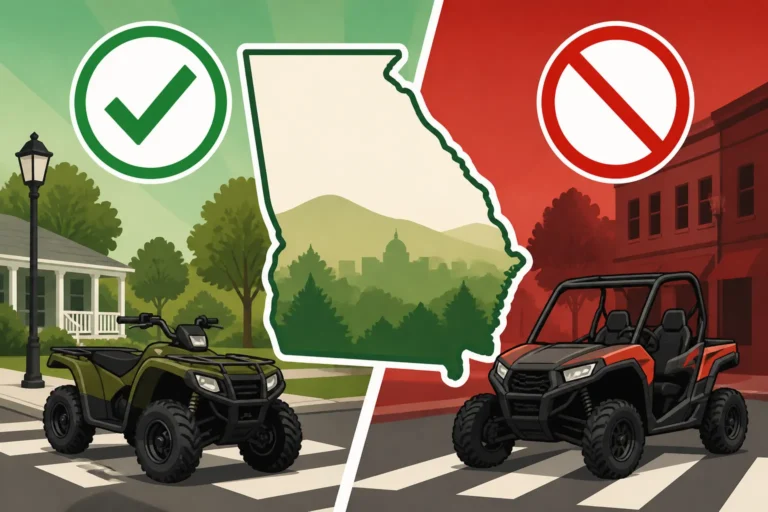
When people ask if their UTV is "street legal" in Georgia, it's often met with a sigh or a complicated explanation, because it's not as straightforward as titling and plating a regular car. The term "street legal" implies full access to all public roads, but for MPOHVs in Georgia, that's simply not the case. Your machine might be legally registered for specific types of roads (county roads), but it's not "street legal" in the same way a car or motorcycle is. This is why you often hear the distinction being made – it's "county road legal," not generally "street legal." You can read more about this distinction in [Are Side-by-Sides Street Legal in Georgia?].
The state's MPOHV registration allows a certain class of vehicle to operate under specific conditions, primarily on public roads maintained by a county. This often means rural, lower-speed roads, whether paved or unpaved. What it definitely does not mean is that you can drive through downtown Atlanta on Peachtree Street, even if it happens to technically be a county-maintained road in some stretches. The spirit of the law, and the practical enforcement, leans heavily towards utility and recreation in more rural settings. So, when you're thinking about whether your machine qualifies, remember that "street legal" is a spectrum, and Georgia's MPOHV rules put your side-by-side firmly in the "limited public road access" category.
The Role of Georgia Counties in UTV Road Access
While the state of Georgia provides the foundational framework for MPOHV registration, it's really the local county governments that hold the power to dictate the specifics of where and how these machines can actually operate on their roads. This is where things can get truly localized and, frankly, a bit confusing for riders who live near county lines or travel frequently. What's perfectly fine in one county might get you pulled over in the next.
County Ordinances: The Local Game Changer
Georgia law allows counties to pass ordinances that further restrict or even prohibit the operation of MPOHVs on their specific county road systems. This means that even if your UTV meets all the state requirements and has a valid MPOHV registration plate, you could still be breaking a local law if your county has decided against allowing UTVs on its roads. Think about it like this: the state says you can register it, but the county gets to say if you can use it on their roads. This is a critical distinction and the main reason why Georgia UTV road rules vary so much by county.
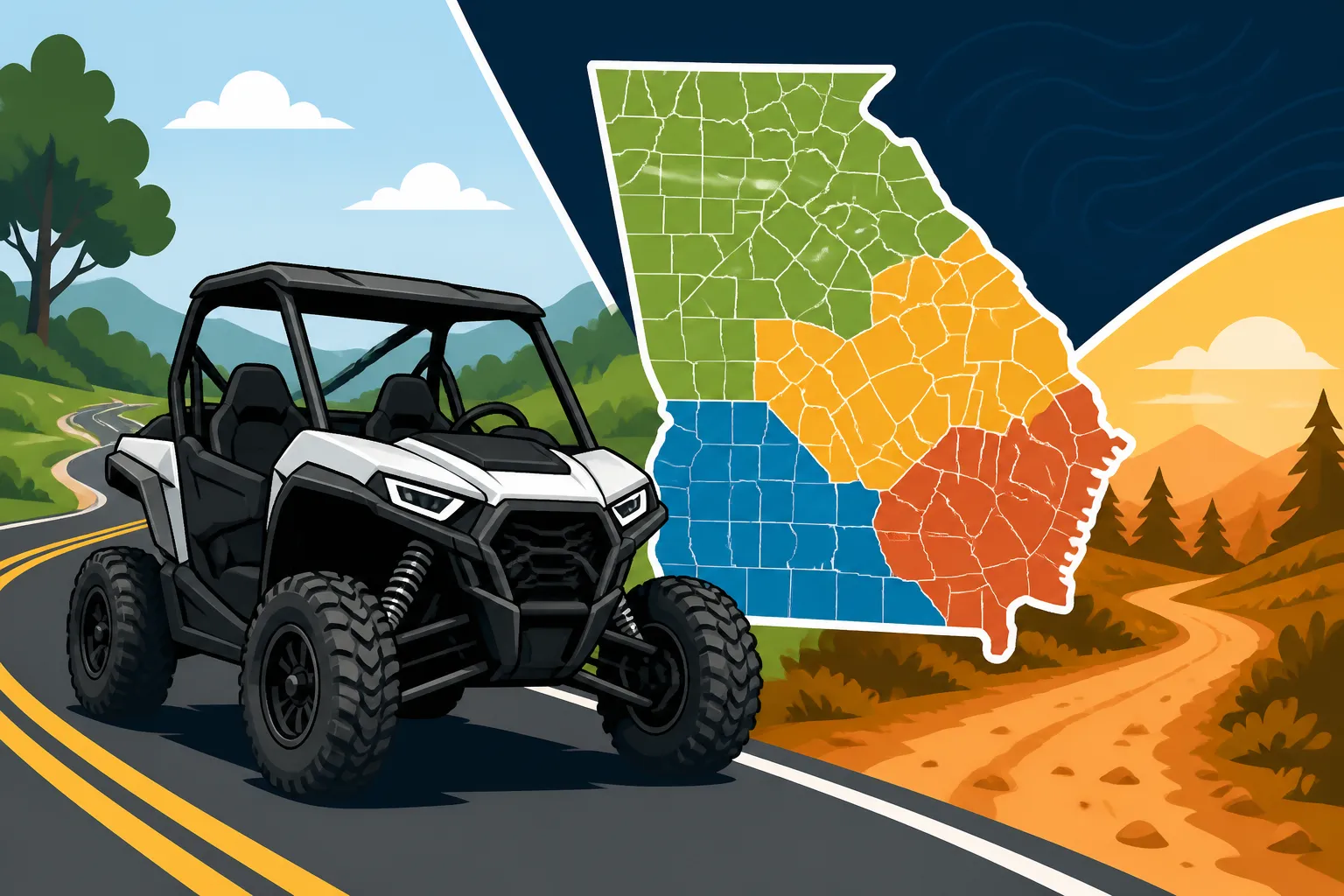
Some counties have warmly embraced the idea, seeing the benefit for residents and visitors, especially in areas with extensive unpaved road networks or popular hunting grounds. These counties might simply adhere to the state's basic rules, allowing registered MPOHVs on all county roads. Other counties, perhaps more urban or suburban, might have concerns about traffic, safety, or noise, and could pass ordinances that restrict MPOHV use to certain hours, specific roads, or ban them entirely. This creates a patchwork of rules, where one county might have clear signs indicating where you can and cannot ride, while another has a blanket ban. For example, Georgia UTV Road Rules by County is a direct result of this local control, highlighting the need for riders to do their homework.
How to Find Your County's Specific Rules
Given this county-by-county variation, the most important step for any UTV owner in Georgia is to find out exactly what the rules are for their specific county – and any neighboring counties they plan to ride in. This isn't always as simple as a quick Google search, as many local ordinances aren't always prominently displayed online.
Here's a practical approach:
- Check the County Website: Start by visiting your county's official website. Look for sections related to "ordinances," "code of conduct," "public safety," or "motor vehicles." Some counties will have a dedicated page or document outlining their rules for UTVs, golf carts, or other off-road vehicles.
- Contact the County Clerk or Sheriff's Office: If the website is unhelpful, a phone call to the county clerk's office or even the local sheriff's department can often provide the most accurate and up-to-date information. They are the ones who either enforce or administer these local laws and should be able to tell you if there are specific ordinances regarding MPOHV use on county roads. Don't be shy about asking specific questions, like if there are time restrictions or road exclusions.
- Talk to Local Riders: While not an official source, speaking with experienced local riders can give you valuable insight into common practices and known problem areas. They might know about specific roads or times that attract law enforcement attention or which areas are generally more welcoming to UTVs.
- Look for Posted Signs: As you explore county roads, keep an eye out for official signage. Some counties will post signs at their borders or along specific roads indicating restrictions or allowances for MPOHVs.
Remember, ignorance of the law is not an excuse. Taking the time to verify the rules for your specific area before you hit the road can save you a lot of hassle and potential fines.
| County Policy Example | Description | Rider Action Required |
|---|---|---|
| Blanket Acceptance | County adopts state MPOHV rules; permits use on all county roads. | Ensure MPOHV is state-registered and meets all state equipment requirements. |
| Restricted Roads | County allows MPOHV use but bans it on specific, high-traffic roads. | Obtain a county map or list of excluded roads; avoid them. |
| Time Restrictions | MPOHV use permitted only during daylight hours or specific times. | Adhere to time limits; consider Georgia Rules for Riding After Dark requirements. |
| Full Prohibition | County has an ordinance completely banning MPOHVs on all county roads. | Do not operate MPOHV on any public road in that county. |
| Permit Required | Beyond state registration, county demands a local permit or sticker. | Apply for and display any required county-specific permits. |
This table provides a generalized overview, and individual county ordinances can have even more specific nuances. Always verify with your local county government for the most accurate information.
Equipment and Driver Requirements for Road Use
Beyond understanding the state laws and county ordinances, actually getting your UTV ready for county road use involves specific equipment modifications and knowing who can legally operate the machine. This isn't just about safety; it's about meeting the detailed requirements that allow for an MPOHV registration and, subsequently, legal operation on those designated roads.
What Your UTV Needs to Be "Road Ready"
If you're hoping to get that coveted MPOHV registration plate, your side-by-side needs to undergo a bit of a transformation, or at least a thorough check. The state has a clear list of what [Georgia Equipment a Road Machine Must Carry], and it's more than just a passing glance.
- Steering Wheel: This might seem obvious for a UTV, but it's a critical distinction from ATVs. Your machine must have a steering wheel, not handlebars.
- Non-Straddle Seat: Another point separating UTVs from many ATVs and dirt bikes. The MPOHV must have a non-straddle seat designed to hold passengers side-by-side, much like a car seat.
- Seat Belts: Factory-installed seat belts are a must for all designated seating positions.
- Headlights and Taillights: These aren't just for looking good; they're essential for visibility, especially if you get caught out near dusk or dawn. They must be operational and properly illuminate the road.
- Brake Lights: Crucial for signaling to vehicles behind you, your UTV needs functional brake lights.
- Rearview Mirrors: You'll need at least one rearview mirror, typically on the left side, to see what's approaching from behind. Many riders find that adding a center rearview mirror and a passenger-side mirror significantly improves safety and visibility, and companies like SuperATV offer a range of robust mirror kits designed for UTVs.
- Turn Signals: Just like any other road-going vehicle, you'll need front and rear turn signals to indicate your intentions.
- Horn: A working horn is necessary for alerting others on the road.
- Windshield: While not explicitly required for all MPOHVs in the state code, it's often a practical necessity for comfort and safety, and some counties might have specific requirements. A sturdy windshield from SuperATV can make a huge difference, protecting you from debris, bugs, and the elements.
- Speed Capability: Your machine must be capable of traveling at least 25 mph but no more than 65 mph. If your UTV is a true workhorse that tops out at 20 mph, or a souped-up racing machine that easily exceeds 65 mph, it won't qualify.
When you take your machine to the county tag office, they'll be checking for these items, and you might even need an inspection certification like the [Georgia T-22B Inspection Certification] to verify that your UTV meets the safety and equipment standards.
Who Can Actually Drive a UTV on a County Road
It’s not just about the machine; it’s also about the operator. Once your UTV is legally registered as an MPOHV, the person behind the wheel needs to meet specific criteria.
- Driver's License: Anyone operating a registered MPOHV on a county road must possess a valid Georgia driver's license. This isn't a loophole for unlicensed drivers; it's treated like any other motor vehicle in that regard. You can't just have a learner's permit; you need a full, unrestricted license. For more details, see [Georgia Driver's License Rules for MPOHV Operators].
- Age Restrictions: While the MPOHV registration allows for road use, Georgia's general ATV rules still apply to certain aspects, especially regarding age and helmets. On private land, there are different rules regarding age, but on public county roads, the requirement for a licensed driver generally means the operator will be at least 16 years old. However, it's worth noting that if an MPOHV is also classified as an ATV (which some older UTVs might be, though modern side-by-sides typically aren't), then the [Georgia ATV Helmet Law for Riders Under 18] could apply, even on public roads. It's a complex area, and safety is always paramount, so helmets are highly recommended regardless of age.
- Insurance: Just like any other vehicle on public roads, your registered MPOHV will require proof of liability insurance. The tag office will not issue the registration without it. This is a critical step, as accidents can happen, and you need to be covered. You can learn more about this in [Georgia UTV Insurance Minimums].
Ensuring both your machine and its operator meet these requirements is crucial for lawful operation. It’s not just about avoiding a ticket; it’s about everyone’s safety on the road.
The Future of UTV Road Access in Georgia
The current legal framework allowing MPOHVs on Georgia county roads isn't permanent. It includes a "sunset clause," which means there's an expiration date to this access. This is a significant factor for anyone considering purchasing or registering a UTV for road use, as it introduces an element of uncertainty about future privileges. Understanding this timeframe and how you can get involved in shaping future policy is important for the longevity of UTV access in Georgia.
The Sunset Clause: What Happens Next?
The legislation that established MPOHV registration and road access in Georgia includes a specific date when this allowance is set to expire. As things stand, [Georgia's July 2027 Sunset on Road Access] is a very real date on the horizon. What does this mean, exactly? It means that unless new legislation is passed to extend, amend, or make permanent the MPOHV road access, the ability to legally operate these registered machines on county roads will cease.
This doesn't necessarily mean it will disappear entirely without a fight. Legislative "sunset clauses" are often put in place to allow for a trial period, giving lawmakers time to assess the impact of a new law – whether it's working as intended, if there have been unforeseen problems, or if it needs adjustments. It forces a review of the policy rather than letting it run indefinitely. However, it does create a period of uncertainty for UTV owners. Will the MPOHV registration system continue? Will it be modified? Will counties retain their local control? These are all questions that will need to be addressed as the sunset date approaches. It's a crucial time for the off-road community to stay informed and engaged.
Advocating for Future Access
If you value the ability to ride your registered UTV on Georgia's county roads, now is the time to start thinking about advocating for its continuation beyond the sunset date. The legislative process can be slow, and it requires active participation from constituents to demonstrate the importance of these laws.
Here are a few ways you can make your voice heard:
- Stay Informed: Keep an eye on legislative developments, especially as the sunset date approaches. Off-road vehicle associations, local riding clubs, and even news outlets that focus on rural issues might provide updates. Understanding the arguments for and against continued access will help you formulate your own message.
- Contact Your Legislators: Reach out to your state representatives and senators. Share your personal experiences and explain why MPOHV road access is important to you – whether it's for farm work, hunting access, connecting to trails, or simply moving your machine from one private property to another. Personal stories are often more impactful than generic form letters.
- Join or Support Off-Road Organizations: Many organizations are dedicated to protecting and expanding off-road access. By joining these groups, you can amplify your voice and contribute to organized advocacy efforts. They often have lobbyists or dedicated staff who work directly with lawmakers.
- Participate in Public Hearings: If public hearings are held on the future of MPOHV road access, consider attending and speaking. This is a direct way to share your perspective with decision-makers.
- Highlight Responsible Riding: One of the best ways to advocate for continued access is to demonstrate responsible riding practices. Following the rules, respecting private property, and operating your UTV safely on county roads helps build a positive image for the entire off-road community, making it easier for legislators to support continued access. The more side-by-side riders, particularly those using accessories from companies like SuperATV that enhance safety and compliance, demonstrate respect for the law and other road users, the stronger the case for maintaining current access.
The future of UTV road access in Georgia is not guaranteed, but with proactive engagement from the riding community, there's a strong possibility that this valuable privilege can continue for years to come.
Disclaimer
This article is for general informational purposes only and does not constitute professional advice. Laws, prices and regulations vary by location and change over time. Consult a qualified professional for guidance on your specific situation.