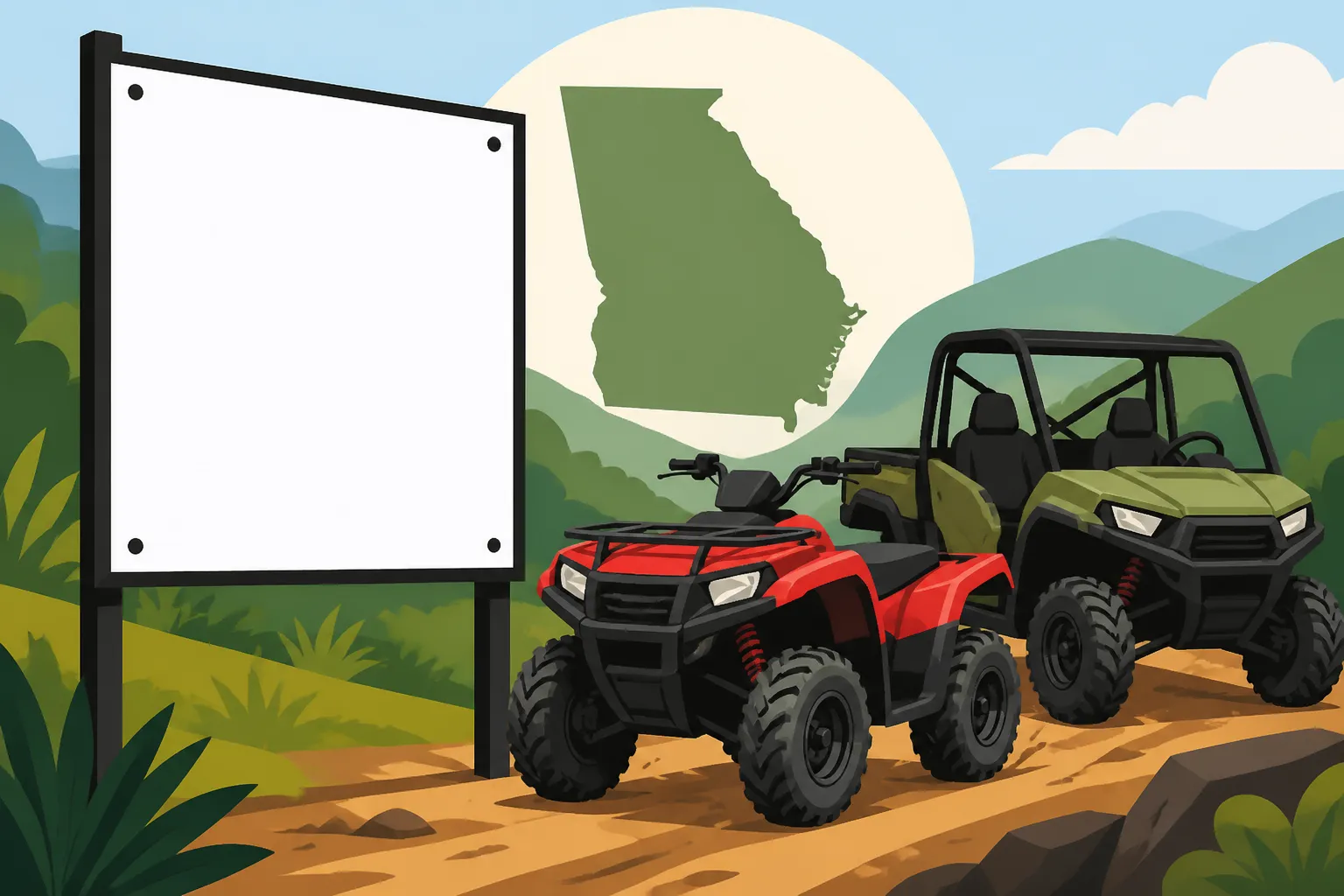
What a 24 by 30 Sign Looks Like
One of the most common stumbling blocks for folks looking to legally drive their golf cart or Personal Transportation Vehicle (PTV) on certain Georgia roads isn't about horsepower or fancy modifications; it's often something as seemingly simple as a sign. Many riders struggle to understand the specific requirements for signage, particularly the often-mentioned "24 by 30 inch" rule, leaving them vulnerable to fines and confusion. This guide will walk you through exactly what this sign looks like, why it's crucial, and how to ensure your machine is properly equipped to stay on the right side of Georgia law.
Deciphering the "24 by 30 Sign" Mandate in Georgia
When Georgia lawmakers crafted the rules for Personal Transportation Vehicles (PTVs) – which, for simplicity, often includes what most of us call golf carts – they knew that these smaller, slower machines needed to be highly visible to other drivers. They're not like cars, trucks, or even full-sized UTVs that can be registered for county road use. PTVs are in their own category, and to help ensure their safety on designated public roads, a very specific type of rear signage was made mandatory. This isn't just a suggestion; it’s a critical piece of the puzzle for legal operation.
The Specific Dimensions and Their Purpose
The "24 by 30" refers to a sign that must measure at least 24 inches in width and 30 inches in height. This isn't a suggestion or a guideline; it’s a hard requirement enshrined in Georgia law. Imagine trying to explain to a deputy that your 12×18 sign is "close enough" – it simply won't fly. The purpose of these precise dimensions is to create a large, unmistakable visual cue for drivers approaching from behind. Unlike a standard vehicle, a PTV might be moving at 20 mph in a 35 mph zone, and its smaller profile can be harder to spot, especially in varying light conditions or around curves. This generously sized sign acts as a clear identifier, signaling to other motorists that they are approaching a slow-moving vehicle and should adjust their speed and awareness accordingly. Without this specific size, your PTV essentially blends into the background more than the law intends, heightening the risk of an accident.
Visual Characteristics and Material Considerations
So, what does a 24 by 30 sign actually look like beyond its measurements? Typically, these signs are rectangular, with the 30-inch dimension being the height. They must be made of a rigid material, capable of withstanding various weather conditions without bending, tearing, or degrading quickly. Common materials include aluminum, durable plastic, or composite panels. The surface needs to be reflective or equipped with retro-reflective sheeting to ensure maximum visibility, especially during low-light conditions or at night. The colors usually contrast sharply with the vehicle itself to stand out. While the law specifies the size, it often leaves the exact design (beyond reflectivity and minimum size) to the PTV owner, so long as it effectively serves its purpose of making the vehicle more conspicuous. Think of the bright, reflective signage you see on the back of tractors or other slow-moving farm equipment; the principle is very much the same – grab attention and clearly communicate "slow vehicle ahead." Some owners opt for a plain reflective rectangle, while others might choose a sign with a border or text like "SLOW VEHICLE" or "GOLF CART" if allowed by local ordinances.
Distinguishing PTV Signs from Other Road Signage
It’s crucial not to confuse the required PTV sign with other types of road signs or markings. For instance, it's not a "Slow Moving Vehicle" (SMV) triangle. While an SMV triangle is also highly visible and often reflective, it has a distinct shape and, crucially, different dimensions. The Georgia PTV sign is a specific rectangular shape and size. It also isn't a simple bumper sticker or a small decorative plate. The 24×30 measurement is non-negotiable and refers to the entire visible area of the sign. Nor is it simply a requirement for a license plate, as [Georgia Golf Cart Registration by City] might include other local tags. This sign stands apart as a dedicated safety feature for PTVs operating on public roads, mandated by state law to ensure these vehicles are unmistakable. Trying to substitute it with anything smaller or differently shaped will likely lead to issues with law enforcement.
Why Georgia Law Requires Specific PTV Signage
The existence of such a precise requirement for PTV signage isn't arbitrary. It stems directly from the need to integrate these slower, often smaller vehicles safely into specific parts of Georgia's road infrastructure. While many PTVs are designed for leisurely use within neighborhoods or on golf courses, the state has allowed for limited road access under strict conditions, and clear identification is paramount to that access.
Enhancing Visibility and Road Safety
The primary reason for the 24 by 30 sign is, unequivocally, road safety. PTVs, by their very nature, travel at significantly lower speeds than typical automobiles. On a road where cars might be traveling at 35 mph, a PTV going 20 mph creates a substantial speed differential. This difference dramatically increases the risk of rear-end collisions, especially if the PTV isn't easily seen. The large, reflective sign gives approaching drivers a much earlier warning. Imagine driving down a tree-lined county road as dusk settles in; a small, dark golf cart could easily be overlooked. A bright, reflective 24×30 sign, however, immediately draws the eye, prompting the driver behind to slow down and exercise caution. This added visibility is not just about avoiding accidents but also about creating a smoother flow of traffic, as drivers can anticipate and react to the slower vehicle well in advance. Without proper signage, a PTV essentially becomes a harder-to-spot hazard, negating the safety allowances intended by the state's PTV laws.
The Role of Local Ordinances and State Statute
While the 24 by 30 sign requirement is a state-level mandate – specified in [Georgia's 24 by 30 Inch Cart Signage Rule] – local ordinances play a significant role in where and how PTVs can be operated. Many Georgia cities and counties have adopted their own rules regarding golf carts and PTVs, often building upon the state's foundation. For example, cities like Peachtree City, known for its extensive cart path network, integrate state requirements like the 24×30 sign into their local framework. [Peachtree City Golf Cart Rules in Georgia] specifically detail signage, registration, and path access. These local rules can define which specific roads are open to PTVs, what hours they can operate, and additional equipment requirements. However, no local ordinance can supersede the state’s minimum requirement for the 24 by 30 sign for PTVs operating on public roads. In fact, if a local jurisdiction wants to allow PTVs on certain streets, they must ensure that the state's basic safety requirements, including this signage, are met by operators. This dual layer of regulation ensures a baseline of safety while allowing communities to tailor PTV access to their unique needs.
Differentiating PTVs from Standard Vehicles and OHVs
Another crucial aspect of the 24 by 30 sign is its role in clearly distinguishing PTVs from other types of vehicles. On Georgia roads, you'll encounter everything from passenger cars to heavy-duty trucks, motorcycles, and even off-highway vehicles (OHVs) like UTVs on designated county roads. Each type of vehicle has its own set of rules and expected performance characteristics. A PTV, while designed for slower, local travel, needs to be instantly identifiable as such. This large sign sets it apart. It tells law enforcement and other drivers that this is not a regular car (which would have a standard license plate and taillights) nor is it a fully "street legal" side-by-side that meets more stringent federal motor vehicle safety standards. The sign signifies that it's a vehicle with limited speed and specific operating zones, helping prevent misunderstandings that could lead to dangerous situations or improper enforcement. Without it, the visual cue that this vehicle is a "Personal Transportation Vehicle" under Georgia law is lost, creating ambiguity on the road.
Where and How to Display the 24 by 30 Sign
Simply having the correct 24 by 30 sign isn't enough; it must be displayed in a manner that maximizes its effectiveness and adheres to the letter of the law. Improper placement can render even a perfectly compliant sign virtually useless, defeating its safety purpose and potentially leading to legal trouble.
Placement Requirements for Optimal Effectiveness
The Georgia statute specifies that the 24 by 30 inch sign must be "affixed to the rear of the vehicle." This isn't just about sticking it anywhere on the back; it's about making sure it's clearly visible to anyone approaching from behind. Ideally, the sign should be mounted centrally and vertically, allowing its full dimensions to be seen without obstruction from other parts of the vehicle, cargo, or passengers. It should also be at a height that is easily caught in the headlights of following vehicles, typically not too low to be obscured by the ground or too high to be missed. Think about where a standard license plate or taillights are located on a car – the PTV sign should occupy a similar, prominent visual space. For many golf carts and PTVs, this means mounting it directly on the rear body panel, tailgate, or a specialized bracket. Some aftermarket accessories, like those from SuperATV, offer mounting solutions that can help ensure proper placement and visibility for various UTV models modified for PTV use. The goal is unambiguous visibility, day or night, rain or shine.
Common Mistakes and How to Avoid Them
Even with good intentions, PTV owners can make mistakes in sign placement. One common error is mounting the sign too low, where it can be obscured by tall grass, uneven terrain, or even the vehicle's own shadow. Another is mounting it off-center or at an angle, reducing its apparent size or reflectivity. Some might try to attach it to a rear cargo basket that isn't always present, or to a soft-sided enclosure that sags, making the sign illegible. A critical mistake is allowing anything to cover part of the sign – perhaps a cooler, a golf bag, or even overgrown brush if riding off-pavement momentarily. The sign must be fully exposed at all times when operating on public roads. To avoid these issues, always conduct a visual check from a distance behind your PTV before heading out. Enlist a friend or family member to stand back and ensure the sign is clearly visible and unobstructed from all common approach angles. Choose a permanent, rigid mounting location that will not shift or be easily covered.
Securing Your Sign Against the Elements
Georgia weather can be unpredictable, ranging from scorching summer heat to torrential downpours and even occasional freezing temperatures. The 24 by 30 sign needs to withstand all of this without becoming damaged or detached. Using sturdy hardware – bolts, nuts, and washers – made from corrosion-resistant materials like stainless steel is paramount. Avoid relying solely on zip ties, adhesive tape, or flimsy clips, especially if your PTV experiences vibrations from rougher roads. Consider reinforcing the mounting points on the vehicle itself if the body panel is thin. If the sign is made of a material prone to fading, ensure it has a UV-resistant coating. Regularly inspect the sign for damage, fading, or loose fasteners. A cracked or heavily faded sign might not meet the reflectivity requirements, even if it's still physically attached. Replacing a damaged sign promptly is not just a matter of compliance but also ongoing safety, ensuring that [Georgia Night Riding on a County Road] remains as safe as possible.
The Ramifications of Non-Compliance
Operating a PTV on Georgia's designated public roads without the proper 24 by 30 signage is not merely a minor oversight; it's a violation of state law. The consequences can range from inconvenient to costly and even dangerous, underscoring why strict adherence to this requirement is so important.
Potential Fines and Citations
If a law enforcement officer spots your PTV on a public road or path without the required 24 by 30 inch sign, you're likely to receive a citation. While the exact fine amount can vary by jurisdiction and the officer's discretion, it typically falls into the range of a traffic infraction. This isn't just a slap on the wrist; it means a financial penalty, and potentially court costs. For instance, [Georgia Penalties for an Unregistered Road Machine] can be substantial, and while the sign isn't about registration, it's about road readiness. An officer might also decide to pull you over for other equipment checks, such as ensuring you have proper [Headlights, Brake Lights and Mirrors on the Checklist]. Imagine the frustration of planning a leisurely drive to a local shop or a friend's house, only to have your journey interrupted and your wallet lighter, all because of an missing or incorrect sign. It's a completely avoidable expense and hassle that can be prevented by a simple check before you leave your driveway.
Safety Risks and Liability Concerns
Beyond the legal penalties, the most significant risk of not having the correct sign is the increased danger to yourself, your passengers, and other road users. As discussed, the sign is a critical safety feature designed to make your PTV highly visible to faster-moving traffic. Without it, you significantly increase the chance of a rear-end collision. If an accident occurs and your PTV lacked the mandated signage, you could face severe liability issues. Your insurance company might argue that your non-compliance contributed to the accident, potentially affecting coverage or increasing your premiums. A personal injury lawsuit could follow, placing you in a far worse financial position than the cost of a compliant sign. This is where the informational intent truly shines – understanding these risks helps PTV owners make informed decisions. It's not just about obeying a rule, but about actively mitigating serious risks.
Impact on Local Road Access and Usage
The state of Georgia empowers local governments to permit PTVs on certain public roads. However, this permission is often conditional on adherence to all state and local regulations. If law enforcement consistently finds PTVs on local roads without the required 24 by 30 sign, it could lead to increased scrutiny and potentially stricter enforcement for everyone. In extreme cases, a pattern of non-compliance within a community could even prompt local officials to reconsider or revoke PTV road access altogether. This means that one person's oversight could negatively impact an entire community's ability to use their PTVs on public streets. Understanding [Georgia PTV Ordinances Cities Can Pass] means understanding that those privileges can be impacted by collective compliance. Therefore, ensuring your sign is correct isn't just about your personal compliance; it's about preserving the privilege of PTV road use for all residents in your area.
Acquiring and Maintaining Your PTV Sign
Once you understand the importance of the 24 by 30 sign, the next step is to ensure you have one that meets the legal requirements and is properly maintained. This involves knowing where to find compliant signs, how to install them, and what to do to keep them in good condition over time.
Sourcing Compliant Signs
Finding a 24 by 30 inch sign isn't as difficult as it might sound, but it does require attention to detail. You generally won't find these at your average department store. Instead, look to specialty retailers that cater to industrial safety, traffic control, or even farm equipment suppliers. Online retailers are often a good source, specifically searching for "reflective slow-moving vehicle sign" (ensuring it's the correct rectangular shape) or "Georgia PTV sign." Many sign shops that create custom vinyl or aluminum signs can also produce one to the exact specifications, ensuring it's reflective and durable. When purchasing, always double-check the dimensions and confirm that the material is rigid and has the necessary retro-reflectivity. Some off-road accessory companies, like SuperATV, which specializes in UTV parts and accessories, might also offer or guide you to compliant signage or mounting solutions, as they understand the need for street-legal modifications in various states. Don't compromise on size or material; a cheaper, smaller, or less reflective sign is not compliant and won't protect you legally or safely.
DIY vs. Professional Installation
Installing the sign itself is usually a straightforward process for anyone with basic hand tools. Most signs come with pre-drilled holes, making it easy to bolt them onto a flat surface on the rear of your PTV. For a DIY installation, carefully measure and mark your mounting points, ensuring the sign is level and centered for maximum visibility. Use appropriate hardware, like stainless steel bolts, fender washers (to distribute pressure and prevent cracking the sign), and lock nuts to secure it tightly against vibrations. If your PTV doesn't have a suitable flat surface, you might need to fabricate a simple bracket or purchase an aftermarket one. However, if you're uncomfortable drilling into your vehicle, or if your PTV's rear structure is particularly complex, a professional installation might be a better option. Many local golf cart dealerships or off-road shops are experienced in these types of modifications and can ensure your sign is securely and legally mounted. They can also advise on other [Georgia Equipment a Road Machine Must Carry] to make your PTV fully compliant.
Longevity and Replacement Considerations
Even the most durable sign will eventually show signs of wear and tear, especially with prolonged exposure to the elements. UV radiation can fade colors and degrade reflectivity, while impacts from debris or general use can cause cracks or damage. Make it a habit to regularly inspect your sign. Look for any signs of fading, peeling reflective material, cracks, or loose mounting hardware. If the sign no longer appears bright and clear, especially when a flashlight is shone on it in the dark, it's time for a replacement. A well-maintained sign can last for many years, but neglecting its condition can quickly render it non-compliant and compromise your safety. Consider the lifespan of the materials used; a high-quality aluminum sign with engineering-grade reflective sheeting will generally outlast a thinner plastic sign. Investing in a good quality sign upfront, and replacing it when necessary, is a small cost compared to the potential fines or, more importantly, the safety risks of an unreadable sign.
Beyond the Sign: Other PTV Roadworthiness Elements
While the 24 by 30 sign is a critical component for legal PTV operation on Georgia roads, it's just one piece of a larger puzzle. For your golf cart or PTV to be truly roadworthy and compliant, several other safety features and legal requirements must be met. Ignoring these can lead to the same fines and safety hazards as neglecting the sign.
Lights, Mirrors, and Other Essential Gear
Beyond the distinctive 24 by 30 sign, Georgia law, along with many local ordinances, stipulates a range of other equipment that PTVs must possess to be driven on public roads. This typically includes working headlights, taillights, and brake lights to ensure visibility and communication with other drivers, especially during low-light conditions. You'll also need a horn, a parking brake, and a rearview mirror. Many jurisdictions require at least one rearview mirror, but having side mirrors can significantly improve situational awareness. [Rearview Mirrors on the Required List] is a specific topic, and it's essential to ensure your PTV meets this. For vehicles capable of carrying multiple passengers, seat belts are often required for all occupants. Furthermore, the PTV must have a minimum speed capability – often 20 miles per hour – but be restricted to a maximum speed, typically 20-25 mph, to qualify as a PTV rather than a Low-Speed Vehicle (LSV), which has different regulations. [Georgia Low-Speed Vehicles Capped at 20 mph] highlights that distinction. Ensuring all these components are present, functional, and properly maintained is just as important as the rear signage.
Georgia Golf Cart Laws and PTV Ordinances
It's vital for PTV owners to understand the broader legal framework governing their use. [Georgia Golf Cart Laws and PTV Ordinances] are complex because they combine state law with local authority. While the state sets the definition for PTVs and the baseline equipment requirements, local counties and cities have the power to designate which roads or paths are open to PTV traffic. This means that a PTV perfectly legal on a county road in one jurisdiction might be prohibited on a similar road just across the county line. These ordinances can also specify age restrictions for drivers, whether a driver's license is required, and even local registration or permit fees, such as those found in [Peachtree City Non-Resident Cart Cost in Georgia]. Therefore, before you venture out, it's not enough to just check your vehicle; you must also check the specific rules of the city or county where you intend to ride. This localized approach means that while the 24 by 30 sign is a constant, the access rules are variable.
Understanding Georgia PTV Ordinances Cities Can Pass
The power granted to local governments to regulate PTVs is significant. [Georgia PTV Ordinances Cities Can Pass] allows communities to create tailored rules that fit their unique infrastructure and safety concerns. This means that if you live in a city or town that has embraced golf cart transportation, like Peachtree City with its extensive network of [Peachtree City's 100 Miles of Georgia Cart Paths], you'll likely find clearly marked roads and paths for PTVs. However, if you're in a more rural area, or a community that hasn't specifically adopted an ordinance for PTVs, your access to public roads may be severely limited, even if your PTV meets all state equipment requirements. Some cities might allow PTVs only during daylight hours, or restrict them to roads with a speed limit below a certain threshold (e.g., 25 mph). Before making any significant modifications to your PTV or planning routes, always consult your local city or county clerk's office, or their official website, to review the most current PTV ordinances. This proactive step can save you a lot of trouble and ensure you’re enjoying your PTV legally and safely within your community.
| Requirement Category | Specific Requirement | Purpose | Notes |
|---|---|---|---|
| Visibility Signage | 24" (width) x 30" (height) reflective sign | Alerts other drivers to slow-moving vehicle ahead | Must be rigidly mounted, fully visible on rear. |
| Lighting System | Headlights, Taillights, Brake Lights | Enables visibility, signals intent, night operation | Must be functional day/night. |
| Signaling & Alerts | Horn | Warns pedestrians/other vehicles | Audible from at least 200 feet. |
| Driver Awareness | Rearview Mirror (at least one) | Allows operator to see traffic behind them | Side mirrors recommended for enhanced safety. |
| Passenger Safety | Seat Belts (for all occupants) | Protects occupants in case of sudden stop or collision | Mandatory for each designated seating position. |
| Braking System | Operational Service Brakes, Parking Brake | Stops vehicle safely, holds it stationary | Must be effective. |
| Speed Capabilities | Min. 20 mph, Max. 25 mph (typically) | Defines PTV class, ensures it can keep up slightly | Prevents classification as an LSV (max 20 mph) or a full vehicle. |
| Tires & Steering | Functional Steering System, DOT-approved tires (often) | Safe control and traction | Check local ordinances for DOT tire specifics. |
| Windshield | AS1 or AS4 rated (often implied or required by local law) | Protects occupants from debris | Shatter-resistant material is key. |
Disclaimer
This article is for general informational purposes only and does not constitute professional advice. Laws, prices and regulations vary by location and change over time. Consult a qualified professional for guidance on your specific situation.