Are Side-by-Sides Street Legal in Georgia?
The question of whether a side-by-side can legally hit the roads in Georgia is one that confounds many enthusiasts, and for good reason. It's not a straightforward "yes" or "no" answer, leading to a lot of frustration and confusion for owners who just want to understand where they can and cannot ride their machines. This guide aims to cut through that complexity, detailing the specific conditions, limitations, and requirements that dictate if, and how, your side-by-side can be operated on Georgia's public roadways.
The Nuance of "Street Legal" in Georgia: It's Not a Simple Yes or No
When you hear the term "street legal," it often conjures images of full-blown automobiles with all the necessary safety features to navigate any public thoroughfare. For side-by-sides in Georgia, however, the reality is far more nuanced. These versatile machines, designed primarily for off-road adventure and utility, exist in a unique legal gray area, requiring specific conditions and designations to gain even limited access to certain roads. It's a system designed to balance recreational and utility use with public safety, but it often leaves owners scratching their heads.
Understanding Georgia's Definitions
To truly grasp whether your side-by-side can venture onto public roads, we first need to understand how Georgia classifies different types of vehicles. The state distinguishes between traditional automobiles, motorcycles, all-terrain vehicles (ATVs), golf carts, low-speed vehicles (LSVs), and a relatively new category specifically for machines like side-by-sides: the Motorized Play Vehicle, or MPOHV. Each category has its own set of rules, restrictions, and permitted uses, and mistaking one for another can lead to significant legal trouble. An ATV, for example, which typically features handlebars and a straddle seat, is generally excluded from road use under the same provisions that allow side-by-sides. Similarly, while golf carts and LSVs have their own path and road access rules, they are distinct from the MPOHV classification.
For a side-by-side, the key classification is MPOHV. This designation was specifically created to provide a pathway for certain off-highway vehicles to gain limited road access. Without this specific MPOHV registration, your side-by-side remains purely an off-road machine in the eyes of Georgia law, restricted to private property, designated trails, and private parks. The frustration often comes from seeing similar machines on roads and not understanding the underlying legal framework that allows some, but not all, to do so. This isn't about arbitrary rules; it's about trying to fit a square peg into a round hole, with the MPOHV category being the custom-cut solution.
The Core Distinction: County Roads vs. State Routes vs. Interstates
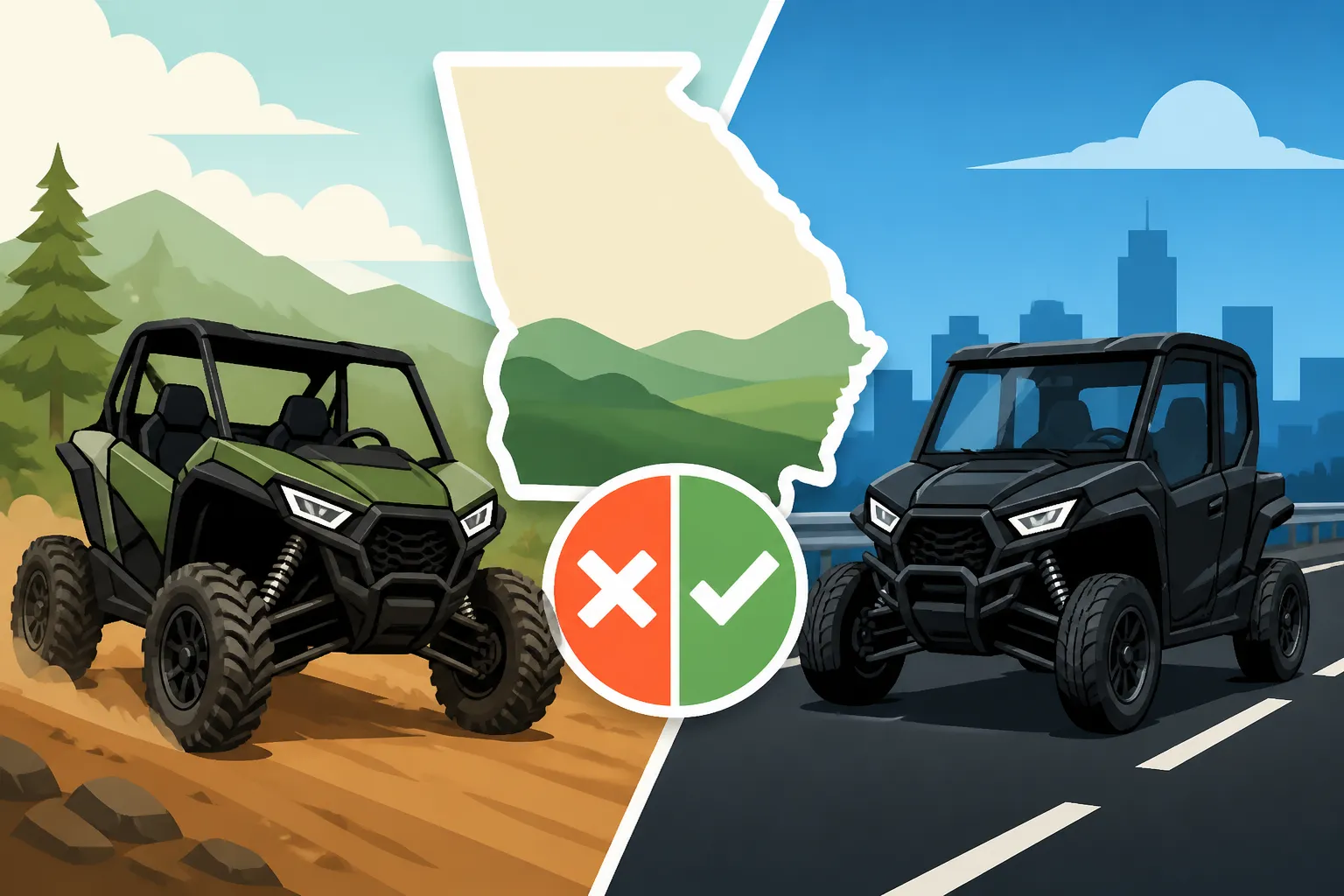
The biggest factor dictating where a registered MPOHV can operate is the type of road itself. Georgia's road network is segmented into different jurisdictions: county roads, state routes (also known as state highways), and federal interstates. The rules for MPOHVs are highly specific and primarily restrict these vehicles to local county roads. This distinction is paramount and often misunderstood by riders who assume "street legal" means access to all public roads. It absolutely does not.
County roads are typically the smaller, less-trafficked routes that connect rural areas or serve local communities. These are the roads where a registered MPOHV has the most latitude. State routes and highways, on the other hand, are designed for higher speeds and greater traffic volumes, connecting larger towns and cities. While an MPOHV might be allowed to cross a state route at designated intersections, sustained travel on a state route is generally prohibited. This is a critical point of confusion, as crossing often gets misinterpreted as continuous travel. And then there are interstates – the major arteries of commerce and travel. These are unequivocally off-limits for MPOHVs under any circumstances. Attempting to drive a side-by-side on an interstate is not only illegal but extremely dangerous due to the high speeds and heavy traffic.
Understanding these distinctions is the first step to legally operating your side-by-side in Georgia. The law carves out specific permissions for specific road types, reflecting an intent to allow limited utility and recreational use without compromising the safety and flow of traffic on busier state and federal thoroughfares.
The July 2027 Sunset Clause: A Ticking Clock for Road Access
One of the most important, yet often overlooked, aspects of Georgia's MPOHV road access law is its sunset clause. This isn't a permanent fixture of Georgia's legal landscape; rather, the current legislation that permits registered MPOHVs on county roads is set to expire on July 1, 2027. This means that, unless the Georgia General Assembly takes action to extend, modify, or make permanent these provisions, the limited road access currently enjoyed by side-by-side owners will cease to exist. This looming deadline creates uncertainty for owners and prospective buyers.
The concept of a sunset clause is not uncommon in legislation. It allows lawmakers to implement new laws on a trial basis, evaluating their effectiveness and impact before deciding whether to make them permanent. For MPOHV owners, it means that the current rules are subject to change, and the ability to ride on county roads could be revoked if the law is not renewed. This uncertainty can make long-term planning difficult, especially for those who rely on their side-by-side for utility purposes on their local county road network. The clock is ticking, and the future of "street legal" side-by-sides in Georgia remains contingent on future legislative decisions. This is why staying informed about potential legislative changes as the date approaches is crucial for anyone considering [Georgia's July 2027 Sunset on Road Access].
Georgia's Motorized Play Vehicle MPOHV Registration: The Gateway to County Roads
For a side-by-side owner in Georgia, the concept of "street legal" is inextricably tied to obtaining an MPOHV registration. This specific registration is the state's answer to a growing demand for limited road access for these popular machines. Without it, your side-by-side is simply an off-highway vehicle, confined to private lands or designated trails. It's not a generic ATV registration; it's a unique process that acknowledges the distinct characteristics of side-by-sides and similar vehicles, setting them apart from traditional ATVs or even golf carts.
Eligibility Requirements: What Makes a Side-by-Side an MPOHV?
Not just any side-by-side can be registered as an MPOHV in Georgia. There's a stringent set of criteria that your machine must meet, essentially functioning as an eight-point test. These requirements are designed to ensure that any vehicle granted road access possesses a basic level of safety and compatibility with road infrastructure. Failing even one of these points will disqualify your machine from MPOHV registration, regardless of how well it performs off-road.
Here's a breakdown of the key eligibility requirements:
- Non-Straddle Seat: This is a fundamental distinction. Unlike traditional ATVs where the rider straddles the engine, an MPOHV must have seating where occupants sit in the vehicle, much like a car. This immediately excludes dirt bikes, three-wheelers, and most conventional quad-style ATVs.
- Steering Wheel, Not Handlebars: Another critical differentiator from ATVs. Your side-by-side must be controlled by a steering wheel, providing a more car-like driving experience on the road.
- Width Limit (80 inches or less): The vehicle's overall width cannot exceed 80 inches. This ensures that the MPOHV fits safely within road lanes and isn't overly cumbersome on public thoroughfares.
- Gross Vehicle Weight (4,000 pounds or less): The total weight of the vehicle, including passengers and cargo, must not exceed 4,000 pounds. This prevents excessively heavy machines from being registered, addressing potential road wear and safety concerns.
- Payload Capacity (350 pounds or more): The machine must be designed to carry a minimum payload of 350 pounds. This acknowledges the utility aspect of many side-by-sides.
- Speed Capability (25 mph minimum, 65 mph maximum): The MPOHV must be capable of reaching a minimum speed of 25 miles per hour but not exceed a maximum speed of 65 miles per hour. This speed range helps integrate the vehicle safely with other traffic on county roads, preventing it from being either too slow to be a hazard or too fast for its design.
- Factory-Installed Seat Belts: All designated seating positions must have factory-installed seat belts. This is a basic safety requirement for any vehicle sharing public roads.
- Manufacture Date (January 1, 2000, or later): The side-by-side must have been manufactured on or after January 1, 2000. This is a historical cutoff, likely intended to ensure modern safety standards and features are present.
These are the non-negotiable points of [Georgia MPOHV Eligibility: The Eight-Point Test]. Many side-by-side owners, especially those who have modified their machines, need to carefully measure and verify each specification. For instance, some aftermarket modifications, such as wider A-arms or wheel spacers, could push a machine over the 80-inch width limit, instantly disqualifying it. Brands like SuperATV offer a vast array of aftermarket parts, and while they can enhance performance or utility, owners must be mindful of how these modifications might impact MPOHV eligibility. Always double-check your vehicle's specifications against these rules before heading to the tag office.
The Registration Process and What It Entails
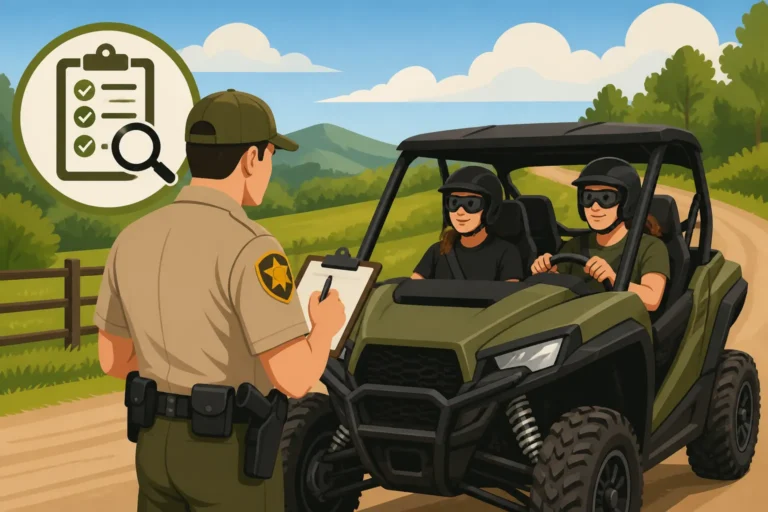
Once you've confirmed your side-by-side meets all the eligibility requirements, the next step is to navigate the actual registration process. This isn't a simple walk-in-and-register affair; it involves gathering specific documentation and visiting your local [Georgia County Tag Office Steps for an MPOHV]. The process is designed to verify ownership, confirm the machine's compliance, and collect any applicable taxes and fees.
You'll typically need to provide proof of ownership, which could be a manufacturer's certificate of origin (MCO) for a new machine, or a bill of sale and possibly an ownership affidavit for a used purchase. You'll also need a Georgia driver's license or state ID for identification and proof of residency. The tag office will review your documentation and, in many cases, will require a physical inspection of your machine or a completed Form T-22B, Inspection of Rebuilt Motor Vehicle and/or Salvage Motor Vehicle, to verify the VIN and that it meets the structural requirements. For unregistered machines, you'll also likely pay Georgia sales tax at this point, which is typically 4% state sales tax plus any applicable local county sales tax add-ons. It's also vital to have proof of liability insurance, as this is a mandatory requirement for any registered MPOHV. The entire process culminates in receiving your MPOHV license plate and a unique "branded" certificate of registration. Understanding [Georgia MPOHV Registration Explained] will help you prepare for this process.
The "Branded" Certificate: Understanding Its Implications
One crucial aspect of MPOHV registration in Georgia is the issuance of a "branded" certificate of registration. Unlike a traditional vehicle title, which denotes full ownership and clear legal history, an MPOHV receives a certificate that explicitly carries a "BRANDED" designation. This isn't just a minor detail; it carries significant implications that all owners should understand.
The branded certificate serves as a clear warning that the vehicle is not a standard on-road automobile and that its road use is limited. It communicates that the machine does not meet all the federal motor vehicle safety standards (FMVSS) that conventional cars, trucks, or motorcycles must adhere to. This branding is important for future sales and for law enforcement, as it immediately signals the vehicle's unique legal status. It also means that you won't be getting a traditional title, which impacts how some lenders might view the machine if you're seeking financing. Furthermore, the branded nature means you avoid the Title Ad Valorem Tax (TAVT) that applies to titled vehicles in Georgia, instead paying only the standard sales tax. While it allows for limited road access, the branded certificate makes it clear that this side-by-side is not a street-legal vehicle in the same vein as your everyday car. It’s a compromise, offering flexibility while maintaining clear distinctions.
Where You Can Ride a Registered MPOHV in Georgia
Having an MPOHV registration plate on your side-by-side doesn't open up every road in Georgia to you. The state's laws are very specific about where these machines can legally operate. This section clarifies those boundaries, emphasizing the distinction between permitted and prohibited areas to help you stay compliant and safe. Misunderstanding these rules is one of the quickest ways to receive a citation.
County Roads: The Primary Legal Access Point
For a properly registered MPOHV in Georgia, county roads are your primary domain. These are the local, typically less-trafficked roads that are maintained by individual counties, rather than the state or federal government. The legislation was specifically crafted to allow side-by-side owners to use these local routes for utility, recreational, and transport purposes within their communities. This means you can often ride your machine from your property to a neighbor's, to local shops, or to trailheads, provided the entire journey remains on designated county roads.
Think of it as extending your off-road machine's utility to the immediate vicinity of your home or property. You can use it to run errands, access hunting land, or simply enjoy a ride through the countryside, as long as you're on a county-maintained route. These roads are typically marked with signs indicating their county designation, or you can check local county road maps. While riding on these roads, all standard traffic laws apply, including speed limits, stop signs, and signals. You're expected to share the road responsibly with other vehicles. It's this access to county roads that makes the MPOHV registration so appealing for many side-by-side owners in Georgia, enabling a convenience that wasn't previously available. This is the core of [Georgia MPOHV Road Rules: County Roads Only].
Crossing State Routes and Highways: Specific Rules and Limitations
While sustained travel on state routes or highways is generally forbidden for MPOHVs, the law does make provisions for crossing them. This is a critical distinction and often a point of misunderstanding. You are permitted to cross a state route, highway, or federal-aid highway at a designated intersection, provided you do so in the most direct manner possible. This means you can't cruise down a state route for miles just to get to another county road; you must cross straight over.
The intent behind this rule is practical: it allows MPOHV operators to navigate their local road networks without being completely cut off by a state-maintained artery. For example, if your county road system is bisected by a state highway, you can cross that highway at a traffic light or stop sign to continue your journey on another county road. However, you must yield to oncoming traffic, obey all traffic signals, and treat it like any other intersection crossing. You cannot drive along the shoulder, use it as a shortcut, or make a turn onto the state route and drive for any significant distance. The moment you are no longer making a direct crossing, you are likely in violation of the law. This emphasizes the limited scope of road access and the need for riders to be intimately familiar with the local road classifications.
Absolute No-Go Zones: Interstates and Federal Highways
To be absolutely clear, interstates and federal highways are strictly off-limits for registered MPOHVs in Georgia. There are no exceptions, no crossings, and no permissible uses for these vehicles on such high-speed, high-volume roadways. Attempting to drive a side-by-side on an interstate or federal highway is not only illegal but extremely dangerous, posing a significant risk to yourself and other motorists.
These highways are designed for vehicles capable of sustaining high speeds and are not compatible with the design or safety features of a side-by-side. The speed differentials alone create immense hazards, not to mention the lack of protective enclosures and crashworthiness found in standard automobiles. Law enforcement will not hesitate to ticket and potentially impound any MPOHV found on these roads. The rules are unequivocal: if you see a sign for an interstate (like I-75, I-85) or a major federal highway (like US-19, US-41), your MPOHV does not belong there. Stick to the designated county roads and exercise extreme caution even when crossing state routes. Prioritizing safety and adherence to these clear boundaries is paramount for all MPOHV operators.
Operator Requirements and Safety Gear for Road Use
Operating a side-by-side on Georgia's public roads, even the limited county roads, comes with a set of responsibilities and requirements for the operator and the machine itself. These rules are in place to ensure public safety and to integrate these off-highway vehicles as smoothly as possible into the existing traffic flow. It's not enough to simply have your machine registered; you also need to meet specific personal qualifications and ensure your side-by-side is properly equipped.
Driver's License and Age Restrictions
One of the most fundamental requirements for operating any motor vehicle on public roads in Georgia is possessing a valid driver's license. This applies equally to registered MPOHVs. You must have at least a Class C driver's license, the standard license for non-commercial vehicles. A learner's permit alone is not sufficient for independent operation on public roads. This ensures that any MPOHV operator has demonstrated basic knowledge of traffic laws and has the necessary driving experience to operate safely.
Furthermore, Georgia law specifies age restrictions for MPOHV operators on public roads. The minimum age to operate a registered MPOHV on a county road is 16 years old. This aligns with the minimum age for obtaining an intermediate driver's license in Georgia. It means that while a younger rider might be able to operate an ATV or side-by-side on private land, they are explicitly prohibited from doing so on public roads, even county roads, until they meet the age requirement and hold the appropriate license. These rules are in place to protect younger, less experienced riders and to minimize risks on shared roadways. Always ensure the driver meets [Georgia Driver's License Rules for MPOHV Operators].
Helmet Laws and Exemptions
Georgia has specific helmet laws that apply to MPOHV operators, particularly for younger riders. For any person under the age of 18, wearing a protective helmet is mandatory when operating or riding as a passenger on an MPOHV on any public road, including county roads. This is a strict rule designed to protect vulnerable young riders in the event of an accident. The helmet must be approved by the Department of Transportation (DOT) and properly fitted.
However, there are a few important exemptions to this helmet requirement. Riders and passengers engaged in specific agricultural or commercial activities may be exempt from the helmet law, regardless of age. For instance, if you're using your side-by-side for legitimate farm work on a county road, or if it's being used for a commercial logging operation, the helmet rule might not apply. It's critical to understand that these exemptions are narrow and do not apply to general recreational use. If you're simply riding for fun on a county road and you're under 18, that helmet must be on. Ignoring this rule can lead to significant fines. For more details on the specific requirements, refer to [Georgia ATV Helmet Law for Riders Under 18].
Required Equipment for Road-Legal Operation
Beyond the basic registration and operator qualifications, your side-by-side must be outfitted with specific safety equipment to be considered road-legal on county roads. These aren't optional accessories; they are mandatory features designed to enhance visibility, signaling, and overall safety when interacting with other traffic. Many side-by-sides come equipped with some of these, but others may require aftermarket additions. Companies like SuperATV offer a range of products, from mirrors to lighting kits, that can help bring a machine into compliance.
The essential equipment list includes:
- Headlights: Your MPOHV must have at least one functional headlight capable of illuminating the road ahead. This is crucial for visibility during dawn, dusk, night, or inclement weather.
- Taillights/Brake Lights: At least one red taillight and at least one red brake light are required on the rear of the machine. The brake light must illuminate when the brakes are applied, signaling your deceleration to vehicles behind you.
- Rearview Mirrors: You must have at least one rearview mirror, typically mounted on the left side, that allows the driver to see at least 200 feet to the rear of the vehicle.
- Turn Signals: While not explicitly listed for all MPOHVs in the same way as cars, having functional turn signals (front and rear) is highly recommended for clear communication with other drivers and can be a de facto requirement if you're pulling into traffic. Some interpretations of "appropriate lighting" can include turn signals, so it's best practice.
- Seat Belts: As noted in the eligibility section, factory-installed seat belts for all seating positions are mandatory. These must be worn by all occupants whenever the MPOHV is in operation on public roads.
- Reflectors: Additional reflectors may be required or highly recommended to increase side and rear visibility, especially in low light conditions.
Ensuring your side-by-side has all this equipment is not just about avoiding a ticket; it's about making your machine as visible and predictable as possible to other road users. Always conduct a pre-ride check to confirm all lights and signals are functioning correctly before venturing onto any public road.
The Importance of Insurance and Avoiding Penalties
Operating any motor vehicle on public roads carries inherent risks, and Georgia law mandates that these risks be mitigated through proper insurance coverage. This is especially true for MPOHVs, which, despite their limited road access, can still be involved in accidents with other vehicles or pedestrians. Understanding Georgia's insurance requirements and the penalties for non-compliance is crucial for any side-by-side owner planning to utilize public roads.
Georgia's Minimum Liability Insurance Requirements
Just like any other registered motor vehicle, a registered MPOHV in Georgia must carry minimum liability insurance coverage. This insurance is designed to protect other parties in the event that you are found at fault for an accident. It covers bodily injury and property damage to others, not damage to your own side-by-side or injuries to yourself. Without this coverage, you are not only breaking the law but also exposing yourself to potentially devastating financial consequences if an accident occurs.
While specific figures can change, Georgia typically requires minimum liability coverage of:
- $25,000 for bodily injury or death of one person in an accident.
- $50,000 for bodily injury or death of two or more persons in an accident.
- $25,000 for property damage in an accident.
It's highly recommended to carry more than the minimum coverage, as accident costs can quickly exceed these amounts. Many insurance providers offer specific policies for off-road vehicles, and some can be tailored to include road liability coverage for registered MPOHVs. When you register your MPOHV, you will need to provide proof of this insurance to the county tag office. An insurance lapse can result in suspension of your registration and additional penalties. For a detailed breakdown of what's required, review [Georgia Insurance Minimums for Road Use].
Penalties for Unregistered or Illegally Operated Machines
The state of Georgia takes violations of its vehicle registration and operation laws seriously, and MPOHVs are no exception. Operating an unregistered side-by-side on public roads, or operating a registered one outside the bounds of the law (e.g., on a state route), can lead to a range of penalties, from fines to impoundment. These aren't just minor inconveniences; they can be costly and disruptive.
Common penalties for illegally operated MPOHVs include:
- Fines: Fines can vary significantly depending on the specific violation (e.g., no registration, no insurance, improper road use, helmet violation). These can quickly add up, easily reaching several hundred dollars for a single incident.
- Vehicle Impoundment: Law enforcement has the authority to impound an illegally operated MPOHV. This means your machine will be towed and stored, incurring towing fees, daily storage fees, and administrative charges, all of which you will be responsible for. Reclaiming an impounded vehicle can be a lengthy and expensive process.
- License Suspension: Operating a vehicle without proper insurance or committing other serious traffic offenses can lead to the suspension of your driver's license, impacting your ability to drive any vehicle, not just your side-by-side.
- Criminal Charges: In severe cases, such as reckless driving or repeat offenses, violations could escalate to misdemeanor charges, carrying even higher fines and potential jail time.
It's crucial to understand that simply owning a side-by-side does not grant you blanket permission to ride it anywhere. The specific MPOHV registration is your only pathway to limited road access, and even then, strict rules apply. Always ensure your machine is properly registered, insured, and operated according to Georgia law to avoid these steep penalties. Review [Georgia Penalties for an Unregistered Road Machine] to understand the full scope of potential consequences.
The Cost of a Road Violation Ticket
Receiving a ticket for an MPOHV road violation can be a rude awakening for many owners who might not fully grasp the seriousness of the regulations. The immediate cost of the fine is often just the beginning. While specific amounts vary by county and the nature of the infraction, a single ticket for an MPOHV offense can be surprisingly expensive and can lead to a cascade of additional expenses.
Consider a scenario where you're caught riding your unregistered side-by-side on a state highway. You could face separate tickets for:
- Operating an unregistered vehicle: This fine can be substantial.
- Operating without proof of insurance: Another significant fine, often accompanied by mandatory court appearances.
- Improper use of a public road: A specific citation for being on a state route.
- If you're under 18 and not wearing a helmet: An additional fine.
Beyond the initial fines, you'll also likely incur court costs if you have to appear before a judge. If your machine is impounded, you'll be on the hook for towing fees, which can run hundreds of dollars, plus daily storage fees that quickly accumulate. These costs can easily exceed the price of obtaining proper registration and insurance in the first place. Moreover, certain violations can add points to your driver's license, potentially leading to increased insurance premiums. The financial repercussions alone are a strong incentive to understand and comply with Georgia's MPOHV laws.
Navigating Local Ordinances and Designated Paths
While Georgia state law provides the framework for MPOHV road access, local jurisdictions, particularly cities and counties, also have a say in how certain types of vehicles, including golf carts and personal transportation vehicles (PTVs), can be used within their boundaries. This creates another layer of complexity for side-by-side owners, as what's permissible in one city might be strictly forbidden just a few miles down the road. It's critical not to confuse MPOHV rules with golf cart ordinances, as they are distinct categories with different applications.
Understanding Georgia's PTV Ordinances
Georgia law allows local governments, specifically cities, to enact ordinances permitting the use of Personal Transportation Vehicles (PTVs) on their local streets. PTVs are often referred to as golf carts, but the legal definition is broader, encompassing vehicles designed for low-speed travel within a community. These ordinances typically set speed limits, designate specific streets or paths where PTVs can operate, and may impose their own registration or permitting requirements separate from state MPOHV registration.
It's important to stress that while some side-by-sides might look like beefed-up golf carts, the MPOHV classification is distinct from a PTV. The PTV ordinances are generally focused on traditional golf carts or purpose-built low-speed electric vehicles. Side-by-sides, with their higher speeds and off-road capabilities, are usually not covered under these PTV ordinances, meaning you can't rely on a city's golf cart-friendly rules to justify riding your MPOHV on city streets. The state MPOHV law specifically restricts registered machines to county roads, not necessarily municipal streets, unless that municipality also happens to be within the definition of a county road system. This is a subtle but crucial difference that many riders overlook. To avoid confusion, it's always best to check [Georgia Golf Cart Laws and PTV Ordinances].
Golf Cart Paths vs. MPOHV Road Use: A Critical Difference
The existence of golf cart paths in many Georgia communities, particularly those with planned recreational or retirement areas, can be highly misleading for side-by-side owners. These paths are specifically designed and designated for golf carts and other low-speed PTVs, not for MPOHVs. While your side-by-side might fit on the path, using it there is typically prohibited.
The reasons for this distinction are rooted in safety and design intent. Golf cart paths are often narrower, have different construction standards, and are integrated into pedestrian or residential areas where higher speeds and the characteristics of an MPOHV would be inappropriate or dangerous. MPOHVs, even when registered for county roads, are designed for the rougher terrain and higher speeds of off-road environments, making them fundamentally different from golf carts. Trying to use a county-road-registered side-by-side on a dedicated golf cart path is likely a violation of local ordinances and could result in a citation. Always respect the signage and the intended use of these paths.
Peachtree City: A Case Study in Local Path Networks
Peachtree City in Georgia offers an excellent example of how a community has integrated a vast network of golf cart paths into its daily life. With over 100 miles of multi-use paths, residents heavily rely on golf carts for transportation to shops, schools, and recreation. This system is often highlighted as a model for alternative transportation and can lead visitors to assume that all off-road-style vehicles have similar access. However, this is not the case.
Peachtree City's ordinances are very specific about the types of vehicles allowed on its paths. They generally permit golf carts and PTVs that meet certain speed and size requirements, and they have their own local registration system, fees, and age restrictions for drivers (often allowing younger drivers with adult supervision). A registered MPOHV, while perhaps street-legal on some county roads outside the city, would typically not be allowed on Peachtree City's designated golf cart paths. This highlights the importance of checking local municipal regulations directly. What works in a sprawling rural county for an MPOHV might be entirely different in a densely planned city with its own PTV network. Always verify local rules before riding your side-by-side in any city limits, even if you have a state MPOHV plate.
Preparing for the Future: The July 2027 Sunset
The most significant looming question mark for side-by-side owners in Georgia regarding road legality is the impending sunset clause. The current law allowing registered MPOHVs on county roads is not permanent; it has an expiration date of July 1, 2027. This isn't just an administrative detail; it represents a critical juncture that could dramatically alter the landscape for side-by-side use on public roads across the state. Understanding this deadline and its potential ramifications is essential for all current and prospective MPOHV owners.
What the Sunset Date Means for Current Registrants
For those who have already gone through the effort of registering their side-by-side as an MPOHV and obtained a license plate, the July 1, 2027, sunset date means that their current permission for limited road access could simply vanish. If the law is not renewed or extended by the Georgia General Assembly, then as of that date, registered MPOHVs would revert to being purely off-highway vehicles, restricted once again to private land and designated trails only. The MPOHV plate would essentially become meaningless for public road use.
This could be a considerable inconvenience for owners who have integrated their side-by-side into their routine for property maintenance, accessing hunting land, or running local errands on county roads. It means that the convenience and utility gained through registration could be rescinded, forcing owners to find alternative means of transport or strictly confine their machines to private property. There's no guarantee that current registrations would be grandfathered in or that any new legislation would offer similar terms. The sunset date creates an immediate deadline for legislative action and a period of uncertainty for thousands of side-by-side owners across Georgia.
Potential Legislative Changes or Extensions
The existence of a sunset clause often implies that lawmakers intend to revisit the legislation before its expiration. As July 2027 approaches, it's highly probable that the Georgia General Assembly will debate whether to extend the current MPOHV road access law, modify it, or allow it to expire. Several factors could influence this decision. Lawmakers might consider the safety record of MPOHVs on county roads, feedback from law enforcement agencies, input from the off-road vehicle community, and the general public's perception.
There are several possible outcomes:
- Extension: The simplest solution would be to extend the current law for another set period, perhaps five or ten years, or even make it permanent. This would maintain the status quo and provide continuity for MPOHV owners.
- Modification: Lawmakers might choose to modify the existing law. This could involve adjusting eligibility requirements (e.g., stricter safety equipment mandates), altering permissible road types, or changing operator qualifications. For instance, they might introduce new safety training requirements or further restrict speeds.
- Expiration: The law could simply be allowed to expire, effectively ending MPOHV road access in Georgia. This would be the most impactful outcome for current registrants.
- New Legislation: A completely new framework for off-highway vehicle road access could be introduced, potentially creating different categories or regulations based on new data or policy objectives.
For side-by-side owners, it's crucial to stay informed about these legislative discussions, possibly through local off-road clubs, advocacy groups, or direct engagement with their state representatives. The future of [Georgia's MPOHV Road Rules] rests on these upcoming decisions.
Alternative Riding Options Post-Sunset
Should the MPOHV road access law be allowed to sunset without extension or replacement, side-by-side owners will need to rely solely on alternative riding options. This means returning to the status quo that existed before the MPOHV registration was introduced.
The primary alternatives would include:
- Private Property: Riding on your own land or land where you have explicit permission remains the most fundamental and unrestricted option. This includes farms, large estates, or private parcels.
- Designated Off-Road Parks and Trails: Georgia boasts a robust network of private off-road parks, such as Iron Mountain Resort and Highland Park Off-Road Resort, as well as several public OHV trail systems within the Chattahoochee-Oconee National Forest. These areas are specifically designed and managed for off-highway vehicle recreation and would become the primary legal avenues for riding.
- Hunting Clubs and Leased Land: Many hunting clubs or individuals who lease large tracts of timberland or agricultural land allow side-by-sides for access and utility within those properties.
- Trailer Transport: For those who previously used county roads for short commutes, a return to trailering their side-by-side to their desired riding spot (be it private land or an OHV park) would be necessary. This requires an appropriate vehicle and trailer capable of safely transporting the machine.
While the expiration of the road access law would undoubtedly be a setback for some, it wouldn't mean the end of side-by-side enjoyment in Georgia. It would simply mean a redirection of where and how these machines can be legally operated. Planning for these alternatives now, and monitoring legislative developments, is the best approach for preparing for the July 2027 deadline.
Disclaimer
This article is for general informational purposes only and does not constitute professional advice. Laws, prices and regulations vary by location and change over time. Consult a qualified professional for guidance on your specific situation.