Weighing a Machine Against the 4,000-Pound Limit
So, you're looking at your trusty side-by-side or UTV, dreaming of hitting those approved Georgia county roads, and then reality sets in: the pile of registration requirements. Among the many rules, one that often causes a lot of head-scratching is the 4,000-pound gross vehicle weight limit. It can feel like you need a degree in engineering just to figure out if your machine qualifies, leaving you wondering if your pride and joy will ever see pavement. This guide is here to cut through the confusion and help you understand exactly what Georgia's 4,000-pound limit means for your machine and how to ensure you're in compliance for MPOHV registration.
Understanding Georgia's 4,000-Pound Gross Vehicle Weight Limit for MPOHV Registration
When Georgia established its rules for Multi-Purpose Off-Highway Vehicles (MPOHV) to legally operate on certain public roads, they weren't just throwing numbers around willy-nilly. These limits, including the 4,000-pound gross vehicle weight, are crucial for ensuring a level of safety and compatibility with standard road traffic. It's not about making things difficult; it's about defining what kind of off-road machine can safely share the road with cars and trucks without causing undue risk or confusion. Many folks assume their machine is lightweight, but the "gross" part of this equation can often be a real eye-opener.
What "Gross Vehicle Weight" Really Means for Your Machine
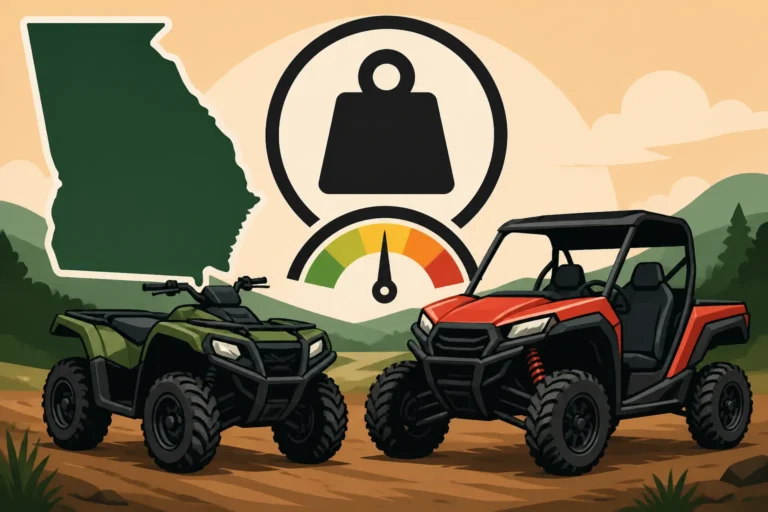
This is where the rubber meets the road, quite literally. When Georgia refers to "gross vehicle weight," they aren't just talking about the weight of your machine when it rolled off the factory floor, empty and pristine. No, they're talking about the maximum operating weight of the vehicle, which includes its own curb weight, a full tank of fuel, all your gear, and every single passenger you intend to carry. Think of it as your machine's fully loaded, ready-for-action weight.
For example, your side-by-side might have a dry weight of 1,800 pounds. Sounds well under 4,000, right? But then you add 10 gallons of fuel (around 60 pounds), a heavy-duty winch and bumper (150 pounds), a full cooler and tool kit (100 pounds), and two adults weighing 200 pounds each (400 pounds total). Suddenly, you're at 2,510 pounds. If you regularly carry four adults and more gear, that number climbs even higher. Every extra gallon of water, every spare tire, every hunting blind you strap on – it all adds up. The idea is to consider your machine at its heaviest, most practical operating state, not just its showroom floor weight. This distinction is vital because a machine that's technically underweight dry could easily exceed the limit once fully equipped and loaded with occupants.
Why the 4,000-Pound Limit Exists
The Georgia Department of Revenue and the state legislature didn't pull the 4,000-pound figure out of thin air. This limit is part of a broader effort to classify off-highway vehicles and regulate their use on public roads. Primarily, it's about road safety and infrastructure. A very heavy off-road vehicle, while robust for trails, can present different challenges on a paved county road. For one, braking distances can be longer, and handling characteristics can be less predictable than a lighter, purpose-built road vehicle. Moreover, heavier vehicles exert more wear and tear on roads and bridges, particularly in rural areas where infrastructure might not be designed for constant heavy off-road vehicle traffic.
This limit also helps to differentiate MPOHVs from larger, heavier trucks or even dedicated commercial vehicles. It creates a clear boundary, ensuring that only machines within a certain reasonable weight class are granted limited road access. It helps to keep truly oversized or heavy-duty industrial vehicles, which have different road regulations, off the MPOHV list. Without such a limit, the definition of an MPOHV could become too broad, potentially allowing vehicles onto county roads that are simply not designed or safe for that environment. It's one piece of the puzzle that includes other restrictions like speed and width, all designed to maintain order and safety on Georgia's public roadways. You can learn more about the complete set of criteria in [Georgia MPOHV Eligibility: The Eight-Point Test].
How to Accurately Weigh Your Side-by-Side for Georgia Registration
So, you've grasped the concept of gross vehicle weight. Now comes the practical part: how do you actually figure out if your machine, fully loaded, falls under that 4,000-pound ceiling? It's not as simple as checking the owner's manual for "dry weight," and the county tag office won't just take your word for it if they have reason to doubt. Being prepared with an accurate weight is part of making your registration process smooth and hassle-free.
DIY Methods for Estimating and Measuring Weight
While you might not have a giant scale in your garage, there are practical ways to get a good idea of your machine's gross vehicle weight. First, always start with the manufacturer's specifications. Look for the "curb weight" or "dry weight," and then add estimated weights for all your typical accessories, fuel, and the maximum number of passengers you plan to carry. For example, if your manual states a dry weight of 2,100 pounds, and you know you'll always have a full 15-gallon tank (around 90 pounds), a heavy rear cargo box (70 pounds), a roof (40 pounds), and two passengers (say, 350 pounds combined), you're looking at a rough gross weight of 2,650 pounds. This is a good starting estimate, but it's often not precise enough for official purposes.
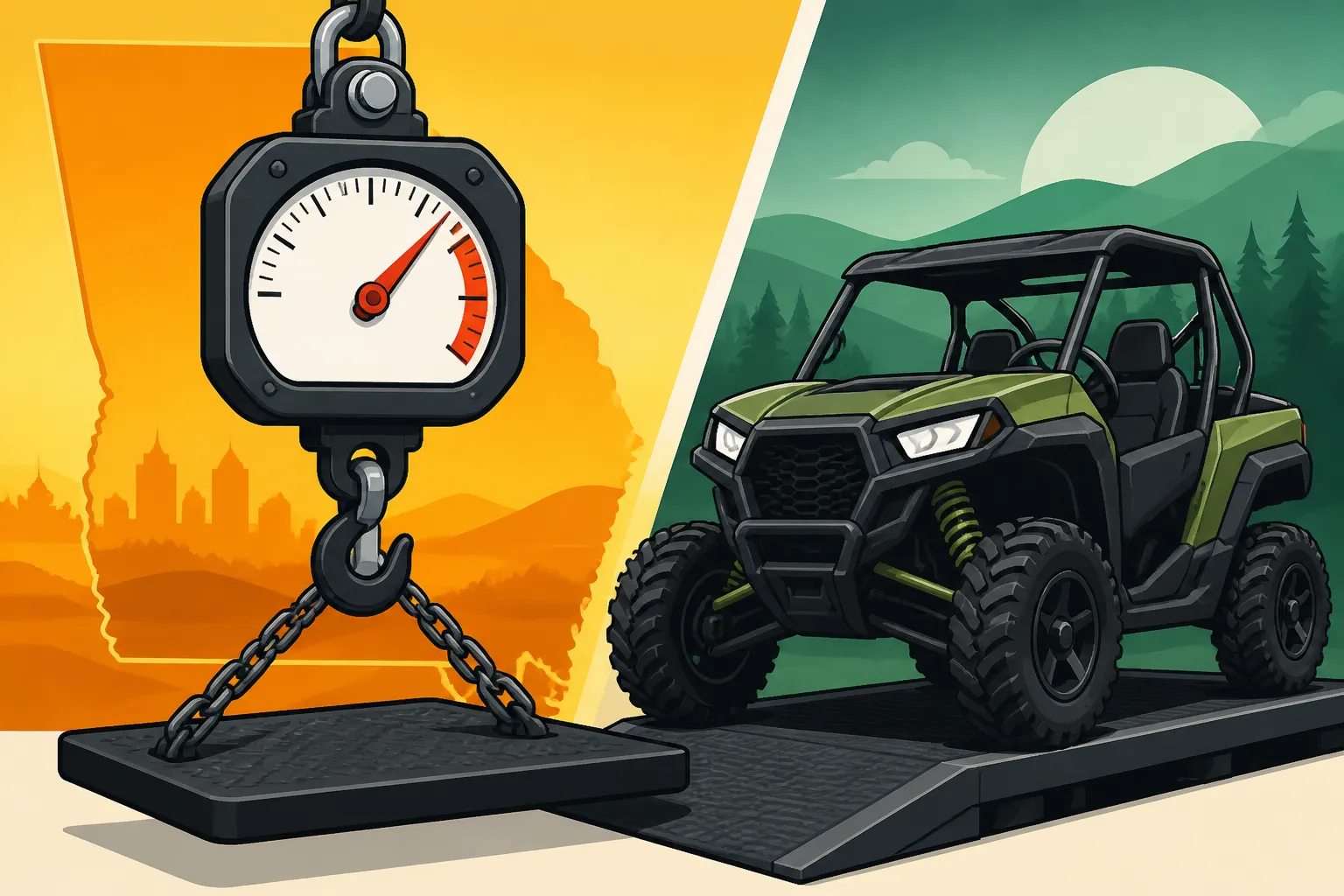
For a more accurate measurement, consider taking your fully loaded side-by-side to a public scale. Many landfills, moving companies, and truck stops have certified scales that can weigh individual vehicles. Just pull up, tell them you need a "gross vehicle weight," and they can usually provide a printout. Make sure you load your machine exactly as you would for road use – full tank, all your usual gear, and even have your typical passengers sit inside if possible, or at least account for their weight. It might seem like a bit of a trek, but having that official weight slip can save you headaches at the county tag office.
What Happens If Your Machine Exceeds the Limit?
This is the hard truth: if your side-by-side, at its typical operating weight, pushes past the 4,000-pound limit, it simply will not qualify for MPOHV registration in Georgia. There's no workaround, no special waiver for being "just a little over." The rules are clear, and the county tag office has to follow them. This means that while your machine is still perfectly fine for use on private land, designated off-road parks like those listed in [Georgia ATV Trails: Where You Can Legally Ride], or hunting club leases, it will not be legally allowed on Georgia's county road system.
This isn't necessarily the end of the world for your off-road adventures, but it does mean you'll need to adjust your expectations for public road access. Your UTV will remain an off-highway vehicle in the strictest sense when it comes to Georgia's road laws. It also underscores why careful planning and understanding all the requirements are so critical before you even head to the tag office. Knowing your machine's limits upfront prevents wasted trips and disappointment.
The Broader Picture: Other MPOHV Eligibility Requirements Beyond Weight
While the 4,000-pound gross vehicle weight limit is a significant hurdle for many, it's essential to remember that it's just one piece of a larger puzzle. Georgia's MPOHV registration is built upon a comprehensive set of criteria, and your machine must satisfy all of them to be deemed road-worthy for limited public use. Overlooking even one requirement can mean your application gets denied, sending you back to the drawing board. Understanding this full scope can help you avoid surprises when you finally get to the county tag office.
The Full Eight-Point Eligibility Test
Georgia has outlined eight specific points that an off-highway vehicle must meet to qualify as an MPOHV. These aren't suggestions; they are mandates. Beyond the 4,000-pound gross vehicle weight ceiling, your machine also needs to have:
- A Steering Wheel, Not Handlebars: This immediately disqualifies most traditional ATVs or dirt bikes. See [Why Georgia Requires a Steering Wheel, Not Handlebars].
- A Non-Straddle Seat: You must sit in the vehicle, like a car, not on it like a motorcycle.
- Factory-Installed Seat Belts: These are non-negotiable for operator and passenger safety. [Georgia Requires Seat Belts on a Registered Machine] explains more.
- Headlights and Brake Lights: Essential for visibility, especially during dawn, dusk, or inclement weather.
- Rearview Mirrors: Crucial for situational awareness on shared roads.
- A Minimum Speed of 25 mph, and a Maximum Speed of 65 mph: This range ensures the MPOHV can keep up with typical county road traffic without being a hazard, but also isn't a high-speed vehicle. Read more at [Georgia's 25 to 65 mph Speed Requirement].
- A Maximum Width of 80 Inches: This ensures the vehicle can fit safely in a standard lane. Learn more about [Measuring Width Against the 80-Inch Limit].
- A Payload Capacity of at Least 350 Pounds: Your machine needs to be able to carry a reasonable load. [Measuring Payload Capacity Against 350 Pounds] provides more detail.
If your machine fails on any one of these points, regardless of its weight, it simply won't qualify. It's a comprehensive checklist designed to ensure that only certain types of machines that mimic some characteristics of a traditional vehicle are allowed limited access to county roads.
Documentation and the County Tag Office Visit
Once you've meticulously checked your machine against every single one of those eight points, including the 4,000-pound weight limit, your next step is to gather all the necessary paperwork and head to your local [Georgia County Tag Office Steps for an MPOHV]. This can feel like navigating a bureaucratic maze, but being prepared makes all the difference. You'll need proof of ownership, which could be a manufacturer's certificate of origin (MCO) for a new machine, or a solid bill of sale if you bought it used. If you're buying a used machine privately, a well-drafted bill of sale is critical to prove the transaction and ownership. Resources like LawDepot can provide templates to help ensure your [Bills of Sale That Hold Up at a Tag Office] contain all the necessary information, protecting both buyer and seller.
You'll also need proof of Georgia residency, and don't forget about [Georgia Liability Insurance Tied to Registration]. Unlike traditional ATVs that are often uninsured, a registered MPOHV must carry minimum liability coverage, just like any other vehicle on the road. The county tag office will review all your documents, potentially verify your vehicle identification number (VIN), and ensure your machine meets all the established criteria. It's a process, but being thorough on your end will lead to a much smoother experience.
| MPOHV Eligibility Criterion | Requirement |
|---|---|
| Gross Vehicle Weight | Must be 4,000 pounds or less (fully loaded with fuel, gear, and passengers) |
| Width | 80 inches or less |
| Speed | Capable of 25 mph minimum, 65 mph maximum |
| Steering | Equipped with a steering wheel (not handlebars) |
| Seating | Equipped with non-straddle seating |
| Seat Belts | Equipped with factory-installed seat belts |
| Lights | Equipped with headlights and brake lights |
| Mirrors | Equipped with rearview mirrors |
| Payload Capacity | 350 pounds or greater |
| Manufacture Date | Built on or after January 1, 2000 (though older machines can have a [Georgia Law Enforcement Inspection for a Branded Plate]) |
Disclaimer
This article is for general informational purposes only and does not constitute professional advice. Laws, prices and regulations vary by location and change over time. Consult a qualified professional for guidance on your specific situation.