Why No Operator Education Card Exists
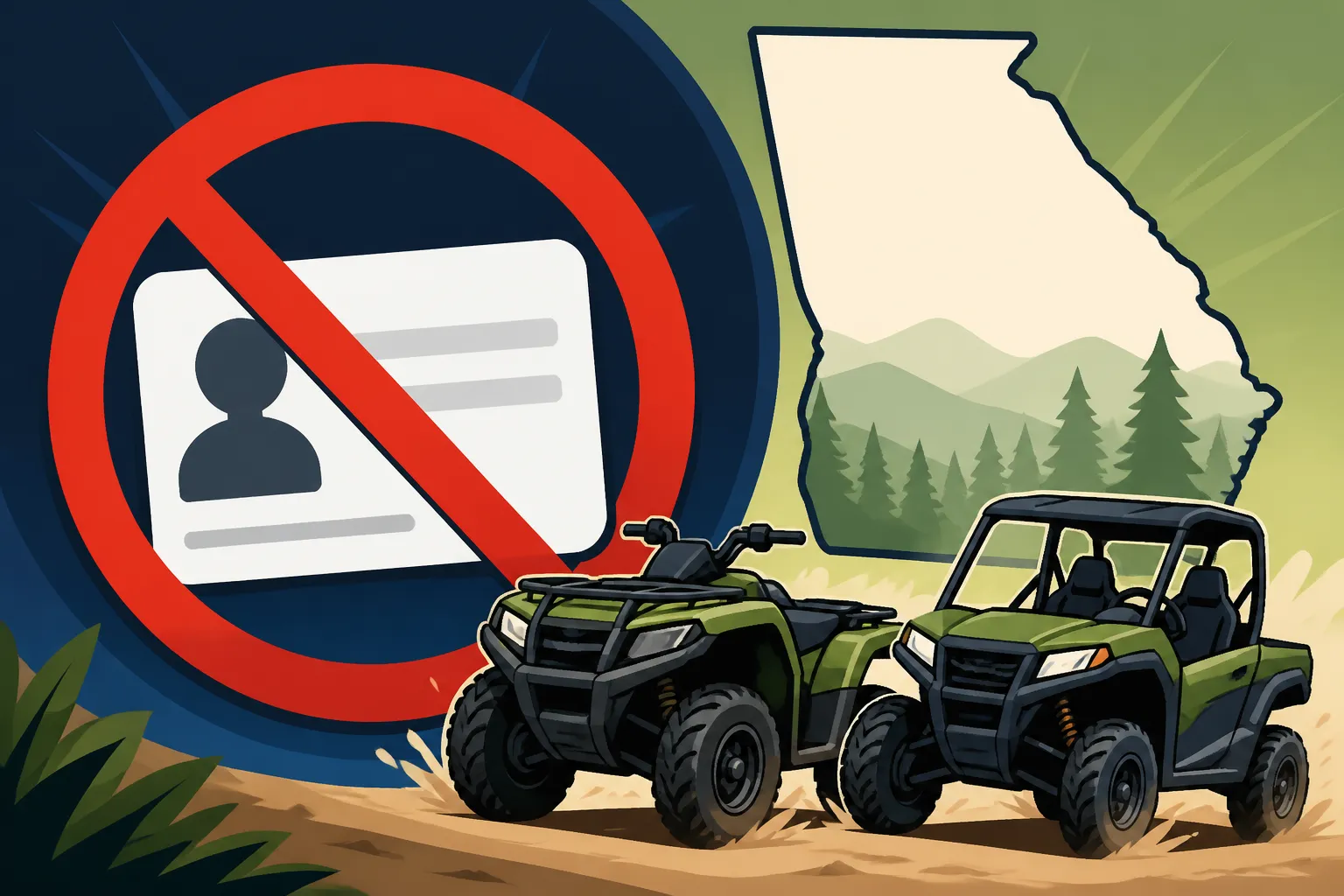
Georgia does not issue a statewide ATV operator education card, so riders may wonder whether they need one before using a trail, forest road, or private riding park. The short answer is that a card is not a general state requirement, but that does not mean every ride has the same rules. Permits, age limits, road laws, and park policies still matter.
Why Georgia Has No State Operator Education Card
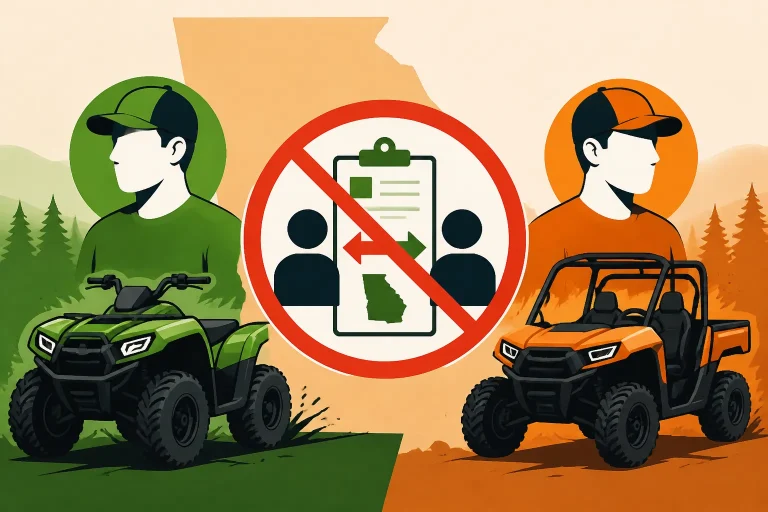
Georgia does not require ATV and UTV riders to complete a state operator course and carry a state-issued education card as a general condition of riding. There is no single statewide card that works like a driver’s license or proves that its holder has permission to ride in every setting.
That distinction is important: no statewide education-card requirement does not mean no rules apply. The requirements depend on where you ride and what you ride. A forest OHV system, a wildlife management area, a private park, and a public road can all have different conditions.
Georgia also does not have a state ATV safety course that all riders must pass before operating a machine. Riders can still take voluntary safety training, and some riding areas or organizations may set their own training or supervision rules. But that is different from a statewide legal requirement.
The state’s approach is better understood as a set of separate rules rather than one operator credential. A rider may need to follow a land manager’s permit rules, meet a minimum age, wear required protective equipment, or hold a driver’s license for a specific type of road use. None of those requirements is the same as an ATV operator education card.
| Requirement | What it does | Is it a statewide operator education card? |
|---|---|---|
| Forest OHV permit | Gives an operator permission to use covered OHV areas under the permit’s terms | No |
| Driver’s license for certain road use | Addresses whether a person may operate a qualifying machine on a public road | No |
| Helmet or protective-equipment rule | Sets safety requirements for particular riders or locations | No |
| Private park waiver or orientation | Follows that park’s own operating policies | No |
| Voluntary safety course | Helps a rider build skills and learn safe practices | No |
This is why someone asking, “Do I need an ATV card in Georgia?” should first identify the riding location. The useful question is usually not whether the state card exists, but whether the place you plan to ride requires a permit, a particular age, supervision, equipment, or another form of authorization.
For an overview of the missing statewide course requirement, see Georgia Has No State ATV Safety Course. For details about training that riders can choose to take, see Georgia Safety Course Options That Exist.
What Permits and Local Rules Do Instead
A permit can be required even when an education card is not. Georgia’s national forest OHV systems use permits, and the permit requirement is separate from operator training. Riders should check the current rules for the particular system before traveling, because an operator needs to meet the land manager’s conditions whether or not they have taken a course.
A forest OHV permit is permission to use the covered riding area under its rules. It is not a certificate of skill, proof of a rider’s age, a driver’s license, or a promise that every road or trail is open. It also does not replace any requirements that apply to the machine or the operator in another setting.
Georgia forest OHV permits are generally tied to the individual operator rather than just to the vehicle. That means a group should not assume that one permit covers every person taking a turn at the controls. Confirm how the permit applies to each operator, including any passenger or youth situations, before the ride. Georgia National Forest Permits Are Per Operator explains that distinction, and What an Operator Permit Does Not Cover clarifies the limits of a permit.
Wildlife management areas have their own access rules as well. Riding there may be restricted to designated roads, certain days, or limited time periods, and age restrictions can apply. A forest OHV permit does not automatically authorize riding wherever an ATV can physically travel. Check the rules for the specific area and activity; do not assume a hunting license or a trail permit alone settles the question. The overview at Georgia WMA Rules for ATV Riders is a useful starting point.
Private parks can make their own rules for admission and machine operation. A park may require a waiver, set minimum ages, restrict passengers, require adult supervision, or provide a safety briefing. Those conditions are park policies, not a statewide education-card system. Read the park’s current rules before you leave, particularly when taking a child or renting a machine. Georgia Private Park Minimum Ages and Georgia Supervision at a Private Park cover common policy questions.
A practical way to sort the requirements is to make a short checklist for the actual ride:
- Identify the land manager or park where you will ride.
- Check whether the area requires a permit, reservation, waiver, or other entry authorization.
- Confirm age, supervision, passenger, and equipment rules for each rider.
- Verify that your machine is permitted on the specific trails or roads you plan to use.
- Keep any required permit or confirmation accessible while riding.
If you are riding more than one type of location in a weekend, check each location separately. A permit for a forest OHV system does not necessarily apply at a private park, and a private park’s orientation does not give permission to ride on public land.
How Road Use and Age Rules Are Different
The absence of an operator education card does not make an ATV or UTV street-legal. Georgia’s road rules are a separate issue, and a machine’s classification matters. An ordinary quad is not made legal for public-road use just because its operator has a permit, training certificate, or safety gear.
Georgia has a limited registration category for certain qualifying machines, but eligibility depends on the machine meeting specific requirements. Even when a machine qualifies, registration does not mean it can be driven on every public road. The allowed road type and other operating conditions still matter. Georgia MPOHV Registration Explained describes the registration category, while Are Side-by-Sides Street Legal in Georgia? addresses the separate road-access question.
A driver’s license requirement, where it applies to a particular kind of road use, is not an education card either. A license addresses legal authority to drive in the relevant setting; it does not prove that the operator has passed an ATV skills course. Conversely, taking a safety course does not grant a person permission to drive a machine on a public road. Check Georgia Driver’s License Rules for MPOHV Operators if road operation is part of your plan.
Age rules are similarly separate. Georgia has helmet requirements that affect riders under 18, but wearing a helmet does not establish that a rider meets every age or supervision rule for a trail, WMA, or private park. The details may depend on where the riding takes place and whether a specific exception applies. See Georgia ATV Helmet Law for Riders Under 18 for the helmet issue, and check the riding location’s rules for any separate age limits.
A common source of confusion is treating all of these as interchangeable credentials:
- A safety course is training.
- A permit is authorization to use a specified riding area under stated conditions.
- A driver’s license is a credential for driving in settings where one is required.
- A helmet is protective equipment.
- A park waiver records acceptance of that park’s terms.
One does not automatically replace another. For example, a rider who has completed a course may still need a forest permit. A person with a forest permit may still be unable to ride a particular machine on a particular trail. And neither a course nor a permit converts a quad into a road-legal vehicle.
Should You Take a Safety Course Anyway?
A course can be useful even when Georgia does not require a state operator card. New riders may benefit from instruction on controls, braking, turning, terrain, body position, and avoiding hazards. More experienced operators may also find value in a refresher, especially when switching from a quad to a side-by-side or operating a machine with unfamiliar controls.
Training is most useful when it matches the machine and conditions you expect to encounter. A course focused on a small ATV may not prepare a rider for the size, weight, passenger practices, or rollover risks of a side-by-side. Ask what equipment and riding situations the course covers, and whether it includes practical instruction rather than only general information.
A sensible course choice should address basic control and judgment, not just completion of a test. Look for instruction that covers:
- Pre-ride checks and protective equipment
- Safe starting, stopping, and turning
- Riding within the limits of the machine and operator
- Passenger and youth safety
- Terrain hazards, including slopes and changing ground conditions
- What to do after a breakdown or incident
Parents and guardians should not treat a course as a substitute for age-appropriate supervision. A young rider still needs a machine suited to their size and ability, close attention from a responsible adult, and compliance with the rules of the place where they ride. A certificate does not make an unsuitable machine or unsafe situation appropriate.
Before relying on any course certificate, ask the organization what it represents. It may document participation, completion of a curriculum, or a particular skills assessment. Do not assume that another state, park, insurer, or land manager will accept it as a required credential unless that organization says so.
For an upcoming ride, the most reliable approach is to verify the current requirements with the land manager or park and keep any required permit or paperwork available. If the question is about public-road use, check the rules for the machine and road rather than looking for an education card. If the question is about a private park, ask the park directly about training, waivers, age limits, and supervision.
Georgia’s lack of a statewide ATV operator education card makes the basic answer straightforward, but it does not create a blanket pass to ride anywhere. The details come from the place, the machine, and the activity. Check those conditions first, and consider voluntary training as a safety tool rather than as a substitute for permission.
Disclaimer
This article is for general informational purposes only and does not constitute professional advice. Laws, prices and regulations vary by location and change over time. Consult a qualified professional for guidance on your specific situation.