Asking a DNR Office About a Specific WMA
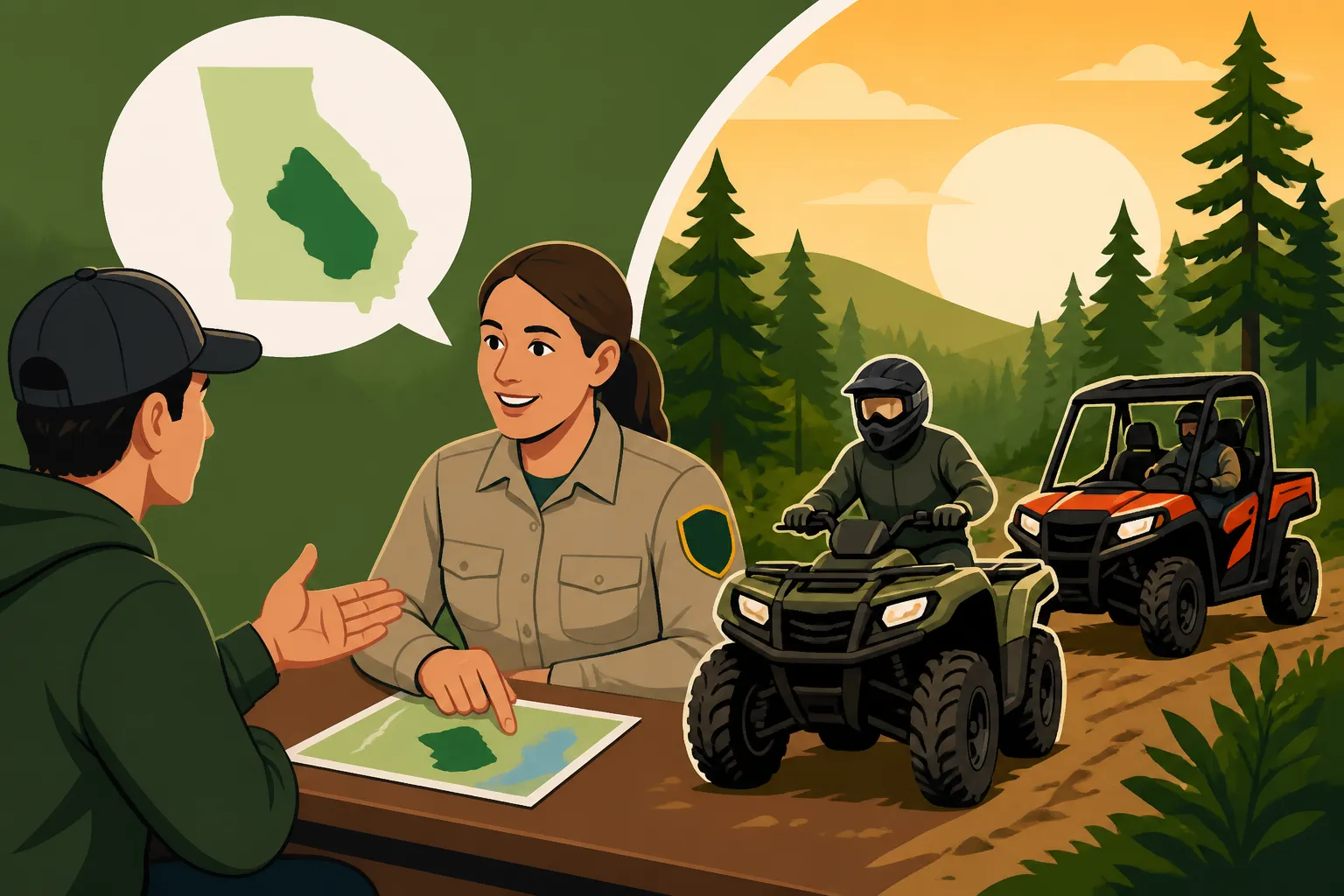
A WMA name on a map does not tell you whether an ATV or UTV may use a particular road on a particular day. Rules can depend on the land manager, hunting dates, road closures, and machine type. A short, well-prepared call to the Georgia DNR can help you verify the details before you haul your machine to the gate.
Get the location and riding plan ready
Before contacting an office, pin down exactly where you want to ride. “The WMA near town” may not be enough: a large area can have multiple entrances, roads, and land managers. Write down the WMA’s full name, the road or access point you plan to use, and the dates you have in mind. If you can, note a map location or nearby road name as well.
Next, describe the machine and the activity accurately. Say whether it is an ATV or a side-by-side, whether you plan to ride for hunting access or recreation, and whether you expect to stay on a named road or use a designated OHV trail. Those distinctions can change the answer. A machine being registered, insured, or suitable for public-road travel does not, by itself, establish permission to ride it on WMA land.
It also helps to check the current official information before calling. Look for the WMA’s rules and any notices about seasonal access, construction, closures, or special hunts. Keep the page or notice handy so you can ask about a particular line rather than relying on a broad description. For background on the general limits, see Georgia WMA Riding Rules Explained and Georgia WMA Riding Only on Roads.
Prepare a quick summary like this:
- WMA name and the entrance, road, or trail you mean
- Planned date and approximate riding time
- ATV or UTV, including whether it is a side-by-side
- Your purpose, such as reaching a hunting location or riding a designated route
- Whether you will carry a permit, hunting license, or other required document
- Any detail that could affect access, such as a gate, a posted closure, or land marked as national forest
The goal is not to persuade the person who answers that you should be allowed in. It is to give them enough detail to identify the exact rule and tell you whether another office manages part of the route.
| Detail to check | Why it matters | A useful way to ask |
|---|---|---|
| Exact road or trail | Access may vary within one WMA | “Is this specific road open to an ATV?” |
| Date and time | Hunting schedules and seasonal closures can change access | “Does the rule apply on this date and at this time?” |
| Machine type | An ATV and a side-by-side may not have the same access | “Does this apply to my side-by-side, or only to smaller ATVs?” |
| Land manager | A route may cross state and federal land | “Who manages this road, and should I confirm with another office?” |
| Permit or license | Riding permission and permit requirements are separate questions | “What documents do I need in addition to permission to use the road?” |
Ask questions that produce a specific answer
Start by stating the location and date plainly: “I’m checking whether I can ride an ATV on the named road at this WMA on Saturday.” Then ask the office to confirm each part of the plan. A general answer such as “ATVs are allowed there” may leave out the road, time window, hunting-day restriction, or seasonal closure that matters to your trip.
Use questions that separate the issues:
- Is the machine allowed on this exact road or trail? Ask whether the route is open to your type of machine, not just whether vehicles are generally permitted in the WMA. If you are asking about a trail rather than a road, say so.
- Does access depend on the date or purpose of the visit? Some WMA riding is limited by hunting activity or designated access periods. Confirm whether your planned day qualifies and whether the restriction applies to riding for recreation as well as hunting access. See Georgia WMA Riding Only on Hunt Days and Georgia WMA Two-Hour Window Around Sunrise.
- What are the hours? Ask when you may enter and when you must be off the road. If the rule is expressed relative to sunrise or sunset, ask how that timing applies on your planned date rather than guessing.
- Are there age or supervision rules? If a young person will operate or ride as a passenger, state their age and ask about the rule that applies to that role. The operator’s age may matter even when an adult is present. See Georgia WMA Minimum Age of 16.
- What documents or permits are required? Ask separately about WMA access, any hunting-related license or tag, and any OHV permit that applies to the land or trail system. A permit for one system should not be assumed to grant access to another. Georgia WMA Tags and When They Are Needed explains one part of this distinction.
- Is the route currently closed or subject to a temporary restriction? Ask about gates, weather-related closures, management work, fire restrictions, or a special event that could affect your date.
- Does another agency manage any part of the route? If the road crosses national forest land or another jurisdiction, ask for the correct contact. Some national forest WMAs have their own designated-trail requirements; see Georgia National Forest WMAs Need Designated Trails.
For example, instead of asking, “Can I ride at this WMA?” try: “I plan to use the named access road in a side-by-side on this date, for hunting access. Is that road open to this machine at that time? Does the answer change if the road enters national forest land?”
This wording makes it easier to catch a mismatch between your plan and the rule. It also helps the staff member ask a follow-up question if the date, machine, or route changes the answer.
Contact the right office and keep a record
Use the current contact information shown on an official Georgia DNR page for the WMA or the relevant wildlife management office. Do not assume the nearest county office manages the area, or that the person who answers can speak for every agency whose land the road crosses. If the official page identifies a manager or a specific contact for the WMA, start there. If you reach a general office, ask to be directed to the staff member who handles access for that area.
You can use this simple process:
- Check the WMA’s official page and note its listed contact, current regulations, and any closure notice.
- Call or send a message with the exact WMA, entrance or route, date, time, machine type, and purpose.
- Ask the questions that apply to your trip, including whether a different land manager controls any part of the route.
- Write down the answer, the date you received it, and any limits the staff member described.
- Before leaving, check for new notices or gate closures and carry any documents the official rules require.
If the answer is “it depends,” ask what it depends on. The condition might be the day of the week, a hunt schedule, a particular road, or the part of the property you intend to use. If you cannot identify the route on the phone, send a map screenshot or ask how to provide a location reference. Do not treat a vague answer as permission to ride beyond the location or conditions the staff member confirmed.
A written response can be useful when you need to remember details, but it is not a substitute for the current regulations or posted signs. Save the message, note which route it concerns, and check that it still applies to your planned date. If a sign or gate at the site appears to contradict what you were told, stop and verify before proceeding.
Understand what the answer does and does not cover
A positive answer usually applies only to the facts you gave. If you asked about an ATV on one road during a particular access period, do not assume the same answer covers a UTV, a neighboring road, a different date, or a recreational ride that is not connected to hunting access. Ask again when an important detail changes.
Keep these distinctions in mind:
- Permission to use a WMA is not a general road-use registration. Registration does not automatically make every public or management road available for riding. For the separate question of riding on public roads, see Georgia WMA Vehicle Rule in Plain English and Georgia UTV Road Rules by County.
- A WMA answer may not cover an adjoining forest trail system. A route that crosses onto national forest land may be subject to separate rules or permits. Ask exactly where the boundary lies and contact the relevant land manager if needed.
- A map line does not prove that a road is open. A road may be gated, closed seasonally, or limited to certain uses. Follow posted signs and any current official closure information.
- A permit may not grant the access you are asking about. Confirm what the permit covers, who must hold it, and whether it applies to that particular land and activity. For example, Georgia National Forest Permits Are Per Operator covers a different permit question from whether a WMA road is open.
- The answer may change with dates or conditions. Hunting schedules, land management, and temporary closures can affect access. Recheck close to your trip rather than relying on an old call or a previous visit.
If the office cannot confirm access, ask which official source or agency can. You can also ask whether the restriction is permanent, seasonal, or specific to the route. That follow-up is more useful than interpreting silence as approval.
The safest plan is to ride only where the current rules clearly allow it, stay within the confirmed route and time limits, and treat a gate or posted closure as a reason to stop. If your planned trip depends on an exception or an unclear boundary, resolve that question with the responsible office before loading the machine.
Disclaimer
This article is for general informational purposes only and does not constitute professional advice. Laws, prices and regulations vary by location and change over time. Consult a qualified professional for guidance on your specific situation.