Hunt Days and the Day Before
Georgia WMA access can be confusing when a hunt is scheduled: does the day before count, and can you ride just for recreation? The practical answer depends on the rules for that specific area. This article explains how to interpret hunt-day and day-before access, what it does—and does not—allow, and what to check before unloading your ATV or UTV.
What “hunt days and the day before” means
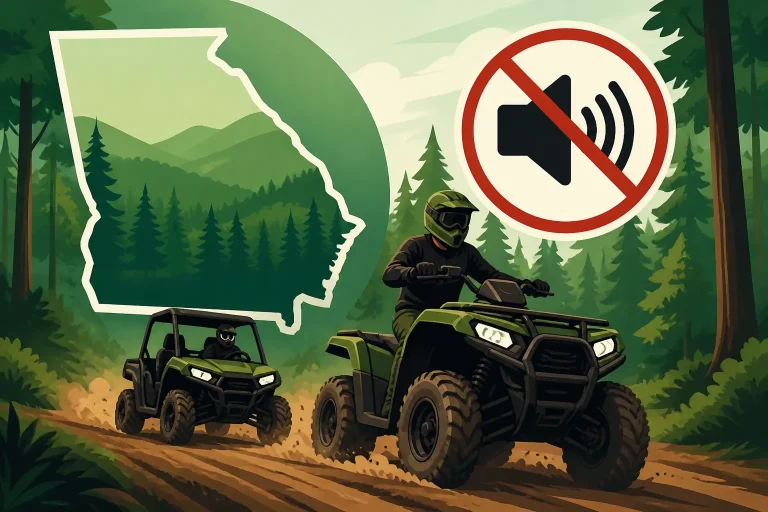
Georgia Wildlife Management Areas are not general-purpose ATV or UTV trail systems. Motorized access is controlled by the rules for each area, and permission to use a road may be connected to hunting dates. A day-before allowance, when the WMA’s rules provide one, is a limited access exception—not permission to ride whenever a hunt is happening nearby.
The important detail is the specific WMA’s current rules and calendar. A hunt scheduled on one area does not necessarily make that date—or the preceding day—an access day on another area. Even within a WMA, different hunts, roads, gates, or management areas can have different restrictions.
Think of the day-before provision as a date on the WMA’s access schedule, not a general grace period. It may help a hunter reach an area or prepare for a scheduled hunt, but it does not automatically open every road or authorize recreational riding. For a broader overview of the restrictions, see Georgia WMA Rules for ATV Riders and Georgia WMA Riding Only on Hunt Days.
The day before is not the day before any hunt
Before planning a ride, confirm what the rule means for the area you intend to visit. In particular, check whether the date before the hunt is explicitly included in that WMA’s motor-vehicle access rules. Do not assume that a hunt listed for the following day makes the previous day open to ATV or UTV use.
This matters when a hunt is limited to a particular species, weapon, participant group, or portion of the area. A date can appear on a hunting calendar without opening every part of the WMA to motorized traffic. If the day-before rule is unclear, ask the relevant Georgia Department of Natural Resources office before relying on it. Asking a DNR Office About a Specific WMA can help you prepare the right questions.
A good rule of thumb is:
- A scheduled hunt may affect access, but the hunt listing alone is not enough to establish that a road is open.
- A day-before allowance applies only where the WMA’s rules make that date eligible.
- An open access date does not mean all roads are open to motor vehicles.
- Permission to travel on an eligible road does not mean you may ride off-road.
Do not confuse hunting access with recreational riding
WMA motor-vehicle access is tied to area rules and is not a substitute for a public OHV trail permit. A road being open for hunting access does not turn the surrounding woods, fields, or trails into a riding area. Stay on roads specifically open to motorized vehicles, and follow gates, signs, and closures.
The same distinction applies to a machine with a plate or registration. Registration does not override WMA restrictions. A legal machine can still be prohibited from a particular road or date. For more on where riding is allowed, read Georgia WMA Riding Only on Roads and Georgia National Forest WMAs Need Designated Trails.
How to check whether a date qualifies
Use the WMA’s current regulations and access information rather than relying on a general hunting calendar, a past visit, or what another rider remembers. Conditions can differ between areas and may change with seasonal closures, scheduled hunts, road work, weather, or wildlife-management needs.
A practical check takes a few minutes:
- Identify the exact WMA and access point. Nearby areas can have different rules. Make sure the road you plan to use is inside the WMA you have checked.
- Find the current rules for that WMA. Look for the section covering ATV or UTV use, motorized vehicles, road access, and hunt dates.
- Check the hunt schedule for the actual date. Confirm the hunt applies to that area and note any restrictions on the hunt type or location.
- Look for a specific day-before provision. If the rule is not clear about the day before, do not assume it is allowed.
- Confirm that your route is open. Check road designations, gates, signs, and any temporary closure notices.
- Verify any operator, permit, or tag requirements. These can depend on the area and the type of land involved.
| What to verify | Why it matters |
|---|---|
| The exact WMA | Rules and hunt schedules are not automatically shared by neighboring areas. |
| The date of the hunt | Access may be limited to dates specifically listed for the area. |
| Day-before wording | A day-before allowance should not be assumed unless the applicable rules include it. |
| Road designation | Hunt-day access does not authorize travel off designated roads. |
| Time restrictions | A road may be open only during specified hours. |
| Operator and vehicle requirements | Age, licenses, permits, tags, or other conditions may apply. |
| Temporary closures | Gates, posted notices, or seasonal restrictions can override a general schedule. |
If online information conflicts, treat the more restrictive direction as the one to follow until you confirm the rule with the managing agency. A closed gate or posted closure is not an invitation to find another route through the woods. For more context on what qualifies as a hunt day, see Georgia WMA Riding on a Non-Hunt Day.
Keep the date and the road separate
People often ask whether a WMA is “open” as if that settles the question. In practice, two separate checks are needed: whether motorized access is permitted on that date, and whether the particular road is open to your machine.
A hunt day can make some access possible while leaving other roads closed. A road that is open to hunters may have restrictions on the direction, purpose, hours, or type of vehicle allowed. A date before a hunt may be included in an access rule without opening every road or permitting off-road travel.
Do not treat a map trail, tire tracks, or an unlocked gate as proof of authorization. Follow signs and the written rules. If you cannot tell whether a road is designated for motorized use, stop and confirm before driving farther.
What the day-before allowance does not change
Even when a WMA allows access the day before a scheduled hunt, the allowance does not erase other restrictions. It does not necessarily mean you can ride all day, take any route, bring any operator, or use the area purely for recreation.
Road and time limits still apply
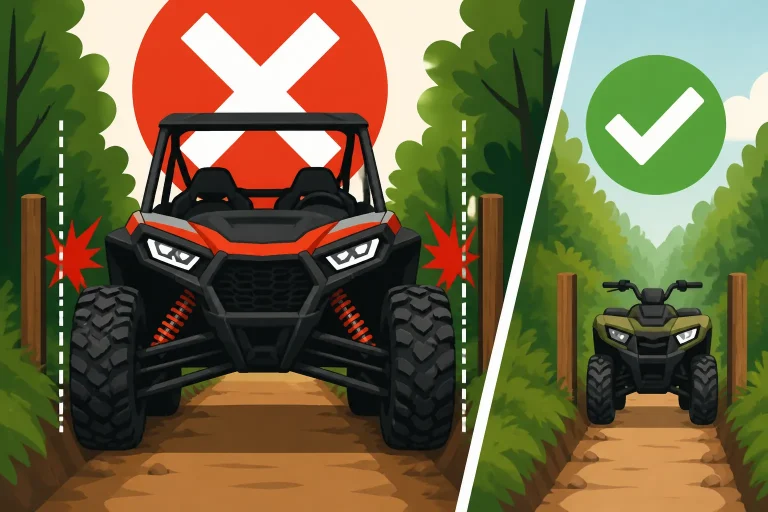
Stay on roads that are open to motorized vehicles. Riding beside a road, cutting across a field, or using an informal trail can still violate the area’s rules. Respect gates and posted closures, including closures that appear to be temporary.
WMA vehicle access may also be limited by time of day. Georgia WMA rules can include a window tied to sunrise; confirm the applicable hours for the area and date rather than assuming that “day before” means around-the-clock access. See Georgia WMA Two-Hour Window Around Sunrise for more detail about how time restrictions fit into WMA riding rules. If your plans involve riding before sunrise or after dark, check Georgia WMA Riding Before Sunrise and Georgia WMA Riding After Sunset.
Age and access conditions may still apply
A date being open does not make every operator eligible. Some WMA rules set a minimum age for operating an ATV or UTV, and separate rules may apply to passengers. Check the specific requirement before bringing a young rider. The relevant overview is Georgia WMA Minimum Age of 16.
Some areas may also have requirements involving hunting licenses, vehicle tags, or other documentation. These are not necessarily identical across all WMAs. For example, requirements can differ depending on whether the land is a WMA on national forest property. Check Georgia WMA Tags and When They Are Needed and Georgia WMA Access for a Quad for related details.
An operator permit for a national forest OHV trail system is a separate matter from WMA road access. It should not be treated as blanket permission to ride on WMA roads, and WMA access should not be treated as authorization to use a designated OHV trail system without its required permit. The location and type of access matter.
Hunting activity and riding purpose are not interchangeable
If access is provided to support a scheduled hunt, do not assume it authorizes a recreational ride unrelated to that hunt. Rules may define who can use the area, why access is available, or what vehicles can do. When the purpose of the exception is unclear, ask the managing office instead of relying on an informal interpretation.
If you are a hunter, plan the machine trip around the applicable access rules and use it only where allowed. If you are not hunting and simply want a place to ride, choose an OHV trail or private riding area that is open to recreational use. A WMA road’s availability on a hunt-related date does not make it equivalent to a public riding trail.
A safe plan for a WMA ride
The most reliable way to avoid a wasted trip—or an access violation—is to verify the date, route, and conditions together before you leave. Make the check close enough to the trip that you can catch a closure or schedule change, and keep a copy of the relevant information with you.
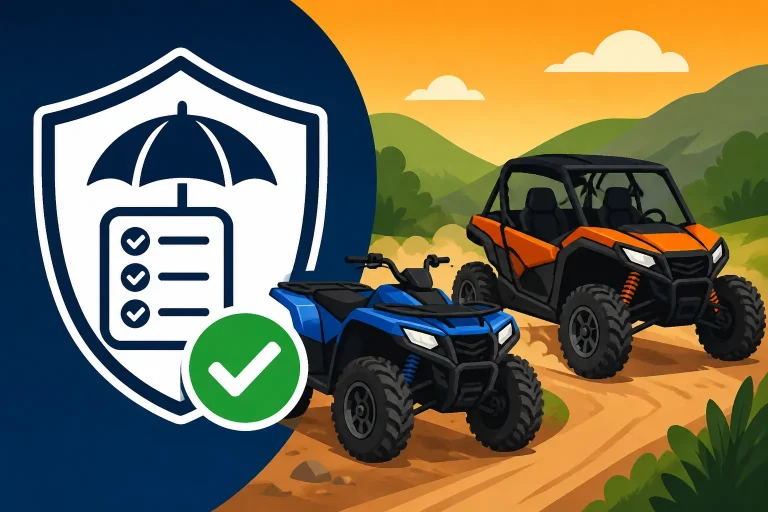
Use this short checklist:
- Confirm the WMA by name, not just the nearest town or trailhead.
- Check that the date is a listed hunt day or an expressly allowed day before.
- Confirm the hunt schedule applies to the area you plan to enter.
- Identify roads open to motorized vehicles and stay on them.
- Check time-of-day, age, license, permit, and tag requirements.
- Look for current gate, weather, seasonal, and emergency closures.
- Carry the required documents and follow posted instructions at the site.
- If the wording is ambiguous, contact the managing agency before riding.
A day-before allowance can be useful for a hunter preparing for a scheduled hunt, but it is not a general-purpose riding pass. The safest interpretation is narrow: use only the dates and roads the specific WMA allows, comply with every additional condition, and do not assume that access on one area’s schedule applies elsewhere.
Disclaimer
This article is for general informational purposes only and does not constitute professional advice. Laws, prices and regulations vary by location and change over time. Consult a qualified professional for guidance on your specific situation.