Two Machines, One Rider, One Permit
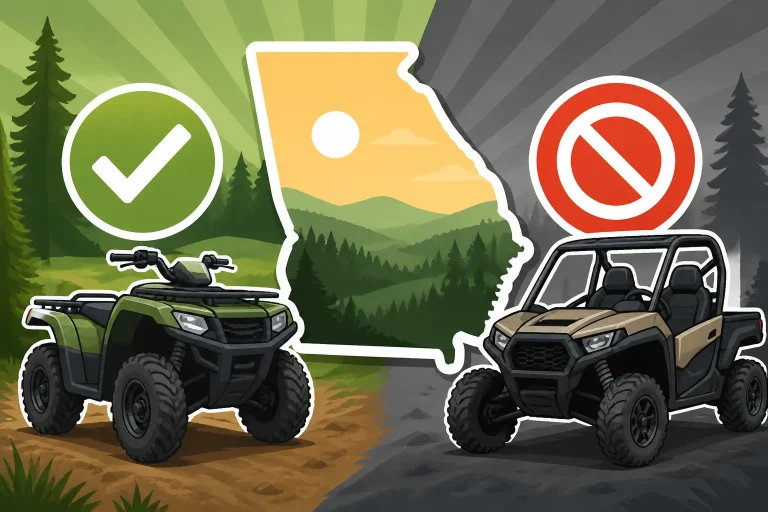
If you ride two ATVs or UTVs in Georgia, it can be unclear whether a forest OHV permit is tied to each machine or to the person operating it. For Georgia’s forest permit system, the key distinction is that the permit is per operator, not per vehicle. That usually means one rider switching machines needs one permit, while two people operating machines need one permit each.
Does one permit cover two machines?
For Georgia’s National Forest OHV permit system, the permit follows the operator rather than a particular ATV or UTV. If you are the only person riding and you switch between two machines during a visit, you generally need one operator permit—not a separate permit for each machine.
This is the practical meaning of Georgia’s Per-Operator Permit, Not Per Vehicle. The permit is associated with the person operating on the system, so buying or bringing another machine does not automatically create a second permit requirement for that same operator.
The rule can be easy to misread because riders may hear “permit per rider” and assume every person in a riding group needs one, including someone who is only a passenger. The central question is whether a person is operating a machine. A person taking the controls and riding as an operator should have their own permit. A passenger who does not operate should check the applicable system and permit conditions, especially when a passenger might take turns driving. For age-specific situations, see Georgia Permit Rules for a Passenger Under 16.
| Riding arrangement | How to think about the forest OHV permit |
|---|---|
| One operator switches between two machines | The operator generally needs one permit, not one per machine |
| Two people each operate a machine | Each operator generally needs a permit |
| One person drives while another rides as a passenger | The driver is the operator; check the system’s passenger conditions |
| Two people take turns operating the same machine | Each person who operates should have their own permit |
| A machine is registered or insured | That does not replace an operator’s forest OHV permit |
The permit does not become a general pass that covers every machine owner, family member or guest. It is not transferable simply because the person who bought it is not riding at that moment. If another person takes over as operator, that person should have their own permit.
There is also an important limit to the answer: this concerns the Georgia forest OHV permit, not every riding location in the state. Private off-road parks, wildlife management areas, and other properties can have separate rules. A forest permit should not be treated as permission to ride anywhere in Georgia.
How to handle switching machines on a ride
If you are taking more than one machine, sort out the operator and permit details before leaving home. That makes it easier to avoid a last-minute scramble at the trailhead, especially if the group changes its plan or different people want to ride.
- List the people who may operate. Count anyone who might take the controls, not just the person who owns the machines or arranged the trip.
- Identify the riding area. Confirm that the destination is one of the forest OHV systems covered by the permit you intend to buy. Rules at a private park or another type of public land may differ.
- Match permits to operators. Arrange a permit for each person who will operate, rather than buying based on the number of machines.
- Check the permit’s dates and terms. A day permit and an annual permit have different uses. Confirm that the permit is valid for your planned visit and that it has not been assigned to someone else.
- Carry the permit as required. Keep it accessible while riding and follow the current instructions for displaying or showing it. A phone can be useful, but a printed backup may help if the battery dies or reception is poor.
- Recheck before changing drivers. If a passenger or another group member is going to ride as an operator, confirm that person has the required permit before the switch.
For instance, if one person brings a quad and a side-by-side and operates each at different times, the number of machines alone does not mean that person needs two forest operator permits. If a second person also drives one of those machines, that person’s permit requirement is separate. The machine being shared does not make the permit shareable.
This distinction is especially useful for families and groups where riders rotate between machines. It is easy to focus on who owns each vehicle, but ownership is not the same as operation. A permit bought by one family member should not be assumed to cover another person who takes a turn driving. If you are unsure how a particular age or passenger arrangement is treated, confirm the details for the specific trail system before riding.
The permit also does not attach permanently to either machine. If you sell one ATV, bring a different one, or switch vehicles during the visit, that change does not by itself make the operator’s permit a vehicle document. The operator still needs to follow the permit conditions and any separate machine requirements that apply at the location.
What the permit does and does not authorize
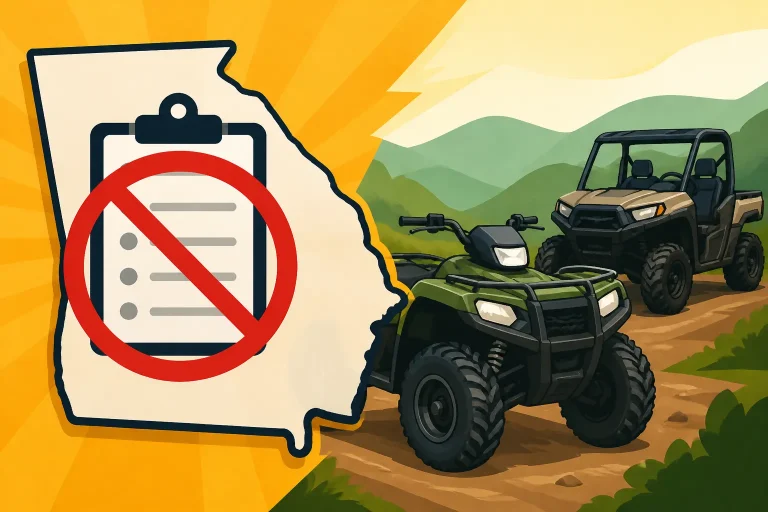
A forest OHV permit is about access to designated OHV riding areas under the applicable permit rules. It does not, by itself, make an ATV or UTV legal to drive on public roads, satisfy vehicle registration rules, or provide access to private property. Think of it as one part of trip preparation, not as a universal authorization.
For example, if the route to a trailhead includes a public road, a forest permit does not grant road access. Georgia road-use rules are separate from forest OHV access rules. Likewise, a permit does not override a closed trail, a gate, a posted restriction, or a system’s machine-width limits. Check the local conditions and closures before setting out.
The permit is also distinct from permission to ride on a wildlife management area. WMA access can depend on its own rules, including where and when riding is allowed. A forest OHV permit does not replace any required WMA authorization or make a non-designated road or trail available. What an Operator Permit Does Not Cover explains why it helps to treat the permit as one specific requirement rather than an all-purpose pass.
If you plan to ride at one of Georgia’s forest OHV systems, an annual permit may be an option for repeat visits, while a day permit may fit a single outing. Compare them against your plans rather than the number of machines you own. Georgia Day Permit vs Annual Permit Value can help you think through which type fits your riding schedule, and One Annual Permit Covers All Six Georgia OHV Systems explains the scope of the annual option. Confirm current coverage, terms, and fees through the official permit channel before purchasing.
A permit also does not guarantee that a trail will be open. Weather, maintenance, seasonal restrictions, or other management decisions can affect access. Check the trail system’s current status close to your trip, and avoid assuming that a permit purchased earlier settles the question of whether a specific route is available.
Common situations that cause confusion
One rider owns two machines
If you are the only operator, having two machines does not mean you need two operator permits for the forest system. Keep the permit available while riding whichever machine you are using, and follow any separate rules for the machine and trail.
Two riders share one machine
If two people take turns operating, both should be prepared to meet the operator permit requirement. One permit should not be treated as transferable from the first driver to the second just because there is only one ATV or UTV.
A passenger wants to drive partway through the trip
Plan for that possibility before arriving. If the passenger might take the controls, check whether they need their own permit and any other required qualifications. Do not assume that being listed as a passenger at the start of the day covers a later turn as operator.
Your group rides at a private park
A forest OHV permit may not be the relevant requirement at a private facility. The park may have its own admission, waiver, age, machine, or passenger rules. Check with the park directly rather than relying on a permit intended for forest OHV systems.
You own the machine but someone else operates it
Ownership does not automatically satisfy the operator’s permit requirement. The person riding as the operator should be the one prepared to show the required permit. If you are arranging permits for a group, count operators, not registered owners or vehicles.
When buying, How to Buy a Georgia Forest OHV Permit is a useful next step. Follow the current instructions for choosing the right permit, keeping proof available, and checking which riding areas it covers. If your plan changes after purchase, review the permit’s transfer and refund terms rather than assuming it can be reassigned to a different rider.
The short version is simple: for Georgia’s forest OHV permit system, count operators, not machines. One person switching between two machines generally needs one permit; two people operating machines should plan on one permit each. Then confirm that the destination, vehicle, and trip conditions meet the separate rules that apply.
Disclaimer
This article is for general informational purposes only and does not constitute professional advice. Laws, prices and regulations vary by location and change over time. Consult a qualified professional for guidance on your specific situation.