Georgia Private Park Pet Rules
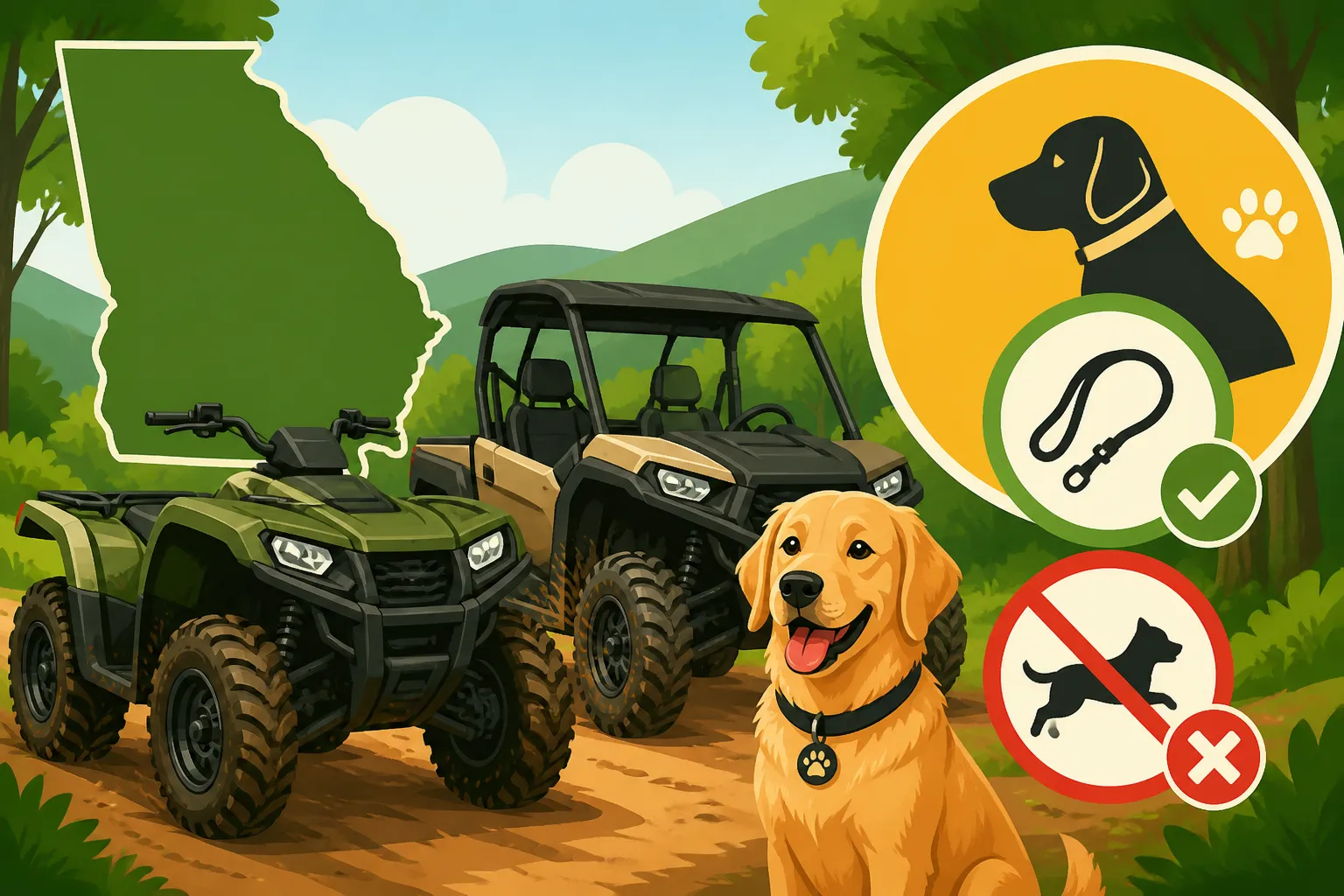
Bringing a dog to a Georgia off-road park can make a riding weekend easier, but “pets allowed” does not tell you where animals may go or what you need to bring. Each private park sets its own rules, and trail access, camping, cabins, and event days can have different restrictions. Confirm the policy before you travel, then plan for noise, heat, and safe separation from moving machines.
Check the park’s current pet policy before you leave
Private parks do not necessarily share one statewide pet policy. One may allow leashed dogs in a campground but not on trails; another may restrict pets during events or in certain lodging areas. Rules can also change with conditions, so a policy you heard about from another rider may not be current.
Look for the park’s official visitor information, but call or message the park if anything is unclear. Ask about the specific location and dates you have in mind—not only whether pets are allowed somewhere on the property.
| Ask the park | Why it matters |
|---|---|
| Are pets allowed on the property on my visit date? | A general policy may have event-day or seasonal exceptions. |
| Where are pets permitted? | Campgrounds, cabins, common areas, and trails may have different rules. |
| Is a leash required, and are there length or control requirements? | “Leashed” may not answer what the park expects in crowded areas. |
| Are there breed, size, or number limits? | Restrictions may apply to particular facilities or accommodations. |
| Do you require vaccination records or other documentation? | It is better to confirm before arriving than to discover a requirement at check-in. |
| Are pets allowed in cabins or rental units? | Property rules and cleaning or damage policies can vary. |
| What are the waste-cleanup rules? | Ask where waste must go and whether bags are provided. |
| Are there designated pet areas? | Knowing the location helps you plan walks away from riding traffic. |
| What happens if a pet becomes disruptive or unsafe? | Understand the park’s response and whether you may need to leave. |
If you cannot find a clear answer, treat that as a reason to contact the park, not as permission to bring your pet everywhere. Ask for the relevant rule in writing or save the park’s written response. That is especially useful when you are booking lodging, organizing a group trip, or traveling a long distance.
For a broader look at how privately operated riding areas differ, see Georgia Private Off-Road Parks Compared. If your trip includes an overnight stay, check the park’s Georgia Private Park Camping Rules and [Georgia Private Park Quiet Hours] as well. A pet policy for a campsite may not cover a cabin, and campground rules may address noise or shared spaces separately.
Confirm the details that affect your specific trip
Tell the park what you plan to do: ride for the day, camp, rent a cabin, attend an organized ride, or bring more than one animal. Ask whether the policy applies to all of those parts of the visit. If you are going with a group, confirm that bringing a pet will not conflict with the group’s reservation or event arrangements.
Also ask whether the park requires a waiver or additional check-in steps for animals. Some parks may ask owners to acknowledge pet-related rules, but requirements differ. Read any forms before signing, and do not assume a general visitor waiver covers every pet-related issue. The park’s Georgia Private Park Waiver Forms resource can help you think through the questions to ask.
If the park allows pets only in certain areas, request a map or a simple description of the boundaries. “Pets are allowed at camp” may mean the campsite itself, rather than nearby trails, buildings, or shared recreation areas. Confirm where you can walk your dog and where you must keep it away from riding activity.
Plan for trails, campgrounds, and lodging separately
A private off-road property can include very different environments: busy staging areas, narrow trails, campgrounds, cabins, parking areas, and quiet corners for walking. A rule that works in one place may not be appropriate in another. Plan around the animal’s access, comfort, and safety in each setting.
Trails and riding areas
Do not assume that a pet permitted on the property may accompany you on a trail. Ask directly whether pets may enter riding areas, whether they must remain leashed, and whether there are routes or hours when animals are not allowed. Even where trail access is permitted, a crowded ride or a narrow trail may be a poor setting for a dog.
ATVs and UTVs can create sudden noise, dust, and fast-moving traffic. A dog that behaves calmly at home may react differently around engines, other animals, or unfamiliar riders. Keep the pet well away from staging areas and vehicle paths unless the park explicitly directs otherwise. Never rely on a pet’s recall as a substitute for the park’s leash rule.
Do not carry a dog loose on a machine or place it where it could fall, be struck, or interfere with the driver. A pet riding in a UTV should only be considered if the vehicle, restraint, and park rules make the arrangement safe; ask the park and use a secure setup intended for that purpose. A lap, open cargo bed, or unsecured seat is not a safe substitute.
If your dog is anxious around loud equipment, plan for it to stay with a responsible person away from active riding—or leave it at home. A pet should not be tied near a trail, parked machine, or shared road while its owner rides.
Campgrounds and shared spaces
Campgrounds bring pets close to other visitors, children, wildlife, and unfamiliar dogs. Ask whether dogs must be leashed at all times, where waste should be disposed of, and whether barking can lead to a warning or removal. Keep your pet from entering another campsite, approaching other animals without permission, or roaming around parked machines.
Bring a leash and waste bags even if the park says it provides some supplies. Pack water and a bowl, and choose a place where your pet can rest without blocking a walkway or sitting close to vehicle traffic. If the campground has designated pet areas, use them rather than assuming any open space is suitable.
For a trip that includes cleanup after a muddy ride, check whether the property has a wash area and whether pets may enter it. A facility listed among Georgia Riding Areas With Wash Stations may be useful for cleaning machines, but it does not automatically mean animals are allowed in or around that area. Confirm separately.
Cabins and other lodging
Pet-friendly lodging can have separate conditions from pet access to the rest of the park. Ask whether animals are allowed inside the specific cabin or rental unit, whether you need to disclose the pet in advance, and whether the park has restrictions on leaving an animal unattended. Confirm any cleaning, damage, or noise rules before making a reservation.
Bring the pet’s familiar bedding, food, bowls, and any medications. Keeping the animal in a familiar resting area can help reduce stress and barking. Do not leave a pet in a cabin or vehicle for a long stretch without checking that the environment is safe and that the park’s rules allow it.
Keep your pet safe around off-road activity
The owner is responsible for anticipating hazards that may not be obvious to a first-time visitor. A private park is not a quiet neighborhood walk: machines may start unexpectedly, trails can be dusty or muddy, and a pet may encounter unfamiliar people and animals. Good preparation helps protect your pet and other guests.
Use a secure leash and maintain distance
Follow the park’s leash rule even if your pet is well trained. Keep enough distance from machines and trailers that a sudden movement, noise, or passing vehicle cannot put the animal in danger. Avoid tying a leash to a machine, trailer, gate, or other object that could move.
A long lead can be difficult to control in a crowded or active area. Ask the park what it considers acceptable, and use a setup that lets you keep the animal close without creating a trip hazard for others. If your dog cannot remain calm on a leash near engines, choose a quieter part of the property or arrange for it to stay elsewhere.
Prepare for heat, water, and changing conditions
Georgia heat and humidity can make outdoor activity hard on animals. Provide shade and fresh water, take breaks, and watch for signs that your pet is struggling, such as unusual panting, weakness, confusion, or difficulty moving. Move the animal to a cooler place and seek veterinary help if you are concerned.
Never assume a pet can stay safely in a parked vehicle while you ride. Vehicle interiors can become dangerous, and the animal may be unable to get away from heat or distress. Arrange for a person to stay with the pet in an appropriate, shaded location, or make other plans.
Bring a collar or harness with current identification, a leash, water, food, waste bags, and any regular medication. Keep vaccination or health records accessible if the park asks for them. If your pet has a medical condition, discuss the trip with a veterinarian before going somewhere remote or physically demanding.
Respect other visitors
Not everyone at a riding park is comfortable around dogs. Some visitors may be allergic or afraid, and other dogs may not be social. Keep your pet from approaching people or animals without permission. Pick up waste promptly and follow the park’s disposal instructions.
If barking, lunging, or persistent distress develops, move away from the busy area and reassess whether the pet should remain. The park can enforce its rules, and a pet that disrupts other guests may affect the visit for the whole group. A calm exit is better than waiting for a conflict.
A simple plan for bringing a pet
Use this checklist before setting out:
- Read the park’s official rules. Check the property’s pet policy and any separate campground, lodging, or event rules.
- Ask about your exact plans. Confirm whether your pet may come to the riding area, campsite, cabin, or other location you intend to use.
- Clarify leash and documentation requirements. Ask about vaccination records, designated areas, waste disposal, and any limits on animals.
- Prepare a safe place for the pet. Decide who will supervise it while others ride, and do not leave it unsecured near machines.
- Pack essentials. Bring water, food, a leash or harness, identification, waste bags, medications, and a familiar resting item.
- Make a backup plan. If the pet cannot tolerate the noise, heat, or activity—or the park’s policy is restrictive—arrange care elsewhere.
If you are unsure whether the visit is a good fit, describe your pet’s temperament and ask the park staff for a practical recommendation. Staff can explain the site’s layout and rules, but they cannot guarantee that every animal will be comfortable. Be prepared to skip a riding session or change plans if your pet becomes stressed.
Pet access at a private park is separate from permission to ride. Check which areas are open to your machine, what permits or fees apply, and what equipment or age rules govern the ride. Georgia ATV Trails: Where You Can Legally Ride offers a broader starting point for understanding that distinction, while each private park’s current instructions should guide your visit.
Disclaimer
This article is for general informational purposes only and does not constitute professional advice. Laws, prices and regulations vary by location and change over time. Consult a qualified professional for guidance on your specific situation.