Georgia Riding Areas With Wash Stations
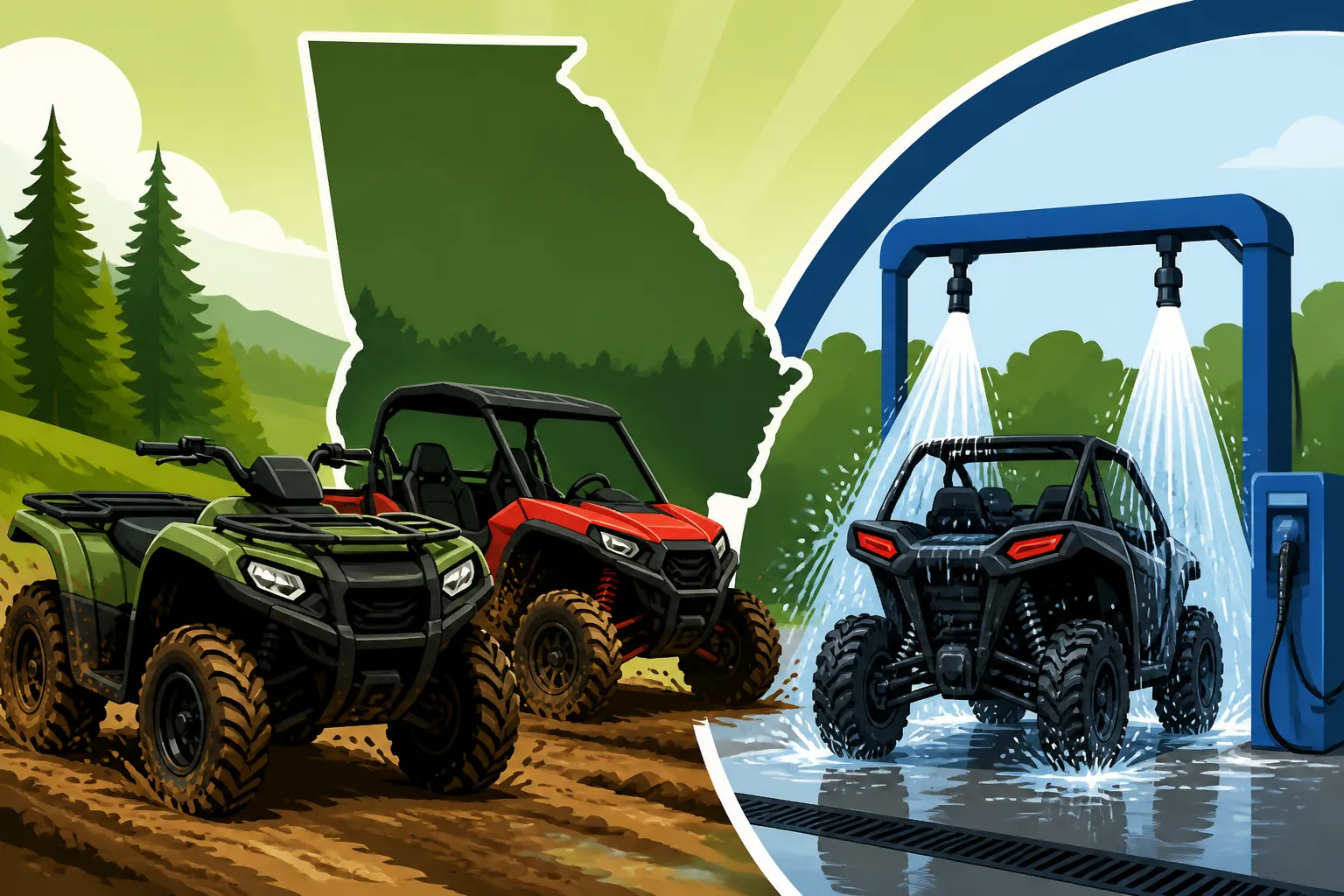
A muddy Georgia ride can leave red clay packed into wheel wells, skid plates, and suspension before you have even loaded the trailer. Finding a wash station near the trail saves cleanup at home, but facilities vary by property and can change. This guide explains where to look, what to confirm before you drive, and how to wash your ATV or UTV without damaging the machine or the riding area.
Where to look for Georgia riding areas with wash stations
A wash station is more likely to be an amenity at a private off-road park or campground than at a public forest trailhead. That does not mean every private park has one, or that a public riding area never will. The practical move is to treat a wash station as an item to confirm directly, not an amenity to assume.
Private off-road parks are the first places to check
Start with private parks if washing your machine on-site is important. They may have dedicated wash areas, water access, or other facilities for riders, but the details can differ: one property might offer a designated wash bay, while another may only have a hose connection or no machine-washing setup at all. Ask what is available for the specific day you plan to visit.
In north Georgia, riders may be comparing places such as Iron Mountain Resort or Highland Park. Check each park’s current rules and facility information before making a reservation or towing several hours. Ask whether the wash area is open to day riders, whether you need to bring a hose or nozzle, and whether using it has a separate fee or time restriction. Do not treat a campground shower, drinking-water spigot, or general-purpose hose as permission to rinse a vehicle.
A wash station can also be temporarily unavailable because of maintenance, water restrictions, cold weather, or heavy use. If you are planning a weekend around a specific facility, contact the park shortly before leaving and get clear directions to the wash area. For a broader comparison of private venues and what to consider before choosing one, see [Georgia Private Off-Road Parks Compared].
Public forest trailheads may not provide vehicle washing
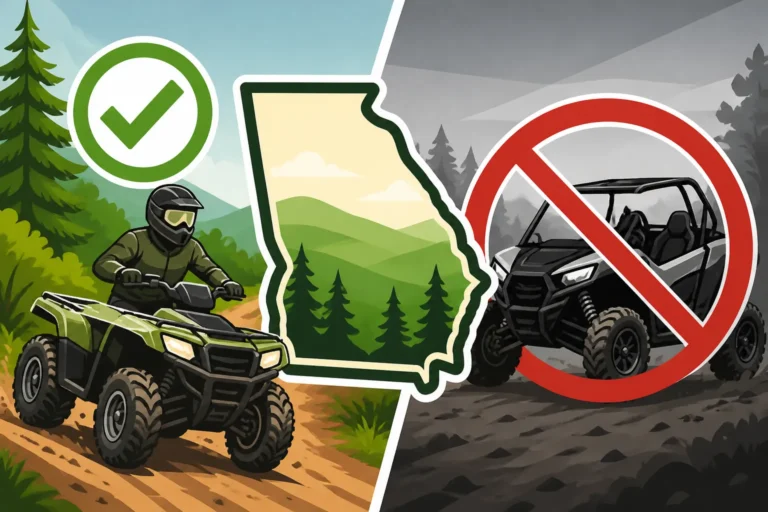
Georgia’s national forest OHV systems, including Houston Valley, Beasley Knob, Whissenhunt, Town Creek, Oakey Mountain, and Davenport, are worth researching for riding access and trail conditions. But a trailhead’s parking area should not be confused with a vehicle wash facility. Public recreation sites may have limited infrastructure, and water available for another purpose is not automatically intended for cleaning an ATV or UTV.
Before counting on a wash after a public-land ride, check the trail system’s official notices and contact the relevant ranger district if the information is unclear. Ask specifically whether vehicle washing is permitted at the trailhead or elsewhere on the property. If the answer is no, plan to clean the machine at home or at a properly equipped commercial facility rather than rinsing it beside the parking lot.
Trail amenities are not interchangeable. A restroom, picnic area, water source, or campground nearby does not confirm that riders can wash machines. For a better sense of what basic trailhead facilities may or may not include, read [Georgia Trailhead Restrooms and Water]. For riding-area updates that could affect your trip, [Georgia Trail Conditions Before You Drive] is also useful.
How to confirm a wash station before your trip
A quick search can turn up old posts, rider photos, or outdated amenity lists. Rather than relying on a single listing, confirm the details that affect your plan: whether the wash area exists, whether it is operating, who may use it, and what equipment or rules apply.
Ask detailed questions instead of just asking whether washing is available
When you call or message a park, ask whether there is a designated machine wash station and whether it is open to the public or only to overnight guests. Find out whether it is included with admission, whether you need to bring a hose or pressure washer, and whether there are limits on when you can use it. If you have a large side-by-side, ask about space to maneuver and park while cleaning.
It is also worth asking what kind of water setup the park provides. A station may have a hose but limited pressure, or it may have a pressure washer with rules about use. Ask whether the facility is suitable for rinsing mud from underbody components, or whether the area is intended only for a light rinse. If you are traveling with more than one machine, check whether there is enough capacity for several riders to clean up without blocking the exit or tying up the wash area.
Finally, ask about wastewater and cleaning products. Some places may restrict detergents or require riders to keep mud and runoff out of drains, creeks, and stormwater areas. A clear answer helps you avoid an awkward conversation at the end of the ride—and prevents you from assuming that a convenient spigot is a wash bay.
Use maps to plan, then verify amenities directly
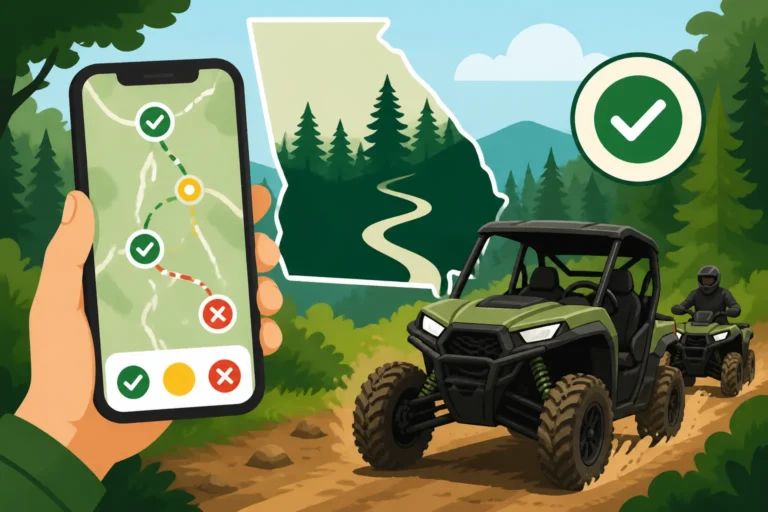
Trail maps and navigation tools can help you plan the route, identify access points, and understand how far a riding area is from nearby services. onX Offroad can be useful for route planning and orienting yourself around an area, but a mapped trail or point of interest does not by itself confirm that a wash station is open or that riders are allowed to use it. Check the venue’s own information for facility rules.
Look at the full trip, not just the trail entrance. If you are riding near Dalton or Chatsworth, for example, consider how far the trailhead is from your planned overnight stop or post-ride cleanup option. A wash station that is technically nearby may be on private property or may not accept drive-up visitors. Map the route back to your lodging or trailer parking before you leave the riding area, especially if you do not want to tow a mud-covered machine through town.
For public forest riding, use maps as navigation aids rather than proof of access or amenities. onX Offroad can help you keep track of your route, but confirm trail status and property-specific rules through the land manager. You can also review [How to Check Georgia Forest Trail Status] before heading out. That extra check matters after heavy rain, when closures and muddy conditions may affect both the ride and your cleanup plan.
| What to confirm | Why it matters | Useful question |
|---|---|---|
| Wash station is operating | Facilities may be closed or under maintenance | “Is the machine wash area open on the day we visit?” |
| Who may use it | Some facilities may be limited to certain guests | “Can day riders use it, or is it for overnight guests?” |
| Equipment provided | A hose connection is not the same as a pressure washer | “What should we bring to wash the machine?” |
| Fees or time limits | Access may have separate rules | “Is washing included, and are there use limits?” |
| Wastewater rules | Runoff may be restricted | “Are detergents allowed, and where should muddy runoff go?” |
| Vehicle access and space | Large machines need room to turn and park | “Can a four-seat UTV use the wash area comfortably?” |
What Georgia mud means for your wash plan
Georgia red clay can cling to a machine long after surface mud has dried. A quick rinse may make the vehicle look cleaner while leaving packed material around the frame, suspension, and underbody. Your cleanup plan should account for the kind of riding you expect, how wet the trails are, and what the wash facility can realistically handle.
Red clay is easier to deal with before it hardens
Clay can collect behind fender liners, around control arms, under floorboards, and near the skid plate. If it dries there, it may take more time and careful rinsing to remove. A wash station is most helpful when you can clean the machine soon after riding, before the mud becomes a hard layer that hides damage or makes maintenance more difficult.
You do not need to blast every part of an ATV or UTV at close range. Keep the nozzle at a sensible distance, avoid forcing water into electrical connections or seals, and take extra care around bearings, radiator fins, and vulnerable wiring. A strong pressure washer used carelessly can create problems that a simple rinse would not. If the station provides only a hose, let the water soften packed clay before trying to remove it with a brush or plastic scraper.
A short walk-around after washing can catch what the spray missed. Look under the machine, check that the radiator area is not still clogged with leaves or mud, and inspect the tires and wheel wells. For more on why clay deserves attention between rides, see [Georgia Red Clay and What It Does to a Machine] and [Washing Clay Off Before It Sets].
Match the riding area to your machine and conditions
A trail that feels manageable in dry weather can become a different challenge after rain. A larger side-by-side may encounter narrow sections or trail restrictions that do not affect a smaller ATV, while wet clay can make even familiar routes slippery. Check your machine’s width and the riding area’s requirements before hauling out. [Georgia Trail Widths and What Fits] can help you think through whether your machine is suitable for a particular system.
If rain is expected, ask whether the park has special rules for muddy conditions or whether trails close when they become too wet. A wash station is not a reason to ride through conditions that damage trails or put you at risk. Ruts can deepen quickly, and waterlogged routes may be closed to protect the riding surface. Check [Georgia Trail Closures After a Storm] before setting out, and respect posted closures even if the parking area is open.
Route choice can affect how much cleanup you need, too. On a one-way trail system, follow the marked direction and avoid stopping in a narrow or busy section to inspect a muddy machine. [Georgia Trail Etiquette on One-Way Loops] offers more on sharing those routes safely. Plan the ride so that washing happens after you are off the trail, in an area where it is permitted.
A practical wash-and-load routine
A little preparation can make the end of the ride less stressful. This is especially true when you are traveling with family, loading more than one machine, or trying to get home before dark. Build cleanup into the schedule instead of treating it as a last-minute task.
Before you leave home
Call the riding area and confirm its wash rules. Pack a small cleanup kit even if you expect the park to have a wash station: gloves, a soft brush, a microfiber cloth, a plastic scraper, and a basic tool for removing visible debris. Bring a hose or nozzle only if the property permits it and the facility does not provide one. Avoid packing detergents until you know they are allowed.
Think about how the machine will be transported if washing is unavailable. A tarp or washable trailer mat can help keep loose mud from spreading, but it should not block safe tie-down points or obscure straps. Bring extra tie-downs and check that your load is secure after cleaning, because rinsing can make straps or contact points wet and slippery.
Before the ride, check the route, machine-width requirements, and weather. onX Offroad can support your navigation planning, while the park or land manager remains the place to confirm access, facility rules, and closures. If your trip includes camping, review [Georgia ATV Trails With Camping] as part of your planning, but confirm separately whether your chosen campground allows vehicle washing.
After the ride
Use the wash area only as directed. Park where staff indicate, keep the machine out of traffic, and avoid letting runoff flow into a creek, drain, or sensitive area. If riders are waiting, wash efficiently and move your machine when you are done so the next person can get in. Be considerate with noise and water use, particularly near campsites or other guests.
Once the machine is clean enough to transport, check for mud packed around moving parts and remove anything that could fall onto the road. Wipe the seat and controls, then inspect the machine for obvious damage, loose fasteners, or a torn boot. A rinse is not a substitute for maintenance, but it makes that inspection easier and can prevent dried mud from hiding a new problem.
If there is no permitted wash station, do not improvise by rinsing the vehicle at a public trailhead or in a nearby stream. Load it safely and use an appropriate wash location later. Keep in mind that mud on the trailer can also create a mess at home; a brush and a container for dirty gear can make the return trip much easier.
Make the wash station part of the destination decision
When two riding areas offer the kind of trails you want, the better choice may be the one with a confirmed, practical cleanup option. But weigh that benefit against trail access, machine restrictions, travel time, parking, and the property’s rules. A wash facility is helpful; it should not override whether the riding area is a good fit for your group or vehicle.
Make a simple checklist for each potential destination: wash access confirmed, hours or restrictions understood, machine width accepted, trail conditions checked, and a backup cleanup plan ready. If you are planning a group ride, share those details before everyone sets out. It saves riders from arriving with different assumptions about where they can wash or whether the facility is available.
Most importantly, confirm directly with the property before each trip. Wash stations are useful conveniences, but their availability and rules belong to the individual park or land manager. A few questions before you tow can prevent a long drive home with a machine full of Georgia clay—and help keep the trails, parking areas, and waterways cleaner for the next ride.
Disclaimer
This article is for general informational purposes only and does not constitute professional advice. Laws, prices and regulations vary by location and change over time. Consult a qualified professional for guidance on your specific situation.