Georgia ATV Trails That Ban Side-by-Sides
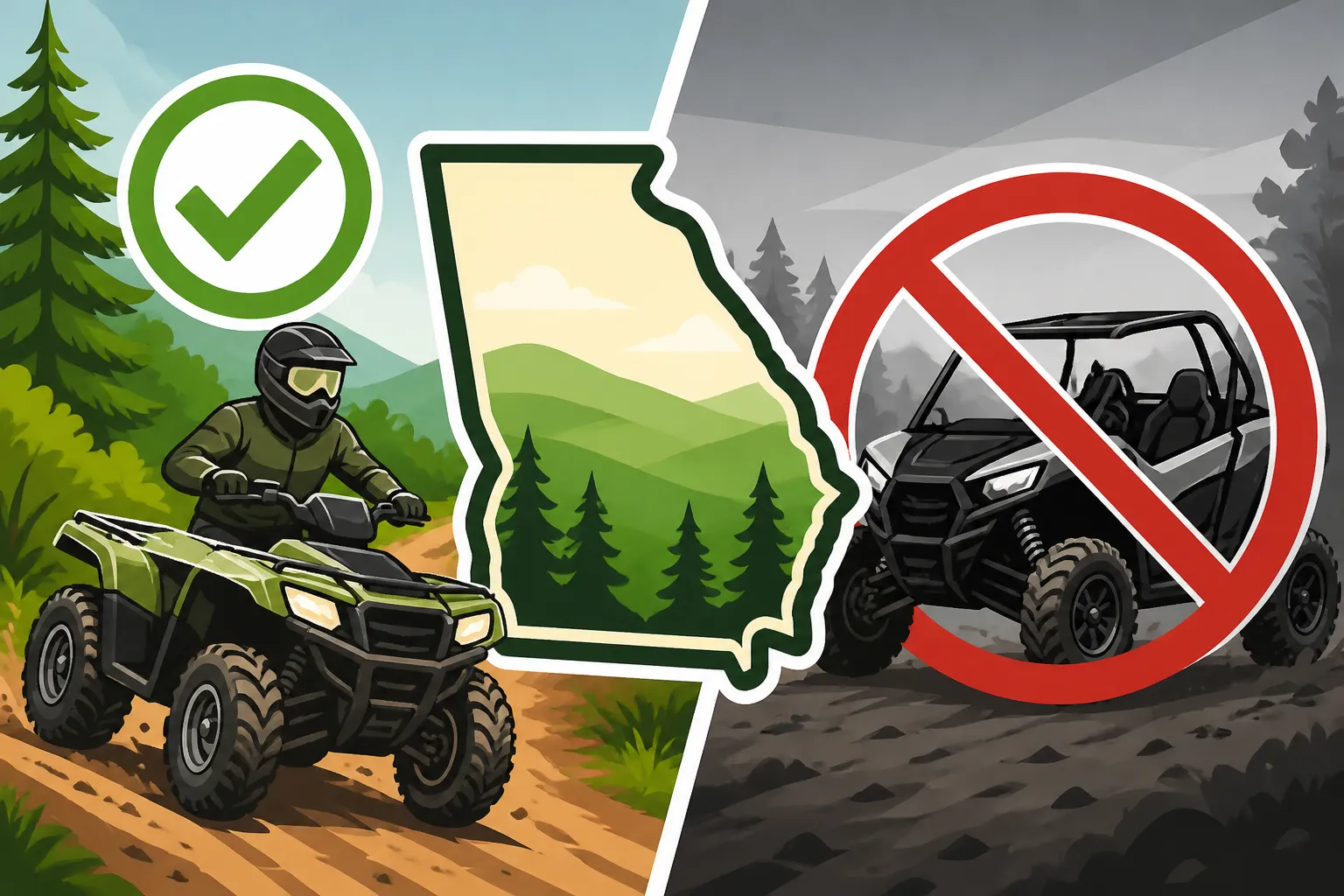
A side-by-side can look trail-ready in your driveway and still be turned away at a Georgia trailhead. The tricky part is that “ATV trail” doesn’t automatically mean “UTV trail,” and width limits, vehicle-class rules, and closures can vary by riding area. This guide explains how to spot restrictions, avoid a wasted tow, and choose a route that fits your machine.
Why some Georgia ATV trails exclude side-by-sides
Trail width is often the first restriction
Many trails built for ATVs and motorcycles are simply too narrow for a side-by-side. A UTV may be physically unable to pass between trees, negotiate tight turns, or fit safely through a narrow section—even if the machine is legally allowed elsewhere in the same general area.
At Houston Valley OHV Trail System near Dalton, the 50-inch width limit is a key reason many side-by-sides are turned away. A machine that is wider than the posted limit is not a suitable fit, no matter how capable it is or how carefully the driver plans to ride. Read [Georgia's 50-Inch Width Cap at Houston Valley] before making the drive, and check the riding area’s current information for any route-specific restrictions.
Measure your machine at its widest point, including accessories that extend beyond the body. Tires, wheel spacers, aftermarket fenders, mirrors, and other add-ons can affect the overall width. A machine advertised as narrow may not remain within a trail’s limit once it has been modified.
A width limit and a vehicle ban are not always the same thing
Trail rules can be worded in different ways. One area may set a maximum width, while another may specify that routes are for motorcycles and ATVs only. Those are not interchangeable rules. A narrow side-by-side might meet a width requirement but still be excluded if the trail system does not permit that vehicle class.
It also helps to separate a restriction on one route from a restriction on an entire riding area. A park might welcome UTVs but designate some trails for smaller machines. Conversely, a narrow trail network may not have any side-by-side routes at all. Don’t assume that an open parking area or a shared trailhead means every route is open to every machine.
If a restriction is unclear, ask the managing office or park staff a specific question: “Is my side-by-side allowed on this trail system, and what width is measured at check-in?” That is more useful than asking only whether the area is “UTV friendly.” For a closer look at Houston Valley’s restrictions, see [Why Houston Valley Turns Away Side-by-Sides].
How to check whether your machine fits before leaving home
Confirm the vehicle rule and the width rule separately
Before loading up, look for both the allowed vehicle types and any maximum-width rules. Check the information for the specific riding area and, where trails have different rules, for the individual route. A general statement that an area has ATV trails is not enough to establish that side-by-sides are allowed.
Use the machine’s actual measured width rather than relying on a brochure, trim name, or online listing. Measure across the widest point, usually from the outer edge of one tire to the outer edge of the other. If the trail authority specifies how width is measured, follow that method. When your measurement is close to the limit, ask the staff whether accessories or tire changes affect eligibility.
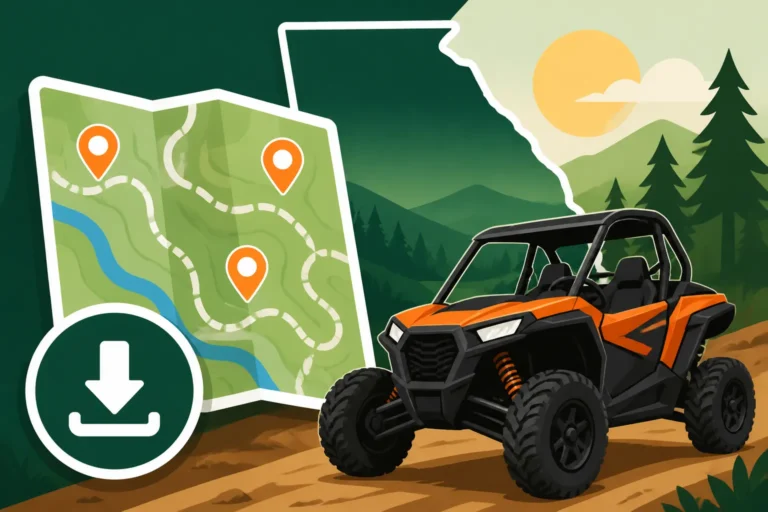
A map can be helpful for planning, but it is not a substitute for current rules or closure notices. Mapping tools such as onX Offroad can help you review routes and understand the surrounding trail network; confirm vehicle restrictions with the land manager or park before you tow. For a practical measuring walkthrough, read [Measuring Your Machine Before You Tow] and [Georgia Trail Widths and What Fits].
Check access, closures, and trail conditions too
A trail can be a poor match even when your machine meets the width requirement. Rain, erosion, maintenance work, seasonal closures, and temporary access changes can affect where you can ride. Georgia’s red clay can become especially challenging after heavy rain, and a narrow route that is difficult when dry may be unsuitable for a wider or heavier machine in wet conditions.
Check the trail system’s updates shortly before departure, not just when you first plan the trip. If you are heading into the North Georgia mountains, road and trail access can change with weather or management decisions. Ask whether the trail is open to your vehicle type that day, whether there are active closures, and whether the route has conditions that make a side-by-side a poor choice.
For help distinguishing trail areas and access types, start with [Georgia ATV Trails: Where You Can Legally Ride] and [Georgia's Six National Forest OHV Systems]. You can also use [Georgia Trail Conditions Before You Drive] as a reminder to check the situation close to your trip. onX Offroad may be useful for route planning, but treat official notices and staff guidance as the final word on closures and allowed vehicles.
| What to check | Why it matters | What to confirm |
|---|---|---|
| Vehicle class | A route may be limited to motorcycles or ATVs, regardless of width | Whether side-by-sides are specifically permitted |
| Maximum width | A machine over the posted limit may be refused access | The allowed width and how it is measured |
| Machine width | Accessories can make a machine wider than its listed dimensions | Actual tire-to-tire or widest-point measurement |
| Route-by-route rules | Restrictions can differ within one riding area | Which trails are open to your machine |
| Current closures | Weather or maintenance may change access | Whether the area and intended routes are open |
| Trail surface and difficulty | Narrow, muddy, or steep sections may not suit every machine | Conditions and terrain appropriate for your vehicle |
Georgia riding areas and side-by-side restrictions
National Forest OHV trails need individual checking
Georgia’s National Forest OHV areas are not all interchangeable. Trail design, allowed vehicle types, and route conditions can differ between systems, so it is risky to assume that a rule from one trail applies to another. Some routes are narrow and better suited to motorcycles or smaller ATVs; others may have vehicle or width restrictions that exclude side-by-sides.
Start with the specific trail system you plan to visit, then verify the permitted vehicle class and any width cap. If you are comparing several areas, write down the requirements rather than relying on memory. That can prevent a frustrating situation where one machine in your group fits the rules but another does not.
A useful comparison is [Georgia ATV Trails That Allow Side-by-Sides]. It helps frame the distinction between areas that offer appropriate UTV routes and trail systems where a side-by-side may not be permitted. Keep in mind that permission at one site does not carry over to another, and a system’s status should be checked before each trip.
Private parks may offer more options, but rules still vary
Private off-road parks can be a better starting point for riders who want to bring a side-by-side, but “private park” does not automatically mean unrestricted access. Parks may divide routes by width, difficulty, vehicle type, or rider experience. Some may have broad UTV trails alongside tighter ATV-only sections.
When comparing parks, ask whether the trails you plan to ride are open to your machine—not just whether the facility accepts side-by-sides. Ask about width limits, passenger requirements, required safety equipment, and whether recent rain has affected access. Also check whether the park requires advance arrangements or has rules that affect the vehicle you are bringing.
A broad overview such as [Georgia Private Off-Road Parks Compared] can help you identify the kinds of riding areas to research. Use [Georgia ATV Trails That Allow Side-by-Sides] as a companion when you want to compare UTV access with narrower ATV-focused routes. onX Offroad can help you get a sense of the surrounding route layout, but park staff can clarify the rules that apply at the gate.
A practical pre-trip checklist for side-by-side riders
Ask the right questions before you load the trailer
A quick phone call or message can save hours of driving and unloading. Be ready to provide your machine’s make and model, its measured width, and any relevant modifications. If the machine is close to a posted limit, explain how you measured it and ask whether the park or trail authority uses a particular measurement method.
Ask these questions in plain terms:
- Are side-by-sides allowed on this trail system?
- Is there a maximum vehicle width?
- Does the rule apply to every trail or only certain routes?
- Are there current closures or weather-related restrictions?
- Are any permits, inspections, or vehicle documents required?
- Is there a recommended route for a machine of my size?
If you are not given a clear answer about whether your machine is allowed, do not treat silence as permission. Look for an official trail description or contact the organization responsible for that land. A map or social post can be useful context, but it may not reflect current access rules.
Keep a backup plan that matches your machine
It is frustrating to arrive ready for a riding day and discover that your side-by-side cannot use the trails. A backup plan helps, especially when traveling with a mixed group of ATVs and UTVs. Choose another area that explicitly permits your vehicle type, or agree in advance that the group will ride a suitable route rather than splitting up unexpectedly.
When comparing options, note the drive, trail type, vehicle restrictions, and current operating status. Save the relevant trail information on your phone, and consider keeping an offline route map if you expect weak service. onX Offroad may help with route research and offline planning, but do not rely on an app alone to establish that a trail is open or that your machine is permitted.
Finally, make sure your vehicle is ready for the route you choose. Secure loose cargo, check tires and lights, and bring recovery equipment appropriate to the terrain. A machine that fits the width rule can still struggle on steep, muddy, or rocky trails. Choosing a trail that matches both the machine and the conditions is part of avoiding trouble—not just getting past the entrance.
Disclaimer
This article is for general informational purposes only and does not constitute professional advice. Laws, prices and regulations vary by location and change over time. Consult a qualified professional for guidance on your specific situation.