Creek Crossings in the Cohutta Area
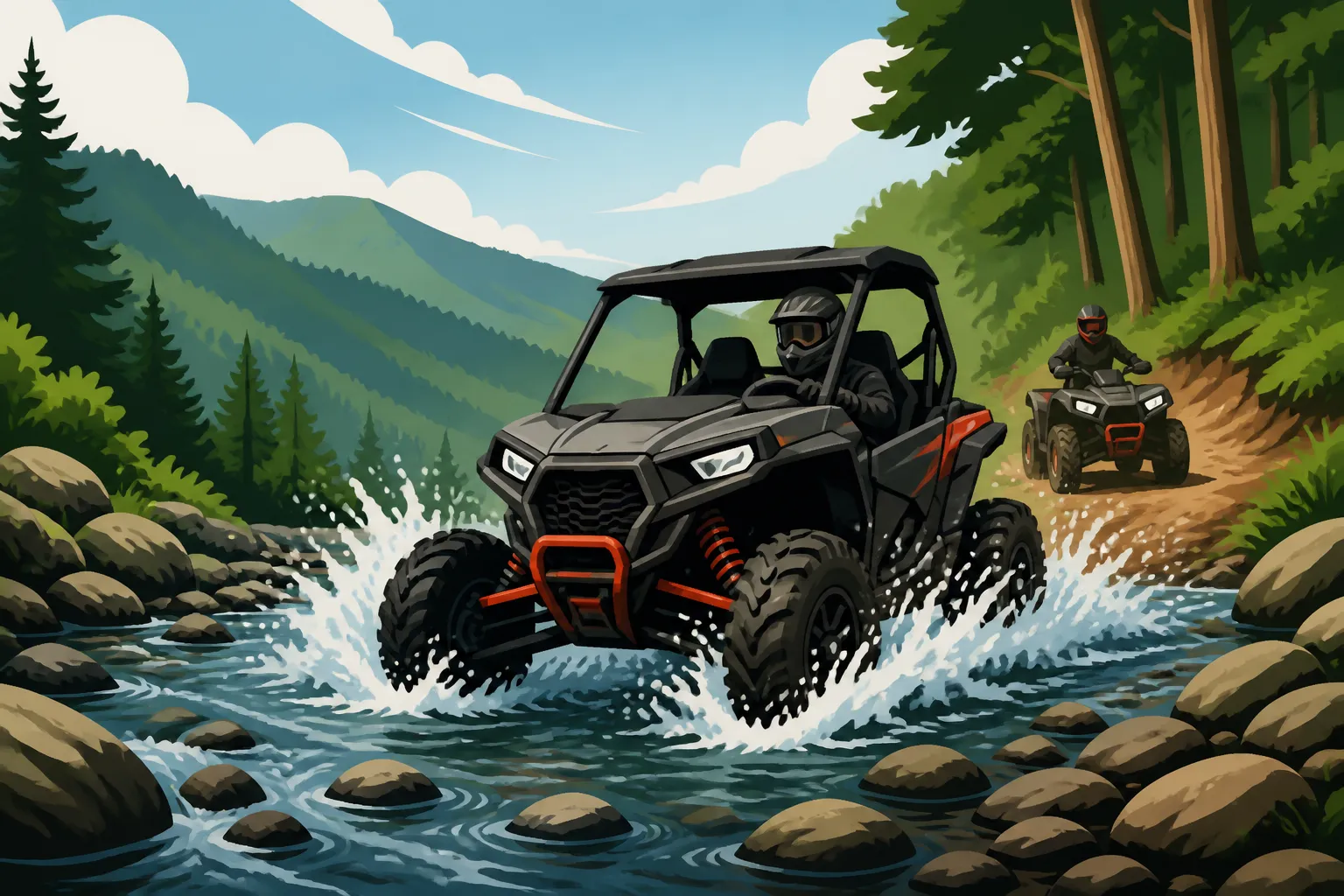
Creek crossings in the Cohutta area can turn a relaxed ride into a risky recovery fast: mountain water may be deeper, colder, or quicker-moving than it looks from the bank. This guide explains how to assess a crossing, when to turn around, what to carry, and how to stay on legal routes in North Georgia’s forest riding areas.
Why Cohutta creek crossings need extra care
Water can hide a changing trail
A creek crossing is not a fixed obstacle. Recent rain can raise water levels, strengthen the current, and wash loose rocks or branches into a familiar route. Even when the surface looks calm, moving water can push a machine sideways, especially where the creekbed slopes or the current runs diagonally across the trail.
The water’s appearance can also make depth difficult to judge. Reflections and muddy water obscure holes, ledges, and uneven footing. A crossing that was manageable during one visit may be unsafe after a storm or after a period of heavy rain upstream. Don’t assume a spot is safe because you or someone else crossed it before.
The Cohutta area’s mountain terrain adds another complication: conditions can differ between the trailhead and a creek farther along the route. A dry start doesn’t tell you what has happened higher in the watershed. Check the forecast and trail status before leaving, and be prepared to turn around if conditions are not what you expected. For broader trip planning, see Georgia Trail Conditions Before You Drive and Georgia Trails That Close After Rain.
A small mistake can become a recovery problem
Water can enter an engine’s air intake or damage electrical components, depending on the machine and how far it is submerged. A submerged or stalled vehicle may also be difficult to recover safely. The risks extend beyond the machine: cold water, slippery rocks, and a strong current can make a person lose footing while trying to help.
A creek crossing also puts extra strain on tires, steering, and traction. Rocks that appear stable from the bank may roll under a tire. Mud or algae can make the bottom slick, while a submerged rut may pull the machine off its intended line. Trying to accelerate sharply through uncertain water can reduce control rather than improve it.
The most useful mindset is simple: the crossing is optional; getting everyone back safely is not. If you can’t see or confidently assess a safe route, or if the current looks strong enough to affect your footing, don’t enter. Turning around is not a failure. It is a sound decision when the alternative is risking a stranded machine or an injury.
How to assess a crossing before entering
Pause, observe, and check the route
Stop well back from the water, on stable ground where you are not blocking the trail. Take time to look at the entry and exit points, the likely depth, the direction of the current, and what lies under the surface. Check whether the far bank is firm enough to climb out of the creek. A shallow-looking entrance does not help if the exit is steep, muddy, or washed out.
Use a map as a planning aid, not as confirmation that a crossing is safe or open. Apps such as onX Offroad can help you orient yourself and review a route before a ride, but a mapped line cannot show the water’s depth or current at the moment you arrive. Compare your route with official information and posted signs, and treat on-the-ground conditions as decisive. Chattahoochee-Oconee National Forest Riding provides useful context for planning within the forest.
If you are riding with others, agree on a decision before anyone approaches the water. One rider should not feel pressured to cross just because the group is waiting. A passenger, family member, or less experienced rider may be uncomfortable with a crossing even when the operator feels confident. Let that discomfort count as a reason to pause or choose another route.
Know when the right call is to turn around
Avoid entering a crossing when the current is visibly strong, the water is rising, the route is obscured, or the exit cannot be assessed. A muddy, fast-moving creek is a particularly poor place to guess. Do not wade into moving water to test it if you cannot keep secure footing; a person can be knocked off balance before realizing how much force the water has.
Also turn back if a machine has already stalled in water, if the trail appears washed out, or if reaching the other side would require riding outside the marked route. Don’t create a new line through vegetation or a creekbank to get around a difficult spot. Stay on authorized trails and follow closures. The Georgia National Forest Trail-Only Rule is a useful reminder that riding areas are not permission to explore every road, streambed, or clearing.
A navigation app can help you understand where you are, but it cannot override a closed gate or a route restriction. If you use onX Offroad, review your route before the trip and keep a second way to orient yourself, such as a downloaded or printed map where appropriate. Confirm that the route is permitted for your vehicle, and follow trailhead signs even if a digital map appears to show a way through.
Safer riding habits around water
Prepare the machine and the group
Before the ride, check the owner’s manual for your machine’s limitations and maintenance guidance. Pay attention to air-intake placement, electrical components, and any manufacturer warnings about water. Don’t rely on a generic depth estimate: the safe limit can differ by machine, accessories, load, and water conditions. A modified machine may not be protected in the way you assume.
Pack for a delay, not just the planned ride. Useful basics can include a first-aid kit, drinking water, a charged phone stored securely, and recovery equipment suitable for your machine. A tow strap may help in some situations, but it is not a reason to enter water that is unsafe to cross. Learn how to use recovery gear before you need it, and keep people clear of tensioned straps and moving machines. For mountain-riding preparation, see Carrying a Tow Strap in the Mountains.
Set a simple group plan before heading out: who leads, who follows, where the group stops, and what everyone will do if a machine becomes stuck. Keep enough space between machines to avoid crowding the bank or entering a crossing before the rider ahead has cleared it. Never assume that another rider’s successful crossing proves the route is safe for your machine, passenger, or skill level.
Keep crossings controlled and avoid unnecessary damage
If conditions appear manageable and the route is open, approach slowly enough to remain in control. Avoid sudden steering or throttle changes, and follow the machine manufacturer’s guidance. Do not ride at speed through water to make a splash, and do not use the creek as a shortcut around a blocked or difficult trail section.
Cross only where the designated trail allows it. Riding up and down a streambed can damage banks, disturb habitat, and create ruts that worsen with each pass. If the marked route is unclear, stop and look for official trail markers rather than improvising a line. Respect one-way signs and give other riders room to clear a narrow crossing before you approach. Georgia Trail Etiquette on One-Way Loops covers the same kind of considerate decision-making that helps keep busy routes safer.
After a crossing, stop somewhere clear of the trail and check for obvious damage or changes in how the machine is running. If you suspect water has entered a component or the machine is behaving abnormally, don’t simply continue deeper into the route. Follow the owner’s manual and seek qualified service if needed. A short inspection is easier than discovering a problem far from the trailhead.
Plan a Cohutta ride with legal access in mind
Confirm that the route fits your machine
The Cohutta area includes public forest lands and designated riding opportunities, but not every road, trail, or patch of open land is available to every vehicle. Check the rules for the specific route and machine you plan to use. A trail suitable for a narrow ATV may not allow a wider side-by-side, and access can change because of closures, weather, maintenance, or land-management decisions.
Do not treat a creek crossing as a separate invitation to leave the trail. If water blocks a marked route, the safe and responsible response may be to turn around. Entering a creek, bypassing a closure, or cutting a new path can cause damage and may put you outside the area where riding is allowed. For an overview of where riding is permitted, review Georgia ATV Trails: Where You Can Legally Ride and Georgia ATV Trails That Allow Side-by-Sides.
Before departure, check applicable permits and access requirements for your chosen riding area. Rules may vary by location and by the kind of land you are using. Georgia’s Day and Annual Forest OHV Permits can help you understand permit planning, while the current signs and official notices for your destination should guide your decisions on the ground.
Build a flexible plan instead of counting on one crossing
A good ride plan includes a turnaround point and enough fuel, daylight, and time to return if the route is blocked. Tell someone where you expect to ride and when you plan to be back. If you are unfamiliar with the area, choose a conservative route and avoid stacking several uncertain crossings into one outing.
Use onX Offroad or another mapping tool to review your intended route before setting out, then compare it with official trail information and signs at the trailhead. Save what you need for navigation before leaving areas with reliable service, and don’t depend on a phone signal being available in the mountains. A paper map or another backup can be helpful if your phone battery runs low or the device is damaged.
The best Cohutta creek crossing is sometimes the one you decide not to make. Check the water, respect trail restrictions, and give yourself permission to change plans. If the crossing looks different from what you expected, choose the safer route back rather than letting the day’s schedule or the group’s momentum make the decision for you.
Disclaimer
This article is for general informational purposes only and does not constitute professional advice. Laws, prices and regulations vary by location and change over time. Consult a qualified professional for guidance on your specific situation.