Georgia Trail Maintenance Volunteer Days
Georgia trail maintenance volunteer days can be a practical way to give back, learn how trails are cared for, and help keep riding areas usable after mud, storms, and heavy traffic. The tricky part is knowing who is organizing the work, what volunteers are allowed to do, and how to show up prepared. This guide explains how to find authorized opportunities and contribute safely.
How Georgia trail maintenance volunteer days work
Who organizes the work
Volunteer trail work is usually coordinated by the land manager or an organization that has permission to work on a particular property. On public land, that may involve a ranger district or another authorized partner. Private off-road parks may organize workdays directly, while riding clubs sometimes help coordinate projects with land managers.
The important distinction is permission. A trail that looks damaged or blocked is not an invitation to start digging, cutting branches, or moving rocks. Even well-meant repairs can send water onto a different part of the trail, damage a habitat, or conflict with a planned maintenance project. Ask who is leading the work and confirm the location and tasks before you head out.
Georgia’s national forest OHV systems include places such as Houston Valley near Dalton and Beasley Knob near Blairsville. Each site has its own access, closures, and management needs, so an opportunity at one riding area should not be treated as permission to work at another. For a sense of how public riding areas differ, start with [Georgia's Six National Forest OHV Systems](Georgia's Six National Forest OHV Systems) and [Georgia ATV Trails: Where You Can Legally Ride](Georgia ATV Trails: Where You Can Legally Ride).
Local clubs can be useful connectors, especially if you are new to a riding area. A club may know which organization is coordinating a workday, whether registration is needed, and whether volunteers should bring tools or simply wear sturdy clothes and help with tasks assigned on site. Ask whether the work is officially approved and who will be supervising it.
What volunteers may be asked to do
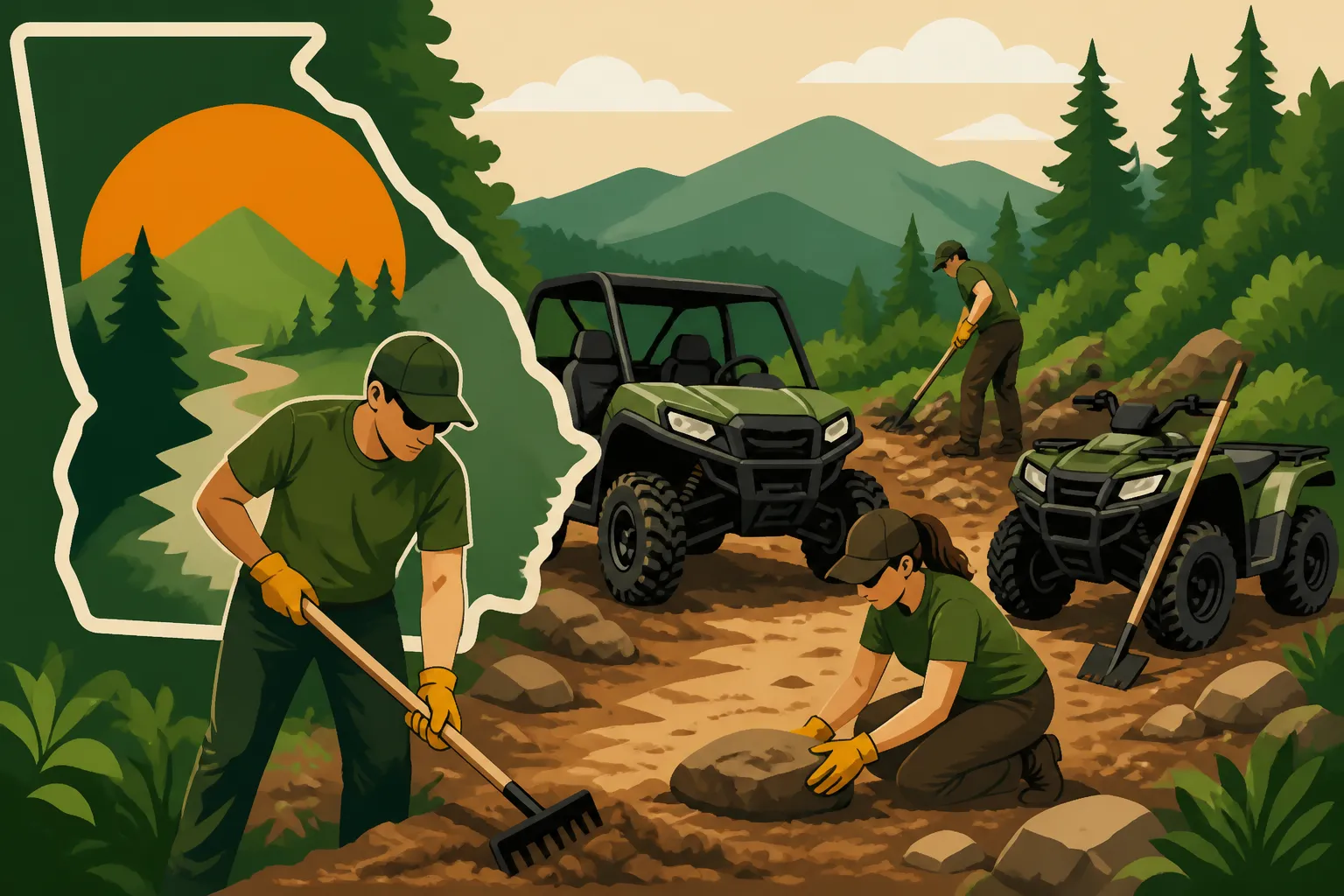
Trail maintenance is not always dramatic. Much of it is careful, repetitive work that prevents a small problem from becoming a major washout. A crew might clear leaves from drainage features, pick up litter, remove loose debris, repair trail markers, or help stabilize an eroded section under a leader’s direction.
Other projects may involve rerouting water away from the riding surface, reshaping a berm, or repairing damage caused by a storm. These jobs need a plan. Moving soil or opening a new route without approval can make erosion worse, widen the trail, or create an unofficial bypass. Follow the crew leader’s instructions even if you have experience doing similar work elsewhere.
A volunteer day can also include observation and reporting rather than hands-on repair. For example, a crew may walk a section to document a drainage issue or check whether a sign is missing. That information helps managers decide what needs attention and what equipment or expertise a later project will require.
Where to look for legitimate opportunities
Start with the organization responsible for the riding area. Check official ranger district or park communications and ask whether a volunteer coordinator or partner group handles trail projects. If you belong to a riding club, ask its officers whether it has an approved relationship with the land manager. For a specific public-land question, [Conasauga Ranger District and Who to Call](Conasauga Ranger District and Who to Call) can help you identify the right contact for the area.
You can also ask at a private riding park whether it schedules cleanup or maintenance days. A park’s own staff can explain its rules, safety requirements, and whether volunteers may ride after the work is done. Never assume a volunteer event includes free riding or access to areas that are otherwise closed.
Before leaving home, confirm the meeting point, the person in charge, the expected length of the workday, and what the organizer wants you to bring. If details are vague, ask for clarification. A legitimate workday should have a clear location, a defined task, and someone responsible for directing volunteers.
Prepare for a safe and useful workday
Confirm the details before you travel
Georgia riding areas can be a long drive apart, and some trailheads have limited cell service. Confirm the date, meeting location, parking arrangements, and any check-in process before setting out. Ask whether the work is still happening if heavy rain or a storm is in the forecast; a project may be postponed because the ground is too wet or access roads are affected.
Check trail and road status through the appropriate land manager before making the trip. A volunteer gathering does not automatically mean every trail is open for riding. For help understanding why conditions change, review [How to Check Georgia Forest Trail Status](How to Check Georgia Forest Trail Status) and [Georgia Trail Closures After a Storm](Georgia Trail Closures After a Storm).
Tell the organizer about relevant experience, but do not assume that experience authorizes you to operate a saw, winch, or powered equipment. The crew leader may assign tools based on training, the project plan, and the hazards on site. If you have a medical concern, mobility limitation, or need a less physically demanding task, mention it before the day so the organizer can advise you about suitable work.
Dress for the terrain and weather
Work clothing should protect you from brush, insects, sun, mud, and rough ground. Sturdy footwear with good traction is more useful than casual shoes, and long pants and durable gloves can help protect against scratches and blisters. Bring drinking water, weather-appropriate layers, and any personal medication you may need during the work period.
Eye and hearing protection may be necessary for certain tasks, but the organizer should specify what is required. Do not borrow or operate powered equipment unless the leader has approved you and you know how to use it safely. A volunteer day is not the place to test an unfamiliar chainsaw or cut branches while other people are working nearby.
Conditions can change quickly in north Georgia, particularly around mountain trails. Heat, afternoon storms, slick clay, and uneven ground can turn a straightforward walk into tiring work. If the crew is working near a steep slope, stream crossing, or unstable trail edge, stay within the marked work area and follow the leader’s directions.
Bring useful items, not an unapproved tool kit
A small personal kit can make the day more comfortable: water, snacks, sunscreen, insect repellent, a first-aid item for minor personal needs, and a charged phone. A notebook or phone can help you remember instructions, but take photos only when the organizer allows them and avoid sharing sensitive locations or access details without permission.
Do not bring powered tools, chemicals, or heavy equipment unless the organizer specifically requests them. Even a shovel can be the wrong tool for a particular repair if it changes a drainage feature or disturbs a protected area. Ask what is needed rather than arriving with a vehicle full of equipment.
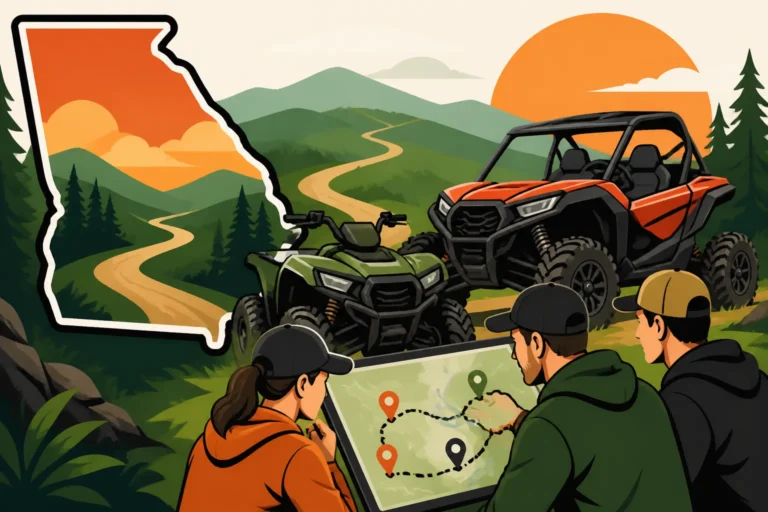
An offline map can be useful for reaching a meeting point or understanding the surrounding area, especially where reception is spotty. Some volunteers use onX Offroad to plan their route and orient themselves, but a mapping app is not an official source for whether a trail is open or whether work is authorized. Confirm access and closure information with the land manager or event leader.
| Before the workday | What to confirm |
|---|---|
| Organizer | Who is leading, and which land manager or property owner approved the project |
| Location | Exact meeting point, parking instructions, and access route |
| Work plan | Assigned tasks, expected physical demands, and whether tools are provided |
| Safety | Required clothing, protective equipment, and rules for powered tools |
| Conditions | Weather plan, cancellation process, and current access or closure status |
| Riding | Whether riding is allowed separately from the volunteer work |
Do trail work without causing more damage
Follow the approved plan
The best contribution is not necessarily the most strenuous one. A volunteer who follows instructions, stays on the assigned section, and reports a concern accurately can be more helpful than someone who tries to improvise a repair. If you notice a new rut, bypass, fallen tree, or damaged sign outside your assignment, tell the leader rather than attempting to fix it on your own.
Water management is one reason to avoid improvising. A shallow rut may look like a simple problem, but changing its shape can direct runoff toward a fragile slope or stream. Moving rocks or soil can also make a trail wider, encourage riders to leave the intended route, or undermine a repair already completed by another crew.
Keep tools and materials within the work area, and do not create shortcuts around obstacles. If a trail is closed, remain out of the closed section unless the organizer specifically authorizes access for the project. For a broader look at riding responsibly on vulnerable surfaces, read [Tread Lightly on Erodible Clay](Tread Lightly on Erodible Clay).
Protect the trail while getting to the site
Getting to a workday can involve driving forest roads, towing a trailer, or walking from a staging area. Follow posted road and parking instructions, and avoid blocking gates, turnarounds, or access needed by emergency vehicles. If the work party is meeting at a busy trailhead, unload only where directed and keep gear organized so other visitors can move safely.
Do not use an ATV or UTV as a substitute for a work vehicle unless the organizer has approved that use and the land manager permits it. A machine can compact wet soil, widen a narrow route, or damage vegetation if it leaves the authorized path. The same caution applies after rain: a trail that is soft underfoot may need time to dry rather than more traffic. [Georgia Trails That Close After Rain](Georgia Trails That Close After Rain) explains why temporary closures matter.
When you are helping on a one-way trail, keep yourself visible and pay attention to the route’s direction of travel. Other riders may not expect people working around a corner or beyond a rise. Follow the crew’s procedures for signs, spotters, and safe tool placement. The basics in [Georgia Trail Etiquette on One-Way Loops](Georgia Trail Etiquette on One-Way Loops) are useful to keep in mind whenever riders and workers share an area.
Report problems clearly
If you find damage beyond the scope of the workday, give the leader a precise description. A useful report includes the trail or road name if known, a nearby landmark, what you observed, and whether the issue appears to block access or create an immediate hazard. Photos can help, provided they are taken safely and the organizer permits them.
Avoid posting a closure bypass or an unofficial route as a navigation tip. Publicizing a way around a barrier can draw more traffic into a sensitive or unsafe area. If you need to use a navigation app such as onX Offroad to record your own route or find your way back to the trailhead, keep the land manager’s directions and posted signs as the authority.
After the workday, ask the organizer how to report future problems and whether follow-up help is needed. Trail maintenance is often ongoing: a cleared drainage feature may need checking after a storm, while a larger erosion issue may require a separate crew and equipment. A short, accurate report can be more useful than a rushed repair.
Make volunteering a sustainable part of riding
Choose work that fits your time and ability
You do not have to commit to every event to be useful. Some volunteers can spend a full day on a project; others may be available for a short cleanup or a single seasonal workday. Be honest about your time, comfort level, and physical limits. It is better to accept a manageable assignment and complete it carefully than to overextend yourself on steep, muddy terrain.
If you are bringing family or friends, check age requirements and supervision rules with the organizer. Do not assume children can use tools or work near machinery. A group can still contribute through low-risk tasks such as litter collection or carrying supplies, if the leader approves and the work area is suitable.
If you cannot attend, there may be other ways to help: reporting trail damage through the proper channel, supporting an authorized club project, or sharing accurate closure information with fellow riders. The goal is to help land managers and riding communities preserve access without creating new impacts.
Keep riding and maintenance separate
Volunteer work does not grant general permission to ride, enter closed areas, or use roads that are restricted to other purposes. Follow the event’s access instructions before, during, and after the project. If you plan to ride on the same trip, verify that the riding area is open and that your machine, permit, and route comply with its rules.
Keep following posted signs even if you have worked on a trail before. Conditions and management decisions can change, and a trail crew may have access for a specific job that ordinary visitors do not have. To understand the difference between riding access and other land uses, see [Georgia Trail Etiquette on One-Way Loops](Georgia Trail Etiquette on One-Way Loops) and [Georgia ATV Trails: Where You Can Legally Ride](Georgia ATV Trails: Where You Can Legally Ride).
A good volunteer day leaves the area safer, the worksite tidy, and the trail’s intended design intact. Ask questions, work within your assignment, and let the responsible organization decide what happens next. Those habits help protect both the riding opportunity and the people who maintain it.
Disclaimer
This article is for general informational purposes only and does not constitute professional advice. Laws, prices and regulations vary by location and change over time. Consult a qualified professional for guidance on your specific situation.