Georgia ATV Clubs Worth Joining
Finding a Georgia ATV club can feel harder than finding a trail: groups change activity, some focus on one region, and a social media page does not always mean organized rides are happening. This guide explains what makes a club worth joining, how to find groups near your riding area, and what to check before paying dues or bringing your machine along.
What makes a Georgia ATV club worth joining
A worthwhile club is more than a chat group that occasionally posts ride photos. It should make it easier to ride responsibly, meet people with similar interests, and understand the land and trail rules in the places you visit. The right fit depends on whether you ride a quad, dirt bike, or side-by-side, and whether you want scheduled outings, trail advocacy, volunteer work, or simply a few dependable riding companions.
Look for a clear purpose and regular activity
Some groups are built around organized trail rides. Others focus on maintaining access, sharing local conditions, or bringing families together for beginner-friendly outings. Before joining, look for evidence that the group is active in the way you want: recent ride announcements, clear event details, or updates about volunteer days.
A club does not need to organize a ride every weekend to be useful. A group that hosts occasional meetups but shares reliable information about closures, machine restrictions, and trail etiquette may be more valuable than a busy page with little practical guidance. Check whether event posts explain where to meet, what machines can attend, whether guests are welcome, and what participants need to bring.
It also helps to notice how members respond to questions. If a new rider asks whether a particular side-by-side will fit a trail and gets a thoughtful answer, that is a good sign. If posts are vague, outdated, or dismissive of safety concerns, keep looking.
Choose a group that matches your machine and riding style
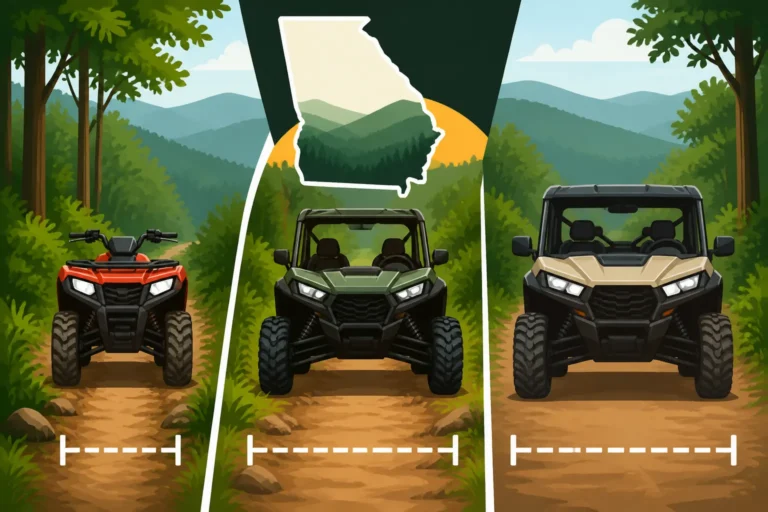
Georgia riding areas are not interchangeable. A narrow trail system suited to ATVs may not permit side-by-sides, while a broad private park may offer a very different experience from a Forest Service OHV route. Ask whether a club’s rides are open to your type of machine and whether the group checks width restrictions before planning an outing. [Georgia ATV Trails That Allow Side-by-Sides]
Also consider the pace and difficulty. A family group with newer riders may stop often and favor easier routes; a group of experienced riders may prefer technical terrain and longer days. Neither approach is better in general, but joining a club whose expectations match your own can prevent a stressful first ride.
| What you want from a club | What to look for before joining |
|---|---|
| Beginner-friendly rides | Clear difficulty descriptions, patient ride leaders, and planned regrouping stops |
| Side-by-side outings | Confirmation that the machines are allowed at the destination and fit its width limits |
| Family rides | Defined age and passenger expectations, a manageable pace, and clear safety rules |
| Trail stewardship | Scheduled cleanup or maintenance work and respect for land-manager instructions |
| Local trail information | Recent updates that identify the location and distinguish confirmed closures from rumors |
| Social riding | Welcoming events, guest policies, and a communication channel members actually use |
Value safety and respect for access
A good club treats safety as part of the ride, not an awkward disclaimer added at the last minute. Look for groups that encourage protective gear, sober riding, sensible spacing, and a plan for what happens if someone gets separated or has a breakdown. Responsible groups also make it clear that riders must follow posted rules and respect private property.
Access depends on where you ride. Georgia’s National Forest OHV systems, private riding parks, and other public or managed lands have different rules. A club’s suggestion to “just follow the road” is not enough if the road is gated, closed, or not open to off-highway vehicles. Learn the basics of [Georgia ATV Trails: Where You Can Legally Ride] and check the specific destination before you go.
How to find ATV clubs and riding groups near you
There is no single kind of group that suits every Georgia rider. You may find a club based near a particular riding area, a regional social group that plans trips to different parks, or a broader organization concerned with responsible access. Search by both your home region and the kind of riding you want to do; a group near Atlanta, Dalton, or Blairsville may plan outings around different destinations and travel times.
Start with the riding areas you expect to visit
If you already have a favorite destination, ask whether it has a local club, an affiliated volunteer group, or a regular community of riders. In north Georgia, riders may be interested in the Forest OHV systems around places such as Houston Valley, Beasley Knob, and Town Creek. Each location has its own conditions and restrictions, so a group that regularly rides one system may have useful local experience—but its advice should still be checked against official trail information.
A club can be especially helpful when you are new to a trail area. Members may know where to stage, how long a typical loop takes, and which conditions make a route difficult. Treat that knowledge as practical context rather than permission to ignore signs or closures. For an overview of the public Forest systems, see [Georgia's Six National Forest OHV Systems].
Search for groups through local riding communities, park event calendars, outdoor recreation pages, and recommendations from riders you trust. If a page looks inactive, ask directly whether rides are still being organized. A group may have moved its announcements to another platform, or it may no longer host public events.
Ask specific questions before attending
A few direct questions can tell you more than a long membership description. Ask what machines are allowed on the next ride, whether a guest can attend, how difficult the route is, and what happens if someone needs to turn back. If you ride a side-by-side, ask about width and trail compatibility rather than assuming that “UTVs welcome” applies to every route.
You should also ask how the group handles permits, fees, waivers, and changing trail conditions. Some rides may require participants to arrange their own permits or park admission. Rules can vary by destination, so read [Georgia OHV Permits: What You Need Before You Ride] before assuming the club’s event covers what you need.
For your first ride, meet at the stated location and arrive with enough time to check in and prepare. Bring the supplies the organizer requests, keep your machine in good working order, and be candid about your experience level. A ride leader can plan better when they know whether you are comfortable with steep climbs, water crossings, or a long day on the trail.
Use maps as planning tools, not permission
Digital maps can help you understand where a route is, compare travel options, and plan a meeting point. Some riders use onX Offroad to review mapped routes and organize a trip. onX Offroad can be useful for preparation, but a route shown on a map does not by itself establish that riding is currently allowed there. Confirm access, closures, and machine restrictions with the land manager or riding area before setting out.
A club’s route file or shared pin is also not a substitute for checking conditions. On a rainy week, a trail that seemed manageable during a dry visit may become deeply rutted or temporarily closed. Compare the group’s information with current notices and [Georgia Trail Conditions Before You Drive]. If you use onX Offroad to plan, make sure you understand what the map does and does not confirm about access.
What to check before joining or riding with a club
A first event is a practical way to see whether the group is a good fit. You are not just evaluating the scenery; you are learning how the club communicates, whether its ride leaders make sound decisions, and whether members treat other riders and the land responsibly.
Check membership expectations and event details
Some groups may be informal and free to join, while others may collect dues, ask members to volunteer, or have rules for participating in organized events. Ask what membership actually includes. Does it provide access to member-only rides, help with trip planning, or opportunities to take part in stewardship work? Are guests allowed, and can you attend one outing before deciding whether to join?
Read any waiver or event rules carefully. A waiver does not replace safe behavior or make a closed trail open. If there are fees, ask what they cover and whether participants must pay the riding area separately. For a club ride at a private park, follow that park’s own requirements as well as the organizer’s instructions.
Good event information should identify the meeting point, expected start time, destination, machine requirements, and a way to contact the organizer if plans change. If those details are missing, ask before you load the trailer. That simple conversation can prevent a long drive to the wrong entrance or a disappointing arrival with a machine that is not allowed on the planned route.
Notice the group’s trail habits
Pay attention to whether riders stay on designated routes, follow one-way signs, and give one another space. On one-way trails, riding against traffic or stopping just beyond a blind corner can create a serious collision risk. A club that explains group spacing and regrouping before the ride is showing good judgment. [Georgia Trail Etiquette on One-Way Loops]
Notice how the group handles a change in conditions, too. A responsible organizer may shorten a ride, choose another route, or cancel when weather makes the trail unsafe or damaging. Members should not pressure one another to ride beyond their comfort level. If you are still learning, it is reasonable to say that you want to skip a difficult section or return to the staging area.
Clubs that support trail stewardship can also make a meaningful difference. Volunteer work may involve picking up litter, reporting damaged signs, or helping with approved maintenance activities. Trail work should be coordinated with the land manager; riders should not cut, widen, or reroute a trail on their own. Learn what organized workdays involve through [Georgia Trail Maintenance Volunteer Days].
Make your own trip plan
Even with a well-organized club, arrive prepared to manage your own basic needs. Bring water, appropriate clothing, any required permit or pass, and a charged phone or other communication option. Tell someone outside the ride where you expect to be and when you plan to return. A group ride reduces isolation, but it does not guarantee that every rider will remain together.
Before leaving, confirm the destination’s operating status and check whether your machine fits the route. Save the meeting location and make sure you understand the return plan. onX Offroad may help you review your route and organize location details, while official notices remain the place to verify restrictions and closures. If cell service is limited, do not assume you will be able to look everything up once you reach the trailhead; [Georgia Riding Areas With Cell Service] can help you think through that planning issue.
Choosing your first Georgia club ride
You do not need to find the biggest group or commit to a long membership before you know what you enjoy. Start with one outing that matches your machine, experience, and travel range. A calm first ride with clear instructions is usually a better introduction than an ambitious route that leaves you struggling to keep pace.
Use a simple first-ride checklist
Before you go, confirm the following:
- The destination is open and allows your machine type.
- The group has shared the meeting place, route difficulty, and expected ride length.
- You know whether guests may attend and whether fees, permits, or waivers are required.
- Your machine is ready for the terrain and has the required safety equipment.
- You have water, suitable clothing, a charged phone, and a plan for a breakdown.
- Someone outside the group knows your destination and expected return time.
After the ride, consider what worked for you. Was the pace comfortable? Did the organizer communicate clearly? Did members follow posted rules and look out for one another? Those answers matter more than how many people were in the group or how dramatic the ride photos looked.
If the first club is not a match, that does not mean organized riding is not for you. A group may be too fast, too far away, or focused on a machine type different from yours. Try another local community, or attend a stewardship day before joining a ride. The goal is to find people who make it easier to ride thoughtfully and enjoy Georgia’s trails without adding avoidable uncertainty.
Disclaimer
This article is for general informational purposes only and does not constitute professional advice. Laws, prices and regulations vary by location and change over time. Consult a qualified professional for guidance on your specific situation.