Georgia Private Park Alcohol Rules
Planning a ride at a private off-road park raises a practical question: can you drink there, and what happens if someone does? There is no single alcohol policy for every Georgia park. The property’s rules, your role as a rider or passenger, and the circumstances all matter. The safest plan is to confirm the policy before arrival and keep alcohol separate from riding.
Why alcohol rules vary from park to park
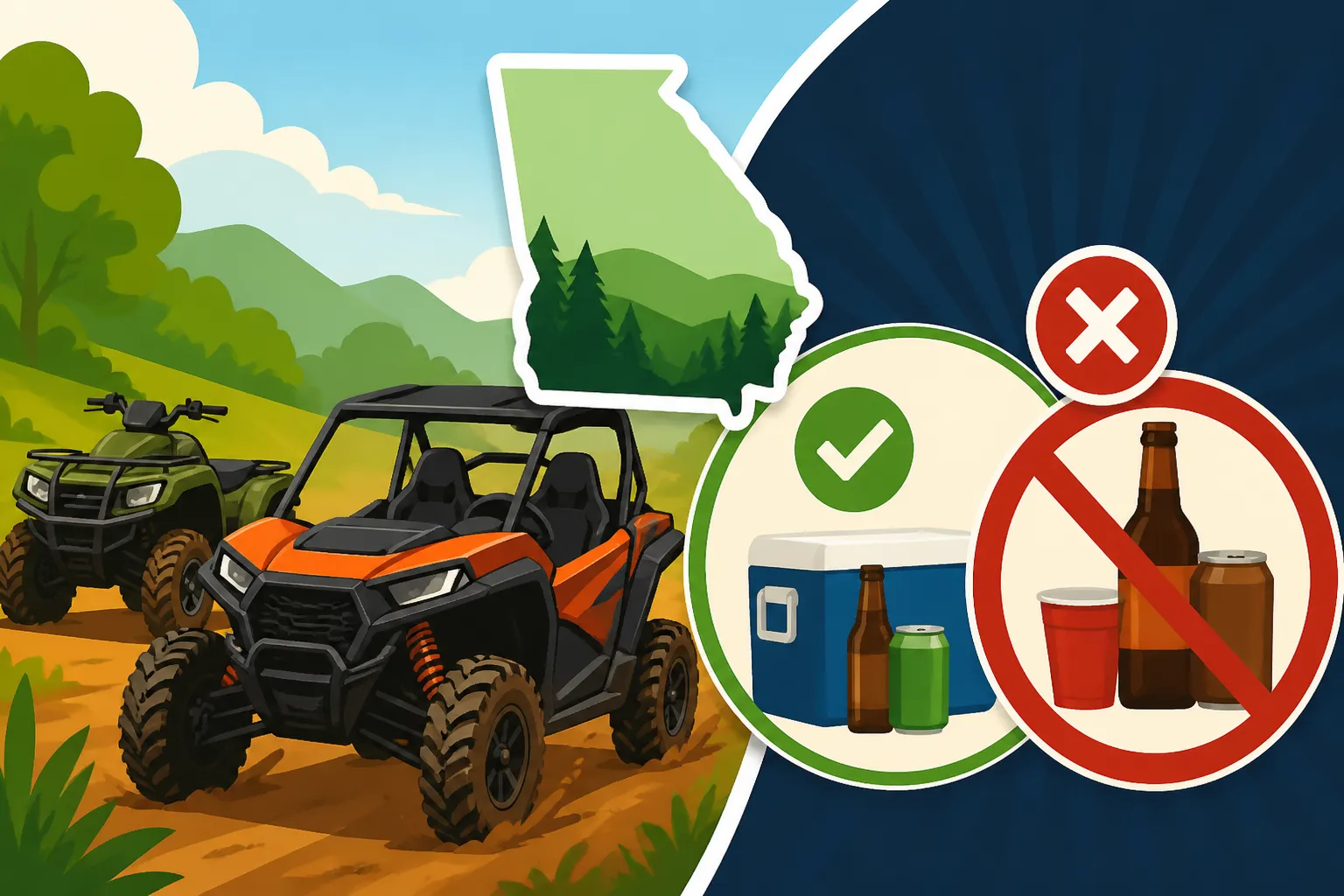
A private riding park can set conditions for using its trails, facilities, and campsites. One property may prohibit alcohol throughout the grounds; another may allow it in a designated camping area but not at the riding area. Some parks may prohibit drinking during organized events or restrict alcohol in certain buildings, vehicles, or public spaces. Do not assume that a rule at one park applies at another.
The written rules may appear in several places: a reservation confirmation, a rider waiver, campground terms, posted signs, or a rules sheet at check-in. A website summary may not cover every condition, and rules can differ between the trail system and a campground on the same property. If the policy is unclear, ask the park directly before you travel.
| Where you are | What the park may address | What to confirm |
|---|---|---|
| Trails and staging areas | Whether alcohol is prohibited anywhere riders operate or prepare machines | Whether the restriction covers riders, passengers, and spectators |
| Campground | Whether alcohol is allowed at campsites and where it may be consumed | Any limits on open containers, noise, visitors, or quiet hours |
| Event or group ride | Whether organizers have additional restrictions | Whether the event policy is stricter than the park’s regular rules |
| Check-in and shared facilities | Whether alcohol is allowed in offices, pavilions, or common areas | Which posted rules apply to the specific space |
| The entire property | Whether the park has a property-wide ban | Whether the rule applies all day, including after riding ends |
A park may also enforce a broader conduct policy. For example, staff could treat visible intoxication, disruptive behavior, or unsafe conduct as a reason to stop someone from riding or ask them to leave. The park’s Georgia Private Park Waivers and Rules may explain how its terms apply, while When a Private Riding Park Can Remove You covers the practical consequences of violating property rules.
Treat park policies as conditions of access, not suggestions. If you are unsure whether a restriction applies to a passenger or camper, ask before opening a drink. A short question at check-in is easier than resolving a dispute after a ride has begun.
Drinking and operating an ATV or UTV
The clearest safety rule is simple: do not operate an ATV or UTV after drinking. Alcohol can affect attention, judgment, coordination, and reaction time. Those effects matter on uneven ground, around other riders, near trail intersections, and whenever a machine is climbing, descending, or towing. Even a route that looks familiar can change with mud, loose soil, visibility, or traffic.
A private park is not a reason to treat impaired operation as safe or consequence-free. Property rules and legal questions are separate issues: the park can enforce its own conditions, and other legal consequences may depend on the facts. For a broader discussion of the legal side, see Georgia DUI Law and Off-Road Machines. That topic is not a substitute for checking the park’s rules or getting legal advice about a specific incident.
The safest approach is to decide who will ride before anyone drinks. A designated sober operator should remain sober for the whole period they may need to drive, including a return trip to a campsite or parking area. If no sober operator is available, do not ride. Do not rely on a passenger who has also been drinking to assess whether the driver is fit to operate.
This caution applies even if the ride is short, the trail is private, or the machine is moving slowly. A low speed does not remove the risks of a rollover, collision, fall, or unexpected obstacle. Alcohol can also make it harder for a rider to notice that their own balance or decision-making has changed.
Passengers and spectators have a role too
A passenger may not be operating the machine, but their choices can affect the ride. A passenger who is impaired may have trouble following instructions, keeping a safe position, or responding to a sudden stop. The operator remains responsible for deciding whether a ride is safe, and should not carry someone who is not able to ride safely.
Spectators should stay clear of travel routes and staging areas, follow staff directions, and avoid distracting operators. If a group is drinking at a campsite after riding, keep people, coolers, and vehicles out of areas where machines are still moving. A park’s Georgia Private Park Insurance Requirements and waiver terms may set conditions riders and visitors must meet, but they do not make impaired riding safe.
Avoid “one last trip” decisions
A common planning failure is leaving the machine until later and then deciding to make one more trip after drinking. Before the first drink, park the machine where it can remain until a sober person can move it. Keep keys with the designated operator, and arrange a sober way to get between the riding area and campsite if the park allows that route.
If someone has been drinking and a machine needs to be moved, do not put that person behind the controls. Ask park staff for help or wait until a sober, authorized operator can move it safely. If there is an immediate danger, contact park staff or emergency services rather than improvising a ride.
How to check a park’s policy before you go
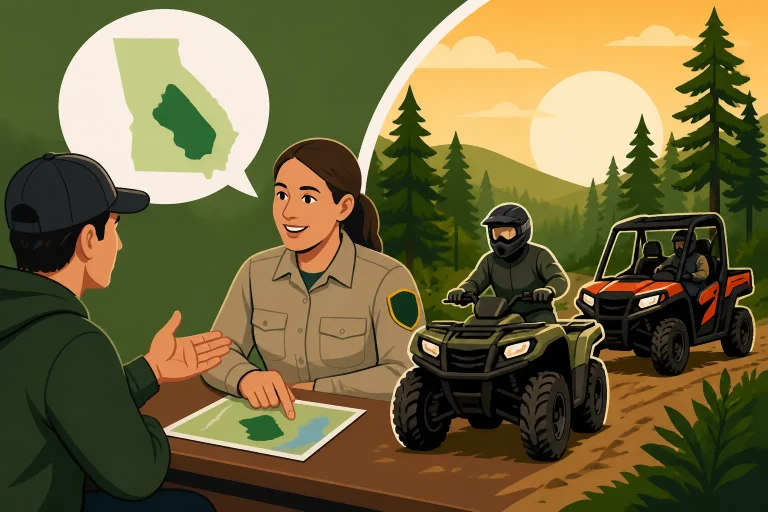
A little preparation can prevent a refused check-in, lost riding time, or conflict with staff. Do not rely on a social media comment or a rule remembered from a previous visit. Confirm the current policy with the property where you plan to ride.
- Read the park’s official rules. Check the website, reservation terms, waiver, and any rider handbook. Look for separate rules for trails, campsites, events, and common areas.
- Ask a specific question. Rather than asking only whether alcohol is “allowed,” ask where it is allowed, who the rule covers, and whether the policy changes during organized rides.
- Check whether guests are covered. A rule may apply to everyone on the property, not just the person who paid or signed a waiver. Confirm the expectations for passengers, visitors, and people staying at a campsite.
- Review the rules at arrival. Read posted notices and check-in paperwork. If staff explain a restriction that differs from an older web page, ask which policy is currently in force.
- Plan a sober operator. Identify the person who will operate each machine and how they will stay sober for the entire riding period.
- Keep the riding area clear of alcohol if the rule is unclear. Wait until staff confirm where consumption is permitted rather than guessing.
- Follow staff directions. If staff tell you that someone cannot ride or needs to leave an area, stop and clarify the issue calmly.
When contacting the park, useful questions include:
- Is alcohol prohibited throughout the property, or only in riding and staging areas?
- Does the same policy apply to passengers, spectators, and campers?
- Are there separate rules for group rides or special events?
- Where can visitors find the current written policy?
- What happens if a rider appears impaired or violates the alcohol rule?
These questions matter for overnight trips as well. A park may permit alcohol in some camping situations but still prohibit riding after drinking, restrict alcohol in shared spaces, or enforce quiet-hour rules. Read [Georgia Private Park Camping Rules] and [Georgia Private Park Quiet Hours] alongside the alcohol policy. If a park has separate requirements about protective equipment or who may ride, check Georgia Private Park Helmet Rules and Georgia Private Park Minimum Ages too.
What to do if someone has been drinking
If a rider has consumed alcohol, the right response is to stop the ride—not to estimate whether the person is “fine.” Do not let them drive an ATV, UTV, truck, or other vehicle to another part of the property. Arrange a sober ride or ask park staff about safe options. If the person becomes unwell or someone is in immediate danger, seek appropriate help.
If park staff raise a concern, stay calm and follow their instructions. A disagreement about whether the rule applies is best handled after the machine is parked and the immediate safety issue is addressed. Ask where the written policy is available and what the staff member needs you to do. Arguing beside an active trail or continuing to ride can make the situation less safe and may create a separate problem under the park’s conduct rules.
If a friend insists on riding after drinking, do not ride with them. Encourage the group to leave the machine parked, and involve park staff if needed. That may feel awkward, but a short delay is preferable to a crash or a confrontation with staff.
For groups, agree on a plan before arrival. Decide who is responsible for each machine, who will hold the keys, and how everyone will get back to camp without driving after drinking. Make the plan clear to passengers as well as operators. A group leader can help coordinate, but each operator must still make a safe decision and follow the property’s rules.
A practical rule for the whole visit is: confirm the park’s alcohol policy, keep every operator sober, and do not assume that permission to drink at camp includes permission to ride. Policies differ by property, and the park’s current written rules are the best place to start.
Disclaimer
This article is for general informational purposes only and does not constitute professional advice. Laws, prices and regulations vary by location and change over time. Consult a qualified professional for guidance on your specific situation.