When a Private Riding Park Can Remove You
A private riding park can usually ask a visitor to leave when the visitor breaks park rules, creates a safety risk, damages property, or ignores staff directions. The hard part is knowing what counts as a rule violation—and whether a permit, waiver, or ticket changes the park’s authority. Here’s how to understand the policies and reduce the chance of an avoidable removal.
Why a Private Park Can Ask a Rider to Leave
A private riding park controls access to its property. Buying admission or signing a waiver generally gives you permission to use the park under its stated conditions; it does not give you an unconditional right to remain or ride wherever you choose. A park can set requirements for riders, passengers, machines, speed, trail use, alcohol, pets, and hours of operation.
The exact rules vary by park. Some are posted online, some are presented at check-in, and others appear on a waiver, wristband, map, or sign at a trail entrance. A rider may be asked to leave for a clear violation, but a park may also act when staff believes someone’s behavior poses a safety concern, even if no crash or injury has occurred.
Common reasons for removal include:
- Riding on a closed trail, outside permitted boundaries, or against a one-way route.
- Ignoring a posted speed limit or riding recklessly near other visitors.
- Riding a machine that does not meet the park’s requirements.
- Carrying an unauthorized passenger or allowing an unqualified person to operate.
- Riding after drinking or using a substance that affects judgment.
- Disobeying a staff member or refusing a safety instruction.
- Damaging trails, signs, gates, buildings, or another visitor’s property.
- Fighting, threatening someone, harassing other visitors, or behaving disruptively.
- Bringing a prohibited item, animal, or vehicle onto the property.
- Failing to follow check-in, helmet, insurance, or other admission conditions.
These are examples, not a universal list. One park may have strict machine-width limits; another may focus on experience level or trail difficulty. A park can also close a trail temporarily because of weather, maintenance, or an incident. Riding it after a closure is announced may still be a violation even if you rode it earlier that day.
A waiver is not permission to disregard the rules. It commonly describes risks and may set conditions of participation, but it does not guarantee that you can stay if the park decides you have violated its policies. Read the documents carefully before signing, especially if the rules cover removal, refunds, damage, or future bans. For more on what these documents can involve, see Georgia Private Park Waivers and Rules.
Likewise, a permit for public-land riding does not grant access to a private park. A Forest Service OHV permit applies to the relevant public riding system and its conditions, not to a separate business’s property. Private parks set their own admission and conduct rules. What an Operator Permit Does Not Cover explains that distinction, while Georgia Private Park Waivers and Rules is useful when comparing park policies.
Conduct and Safety Issues That Commonly Lead to Removal
Parks are responsible for managing shared trails where people may be riding at different speeds, on machines with different capabilities. Staff may intervene before a rule violation leads to a collision. A warning can therefore be about risk, not just punishment.
Unsafe riding
Speeding is a frequent source of conflict because a machine can be hard to stop on loose gravel, mud, or a blind corner. Passing without enough room, riding too close to another machine, spinning tires near people, or deliberately causing a rollover can also prompt staff action. A rider may be removed after ignoring a warning, but a park may act sooner if the conduct is severe.
Following the posted direction of a trail matters too. One-way routes and marked difficulty levels help reduce head-on encounters and keep riders on trails suited to their machines and abilities. Do not assume that a trail is open just because it appears on a map or because other riders are using it. Check signs and current instructions at the park.
Alcohol and impaired operation
Many riding parks restrict alcohol or prohibit operating a machine while impaired. The precise policy may depend on the park, event, or campground area, so check before bringing alcohol onto the property. A rider who appears impaired may be stopped from riding or asked to leave. Do not expect a park to wait for an accident before acting on a safety concern. Georgia Private Park Alcohol Rules covers the kinds of policies visitors should check.
Machine, passenger, and equipment rules
Parks may set limits for machine size, width, passenger capacity, or permitted vehicle types. They may also require helmets, seat belts, or other protective equipment. A machine that is allowed on one trail system may not be accepted at another, and a passenger rule may differ between a two-seat ATV and a side-by-side. Confirm the park’s requirements before unloading. See Georgia Private Park Minimum Ages and Georgia Private Park Helmet Rules for related questions involving operators and protective gear.
A park may also stop a machine that appears unsafe or unsuitable for the trails. Examples could include a missing safety component, damaged steering, exposed sharp parts, or a vehicle that cannot be controlled reliably. If staff asks you to park the machine or leave a trail, do not continue riding while trying to negotiate the decision.
| Situation | Possible park response | What to check in advance |
|---|---|---|
| Riding a closed or restricted trail | Warning, route restriction, or removal | Trail map, closure notices, and staff directions |
| Excessive speed or reckless riding | Stop, warning, or removal | Posted speed limits and passing rules |
| Impaired operation | Stop riding and possible removal | Alcohol and substance policy |
| Machine or passenger violates requirements | Refusal of entry or removal from riding area | Vehicle, age, and passenger rules |
| Damage or disruptive conduct | Removal and possible responsibility for costs | Waiver, damage policy, and conduct rules |
| Ignoring a staff instruction | Removal or loss of future access | Check-in rules and directions from staff |
A park’s rules for helmets, supervision, and permitted machine types can be stricter than what a rider is used to elsewhere. Do not assume that a rule from a public trail, county road, or another private facility carries over. Ask staff if a policy is unclear before you begin riding.
Disruptive conduct and property damage
A park may remove someone for more than riding behavior. Fighting, threatening staff, harassing other visitors, damaging property, or repeatedly disturbing other people can violate the park’s conduct policy. The same may apply to a guest who is not riding but is part of a group’s visit.
Do not treat a disagreement about a rule as permission to ignore it. If you think staff misunderstood what happened, stop riding, move to a safe place, and ask calmly for the policy and the reason for the decision. A respectful question is more likely to clarify the issue than an argument at a trail entrance.
What to Do If Staff Tells You to Stop or Leave
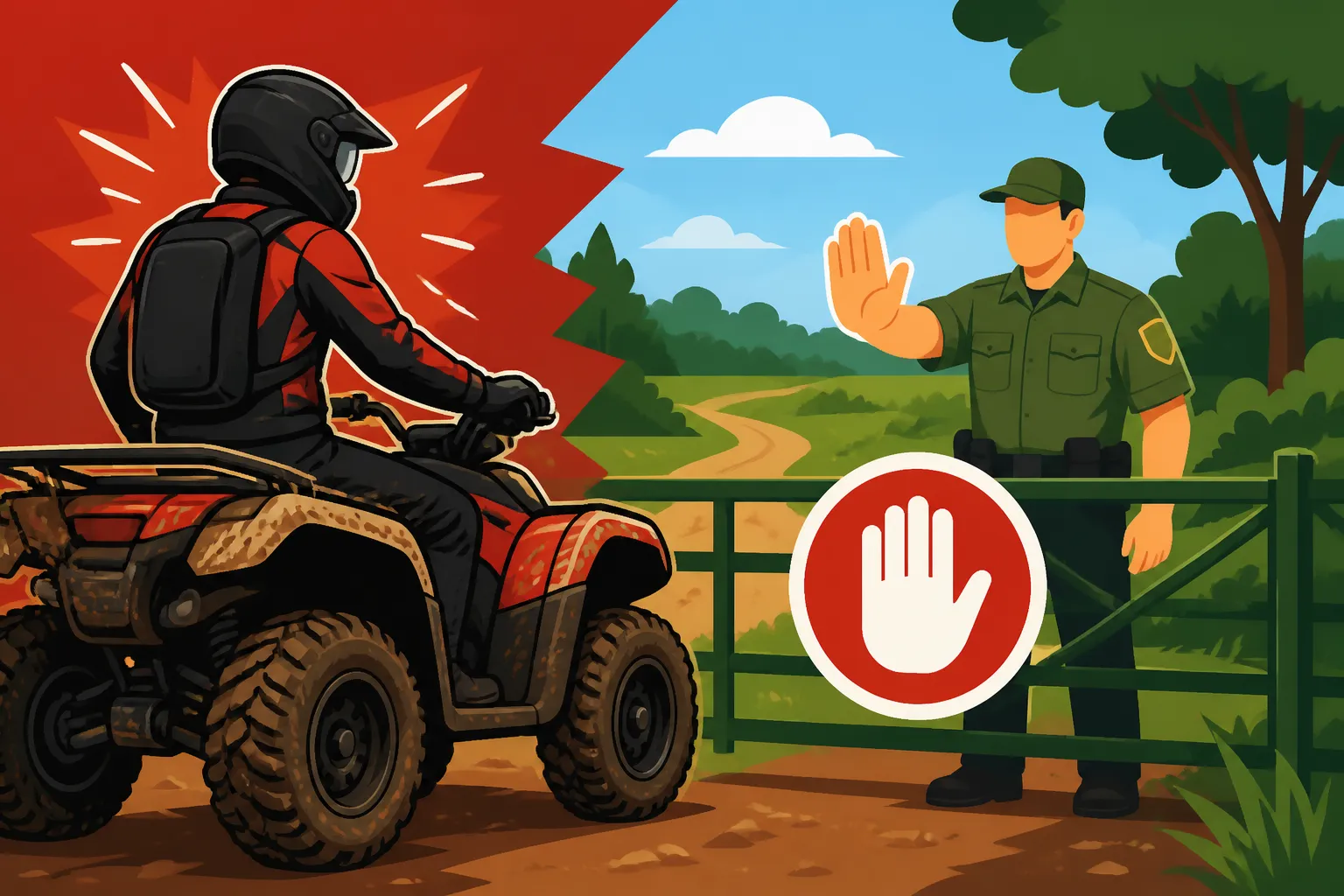
When a staff member gives a direction, make the situation safe first. Slow down, pull over where it is safe, turn off the machine if instructed, and keep passengers clear of traffic. If the instruction is to leave a trail, do not keep riding farther into it to finish a loop. If the instruction is to leave the property, do not provoke a confrontation or block access while debating.
You can ask for an explanation without refusing the instruction. Useful questions include:
- Which rule or policy applies?
- Is this a warning, a suspension from riding, or a direction to leave the property?
- Where should the machine be parked or loaded?
- Does the decision apply to the whole group or only one rider?
- Is there a process to request a review or make a complaint afterward?
A park may not be required to negotiate its decision at the trailhead. If staff tells you to leave, comply with the direction and raise any dispute through the park’s stated contact process. Do not threaten staff, follow them around the property, or continue riding after being told to stop. That can turn a manageable disagreement into a more serious safety or trespass issue.
Keep a clear record
If the reason for removal is unclear or you believe the decision was mistaken, make a factual note once you are in a safe place. Record the time, location, staff explanation, relevant sign or policy, and names of witnesses if appropriate. Save a copy of the admission terms, waiver, receipt, and any written messages. If the park provides a complaint process, use it and keep your communication calm and specific.
Photos can help document a posted rule or the condition of a machine, but do not photograph people in a way that escalates the conflict or violates park policy. Never interfere with staff or other riders to collect evidence.
A removal does not automatically mean you will receive a refund. Refunds, credits, and bans depend on the park’s published terms and the circumstances. Check the admission policy rather than assuming that a ticket or day pass will be refunded. If you believe a charge or decision was handled improperly, contact the park afterward through its official channel and explain what happened.
If the park raises a damage or safety claim
If staff says your machine or group caused damage, ask what was damaged and how the park documents the claim. Do not sign a statement you do not understand just to end the conversation. Keep any paperwork you receive and take notes about what was said. A waiver or admission agreement may address responsibility for damage, but the details depend on the document and applicable circumstances.
If someone is hurt, prioritize medical care and follow the park’s incident-reporting process. Share accurate information and keep a copy of any report you are given. For an injury, major damage, or a disputed claim, consider getting qualified advice before making commitments about responsibility or payment.
How to Reduce the Chance of Being Removed
The best preparation is simple: check the rules before the trip, make sure each rider understands them, and ask questions before entering the trails. A park’s website can be helpful, but confirm any important detail with the park directly if the information is unclear or seems outdated.
Before leaving home, check:
- Machine eligibility. Confirm that your ATV or UTV is allowed, including any width, passenger, tire, or equipment restrictions.
- Operator and passenger rules. Check age limits, supervision requirements, and whether passengers are allowed on your machine.
- Protective gear. Confirm helmet and other equipment requirements for every person riding.
- Trail access. Find out which routes are open to your type of machine and how closures are announced.
- Conduct rules. Read policies for speed, passing, alcohol, pets, noise, and riding after dark.
- Admission terms. Understand the waiver, refund policy, and any conditions for removal or future access.
- Check-in expectations. Ask whether the park requires proof of ownership, insurance, a safety briefing, or any other document.
At check-in, listen to the orientation and keep a copy of the map or rules accessible. If staff tells you a trail is closed, treat that instruction as current even if an old map shows it as open. If your machine is near a size limit or your passenger situation is unusual, resolve that before paying or unloading whenever possible.
Groups should agree on the rules before riding. One person’s decision to speed, enter a closed area, or ignore staff can affect everyone in the group. Choose a meeting point, keep riders within their abilities, and make sure nobody feels pressured to follow a faster or more experienced rider onto difficult terrain.
If a park has multiple activity areas, make sure your admission covers the area you intend to use. A ticket or permit for one part of a property may not include every trail, campground, or event. Staff can explain the boundaries and any extra restrictions.
For a park-specific question, contact the operator directly and ask for the current written policy. This is especially useful for rules that vary by location, such as machine width, passenger age, alcohol, and refunds. A clear answer before the trip is far easier to deal with than a dispute after you arrive.
Disclaimer
This article is for general informational purposes only and does not constitute professional advice. Laws, prices and regulations vary by location and change over time. Consult a qualified professional for guidance on your specific situation.