What Dry Riding Only Means at a Trailhead
A “dry riding only” sign can leave you wondering whether a trail is open after last night’s rain, or whether one damp stretch means you should turn around. In Georgia, that wording is a practical warning about conditions and trail damage, not a cue to push through mud. This guide explains how to interpret the sign, check access, and make a responsible go-or-no-go decision.
What dry riding only means at a Georgia trailhead
Treat the notice as a condition for access
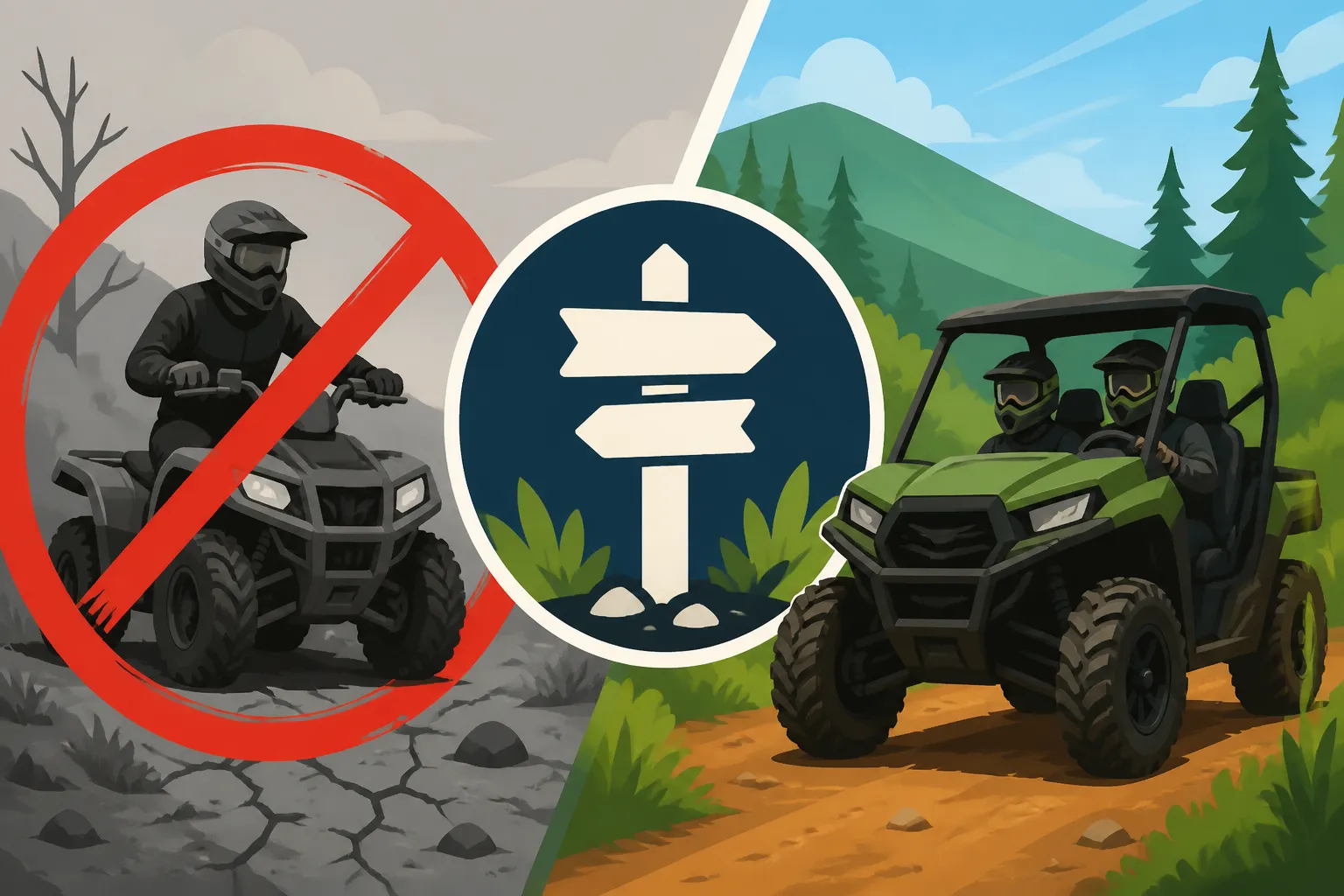
“Dry riding only” generally means riders should use the trail when it is dry enough to avoid damaging its surface. It may be posted year-round as a standing rule, or used alongside temporary closures after rain or other wet conditions. The exact meaning can depend on the land manager and the trail system, so follow the wording on the sign and any current closure notice.
The important point is that a trail can be physically reachable without being suitable or open for riding. A gate may be open, the parking area may be dry, and other vehicles may be present, but those details do not necessarily override a posted restriction. If the trailhead has a closure board, a sign specifically says not to ride when wet, or an official notice closes the route, don’t enter until the restriction is lifted.
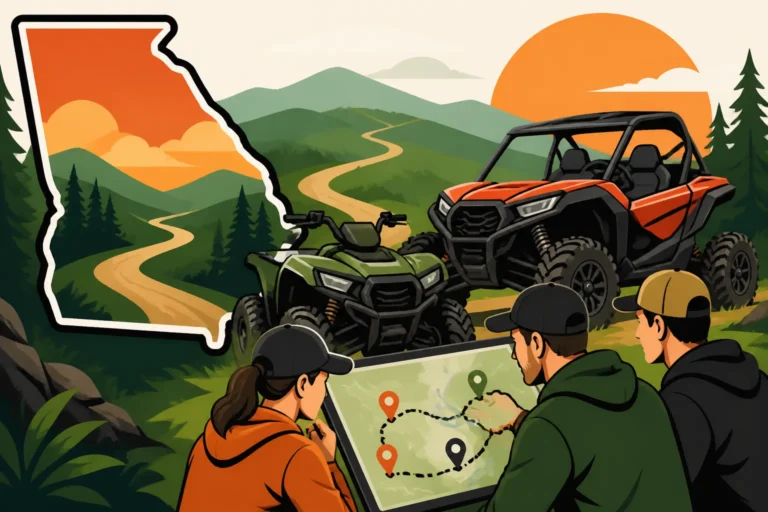
This is especially relevant when planning a trip to places such as [Houston Valley OHV Trails in Georgia] or [Beasley Knob OHV Trail System in Georgia]. Conditions and access instructions can differ by system and can change after storms. Check the trail manager’s latest information instead of assuming that a past visit, an old map, or a clear forecast means the route is open.
“Damp” and “dry enough” are not always obvious
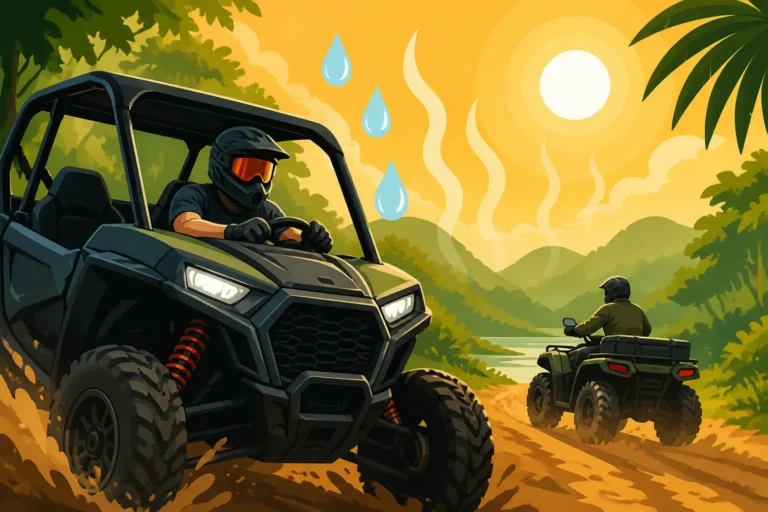
A trail can look mostly dry from the parking lot while shaded hollows, low spots, creek approaches, and north-facing slopes remain soft. In Georgia, red clay can be particularly deceptive: the surface may look firm in one place and turn slick or deeply rutted a short distance later. A light sprinkle can also leave some sections vulnerable even when there is no standing water.
Riders often face a frustrating gray area: the trail is not visibly flooded, but the tires are leaving marks or sliding more than usual. When a trail is marked dry riding only, visible mud is not the only concern. If the surface is soft enough for tires to cut into it, churn up the soil, or widen the track as riders steer around wet spots, it may not be appropriate to continue.
If the sign does not define a specific test for “dry,” don’t invent one based on how capable your machine is. A winch, aggressive tires, or a high-clearance UTV may help you get through a soft section, but that does not make riding it acceptable. When the condition is unclear, ask the managing office or choose a different riding area.
Why trails are restricted when wet
Wet soil is easier to rut and harder to repair
When soil is saturated, tires can press into it instead of rolling over a firm surface. That creates ruts and can loosen soil along the tread. Once a rut forms, water may follow it downhill, making it deeper and carrying sediment away. The result is not simply a muddy patch for the next rider; it can become a damaged section that needs maintenance or a closure.
Red clay and sloped terrain make this problem easy to underestimate. A small rut on a hillside can guide runoff down the trail. Repeated traffic may widen the damaged area as riders steer around the deepest section. A route that began as a narrow track can gradually become a broad, uneven channel, especially when riders keep choosing the same soft line.
That is why “just one pass” can matter. If several riders each leave a deep tire mark, the total impact adds up. The principles in [Tread Lightly on Erodible Clay] and [Georgia Red Clay and What It Does to a Machine] are useful reminders that trail surfaces are part of the riding experience—and need time and care to remain usable.
Recovery work can affect access for everyone
Trail damage may require workers or volunteers to reshape the surface, clear drainage, or stabilize a section. Depending on the location and the condition, that work can take time and may require the route to stay closed while repairs are underway. A wet-weather detour can also cause harm if riders create unofficial bypasses around a muddy obstacle.
This affects more than the person who made the rut. Other riders may lose access to a favorite route, and land managers may need to redirect effort from routine upkeep to repairs. In public riding areas, ongoing damage can also influence how managers evaluate trail use and seasonal access.
The best prevention is simple: respect closure notices and avoid making a bad spot worse. If a trail is closed, don’t ride around the barrier or look for an alternate entrance. For practical guidance on how rain can affect access, see [Georgia Trails That Close After Rain] and [Georgia Trail Closures After a Storm].
How to decide whether to ride after rain
Check official conditions before you leave
Start with the managing agency or riding area’s own trail updates. Look for closures, wet-weather restrictions, storm notices, and any instructions for a specific trail system. A general weather app can tell you about rain in the area, but it cannot confirm the condition of a particular route, drainage crossing, or shaded section.
Check close to departure, not only when you first plan the trip. A forecast can change, and a storm may pass over the trail system even if it missed your home. If you are travelling to the mountains from elsewhere in Georgia, conditions at your house may not reflect conditions near the trailhead.
Use maps as supporting information, not as proof of access. An app such as onX Offroad can help you plan around trail locations and understand the route layout, but a mapped route does not by itself confirm that a trail is open or dry enough to ride. Cross-check any planned route against current information from the land manager. For a broader routine, see [Georgia Trail Conditions Before You Drive] and [How to Check Georgia Forest Trail Status].
| What you find | What to do |
|---|---|
| An official closure or wet-weather restriction | Do not enter the closed route |
| A “dry riding only” notice and soft or muddy conditions | Wait or choose a different riding area |
| Conflicting information from a map and an official notice | Follow the official notice |
| No clear update and conditions are uncertain | Contact the managing office or postpone |
| The route is open and the surface appears firm | Ride carefully and follow all posted rules |
Use the whole route, not the parking lot, as your reference
At the trailhead, read every sign before unloading. Look for posted hours, route restrictions, seasonal notices, and barriers. If a sign is difficult to interpret, don’t assume the most permissive meaning. A staff member or land manager is a better source than a guess based on what other riders are doing.
Think about the terrain beyond the first few hundred yards. A trail may begin on a firm gravel road and then descend into a shaded hollow or cross a low, wet area. If you already know the system has steep slopes, clay, or drainage crossings, give recent rain extra weight in your decision. A route may also have multiple sections with different exposure to sun and runoff.
If you arrive and discover conditions are worse than expected, turn back where it is safe to do so. Don’t keep going just because the group has unloaded or driven a long way. That sunk-cost feeling is familiar, especially after arranging a trailer, time off, and a full day of riding—but damaging the trail or getting stuck can make the outing costlier and more stressful.
What to do when you encounter mud on the trail
Don’t create a new route around a soft spot
If an isolated muddy area appears on a trail that is otherwise open, pause and assess it without driving into the soft ground. Check for signs, barriers, and any route-specific direction. If the area is clearly unsafe or the trail is marked dry riding only and is not dry, turn around if possible. Don’t assume that a narrow muddy stretch is automatically an exception to the notice.
Riding around the edge can be just as damaging as driving through the middle. It widens the trail and can flatten nearby vegetation or erode the shoulder. Don’t cut a new line through the woods, cross a ditch, or use a closed trail as a bypass. If you cannot continue without making a new route or causing damage, backtrack safely and contact the trail manager if the condition needs to be reported.
If other riders are stopped, communicate calmly. You can explain that the surface is soft and suggest turning back rather than letting the group pressure someone into pushing onward. On one-way routes, follow the system’s instructions for handling a turnaround; don’t ride against traffic or ignore one-way rules. [Georgia Trail Etiquette on One-Way Loops] covers the importance of keeping decisions predictable and safe for other users.
Ride in a way that limits impact when conditions are suitable
When official information says the route is open and the surface is firm enough, smooth riding still matters. Avoid abrupt throttle changes, wheelspin, and sharp turns that dig into the ground. Stay on the designated track rather than steering onto the shoulder to avoid a shallow puddle. A controlled pace can help you notice soft areas before your tires enter them.
Carry out the same care across the group. A leader who speeds through a wet-looking section may encourage everyone behind to follow the same line, even if the first machine has made it through. Stop where the trail is wide and safe, give the group a chance to regroup, and make sure riders understand any posted direction before continuing.
Conditions can also change during the day. A sunny morning does not guarantee that a shaded section will dry quickly, and a passing shower may alter the surface. If the trail becomes soft or you see fresh damage developing, don’t treat the earlier decision to ride as permission to continue regardless. Reassess as you go, and let trail conditions—not the desire to finish a loop—guide the call.
Plan a backup ride and communicate with your group
Choose a flexible destination
A successful riding day is easier to salvage when you have another option. Before leaving, identify a second legal riding area or a non-riding plan in case wet conditions close your first choice. That could mean changing systems, waiting for a later date, or spending the day on a different activity rather than trying to find an unofficial route.
When comparing options, check more than the general area. Confirm that the facility allows your type of machine, review current access information, and make sure the trail width and difficulty suit your group. Don’t assume a route suitable for a narrow ATV will also accommodate a side-by-side. A map such as onX Offroad may help you organize possible routes, but check access details with the relevant land manager before setting out.
For spring trips, build in extra flexibility. Georgia’s spring weather can change quickly, and wet ground may stay soft after rain has stopped. If your plan depends on dry conditions, decide in advance what will count as a reason to postpone. [Georgia Riding in Spring Mud] offers related planning considerations for riders weighing weather, terrain, and trail access.
Make the decision as a group before reaching the trail
Group rides can make it harder to turn around. One person may have made a long drive, another may have taken a day off, and someone else may be eager to try a new machine. Agree beforehand that an official closure or unsuitable wet conditions means the group will change plans. That makes the decision less personal when the sign is in front of you.
Assign someone to check current conditions and share the information with everyone travelling. Make sure the group knows the trailhead rules, the planned route, and what to do if conditions differ from expectations. If riders are arriving separately, send the same update to each person so nobody makes the trip based on stale information.
Keep the plan respectful toward the trail and the people who maintain it. A disappointing change of plans is temporary; deep ruts, erosion, or a closure can affect future rides. If the trail is posted dry riding only and conditions are wet, the considerate choice is to wait, use a suitable alternative, and return when the route is ready.
Disclaimer
This article is for general informational purposes only and does not constitute professional advice. Laws, prices and regulations vary by location and change over time. Consult a qualified professional for guidance on your specific situation.