Union Point as a Riding Destination
Union Point, Georgia, is best known to many off-road riders as the former home of Durhamtown Off Road Park. That history can make trip planning confusing: old listings and ride reports may still point toward the area, even though they don’t confirm a place is open today. This guide explains what Union Point offers, what to verify, and how to plan a safer ride nearby.
Why Union Point Appears on Georgia Riding Maps
Durhamtown shaped the area’s riding reputation
Union Point is a small city in Greene County, east of Athens and within reach of communities such as Greensboro and Madison. For years, riders associated it with Durhamtown Off Road Park, a large private off-road destination that drew ATV and UTV visitors from around Georgia. Its size and variety of terrain helped put Union Point on many riders’ trip-planning lists.
That history still shows up in search results, GPS pins, forum posts, and older videos. If you’re researching a weekend ride, it’s easy to assume a place with so much online material must still be operating. But an old review or ride video is evidence of a past visit, not proof of current access.
Durhamtown’s 2022 closure changed the practical picture for visitors. Treat older directions, event announcements, and park descriptions as historical until you confirm otherwise with the property or a reliable current operator. For background on what the former destination covered, see Durhamtown’s 5,000 Acres in Union Point. For what the closure means to riders, see Durhamtown After Its 2022 Closure.
The town is not the same thing as a ride area
A common planning mistake is to search for “Union Point ATV riding” and assume that the surrounding countryside offers public trails. A town’s location near woods, fields, or rural roads does not make those places open to off-highway vehicles. Land may be privately owned, leased for farming or timber, or subject to restrictions that aren’t obvious from a map.
That distinction matters even if you’re only hoping to ride a short distance between a campground and a trailhead. A dirt road may be a private farm lane, a gated timber road, or a public road where an ATV or UTV isn’t permitted. Get explicit permission before entering private land, and don’t rely on a worn tire track as proof that riding is allowed.
Union Point can still be a useful base for a regional trip, especially if your group is visiting friends, staying nearby, or comparing riding areas across the region. Just separate the town you’re staying in from the property where you’ll actually ride. For a broader look at destinations and how they differ, read Georgia Private Off-Road Parks Compared.
How to Plan a Ride From Union Point
Confirm the riding property before you leave
Start with the destination, not the route. Identify the specific park, trail system, or land manager that will permit your vehicle on the day you plan to visit. Check its current operating information directly, including whether it accepts day riders, which machine types it allows, and whether reservations or advance registration are required.
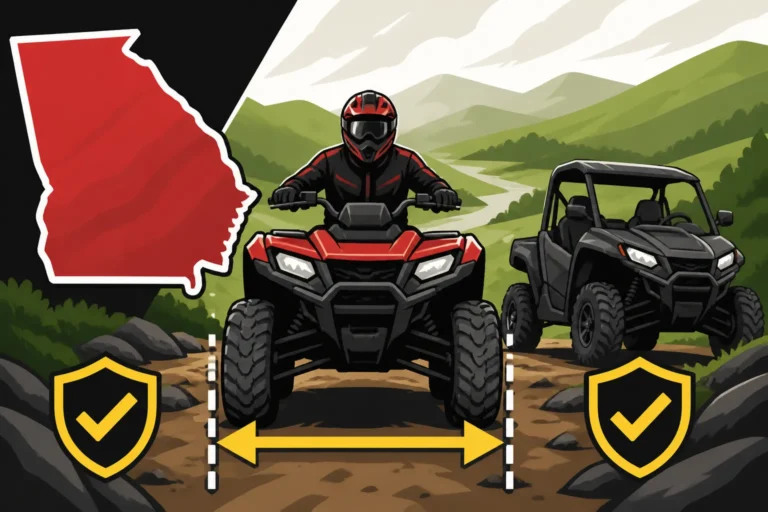
Ask about the details that can turn a promising trip into a frustrating one: trail closures, weather-related restrictions, noise requirements, machine width limits, age rules, passenger policies, and any required permits or waivers. A UTV-friendly property may still restrict certain trails, while a trail system designed for narrower machines may not admit a side-by-side at all. Don’t assume that a park’s general ATV access automatically covers every vehicle or route.
If your preferred destination can’t confirm access, don’t drive there hoping to sort it out at the gate. Pick a confirmed alternative and build the trip around that location. The guide Georgia ATV Trails That Allow Side-by-Sides can help narrow the search if your group is bringing a UTV.
Use maps as planning tools, not permission slips
Mapping apps can help you understand distances, road connections, and the general layout of a region. onX Offroad can be useful when you’re comparing route options and trying to keep your planned ride organized. Still, an app’s displayed road or trail line does not by itself establish public access, current opening status, or permission to ride.
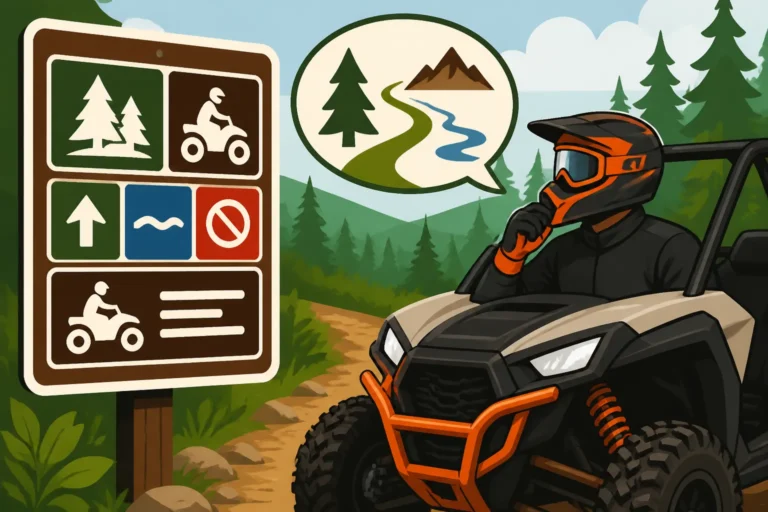
Cross-check the route with the land manager or property operator. Pay attention to gates, signs, closed roads, and boundaries on the ground. If a route crosses private land or appears to leave the authorized riding area, stop and confirm before continuing. An onX Offroad map can support your preparation, but it shouldn’t replace posted rules or direct confirmation from the people responsible for the land.
Download or save the information you’ll need before leaving home, particularly if you expect weak cell service. Keep the official address, check-in instructions, and a backup route handy. It’s also sensible to share your plan with someone who isn’t on the ride. For more map-preparation ideas, see Georgia ATV Trail Map Downloads.
Choosing a Suitable Riding Alternative
Match the destination to your machine and group
The right alternative depends on who’s riding and what they’re bringing. A family with youth riders may care most about beginner-friendly terrain, supervision rules, and nearby facilities. A group with full-size side-by-sides may need wider trails, suitable trailer parking, and clear confirmation that those machines are allowed. Riders looking for technical challenges may prioritize a different kind of property altogether.
Ask the operator what “open to UTVs” means in practice. Does it mean the entire trail network is available, or only designated routes? Are there width limits? Are passengers allowed on all permitted trails? Is there a required helmet, safety gear, or sound standard? Getting specific answers before departure is much easier than discovering a mismatch after you’ve unloaded.
Use a comparison like this when you’re deciding whether an alternative fits your group:
| What to compare | Questions to ask before leaving |
|---|---|
| Vehicle access | Are ATVs, UTVs, or both allowed? Are there width or sound limits? |
| Trail difficulty | Are beginner routes available? Are steep, rocky, or muddy sections avoidable? |
| Access rules | Is the land private, public, or managed under a permit system? |
| Visit requirements | Do you need a reservation, waiver, permit, or advance check-in? |
| Facilities | Is there trailer parking, water, restrooms, fuel nearby, or camping? |
| Current conditions | Are trails closed because of rain, maintenance, or seasonal restrictions? |
A ride area that looks ideal online may not fit a low-clearance machine, a first-time rider, or a group that needs an easy turnaround. Be candid about everyone’s skill level when you call. If one rider is new, ask whether the operator can recommend a suitable route rather than assuming the easiest trail will be obvious once you arrive.
Think through camping, towing, and the full weekend
If you’re making a weekend of it, confirm lodging and camping separately from trail access. A campground near Union Point may be convenient without being affiliated with a riding area. Likewise, a property that allows riding may not offer overnight stays, hookups, or space for a long trailer. Verify each part of the plan instead of treating “near the trails” as a promise of connected services.
Think through the logistics from the moment you leave home: trailer size, tie-downs, fuel stops, food, drinking water, and what you’ll do if weather closes the trails. If a destination has limited parking, arriving with a large trailer late in the day can create avoidable stress. Ask where to stage and whether the lot is suitable for your setup. For ideas on combining a ride with an overnight stay, see Georgia ATV Camping With Trail Access and Georgia Trailhead Restrooms and Water.
A backup plan is especially helpful when traveling with children or a group that has made advance arrangements. Identify another confirmed activity in the area, or choose a different riding destination before you set out. That way, a closure doesn’t leave everyone sitting in the parking area trying to find a new plan on a phone with a weak signal.
A Practical Pre-Trip Checklist for Union Point
Make the confirmation call
Before loading your ATV or UTV, confirm the name and address of the actual riding property. Ask whether it’s open to visitors on your intended date and whether your specific vehicle is allowed. If the person answering can’t confirm those basics, keep looking rather than treating uncertainty as a green light.
Next, ask about the rules that affect your group: required gear, rider ages, passenger limits, trail difficulty, sound restrictions, permits, fees, waivers, and weather closures. Requirements vary between privately operated parks and public land, so don’t assume that a rule from one Georgia riding area applies everywhere. If you’re visiting a public trail system, make sure you understand its access requirements before you travel.
Write down the answers, including any check-in instructions and the name of the person or office you spoke with. Check again before departure if the weather changes or if you’re traveling during a period when closures are possible. A quick confirmation can save you a long tow, a disappointed group, and the uncomfortable discovery that a familiar name in an old search result no longer provides access.
Pack for a ride that may not go exactly to plan
Bring the documents and equipment your chosen property requires, plus practical basics such as water, snacks, a first-aid kit, and appropriate riding gear. Inspect the machine before loading: check tires, brakes, lights, fluids, belts where applicable, and tie-down points. A mechanical issue is frustrating at home; it’s harder to manage when you’ve driven to a rural destination.
If the route relies on cell navigation, save the address and key directions in advance. onX Offroad can help you keep a route plan available, but carry the property’s instructions too and follow signs at the entrance. Do not use a mapped line to justify riding past a gate, crossing private property, or continuing onto a road that isn’t authorized for your machine.
Finally, give yourself permission to change plans. If an operator says a trail is closed, if a storm has made conditions unsafe, or if you arrive and the property rules don’t fit your vehicle, don’t try to improvise access. Union Point’s riding history can make it an appealing place to plan around, but a good trip depends on confirmed access at a specific destination—not on the name of the town alone. Check Georgia Trail Conditions Before You Drive before committing to a route.
Disclaimer
This article is for general informational purposes only and does not constitute professional advice. Laws, prices and regulations vary by location and change over time. Consult a qualified professional for guidance on your specific situation.