Georgia Riding in Summer Humidity
Georgia’s summer humidity can make a familiar ATV or UTV trail feel harder than expected: riders tire sooner, gear stays damp, and a short afternoon storm can change trail conditions fast. This guide explains how to plan a safer Georgia summer ride, manage heat and hydration, choose useful gear, and adapt your pace when the air feels heavy.
Why Georgia summer humidity changes a ride
Heat feels harder when sweat cannot cool you effectively
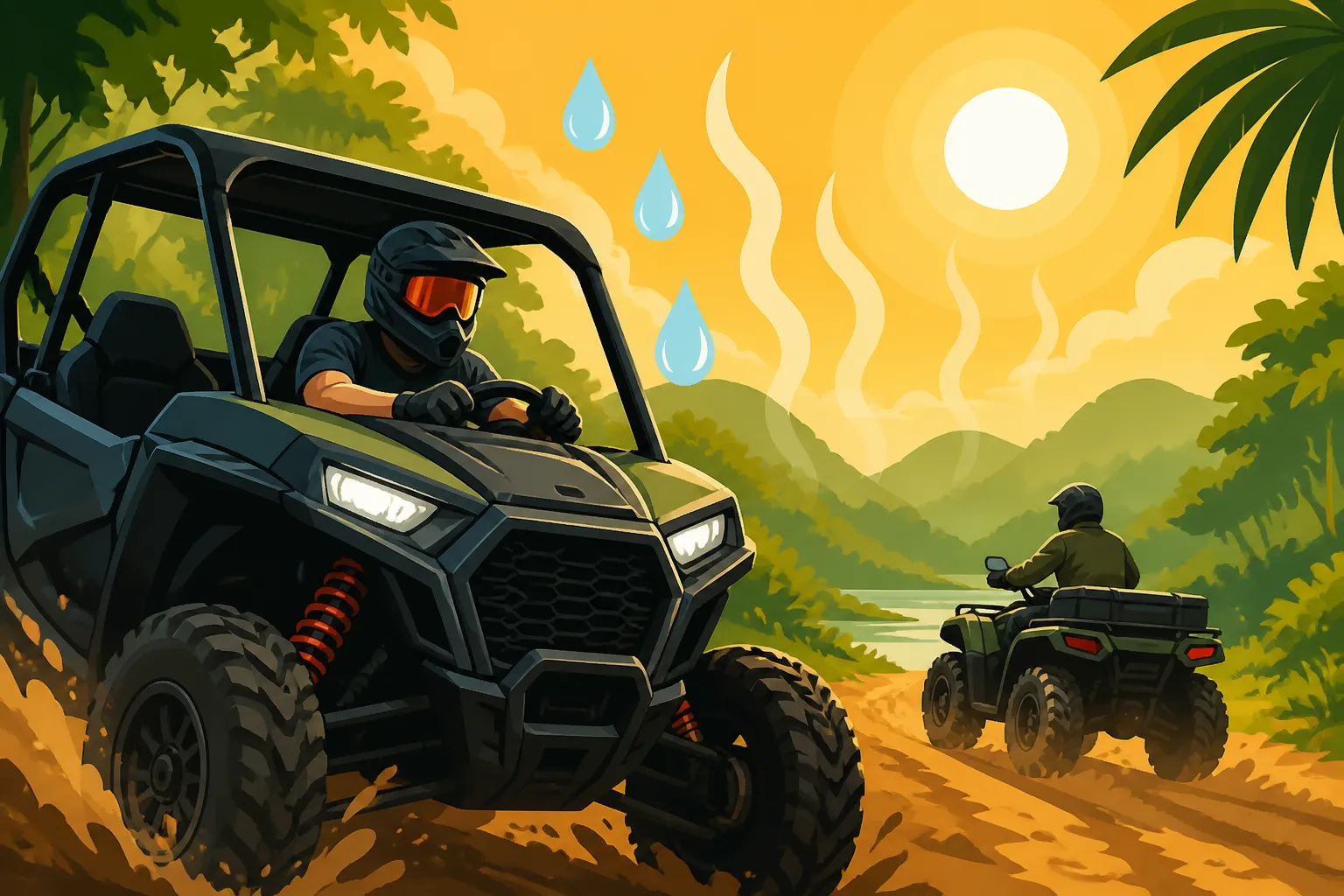
On a humid day, sweat does not evaporate as readily from your skin. That makes it harder for your body to cool itself, especially when you are working the throttle, steering through rough ground, or wearing protective gear. The result can be a ride that feels exhausting well before you have covered much distance.
The effect is easy to underestimate. You might feel fine while unloading at the trailhead, then become drained after a slow climb or a stretch of deep mud. A helmet, gloves, boots, and riding layers are important protection, but they also make it more important to take breaks, drink regularly, and notice how you and your passengers are feeling.
Humidity also makes it harder to judge how much effort you are using. If you are concentrating on ruts, roots, or other riders, you may not notice fatigue building. Plan for a more conservative day than you would on a cool morning, and be willing to shorten the route instead of pushing through discomfort.
Conditions can vary across Georgia riding areas
A shaded trail in the north Georgia mountains may feel different from an open, exposed route farther south. Elevation, tree cover, wind, recent rain, and the amount of time you spend moving all affect how the ride feels. Even within one trail system, a wooded section can offer relief while an exposed connector or staging area feels much hotter.
Georgia’s riding areas also differ in what they allow and how they are managed. Before choosing a destination, check that the area is open to your kind of machine and that the route is appropriate for your group. Start with [Georgia ATV Trails: Where You Can Legally Ride] and [Georgia's Six National Forest OHV Systems] if you are deciding where to ride.
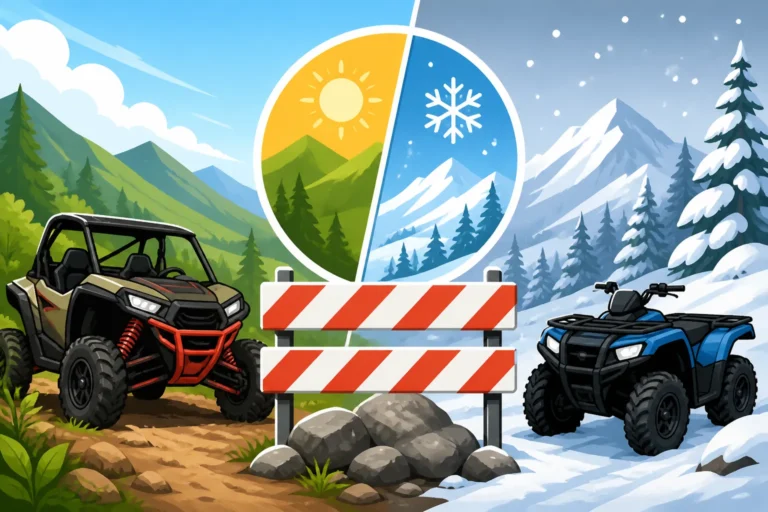
Do not assume that a route you rode earlier in the year will be in the same condition during summer. Rain can soften the ground, create slick clay, and affect access. Before leaving home, check [Georgia Trail Conditions Before You Drive] and [Georgia Trails That Close After Rain]. A closed or unsuitable trail is not worth trying to work around; choose another legal place to ride.
Plan a summer ride around heat and weather
Choose a realistic route and a sensible start time
A good summer plan leaves room for slower progress. Instead of packing the day with a long route and several side trips, choose a ride that gives your group options to turn back, take a longer break, or stop early. If someone in your party is new to off-road riding, has a medical concern, or is less comfortable in heat, plan around that person’s needs rather than the fastest rider’s pace.
Starting earlier can help you avoid some of the day’s hottest hours, but it does not remove the need to prepare. Humidity can remain high in the morning, and afternoon thunderstorms can develop quickly. Check the forecast before you go and keep an eye on changing skies while riding. If lightning or a severe storm is nearby, stop riding and move to a safer location rather than continuing to a more exposed section.
A planning app such as onX Offroad can help you review route options and keep track of where you are, but it should not replace local trail rules or current closure information. Save or download the information you need before entering areas with unreliable cell service. Tell someone outside your riding group where you plan to go and when you expect to return.
Prepare permits, water, and a return plan
Sort out access requirements before you reach the trailhead. Public riding areas can have rules about permits, designated routes, vehicle types, and operating hours. Review [Georgia's Day and Annual Forest OHV Permits] and the land manager’s current instructions for the specific area you plan to visit. A map showing a road or trail does not automatically mean it is open to motorized riding.
Plan your drinking water and breaks as carefully as you plan fuel. Bring more water than you expect to need, and keep it where it can be reached without unpacking the entire vehicle. Pack water for every rider, including passengers, and do not rely on finding a working fountain or store near a remote trailhead. [Georgia Trailhead Restrooms and Water] can help you think through what facilities may or may not be available, but verify details for your chosen destination before the trip.
Set a turnaround time and agree on what the group will do if someone feels unwell, a storm approaches, or the route is taking longer than expected. If you are camping near a riding area, make sure you understand the campground’s access rules and whether the route you want is appropriate for your machine. [Georgia ATV Camping With Trail Access] is a useful next step when you are building a longer trip.
| Before the ride | What to check | Why it matters |
|---|---|---|
| Trail access | Current closures, permitted vehicle types, and designated routes | Prevents arriving at a closed area or riding somewhere unauthorized |
| Weather | Heat, humidity, storms, and changing conditions | Helps you choose a manageable start time and route |
| Water | A reachable supply for every rider and passenger | Makes it easier to take breaks before anyone feels depleted |
| Navigation | Saved route information and a backup plan | Cell service may be limited in remote areas |
| Group plan | Turnaround time, meeting points, and an early-exit option | Keeps a small problem from becoming a long, stressful ride |
Gear and habits that help in humid weather
Wear protective gear without ignoring ventilation
Protective clothing should fit the ride, not just the temperature. Wear a helmet and other appropriate protective equipment, and look for gear that allows airflow while still providing the protection you need. Avoid making an unfamiliar gear change on the morning of a long ride. Try new layers or a different helmet setup on a shorter outing first so you can see whether it is comfortable and works with your machine.
Lightweight, moisture-managing clothing can feel more comfortable than heavy cotton, which tends to stay damp. However, comfort is not a reason to skip protection. Consider how exposed the trail is, how likely you are to encounter brush or debris, and whether your clothing protects your skin if you fall. Pack a dry layer for after the ride, especially if you will be traveling home in a vehicle with air conditioning.
Keep your gear in good condition. A visor obscured by mud or condensation, gloves that have become slick, or boots that rub can distract you and make a tiring ride harder. If you need to stop to adjust equipment, do it in a safe place off the main riding line. OnX Offroad can be useful for checking your position when you stop, but do not rely on a phone screen while operating a vehicle.
Drink consistently and treat rest as part of the route
Do not wait until you feel extremely thirsty to take your first drink. Make water breaks part of the group’s routine, such as stopping at a safe trail junction or after a demanding section. Sip regularly and make sure passengers have easy access to their own water. If you bring snacks, choose familiar foods that are easy to eat during a break and that do not create a mess in hot conditions.
Rest in a safe, shaded area when possible, with machines parked clear of the trail. Loosen or remove gear only when it is safe to do so, and give everyone time to cool down before setting off again. A rider who is quiet, unusually irritable, unsteady, confused, nauseated, or acting unlike themselves may need immediate attention. Stop the ride, move the person to a safer, cooler place, and seek medical help if symptoms are severe or do not improve. Do not leave an unwell rider alone.
Keep group communication simple. Before the ride, agree that anyone can call for a stop without having to justify it. This matters with children and newer riders, who may be reluctant to say they are struggling because they do not want to slow everyone down. A short break is easier to manage than pushing a tired rider through another difficult section.
Ride to the conditions, not the schedule
Slow down when the trail is slick or visibility is poor
Summer rain can change the feel of Georgia’s red clay quickly. A slope that seemed straightforward when dry may become slick, while standing water can hide ruts, rocks, or damaged ground. Reduce speed, leave more room between machines, and avoid sudden steering or braking where traction is uncertain. If a section feels beyond your ability or your vehicle’s capability, turn around rather than making repeated attempts that could damage the trail or lead to a rollover.
Dust can also be a problem in dry stretches, especially when several machines travel close together. Increase following distance so the rider behind can see, and slow down when dust obscures the route. In wet conditions, avoid riding around closures or creating new paths to bypass mud. Those workarounds can widen erosion and leave lasting damage.
Follow posted signs, one-way directions, and instructions from land managers. When a route is narrow or visibility is limited, stay alert for other riders, hikers, and maintenance activity. [Georgia Trail Etiquette on One-Way Loops] offers more guidance on sharing routes responsibly. A map app such as onX Offroad can support navigation, but posted signs and official closures take priority.
Know when to end the ride
A summer ride does not have to end with a breakdown or emergency to count as a good day. If the group is slowing down, skipping water breaks, making avoidable mistakes, or arguing over whether to continue, treat that as useful information. Turn back while everyone still has the energy and judgment to do so safely.
After the ride, check yourself and your passengers for symptoms that may have developed gradually. Rehydrate, get to a cooler environment, and avoid immediately starting another strenuous activity. Inspect machines for mud packed around cooling areas, debris, loose items, or damage from wet conditions. Clean and dry riding gear before storing it so it is less likely to stay damp or develop unpleasant odors.
For the next outing, note what worked: the start time, route length, water access, break frequency, and gear choices. Small adjustments can make the next humid-weather ride much more comfortable. If you want to use onX Offroad for planning, save your route before the trip and pair it with current local access information, a weather check, and a clear group plan.
Disclaimer
This article is for general informational purposes only and does not constitute professional advice. Laws, prices and regulations vary by location and change over time. Consult a qualified professional for guidance on your specific situation.