Georgia Riding in Fall Leaf Season
Fall riding in Georgia can mean bright mountain overlooks one weekend and slick, leaf-covered ruts the next. The color is beautiful, but fallen leaves can hide rocks, roots, water and trail edges. This guide helps you choose a suitable riding area, prepare for changing conditions, and plan around closures, shorter daylight and hunting-season activity.
What Fall Riding in Georgia Is Really Like
Leaf color and trail conditions change by elevation
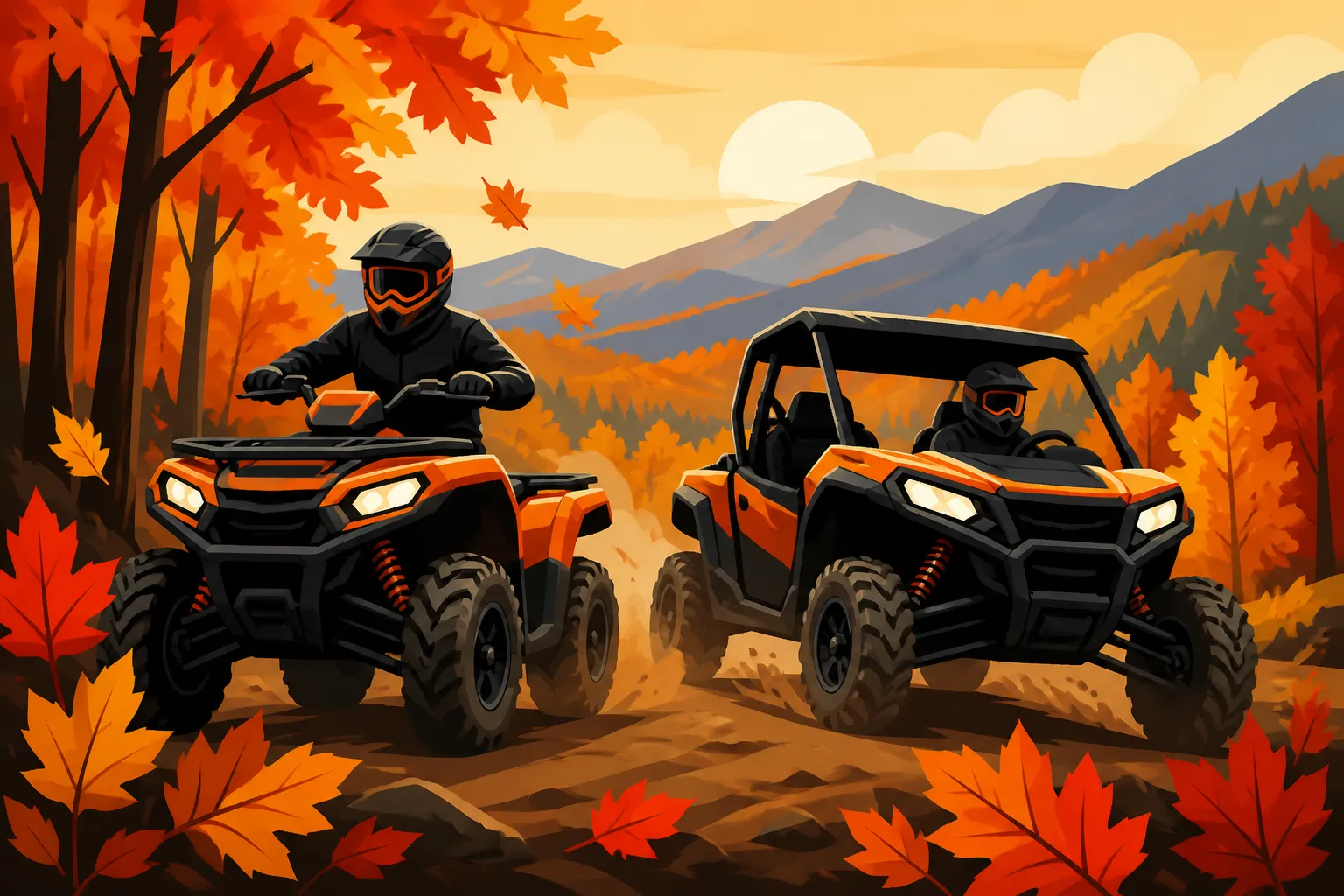
North Georgia’s mountain areas around Blue Ridge, Blairsville, Dahlonega and Chatsworth are popular places to seek fall color. But the timing and intensity of the display vary from year to year and from one elevation to another. A hillside can look colorful while a nearby trail is still mostly green, or a windy day can strip leaves before your planned ride.
That changing scenery affects the ride itself. A dry carpet of leaves may feel harmless until it hides a rock ledge, a branch or a shallow rut. After rain, leaves can become slick and collect in low spots, making a familiar corner feel surprisingly different. Slow down when the trail surface disappears beneath foliage, and don’t assume a route is clear just because you rode it earlier in the season.
Fall conditions also vary within a single day. A shaded trail may stay damp while an exposed section dries in the afternoon. In the mountains, a cool morning can give way to a milder afternoon, then turn chilly again once the sun drops. For a broader look at seasonal planning, see [Georgia Riding Season Month by Month].
Choose the riding area for the machine and the group
Georgia has a mix of public-land trail systems and private off-road parks, and their trail layouts, machine restrictions, access rules and amenities differ. Forest systems such as Houston Valley, Beasley Knob, Whissenhunt, Town Creek, Oakey Mountain and Davenport are associated with Georgia’s national forest riding areas. Their conditions and access can change, so check the specific system before towing there. A machine that fits one trail network may not be permitted or practical on another.
Private parks can offer a different kind of fall outing, with their own trail choices, check-in requirements and rules. They may suit a group that wants to choose among routes by difficulty or ride with amenities nearby. Still, don’t treat “open” as a guarantee that every route is appropriate for your machine or your experience level. Ask about current conditions and restrictions before you leave home.
If your group includes newer riders, children or people who prefer a relaxed pace, prioritize a route you can shorten or turn around on. The most scenic option isn’t always the best choice if it involves steep, leaf-covered climbs or long stretches without an easy exit. Browse [Georgia Trails in the Blue Ridge Mountains] and [Georgia Trails in the Piedmont] when comparing the character of different regions, then confirm access and conditions directly before the trip.
Plan around rain, wind and changing daylight
A fall forecast can be misleading if you only check the conditions at your house. Rain in the mountains may leave a trail wet after nearby towns have dried out, and wind can bring down branches or cover the route with fresh leaves. Before heading out, check the local forecast for the riding area and look for any trail-status notices or closure information. [Georgia Trail Conditions Before You Drive] and [How to Check Georgia Forest Trail Status] are useful starting points for building that pre-trip routine.
Shorter days are easy to underestimate when the morning starts bright. A group that spends extra time unloading, airing down or stopping for photos can find itself riding back in dim light. Set a realistic turnaround time, keep the group together, and avoid starting a route late in the day if you don’t know how long it takes. Carry a dependable light, but don’t use it as a reason to ride beyond your group’s comfort or the area’s operating rules.
Prepare for Leaves, Mud and Cool Weather
Treat leaf cover as a visibility problem
Leaves can conceal hazards rather than remove them. A shallow washout, a protruding root or a rock that would normally be obvious may blend into the trail. Keep your speed low enough to stop within the distance you can see, especially on downhill sections, around blind corners and anywhere the trail narrows.
Leave extra space between machines. If the rider in front brakes suddenly or gets sideways on a slick patch, a close-following machine has little room to react. Avoid passing unless the trail is wide, visibility is clear and the group has agreed on a safe place to do so. On unfamiliar routes, take turns as information stops: the lead rider can point out a hazard, and the last rider can confirm that nobody has been left behind.
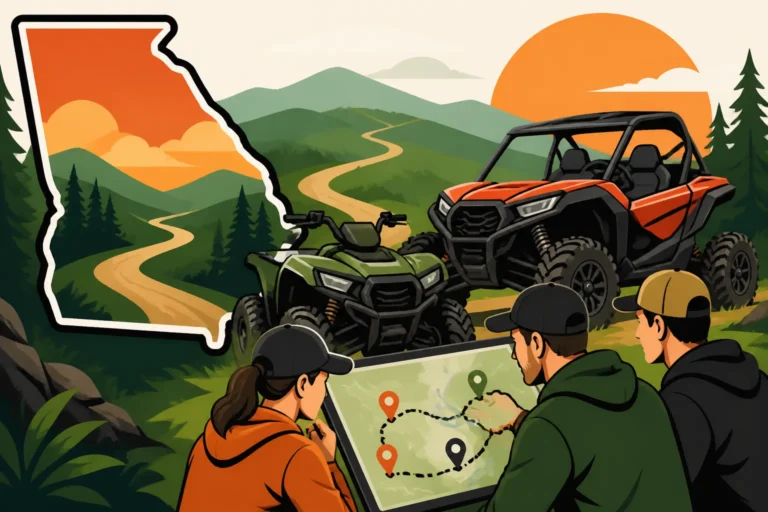
Use navigation as a backup, not a substitute for attention. A route-planning tool such as onX Offroad can help you review an area before you go, but map information should be checked against posted signs and the managing agency’s current notices. Save the route or relevant map information before service becomes unreliable, and keep a paper or written backup of the trailhead location and emergency meeting point.
Adjust your clothing and gear for the temperature swing
Dressing for a fall ride is a balancing act: you may feel cold while unloading and warm up once you’re moving. Layers are more practical than one heavy outer layer. A moisture-managing base layer, an insulating layer you can remove, and a weather-resistant shell help you adapt without getting chilled by sweat or a breeze.
Pack gloves and a dry layer in a protected bag, even when the afternoon forecast looks mild. Mud and water can soak clothing, and wet fabric becomes uncomfortable quickly when the temperature drops. Riders should use appropriate helmets and protective gear for their machine and riding situation. Check that eye protection is clean and secure; low sun, dust and leaves can all make it harder to see trail details.
A small first-aid kit, water, snacks, a charged phone and basic recovery equipment can make a long delay less stressful. Tell someone who isn’t riding where you plan to go and when you expect to return. If you use onX Offroad for navigation, consider carrying a backup power source and make sure everyone in the group knows the meeting point if riders become separated.
Inspect the machine before and after the ride
Before departure, check tires, brakes, steering, lights and any recovery equipment you expect to use. A quick inspection is especially worthwhile if the machine has been stored or used heavily through the summer. Make sure straps and tie-down points are secure before towing, and keep tools or spare items arranged so they won’t shift on rough roads.
During the ride, stop in a safe place if leaves, mud or grass begin to collect around moving or hot components. Don’t reach into a hot or moving area. After riding, remove packed debris and clean the machine before it dries into hard-to-remove mud. Check the undercarriage and radiator area as appropriate for the machine, then look for fresh damage, loose fasteners or cuts in tires. Cleaning is more than cosmetic: it gives you a chance to notice a problem before the next outing.
Plan a Fall Ride That Fits the Group
Compare the main fall-planning choices
| Planning choice | Why it can help | What to confirm |
|---|---|---|
| Public forest trail system | A chance to ride designated routes in a forest setting | Current openings, machine restrictions, permits and trail conditions |
| Private off-road park | May offer different trail choices and on-site facilities | Park rules, route difficulty, fees, hours and reservation needs |
| Morning start | Leaves more daylight for riding and unexpected delays | Local weather, check-in time and the group’s readiness |
| Shorter out-and-back route | Easier to turn around if conditions worsen | Whether the route is open and safe in both directions |
| Group ride with a lead and sweep rider | Helps keep the group organized | Shared route, communication plan and regrouping points |
This comparison is a planning aid, not a guarantee of access or suitability. Conditions can change between the time you research and the time you arrive. Check local notices, follow signs at the trailhead and be prepared to change plans.
Check closures and permissions before towing
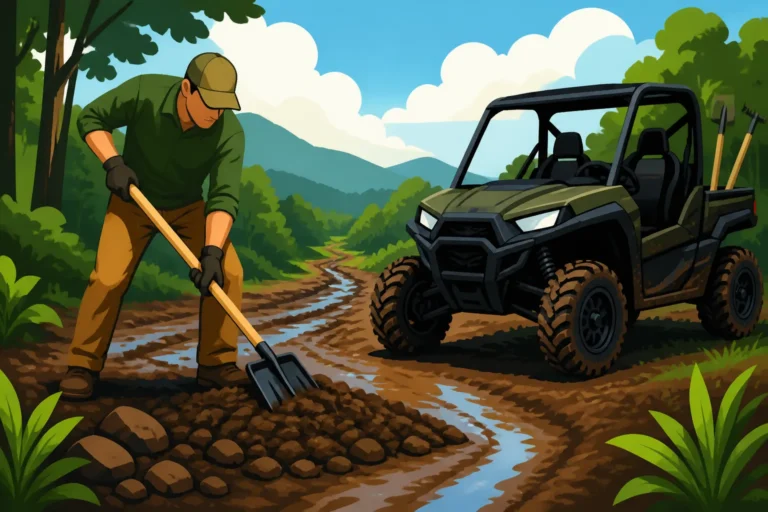
Wet-weather closures deserve special attention in fall. A trail that is already soft can be damaged quickly by tires, and fresh leaves may make a muddy section look deceptively firm. If a route is closed, don’t go around a gate or make a new path through the woods. Choose a different open area or postpone the ride. [Georgia Trail Closures After a Storm] explains why closures matter to both riders and the places they enjoy.
On public land, confirm what access rules apply to the exact area and the type of ride you’re planning. Riding permissions, permits and operating restrictions are not interchangeable from one location to another. Start with [Georgia OHV Permits: What You Need Before You Ride] and check any additional guidance for your destination. For camp-and-ride plans, [Georgia ATV Camping With Trail Access] can help you think through how to coordinate lodging and trail access without assuming they are automatically bundled together.
Use a mapping app such as onX Offroad to help organize a route, but treat official signs and current land-manager information as the authority on access. Keep your plan flexible. If the road to a trailhead is closed, the parking area is full, or the route looks unsafe after rain, a backup destination can save the day.
Account for hunting-season activity
Fall riding may overlap with hunting activity in some areas. Access rules vary by property and land designation, so check the rules for the specific place rather than relying on a general assumption about hunting season. [Georgia Hunting Season and Trail Access] is a useful related topic when you’re deciding whether an area is appropriate for a ride on a particular day.
Make your group visible and predictable. Wear high-visibility clothing where appropriate, stay on authorized routes, and avoid cutting through brush or leaving the designated trail. Keep noise and speed under control near other land users, and don’t stop where you block a road or trail. If you encounter hunters or other trail users, give them room and communicate calmly.
If you’re uncertain whether riding is allowed during a particular activity or season, contact the land manager or property operator before setting out. A quick check is much easier than arriving at a gate and trying to interpret a sign under pressure. It also helps your group avoid creating conflict with people who are using the same area for a different purpose.
A Practical Fall Ride Checklist
The evening before
Check the forecast for the actual riding area, not only your starting point. Review trail status, operating restrictions and any required permits. Confirm that the trail system accepts your machine and that your planned route suits the least experienced rider in the group. If you’ll use onX Offroad or another navigation tool, review the route beforehand and download or save what you may need where cell service is weak.
Tell a non-riding contact your destination, expected return time and a simple plan for what to do if you’re overdue. Charge phones and navigation devices, pack a power bank, and agree on a meeting point. If the group is riding separate machines, decide how you’ll communicate and what you’ll do if someone has to stop or turn back.
At the trailhead
Read posted signs before unloading or setting off. Confirm that the route is open and that your machine is allowed. Take a moment to check that everyone has suitable clothing, water, basic supplies and working protective gear. Review the route and regrouping points with the whole group, not just the person leading.
A short conversation can prevent avoidable confusion later: agree on a comfortable pace, how to signal a stop, and whether riders should wait at forks or other decision points. Keep enough distance to see dust, leaves and hazards kicked up by the machine ahead. If conditions are worse than expected, choose a shorter route or leave rather than trying to “make the trip worth it” at the expense of safety.
During and after the ride
Stop in a safe location when visibility is poor or a section feels beyond the group’s ability. Don’t pressure a rider to attempt an obstacle because others have already crossed it. Turn around when needed, and remember that a scenic ride is still a successful ride if the group gets home comfortably.
Afterward, check the machine for debris, damage and loose equipment. Make a note of any trail conditions that affected your route, but don’t treat a personal observation as a current access notice for other riders. For the next outing, check again: a trail that was dry and open during one fall weekend may be wet, leaf-covered or closed the next. That small habit keeps autumn riding enjoyable while helping protect Georgia’s trails.
Disclaimer
This article is for general informational purposes only and does not constitute professional advice. Laws, prices and regulations vary by location and change over time. Consult a qualified professional for guidance on your specific situation.