Georgia PeeWee Tracks for Small Riders
A small rider’s first outing can go sideways before the engine even starts: a venue may advertise family riding but have no beginner loop, or a child-sized machine may not meet the site’s rules. This guide explains how to find and assess Georgia peewee tracks, prepare your young rider, and plan a safer day without assuming every off-road park is suitable for children.
What Makes a Georgia Peewee Track Suitable for a Small Rider
A peewee track is about the riding experience, not just the machine
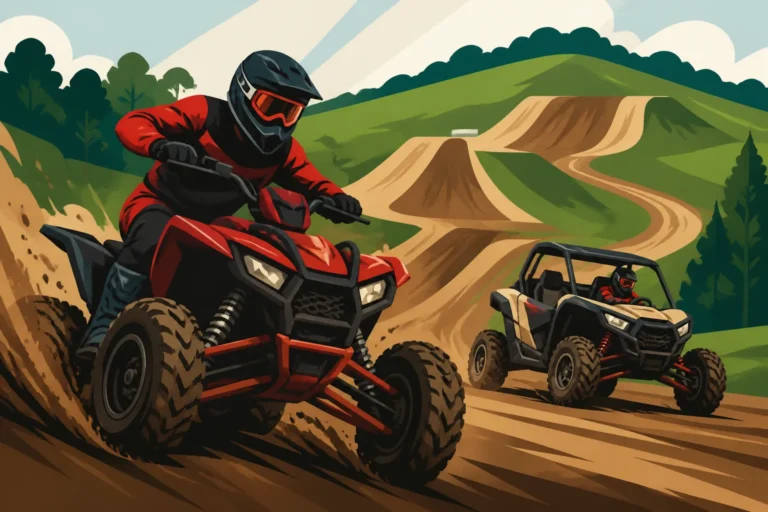
“Peewee track” can mean different things at different facilities. It might be a short, low-speed loop designed for children, a beginner practice area, or a smaller motocross layout with jumps and berms. The name alone does not tell you whether the riding is right for your child. Ask what the track is like, which machines are allowed, and whether a new rider can practice away from faster traffic.
For a first or early outing, look for a predictable layout with clear sightlines, manageable turns, and room for a child to stop without being crowded. A young rider who is still learning to brake and steer may find a busy track with deep ruts or sharp transitions overwhelming, even if the machine itself is small. A parent’s “that looks easy” is not always the same as a child’s comfortable first ride.
Also ask whether the facility separates beginner riders from more experienced riders. A dedicated practice area is often more useful than a large course with a children’s label but mixed traffic. For a broader look at what facilities may offer, see [Georgia Motocross Tracks at Off-Road Parks] and [Georgia ATV Trails for Kids].
Match the track to the child, not the other way around
A child’s age is only one part of the decision. Experience, height, coordination, comfort with the controls, and ability to follow instructions all matter. A child who can ride confidently in an open field may still need time to learn how a track’s turns, surface, and other riders change the experience. And a child who is physically big enough for a machine may not yet be ready to manage its weight or throttle response.
Think about what your child can do consistently—not just what they can do once with close help. Can they start and stop smoothly? Can they turn both directions without drifting wide? Do they understand how to let off the throttle and use the brakes? If those skills are still developing, choose an area where they can practice slowly and where you can supervise closely.
The machine needs to fit the track and the rider. Ask the facility about permitted machine types and size restrictions, then check the manufacturer’s recommendations for the machine itself. A smaller engine does not automatically mean a safer ride: seat height, weight, throttle response, braking, and the child’s ability to reach the controls all play a role.
Finding and Checking Peewee Riding Options in Georgia
Start with the facility’s exact offering
A venue may offer family riding without maintaining a dedicated peewee track. Before you load a machine, ask whether children can ride a separate beginner loop, whether that area is open on the day you plan to visit, and whether it is suitable for the machine your child uses. It is also worth asking whether the venue’s description refers to a motocross track, a general off-road trail, or a practice area. Those are different experiences.
Highland Park Off-Road Resort near Cedartown is a name Georgia riders may encounter when looking for off-road riding. Do not assume that a particular practice area, track, or child-friendly arrangement will be available on your visit. Confirm the facility’s current layout, age rules, machine requirements, operating schedule, and whether beginner riders have a separate place to practice directly with the venue.
You can use a map app such as onX Offroad to help orient yourself and plan the drive to a riding destination, but a map is not confirmation that a track is open or appropriate for a young rider. Check the facility’s own information before leaving, especially if you are traveling with a trailer or building the day around a child’s first ride. For a wider comparison of venue types, see [Georgia Private Off-Road Parks Compared].
Ask specific questions before you make the drive
A quick call or message can prevent the frustrating discovery that your child’s machine is not allowed or the beginner area is closed. Be specific. Rather than asking, “Is this good for kids?” describe the rider’s age and experience, the machine type, and whether they have ridden on a track before. The more detail you share, the more useful the answer is likely to be.
Use questions like these:
- Is there a dedicated peewee or beginner riding area?
- Is it open on the day we plan to visit?
- What machines are allowed there, and are there size or equipment restrictions?
- Are children separated from faster riders?
- What are the minimum age, supervision, helmet, and protective-equipment rules?
- Do riders need to reserve, sign a waiver, or bring proof of ownership?
- What happens if the track is muddy, closed, or unsuitable after rain?
Save the answer or note who you spoke with. Policies and track conditions can change, and a clear confirmation is more useful than relying on an old review or a social media post. If the venue takes reservations, ask whether booking is required for the practice area itself or just for admission. [Georgia Riding Areas That Take Reservations] and [Georgia Trail Conditions Before You Drive] can help you think through the planning details.
| What to check | Why it matters | A useful question |
|---|---|---|
| Dedicated beginner area | Reduces the chance of a new rider being mixed with faster traffic | Is there a separate area for first-time or small riders? |
| Machine requirements | A child-sized ATV or dirt bike may not be accepted everywhere | Which machine types and sizes are permitted? |
| Age and supervision rules | The child may need an adult nearby or specific qualifications | What are your age and adult-supervision policies? |
| Protective gear | Facility requirements may exceed what a family expects | Which helmet and protective gear are required? |
| Weather and track status | Rain can change the surface or close a riding area | How do you announce closures or poor conditions? |
| Fees and booking | Helps avoid surprises at check-in | Do we need to reserve, and what does admission include? |
Preparing Your Child and Their Machine
Build confidence before the first lap
A good first visit does not need to begin with a full lap. Start on level ground in an area where riding is permitted. Let your child get comfortable with the controls, practice starting and stopping, and make gentle turns in both directions. If they feel tense or repeatedly grab the throttle, pause and work on control before adding track features or other riders.
Keep instructions short and specific. “Look where you want to go,” “ease off the throttle,” and “stop here” are easier to act on than a long string of directions shouted from the side of the track. Agree on simple hand signals or a clear stopping point before the engine starts. If your child gets tired or overwhelmed, ending early is a smart decision—not a failed outing.
Plan for patience. The first ride may involve more watching than riding, a short practice session, and several breaks. That is normal. Children often learn better when they are not pushed to keep up with a sibling or parent. If you have more than one young rider, give each child attention rather than trying to supervise several machines at once.
Check the machine and protective gear
Before riding, inspect the machine’s basic condition: brakes, throttle return, tires, controls, chain or belt area where applicable, and any visible leaks or damage. Confirm that the child can comfortably reach the controls and sit in a stable position. Do not rely on a machine’s size label alone; a child should be able to operate it safely, and the manufacturer’s guidance should be followed.
A properly fitted helmet is essential. Check the facility’s rules for helmet type and any requirements for goggles, gloves, long sleeves, long pants, and boots. A helmet that shifts or sits incorrectly can be a poor fit even if it is new. Protective clothing should allow the child to move without loose fabric catching on controls or equipment.
Bring water, snacks, spare gloves, and clothing suited to the weather. Georgia clay and dust can make a short ride messy, and a child who gets cold, hot, or uncomfortable may lose focus quickly. Ask whether the venue has a wash area or nearby facilities rather than assuming. For more planning context, review [Georgia Private Park Helmet Rules] and [Georgia Riding Areas With Wash Stations].
Choosing Between a Private Track and Public Trails
Why a marked track can be a better first outing
A purpose-built track or practice area can give a family a more controlled place to introduce a child to off-road riding. Its boundaries are easier to understand than an informal route, and a designated beginner area may make it easier for a parent to supervise. Still, “private” does not mean risk-free. Surfaces change, riders make mistakes, and facilities set their own rules.
Public off-highway routes are a different proposition. National forest OHV areas and other trail systems may have narrow paths, uneven terrain, changing conditions, and eligibility or permit rules. They are not automatically suitable for a very young or inexperienced rider simply because the machine can physically travel there. Check the rules for the specific riding area, not just general advice about off-road riding.
Keep riding locations distinct from roads. A child’s machine being allowed on a track or trail does not mean it can be ridden on public streets or county roads. Start with the actual destination’s rules and the route’s intended use. [Georgia ATV Trails: Where You Can Legally Ride] and [Georgia OHV Permits: What You Need Before You Ride] are useful starting points when you are comparing designated trail riding with private-facility riding.
Use maps as a planning aid, not a substitute for permission
A map can help you understand where a riding area is, how long the drive may take, and whether a destination is near a town or service stop. onX Offroad can be useful for organizing route planning and reviewing map information before a trip. But a mapped line should not be treated as permission to ride. Property boundaries, closures, access rules, and facility operations need to be confirmed through the relevant park or land manager.
This matters especially when a route passes near private land, a forest road, a gated entrance, or a trail system with seasonal restrictions. A mapped route may help with navigation while still leaving you responsible for checking whether the machine and rider are allowed. If a route seems unclear, do not assume that an open-looking road or path is public riding access.
For a family outing, identify the exact entrance, parking area, check-in location, and any staging instructions before you leave. Save the facility’s contact details and have a backup plan in case the riding area closes. onX Offroad can help you keep the trip organized, while the facility or land manager remains the place to confirm access and current conditions.
A Practical Plan for a First Peewee Track Day
Make the day simple and manageable
A smooth first outing starts at home. Confirm the venue’s rules, check the machine, pack protective equipment, and tell your child what to expect. Explain that there may be check-in steps, a safety briefing, waiting time, and limits on where they can ride. Knowing the plan can make a new setting feel less intimidating.
Once you arrive, take time to look around before unloading or starting the machine. Find the beginner area, identify where adults may stand, and watch a few riders if the facility allows it. Ask staff whether the track has changed since your earlier inquiry. If the surface looks rougher than expected or faster riders are entering the area, ask whether there is a quieter time or a more suitable place to begin.
Keep the first riding block short. A child may be physically tired before they admit it, and fatigue can affect concentration and control. Take breaks, check in without pressuring them to continue, and be prepared to call it a day. A positive short visit can make a child eager to return; an exhausting session can turn riding into something they dread.
Know when to stop or choose another venue
Stop if your child is frightened, cannot follow instructions, repeatedly loses control, or seems too tired to focus. Stop if the machine has a problem, weather makes the surface unsafe, or the area is busier than expected. Children can be disappointed when a plan changes, but it is better to explain the reason calmly than to push through a situation that no longer feels manageable.
It is also reasonable to leave if the venue does not match what you were told. If a designated beginner area is unavailable or the only route is too challenging, do not let the drive or admission cost make the decision for you. Ask whether there is an alternative practice space, reschedule, or choose another kind of outing. The same caution applies if your child’s machine or equipment does not meet the rules.
Before going again, talk through what worked and what felt difficult. Maybe your child needs more practice with braking, a quieter time of day, or a different surface. Keep notes about the machine, gear, and venue requirements, and check rules again before the next trip. For questions about age and supervision, [Georgia Private Park Age Minimums] and [Georgia Rules for a Ten-Year-Old Rider] can help guide your preparation, but confirm the specific facility’s policy directly.
Disclaimer
This article is for general informational purposes only and does not constitute professional advice. Laws, prices and regulations vary by location and change over time. Consult a qualified professional for guidance on your specific situation.