Georgia Motocross Tracks at Off-Road Parks
Finding a motocross track in Georgia can be harder than it sounds: an off-road park may advertise miles of trails but have different rules, access, or machine requirements for its motocross area. This guide explains how to find a suitable park, check what is actually open, prepare your machine and gear, and ride respectfully without confusing motocross tracks with public OHV trails.
How motocross tracks differ from Georgia OHV trails
A motocross track is not simply another trail
A motocross track is a purpose-built circuit, usually with jumps, berms, turns, and changing surfaces. Riders typically complete repeated laps rather than following a route through the woods. The layout may be groomed or reshaped, and its difficulty can depend on recent maintenance, weather, and the pace of other riders.
That makes track riding different from exploring a forest road or a marked trail. A trail ride may involve changing terrain and a mix of machines moving in the same direction. On a motocross track, riders may be traveling at very different speeds on the same loop, often approaching jumps and corners from behind one another. Staying predictable, checking before entering the course, and following posted direction-of-travel rules are essential.
An off-road park may offer both types of riding, but access to one does not automatically include access to the other. A park’s trail pass, riding rules, and available facilities can vary, so ask whether motocross track access is included and whether a separate practice session or check-in is required. For a broader look at the differences between private facilities, see [Georgia Private Off-Road Parks Compared].
Forest OHV trails and private park tracks have different rules
Georgia’s national forest OHV systems are designated trail systems, not general-purpose motocross facilities. A trail permit or access rule for a forest system does not grant permission to ride a private park’s track. Likewise, a private park admission or waiver does not authorize riding on public forest land. Check the rules for the specific property you plan to visit.
The distinction also matters for machine fit. Some public routes have width restrictions or limit which vehicle types can use them; a motocross circuit may instead be organized around dirt bikes and particular riding standards. Before hauling an ATV or UTV, ask whether the track is open to that type of machine. Do not assume a four-wheeler or side-by-side is welcome just because the park has other off-road riding.
If you’re comparing riding options, [Georgia ATV Trails That Allow Side-by-Sides] can help you think through vehicle access on trail systems. For track-specific questions, however, the park is the authority on its own rules. Ask about the course, vehicle classes, operating hours, required safety equipment, and any conditions that could close the track.
Choosing a Georgia park with motocross riding
Look for a dedicated track, not just a general off-road listing
Search results and older rider discussions can use “off-road park,” “motocross track,” and “trail system” as though they mean the same thing. They do not. A park might offer woods trails, a motocross track, a practice area, or some combination. A listing that mentions dirt riding does not prove that a maintained MX track is available to the public on the day you plan to visit.
Start with the park’s own information and confirm the details directly. Ask whether the track is open to public practice, what kinds of machines are allowed, whether the track is separated by rider or machine class, and whether a special event has changed regular access. If the answers are vague, make another call before committing to a long drive.
Highland Park Off-Road Resort is one Georgia facility associated with motocross riding, and its MX track is listed as a feature. That is a useful starting point, not a guarantee that every track or session is open whenever you arrive. Check the operator’s latest instructions and use [Highland Park Off-Road Resort in Georgia] as a related guide to the facility.
Confirm track access, surface conditions, and operating details
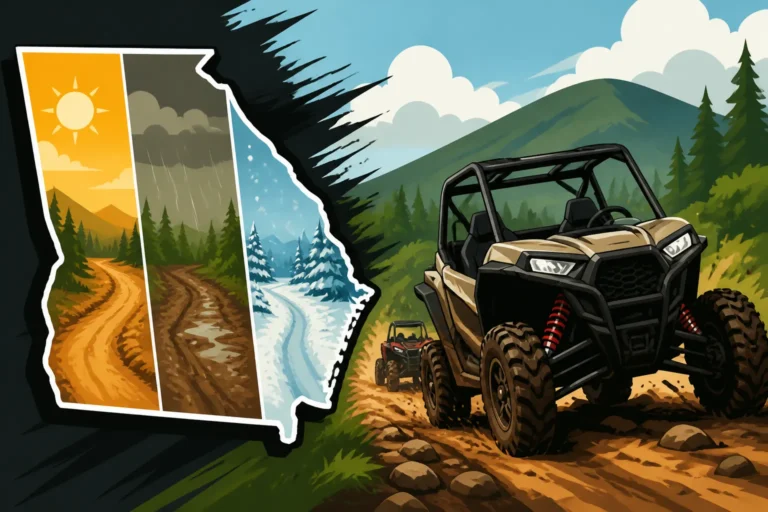
A track can be temporarily closed or unsuitable even when the overall park is open. Rain may leave the surface slick, rutted, or too soft for safe riding. Maintenance, an organized event, or a change in operating arrangements may also affect access. Before leaving home, ask whether the track is open specifically for the vehicle you intend to bring and whether recent weather has changed the riding conditions.
Clarify what “open” means. Is it open practice, a scheduled session, or access limited to a particular event? Does the track have a separate sign-in or waiver? Are there posted noise requirements, age rules, or restrictions on certain tires or machine types? A quick phone call can prevent the familiar frustration of arriving with a loaded trailer only to discover the feature you came for is closed or not suitable for your machine.
Use a map app such as onX Offroad to help orient yourself, plan the approach, and keep track of nearby roads or facilities. Treat it as a navigation aid, not confirmation that a track is open or legally accessible. Check the park’s own directions and access instructions, especially if mobile service may be unreliable near the riding area.
| What to confirm | Why it matters | Useful question to ask |
|---|---|---|
| Track access | General park access may not include the MX track | Is the motocross track open for public practice on my planned day? |
| Vehicle type | A track may be intended for specific machines | Are ATVs or UTVs allowed, or is this track for dirt bikes only? |
| Weather and grooming | Rain and maintenance can change conditions | How has the track been affected by recent weather? |
| Events and sessions | A race or private event may change regular access | Is there an event, schedule, or session rule I should know about? |
| Age and safety rules | Requirements can vary by facility | What rules apply to younger riders and protective gear? |
| Fees and waiver process | Check-in requirements may differ from trail access | Is there a separate track fee, waiver, or sign-in? |
For a wider comparison of park facilities and what to check before choosing one, read [Georgia Private Off-Road Parks Compared] alongside the park’s direct guidance.
Preparing your machine and riding gear
Match the machine to the track and your experience
A motocross track can be demanding on both rider and machine. Tight corners, repeated acceleration, jump faces, and rough landings put different stresses on a vehicle than a relaxed ride along a smooth forest road. A machine that feels comfortable on private property may behave differently when the surface is rutted or when other riders are moving quickly nearby.
Ask whether your vehicle is permitted and appropriate for the course. Some tracks are built around dirt bikes, while others may have separate areas or rules for other machines. A side-by-side’s width and turning behavior can make it a poor fit on a narrow bike track, even if the park allows side-by-sides elsewhere. If you ride an ATV, check whether the track’s layout, traffic pattern, and surface are suitable for it.
Be honest about your experience, too. A beginner who has never ridden a jump should not treat a large track feature as a challenge to conquer on the first lap. Start slowly, learn the line, and leave space for riders with more speed. If the park has beginner areas, a smaller practice course, or skill-based sessions, ask about those before choosing the main track. [Georgia ATV Trails for Beginners] offers useful general planning considerations for newer off-road riders, even though a motocross circuit has its own demands.
Inspect the machine before loading and again at the park
A basic pre-ride inspection is especially valuable when you expect repeated laps. Check tire condition and pressure according to the machine’s requirements, inspect the brakes and controls, and look for loose fasteners, visible leaks, or damaged parts. Make sure the throttle moves freely and returns as expected. If you find a concern, address it before riding rather than hoping it will hold together through the session.
Bring the tools and supplies you’re realistically prepared to use. That might include basic hand tools, a tire gauge, water, and any manufacturer-recommended spares that make sense for your machine. Avoid making last-minute mechanical adjustments at the track if you’re not confident in the repair; a rushed change can create a new problem. If the machine has been sitting, test it close to home before making a long trip.
After arriving, look over the course before riding. Notice ruts, standing water, loose soil, blind rises, and areas where riders may rejoin the circuit. Conditions can change over the day, so a track that felt manageable early on may become rougher as more machines pass over it. A second check after a break is sensible, particularly if you hear a new noise or feel a change in steering or braking.
Wear protective gear that fits the riding
A helmet that fits properly is basic preparation, not an optional accessory to think about after arriving. Use riding gear suited to the machine and the conditions, including eye protection, gloves, boots, and protective clothing. For an ATV or UTV, follow the park’s specific requirements and use the vehicle’s installed safety equipment as intended. A helmet does not eliminate risk, but skipping protective gear can make a fall or collision much worse.
Comfort affects judgment. Georgia heat, humidity, dust, and physical effort can leave riders tired sooner than they expect. Bring drinking water and take breaks before you feel depleted. Dusty conditions can make eye protection especially important, while wet conditions may call for gear that remains manageable when muddy. Check that goggles, helmet straps, and gloves fit securely before you start, rather than adjusting them while stopped in a busy riding area.
If you’re bringing a child or a new rider, check age and supervision requirements before the trip and choose a course that matches their ability. Do not use another rider’s confidence as a measure of what your child can safely handle. Park rules may include age limits or separate requirements for different riding areas; [Georgia Private Park Minimum Ages] and [Georgia Private Park Waivers and Rules] are useful related reads.
Riding the track safely and considerately
Learn the traffic pattern before joining a lap
Before entering a track, stop somewhere safe and observe how riders use it. Find the designated entrance and exit, confirm the direction of travel, and watch how riders approach corners and jumps. Never pull onto the course simply because there appears to be a gap. A faster rider may be approaching from a blind section, and your machine may not accelerate or turn as quickly as you expect.
Keep a consistent line and avoid sudden changes in direction. If you need to slow down, leave the main riding line when it is safe and follow the park’s instructions for exiting or stopping. Do not stop just beyond a jump, in a blind corner, or where other riders have little room to react. If you fall or have a mechanical issue, get clear of the active riding line as safely as possible and ask for help.
Give other riders space. Avoid crowding, racing someone who has not agreed to race, or trying a pass where the track narrows or sightlines are poor. A motocross track brings together different levels of experience, and no one is helped by an aggressive pass that forces another rider off line. If you are unsure how a track handles passing, ask staff before riding.
Build speed gradually and know when to stop
Your first lap is for learning, not proving anything. Ride at a pace that leaves room to respond to a rut, a stalled machine, or another rider taking an unexpected line. Work up to more speed only after you understand the course and feel in control. If a jump or section seems beyond your current ability, ride around it if allowed or exit the course. You are not required to attempt every feature.
Fatigue can creep up during repetitive riding. A rider may feel confident early in a session, then become slower to react as arms tire or concentration drops. Take a break when your grip, balance, or attention starts to fade. Stop riding if you feel dizzy, overheated, unusually short of breath, or unable to focus. Resting is a practical decision, not a failure.
Pay attention to changes in the track, too. Fresh ruts, loose berms, or a newly slick section can alter a familiar line. If the conditions feel different, reduce your pace and reassess instead of relying on memory from an earlier lap. For more general guidance on interpreting route difficulty, [Georgia Trail Ratings and What They Mean] can help with the broader habit of matching a ride to your ability, though track ratings and trail ratings may not use the same system.
Respect staff instructions and other park users
Park staff are managing a shared facility, not just a piece of dirt. Follow posted speed limits, one-way rules, vehicle restrictions, noise requirements, and instructions about where to park or unload. If staff close a section or ask riders to wait, do not look for an unofficial way around the restriction. A closed area may be unsafe, under repair, or reserved for a scheduled activity.
Be considerate in the pits and parking areas. Keep equipment and vehicles out of travel lanes, supervise children, and avoid revving unnecessarily near other visitors. If your group is sharing a track with riders you do not know, agree on a simple plan: where to meet if separated, who is checking the course rules, and when to take breaks. [Georgia Group Ride Planning] covers helpful coordination habits for riding with others.
After the ride, clean up your area and check the machine before loading. Mud, loose parts, and equipment left behind create work for staff and inconvenience for the next visitor. If you noticed a damaged feature, hazard, or unclear sign, tell the park instead of assuming someone else has reported it. A brief, specific note helps the operator decide whether the area needs attention.
Planning a useful track-riding day
Make a practical checklist before you leave
A good day starts with a few checks the night before. Confirm the park’s address and current arrival instructions, make sure your machine is permitted on the track, and ask about weather-related changes. Check your trailer, tie-downs, fuel plan, and basic riding gear. If you’re traveling with others, make sure everyone understands where the group is going and what time you expect to return.
Use the following checklist as a starting point:
- Confirm that the motocross track is open to public riding on your planned day.
- Verify the track permits your vehicle type and rider’s experience level.
- Ask about check-in, waivers, fees, age rules, and required safety equipment.
- Review the weather and ask whether recent rain has affected the surface.
- Inspect the machine, trailer, tie-downs, tires, brakes, and controls.
- Pack protective gear, drinking water, basic tools, and any necessary medication.
- Save the park’s directions and instructions before you lose mobile reception.
A map app such as onX Offroad can help with route planning and orientation, but it cannot replace permission from the land manager or park operator. Use official directions for the final approach, and don’t treat an apparent line on a map as permission to cross private property or use an unmarked route.
Plan for conditions beyond the track itself
A park visit often involves more than riding. Consider where you’ll park, unload, refuel, take breaks, and clean up. Ask whether there are restrooms, water, wash areas, or other facilities you expect to use. Facilities can differ from one property to another, and a park may have limited services even when it offers extensive riding. [Georgia Trailhead Restrooms and Water] and [Georgia Riding Areas With Wash Stations] provide useful questions to consider when planning an off-road outing.
Think about what happens if the weather turns or someone in your group has a problem. Bring a way to contact your group, identify a meeting point, and make sure someone knows your plan. If the park is remote, save the address and any check-in details in advance. Navigation apps such as onX Offroad can support orientation, but plan for the possibility of weak cell service and follow the facility’s own emergency procedures.
Finally, build flexibility into the day. A track might be too wet, crowded, or difficult for a newer rider, even if it was your main reason for visiting. Having a backup plan—such as using another area the park allows, watching a session, or calling it early—can turn a frustrating trip into a safer one. Confirm options before paying or unloading, and do not move to a nearby trail or road unless you know that access is allowed.
Choose the right kind of riding day for your group
A successful outing does not have to mean riding the fastest or most challenging course. For a family, the best day may involve short sessions, regular breaks, and a track that gives less experienced riders room to learn. For a group with mixed abilities, agree in advance that no one is expected to keep up with the fastest rider. Splitting into smaller groups can reduce pressure and help everyone ride at a suitable pace.
If the track is not a good fit, ask the park about other designated areas rather than improvising. A woods trail, practice area, or spectator location may be a better alternative, depending on what the facility allows. Keep the machine within the park’s stated vehicle rules, and don’t assume that an area suitable for one vehicle is safe for another.
A little preparation makes it much easier to enjoy Georgia motocross riding without unpleasant surprises. Confirm the track, match the machine and pace to the course, follow the park’s rules, and stay willing to change plans when conditions call for it. That approach protects your group and helps keep the facility usable for the next ride.
Disclaimer
This article is for general informational purposes only and does not constitute professional advice. Laws, prices and regulations vary by location and change over time. Consult a qualified professional for guidance on your specific situation.