Town Creek Trail Access
Town Creek is an easy name to search and a surprisingly easy trailhead to misjudge: a map pin may not tell you whether the route is open, which machines fit, or where a required permit applies. This guide explains how to plan access near Suches, Georgia, check the details that matter before you tow, and arrive ready for a safe ride.
Finding Town Creek and Planning the Approach
Where the trail system is
Town Creek OHV trails are in the Chattahoochee-Oconee National Forest, near Suches in the North Georgia mountains. Suches is a useful place to orient yourself when planning a trip, but the town itself is not the trailhead. The final approach involves forest roads, where conditions and access can change. Before setting out, confirm the trailhead location and route using current Forest Service information.
A navigation app can help with the broader drive, but don’t rely on a dropped pin as proof that a particular road is open or suitable for your vehicle. Forest roads may be narrow, rough, or subject to closures. If you’re towing, consider whether your trailer can safely manage the last part of the approach and whether you’ll have room to turn around or park once you arrive.
The onX Offroad app can be useful for seeing mapped roads and trail routes while you plan. Treat it as a planning aid rather than the final word on access: compare its map with Forest Service trail information and signs at the site. For a broader look at how Town Creek fits among the region’s public riding options, see Georgia’s Six National Forest OHV Systems and Georgia Town Creek OHV Trails.
Check access before you leave home
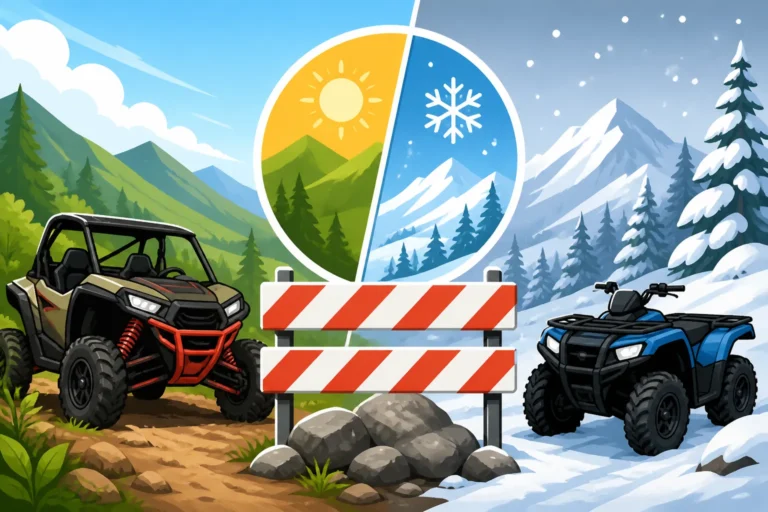
Trail access is not simply a matter of finding the entrance. You’ll want to confirm that the system is open, that your machine is allowed on the route you plan to ride, and that any required permit is arranged. Weather can affect forest roads and trails, while maintenance, seasonal restrictions, or other closures can change where riding is allowed.
Check the official Forest Service information close to your departure, especially if rain has recently moved through the area. A route that appears open on an older map may have a temporary closure, and a passable forest road can become difficult after heavy rain. Georgia Trail Conditions Before You Drive and Georgia Trails That Close After Rain offer more guidance on what to check before committing to the drive.
Use a map app such as onX Offroad to understand the general layout and identify your planned approach, then verify that information with the responsible land manager. It’s also sensible to save the trailhead location for offline use if you expect weak cell service. A screenshot or downloaded map can make the last turn less stressful when your phone stops loading directions.
Confirm the machine fits the route
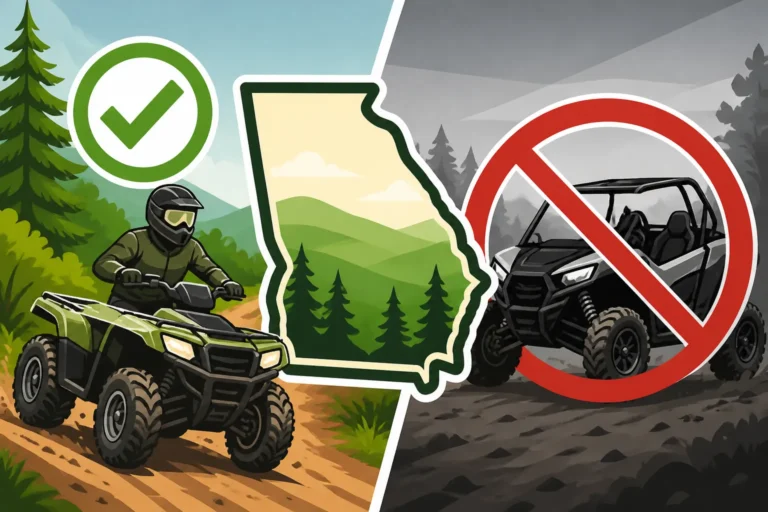
Do not assume that every OHV trail welcomes every type of ATV or UTV. Trail width limits, vehicle categories, and posted restrictions can differ from one riding area to another. If you’re bringing a side-by-side, check its width and confirm that it is permitted on the specific Town Creek route you intend to ride. A machine that fits comfortably on a wide forest road may still be too wide for a designated trail.
This is especially important if you’re towing a larger machine from outside the area. Measure the machine in its riding configuration, including accessories that add width, and check the relevant trail restrictions before loading it. Georgia ATV Trails That Allow Side-by-Sides explains why machine compatibility needs to be verified rather than guessed.
A map showing a trail does not, by itself, establish that your vehicle is permitted there. Look for official restrictions at the trailhead and on the Forest Service’s information for that system. If the permitted machine class remains unclear, ask the managing ranger district before making the trip.
Permits, Parking, and Trailhead Preparation
Understand the permit requirement
Forest OHV permits are generally organized around the operator rather than the machine. That means riders in a group should check whether each person who will operate a vehicle needs their own permit. A passenger and an operator are not automatically treated the same, so confirm the rule for your situation instead of assuming that one permit covers everyone in the group.
The Georgia’s Per-Operator Permit, Not Per Vehicle guide explains the basic distinction, while Buying a Day Permit the Morning You Ride can help you plan if you are not purchasing an annual permit. Check the current purchase process and rules through the appropriate Forest Service or Recreation.gov information before you drive. Keep proof of the permit accessible during the ride, whether you carry it on your phone, bring a printed copy, or use both.
onX Offroad may help you organize the route, but a navigation app does not replace an OHV permit or establish that a machine is authorized to ride. Handle those requirements separately: confirm the permit, confirm your machine’s eligibility, and then use your map to follow the permitted route.
Get ready for the parking area
Plan to arrive with enough time to unload and get organized without blocking other visitors. Trailhead parking can be more limited than it looks on a map, particularly when several vehicles arrive together or when trailers need extra room to maneuver. Park only where permitted, keep access lanes clear, and avoid blocking gates or forest roads.
Bring water, food, basic tools, and the riding gear you’ll need for the day. Facilities and cell service can be limited in forest recreation areas, so don’t count on being able to buy supplies at the trailhead or call for help from every point on the route. Check what amenities are actually available before you leave; Georgia Trailhead Restrooms and Water provides a useful checklist for setting expectations.
A few practical steps make unloading smoother:
- Confirm your trailer and tow vehicle can reach the designated parking area.
- Secure loose gear before unloading.
- Keep helmets, permits, keys, and essential tools easy to find.
- Agree on a meeting point in case your group gets separated.
- Take a moment to review the route and any posted notices before riding.
Read signs and verify the route on site
At the trailhead, pause long enough to read the signs rather than following another group’s tire tracks. Signs may identify allowed vehicle types, trail direction, closures, or other restrictions. If a route is marked closed, do not ride around the barrier or assume the closure applies only to another kind of vehicle.
Use your map to stay oriented, but let posted restrictions and official notices govern your decisions. The onX Offroad map can provide helpful context when you’re comparing your location with nearby mapped routes, yet an app layer may not reflect a new closure or a sign installed on site. Reading a Forest Service Trail Sign explains what to look for before you start.
If the trail system has one-way routes, follow the designated direction even when a short connector seems to offer a quicker way back. On a narrow or winding route, unexpected oncoming traffic can create a dangerous situation. Review Georgia Trail Etiquette on One-Way Loops before riding in a group or on an unfamiliar system.
Choosing a Ride and Staying Flexible
Match the route to your group
A good Town Creek day starts with a realistic plan, not an ambitious one. Consider the experience of the least experienced rider in your group, the type of machine they’re operating, and how comfortable everyone is with uneven terrain. If someone is new to off-road riding, make the first part of the day an opportunity to get comfortable before attempting more challenging sections.
Agree on a simple group plan before leaving the trailhead. Decide who will lead, who will bring up the rear, where you’ll regroup, and what everyone should do if a rider stops or takes a wrong turn. Keep the group together at turns and intersections instead of assuming that each person will spot the right route.
OnX Offroad can help group members review the planned route together before setting off. For a larger group, share the route details in advance and confirm that everyone understands the same meeting point. A shared plan is more dependable than expecting riders to follow each other’s dust through a wooded trail system.
Let weather and trail conditions guide the day
Mountain weather can change quickly, and rain can affect both the trail surface and the roads leading to the trailhead. Mud may look like part of the fun, but deep ruts can damage a route, reduce traction, and make recovery harder. If conditions seem worse than expected, shorten the ride or turn around rather than pushing on just because you made the drive.
Check for recent weather and official trail notices before departure, and look again when you reach the area. A trail that was manageable earlier in the day can become slick after a shower. If your group encounters a closure, washed-out section, or conditions beyond its ability, stop and choose a safe alternative rather than creating a new route around the problem.
Flexible plans are especially helpful when the drive is long. Choose a backup activity or a different permitted riding area in case Town Creek is unavailable. Georgia ATV Trails: Where You Can Legally Ride can help you compare other legal riding options, but verify each location’s access rules separately rather than assuming the same permit or machine restrictions apply.
Use a simple access checklist
A short checklist can prevent the most frustrating problems: arriving at a closed trail, discovering that a machine is too wide, or realizing that the group misunderstood the permit rule. Before leaving, confirm the trail is open, check machine eligibility, arrange required permits, and make sure your tow vehicle and trailer can reach the designated parking area.
| Before the drive | At the trailhead | During the ride |
|---|---|---|
| Check official access and closure information | Read posted signs and restrictions | Stay on designated routes |
| Confirm your machine is allowed | Park without blocking roads or gates | Follow one-way signs |
| Arrange the required operator permit | Review the route with your group | Turn back if conditions become unsafe |
| Check weather and forest-road conditions | Keep essential gear accessible | Respect closures and other visitors |
| Save maps for offline use if needed | Agree on a meeting point | Leave the trail as you found it |
If one important detail is uncertain, resolve it before you tow. That small pause can save a long drive and help protect the trail system for the next group of riders.
Disclaimer
This article is for general informational purposes only and does not constitute professional advice. Laws, prices and regulations vary by location and change over time. Consult a qualified professional for guidance on your specific situation.