Riding All Six Forest Systems in a Season
Planning to ride all six Georgia National Forest OHV systems in one season sounds like a simple checklist—until rain, seasonal closures, trail-width limits, and long mountain drives start changing the plan. This guide helps you organize the six areas into realistic trips, prepare for different terrain, and check access before you haul your machine to a trailhead.
Plan the season around the six riding systems
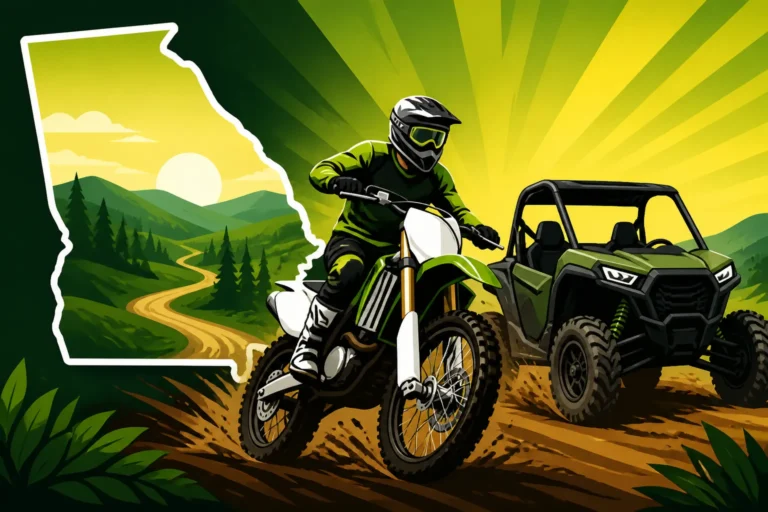
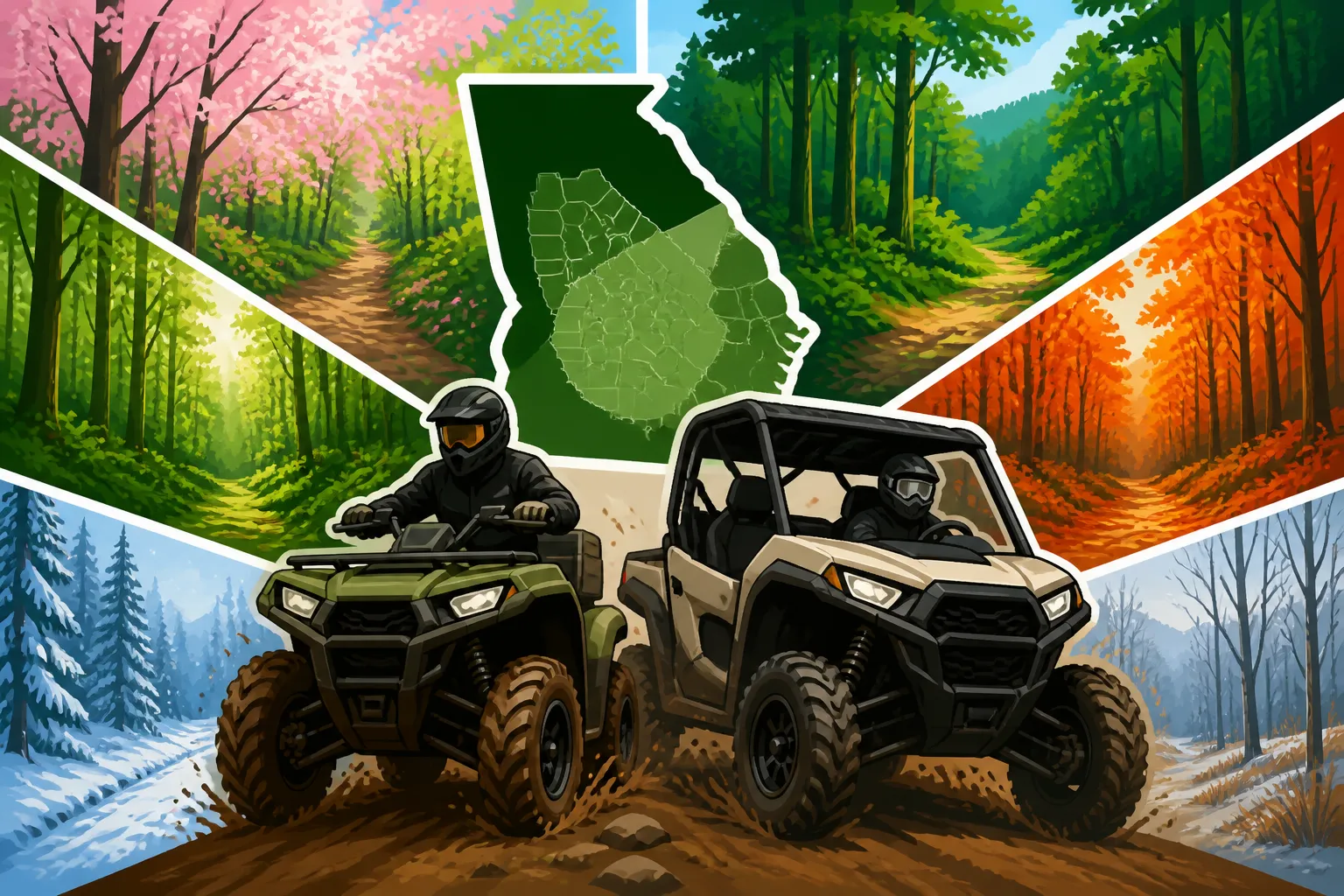
Georgia’s six National Forest OHV systems are spread across the north Georgia mountains, so riding all of them is as much a travel-planning challenge as a trail challenge. The areas are Houston Valley, Beasley Knob, Whissenhunt, Town Creek, Oakey Mountain, and Davenport Mountain. Treat each as its own destination rather than assuming one permit, one map, or one weekend plan covers every detail.
For an overview of how the systems fit together, start with Georgia’s Six National Forest OHV Systems. Then build your season around the areas you can reach comfortably, the machine you ride, and the conditions you’re willing to handle.
Group trips by location instead of chasing a checklist
A common planning mistake is to try to check off every system in a rigid order. A trail may be closed after heavy rain, your machine may not fit a particular route, or a long drive may make a one-day visit feel more like a hauling exercise than a ride. Keep your schedule flexible enough to swap destinations when access or conditions change.
The six systems are in north Georgia, but they are not all interchangeable. Houston Valley is near Dalton, while the other trail systems sit in different mountain communities and forest areas. Mapping drive times from your home, trailer parking, fuel stops, and possible overnight stays can help you group nearby destinations into efficient trips. If you’re coming from Atlanta, Chattanooga, or farther south, a two-day outing can make more sense than trying to ride and return home in one exhausting day.
Digital mapping tools such as onX Offroad can help you organize saved destinations, routes, and trip notes. Use them as planning aids, not as a substitute for official trail information: a mapped road or trail line does not, by itself, mean it is open to motorized riding. Check access and closures before you leave.
Choose a sequence that leaves room for closures
A practical season plan is a rolling list rather than a calendar packed with fixed dates. Pick a primary system for each trip and one backup. If a system is closed or conditions are unsuitable, you can redirect without wasting the weekend or pressuring yourself to ride in unsafe conditions.
Seasonal access can vary by location, weather, management decisions, and trail conditions. Beasley Knob, for example, has a seasonal closure period, so check its status rather than assuming it will be open because the weather looks good elsewhere. Heavy rain can also affect mountain routes differently from nearby lowland roads. Before each outing, review Georgia Trail Conditions Before You Drive and How to Check Georgia Forest Trail Status.
A simple planning sheet can keep the details straight:
| Planning item | What to confirm before leaving |
|---|---|
| Trail system | Correct trailhead, access road, and current operating status |
| Machine fit | Width restrictions and permitted vehicle types |
| Permit | Whether each operator has the required permit |
| Weather | Recent rain, forecast, and possible storm impacts |
| Trip logistics | Fuel, food, trailer parking, and a backup plan |
| Riding group | Experience level, passenger arrangements, and meeting point |
Match your machine and riding skills to the trail
The phrase “OHV trail” can make every route sound suitable for every off-road machine. In practice, trail width, surface, grade, turns, and restrictions can make a major difference. A route that works well for a narrow ATV may not accommodate a wider side-by-side, while a newer rider may prefer a simpler outing over steep or rutted terrain.
Before setting out, review Georgia Trail Widths and What Fits and Georgia ATV Trails That Allow Side-by-Sides. When comparing options, consider the entire group—not just the most experienced rider or the machine with the most ground clearance.
Check width and machine fit before towing
Width limits can determine whether a machine is allowed on a route, even when it can physically squeeze between trees or around obstacles. Measure the machine at its widest point, including accessories that affect its overall width. A replaced wheel setup, wider tires, or added attachments can change the measurement from what the owner’s manual lists.
This is especially important for side-by-side owners planning to visit a narrow trail system. Don’t rely on photographs, forum posts, or a guess based on another person’s machine. Confirm the relevant restriction for the specific system and trail before loading the trailer. The practical guide Measuring Your Machine Before You Tow can help you think through what to measure.
The same caution applies to vehicle types. A trail system’s general name or reputation does not prove that every route is open to every kind of OHV. Check the current rules for your machine, and make sure the trailhead information matches what you intend to ride. onX Offroad can help you keep candidate trail areas and access notes together, but verify restrictions with official Forest Service information before you travel.
Build the day around the least experienced rider
A six-system season is more enjoyable when each ride is planned for the people actually coming along. If one member of the group is new to trail riding, choose a manageable route and allow time for breaks, navigation, and regrouping. Avoid letting the most confident rider set a pace that leaves everyone else worried about keeping up.
Before leaving the trailhead, agree on a simple group routine: where to stop, how to handle a separation, and what to do if a machine develops a problem. Keep a safe following distance, especially where visibility is limited, and don’t crowd another rider on a climb or descent. In a mixed group, the person with the least experience should not feel pressured to attempt an obstacle simply because others have already crossed it.
If you’re selecting a first destination or bringing a newer rider, Best Georgia ATV Trails for Beginners can help frame the choice. Beginners still need to follow the same closures, permits, and machine restrictions as everyone else; “easier” does not mean unrestricted.
Prepare for permits, weather, and trailhead logistics
A successful ride often depends on the small details handled before departure. A forgotten permit, a closed access road, or an empty fuel can turn a long-awaited outing into a frustrating day at the trailhead. Build these checks into your trip routine instead of treating them as last-minute errands.
Sort out permits for every operator
Georgia’s National Forest OHV permit system is based on the operator, not simply on the vehicle. If two people are taking turns operating a machine, or several riders are in the group, check what each operator needs. Read Georgia’s Day and Annual Forest OHV Permits and Georgia National Forest Permits Are Per Operator before buying or relying on a permit.
Keep proof of the permit accessible during the ride, whether you carry a printed copy or another accepted form. Don’t assume a passenger’s permit covers the person driving, and don’t confuse a forest OHV permit with permission to ride on every nearby road or property. The permit is one part of preparing for a legal outing, not a general pass for off-road riding throughout Georgia.
Before the trip, make a quick check that everyone in the group understands the permit requirement. This is particularly useful for a family or club ride where people may arrive separately. If the group is visiting several systems during the season, save the permit details with each trip plan so you don’t have to reconstruct the same information at every departure.
Treat rain and trail status as go or no-go information
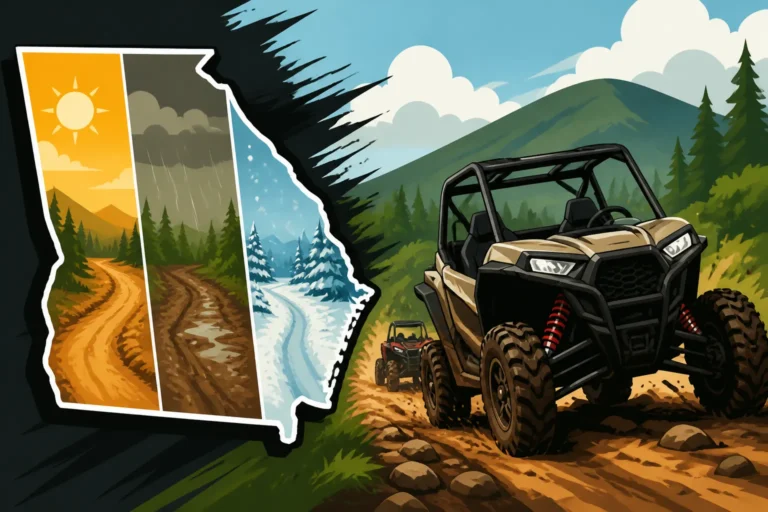
Mountain weather can change quickly, and rain may leave clay surfaces slick, deepen ruts, or damage a trail. Even if the trail is technically open, riding after heavy rain can be unpleasant and can contribute to erosion. Georgia Trails That Close After Rain explains why a wet-weather closure should be taken seriously rather than treated as an inconvenience to work around.
Check trail status close to departure, then check again if severe weather is forecast while you’re traveling. A post from a rider who visited last month may not reflect a closure announced this week. onX Offroad can be useful for saving your planned area and keeping trip notes in one place, but use official status information to confirm whether the route is open.
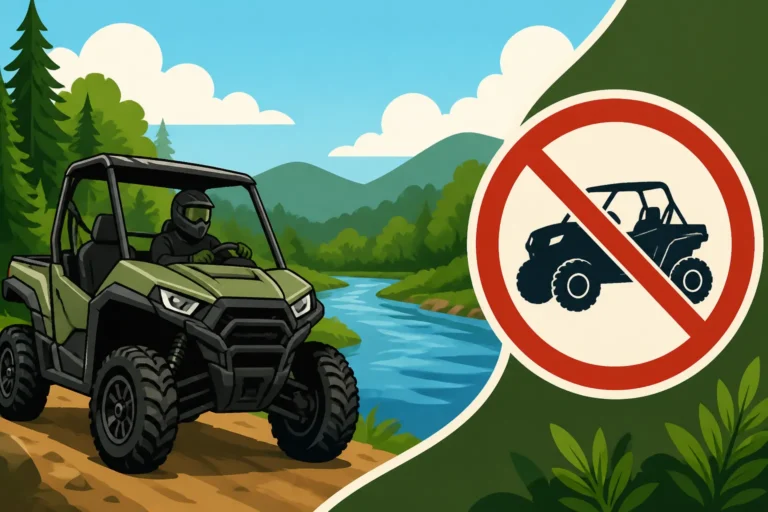
If you arrive and find a gate closed, a sign posted, or conditions that don’t match the plan, don’t ride around the barrier. Switch to your backup destination or call it a rest day. A wasted drive is frustrating, but it is better than damaging the trail, getting stuck, or riding somewhere you aren’t permitted to be.
Pack for the trailhead, not just the ride
Trailhead facilities and services can differ, so avoid assuming there will be water, food, fuel, or a place to make repairs nearby. Bring drinking water, snacks, basic tools, a first-aid kit, and the essentials needed to secure your machine for the return trip. Tell someone outside the riding group where you plan to go and when you expect to be back.
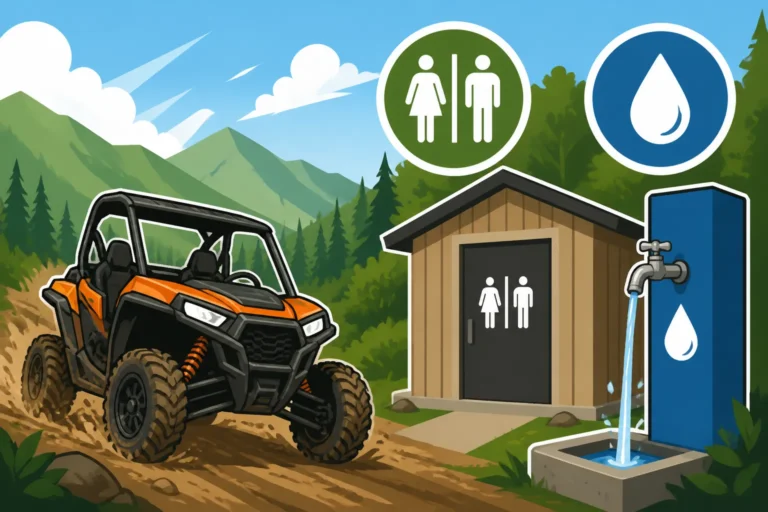
Check the parking situation and arrive with a trailer plan. A full lot or an awkward turnaround can create problems before anyone has started riding. Georgia Trailhead Restrooms and Water is a useful reminder to verify amenities rather than counting on them. If your ride depends on a nearby fuel stop, confirm its location and operating availability before you leave home.
Make each visit count without rushing the season
Riding all six systems in a season is a satisfying goal, but it does not need to become a race. Give each area enough time to learn its access points, ride within your group’s ability, and respond to changing conditions. A careful plan also makes it easier to return to a favorite system instead of treating every visit as a one-time checklist stop.
Keep a simple record after every trip
After each ride, record the system you visited, the trailhead you used, the machine you brought, and anything that affected the day. Note whether the route felt appropriate for your group, which supplies you wished you had packed, and whether the drive or parking setup created a hassle. These details are more useful than a vague memory when you’re planning the next outing.
Save official closure notices or access information with the trip record, but date your notes so you don’t mistake old information for current guidance. A route that was open during one visit may be affected by weather or management changes later. A saved map in onX Offroad can help organize your own route ideas and notes; still confirm the latest access information before you ride.
If you ride with a club or friends, share practical observations rather than presenting them as guarantees. “We found the trailhead this way on our visit” is more responsible than promising that the route is always open or that a certain machine will fit. Trail conditions and restrictions can change.
Leave the system ready for the next rider
Stay on designated routes, follow signs, and avoid creating new tracks around mud, fallen debris, or a closure. Riding around an obstacle can widen a trail or damage the surrounding ground, especially when the soil is wet. Reading a Forest Service Trail Sign and Georgia Trail Etiquette on One-Way Loops can help reinforce the habits that keep shared routes safer and more enjoyable.
Pack out trash, respect other trail users, and keep noise in mind near homes and recreation areas. If a machine breaks down, move it out of the way when it is safe to do so and arrange recovery without blocking the trail. A little patience at a narrow section or one-way route can prevent a small inconvenience from turning into a close call.
Most of all, let the conditions guide the day. You don’t have to finish every planned route or visit every system on a predetermined schedule. A flexible plan, a suitable machine, and a group that is willing to turn back are what make a season of Georgia OHV riding memorable for the right reasons.
Disclaimer
This article is for general informational purposes only and does not constitute professional advice. Laws, prices and regulations vary by location and change over time. Consult a qualified professional for guidance on your specific situation.