Georgia’s Annual Off-Highway Registration
For many Georgia off-highway vehicle owners, the idea of getting their side-by-side or UTV legally registered for certain public roads has long felt like an impossible dream. The frustration of being restricted to private land or trails, while knowing your machine could safely navigate a county road, has been a real headache. This comprehensive guide is here to demystify Georgia's annual off-highway vehicle registration process, breaking down exactly what it means for your machine and how you can navigate the requirements to get that coveted plate.
What is Georgia's MPOHV Registration and Why Does it Matter?
It’s easy to feel lost in a sea of acronyms and legal jargon when it comes to vehicle registration, especially for something that doesn't quite fit the traditional car or truck mold. For years, Georgia ATV and UTV owners have struggled with the state's stance on off-highway vehicles, often feeling left out of the public road system. That frustration changed when Georgia introduced its new registration process for Multi-Purpose Off-Highway Vehicles, or MPOHVs. This isn't about making every single ATV street-legal on every road, but it opens up crucial access for specific types of machines on a limited road network.
Understanding the MPOHV Definition and Its Purpose
First off, let's tackle what an MPOHV actually is in the eyes of Georgia law. It's not just any ATV or dirt bike you have sitting in your garage. An MPOHV is a specific type of off-highway vehicle that has been manufactured for utility and recreational use and meets a stringent list of safety and design criteria. This classification is vital because it separates these machines from standard ATVs, which generally cannot be registered for road use, as explained further in [Why a Four-Wheeler Cannot Be Registered in Georgia]. The primary purpose of this MPOHV registration is to provide a legal framework for owners of qualifying side-by-sides and UTVs to operate their machines on designated county roads, not state highways or interstates.
The introduction of MPOHV registration recognizes that many people use these vehicles not just for recreation on private land, but also for practical tasks, property management, or even just getting around rural areas. Before this, the legal ambiguity often left riders feeling vulnerable to citations, even when they were simply crossing a paved county road to get from one section of their property to another. This new system, which you can learn more about in [Georgia MPOHV Registration Started December 2023], aims to bring clarity and legitimate road access under specific conditions. It’s a game-changer for many who have long wished for more practical ways to use their UTVs without breaking the law.
The Benefits of Voluntary Registration
You might be thinking, "Why bother with all this paperwork if it's voluntary?" That's a fair question, and it speaks to the inherent caution many off-road enthusiasts have about government oversight. However, [Georgia MPOHV Registration Is Voluntary] for a very good reason: it’s about enabling road access, not mandating it for every machine. If you only ever ride on your own private land or within the confines of a dedicated off-road park, then you likely won't need to go through this process. But for anyone who wants the flexibility to travel on county roads, even if it's just to get to a hunting spot or a neighbor's property, registration becomes incredibly beneficial.
The main benefit is clear: peace of mind and legal access. Without an MPOHV plate, riding on any public road, even a dirt county road, could put you at risk of a citation. With a registered MPOHV, you gain the legal right to operate on roads where it's permitted, provided you adhere to all other traffic laws and regulations. This also ties into insurance, as many insurance providers require valid registration for coverage on public roads, and [Georgia Liability Insurance Tied to Registration] is a crucial component. Furthermore, having proper registration can simplify things like proving ownership if your machine is ever stolen or involved in an accident, which is a common concern among owners. It essentially brings your off-highway vehicle into a more recognized legal status for specific on-road uses.
The Eligibility Checklist: Does Your Machine Qualify for a Georgia Plate?
This is where the rubber meets the road, quite literally. Georgia's MPOHV registration isn't a free-for-all; there’s a very specific list of criteria your machine must meet to even be considered. Many people get excited about the idea of registration, only to find their beloved quad or side-by-side doesn't quite fit the bill. It's a common source of frustration, but understanding these rules upfront can save you a lot of time and disappointment at the county tag office.
Key Design and Weight Requirements
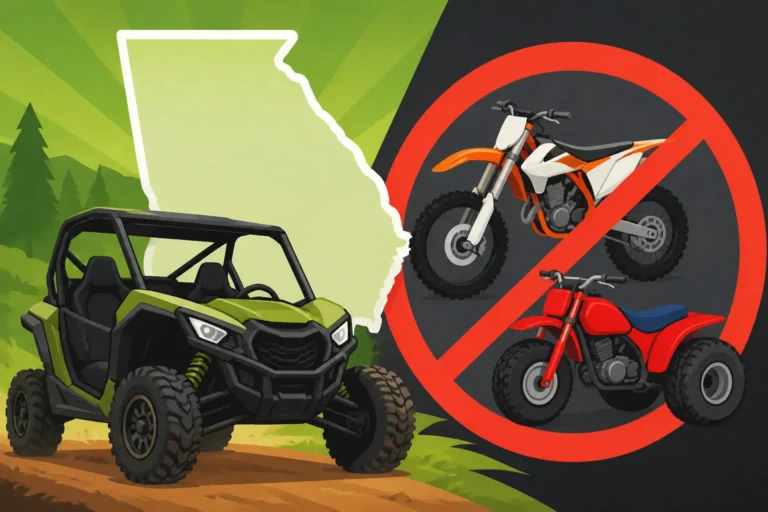
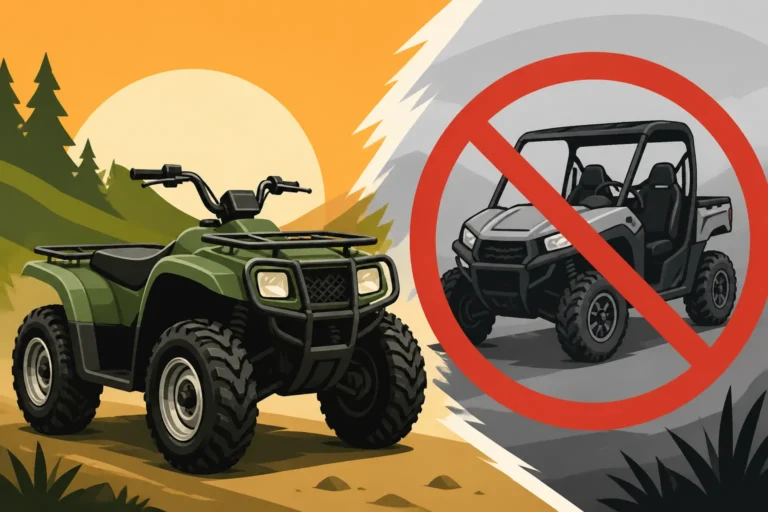
One of the first hurdles your machine must clear involves its fundamental design and physical specifications. Georgia law is very clear that an MPOHV must be manufactured with a steering wheel, not handlebars, immediately excluding most traditional ATVs, dirt bikes, and three-wheelers from consideration. This is a crucial distinction, as highlighted in [Why Handlebars Disqualify a Machine]. Furthermore, it must have a non-straddle seat, meaning you sit in it like a car, not on it like a motorcycle. This rules out virtually all quads and dirt bikes, focusing the registration strictly on side-by-sides and UTVs.
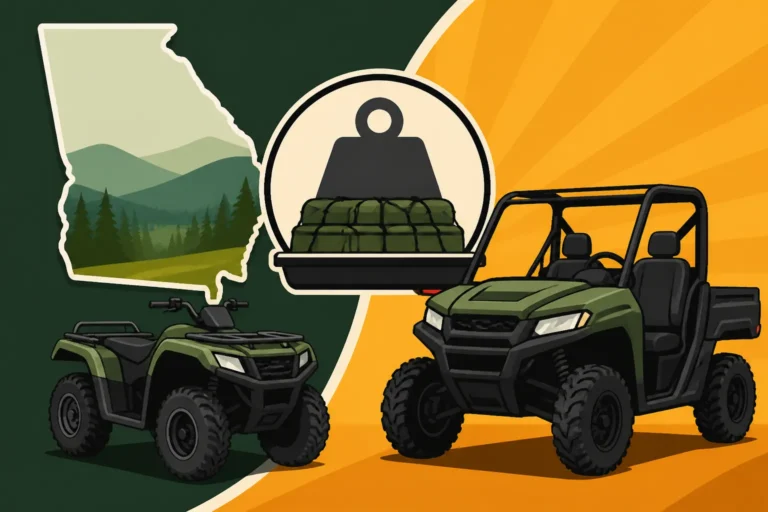
Beyond seating and steering, there are critical limits on size and weight. Your machine cannot exceed 80 inches in width, a measurement that often catches owners of wider, highly customized UTVs off guard. There’s also a gross vehicle weight limit of 4,000 pounds, and a payload capacity requirement of at least 350 pounds. These specifications are designed to ensure that registered machines are stable, manageable, and capable of carrying a reasonable load, distinguishing them from smaller recreational vehicles. For instance, if you're trying to register a side-by-side, you'll need to confirm its exact measurements and weight against these figures, as detailed in [Measuring Width Against the 80-Inch Limit]. It’s vital to check your manufacturer’s specifications or even measure your vehicle yourself before heading to the tag office.
Safety Features and Speed Capabilities
Beyond the basic dimensions, Georgia's MPOHV rules put a strong emphasis on safety features that align with on-road operation, even if it's just on county roads. Your machine must be equipped with factory-installed seat belts for all designated seating positions. This isn't something you can add aftermarket and expect it to count; it needs to be an original equipment manufacturer (OEM) component, as you can read in [Factory Seat Belts and the Eligibility Check]. Additionally, working headlights, brake lights, and rearview mirrors are non-negotiable. These are standard safety items for any vehicle sharing a public roadway, ensuring visibility and situational awareness.
Speed is another key factor. To qualify as an MPOHV, your machine must be capable of reaching a minimum speed of 25 miles per hour, but it cannot exceed 65 miles per hour. This range is designed to integrate MPOHVs into the flow of local county road traffic without being too slow to create hazards or too fast for the intended usage. Machines that fall outside this range – either too slow or too fast – are simply ineligible for registration. This balance ensures that MPOHVs can safely operate alongside other slow-moving vehicles without becoming a danger. If you're unsure about your machine's capabilities, checking the manufacturer's specs is your best bet, or consulting your owner's manual.
The Age Cutoff: Machines Built Before 2000
Here's a rule that often surprises and disappoints owners of older, well-maintained machines: Georgia's MPOHV registration is generally restricted to vehicles manufactured on or after January 1, 2000. This means if you have a classic UTV or side-by-side from the late 90s, even if it otherwise meets all the other criteria, it might be out of luck. This cutoff is a significant hurdle for many, and it's something to be aware of before you invest time and effort into the registration process.
The rationale behind this date cutoff often relates to evolving safety standards, emissions controls, and manufacturing practices. Newer machines are typically built to more modern specifications that are considered safer and more compatible with potential on-road use. While it can be frustrating for owners of vintage equipment, it's a hard and fast rule set by the state. So, if you're eyeing a used machine for potential registration, always confirm its manufacture date. You can find more details on this specific limitation in [Machines Built Before 2000 and Georgia Registration], which explains why these older models simply don't make the cut for a Georgia plate.
Here's a quick reference table for MPOHV eligibility:
| Criteria | Requirement | Exclusion Example |
|---|---|---|
| Steering | Steering Wheel | Handlebars (e.g., ATVs, dirt bikes) |
| Seating | Non-Straddle Seats | Straddle Seat (e.g., ATVs) |
| Width | Maximum 80 inches | Oversized custom UTVs |
| Gross Weight | Maximum 4,000 pounds | Heavy-duty industrial vehicles |
| Payload Capacity | Minimum 350 pounds | Small, light recreational vehicles |
| Manufacture Date | On or after January 1, 2000 | Any machine built before 2000 |
| Speed Range | 25-65 mph | Golf carts (too slow), racing machines (too fast) |
| Safety Equipment | Seat belts, headlights, brake lights, mirrors | Machines lacking any of these |
The Application Process: Steps to Get Your MPOHV Registered
So, you've checked your machine against the eligibility list, and it seems like a perfect fit. Great! Now comes the paperwork and the trip to the county tag office. This part can feel daunting, but breaking it down into manageable steps makes it much easier. Remember, each county tag office might have slightly different procedures or specific hours for certain services, so it's always a good idea to check their website or call ahead.
Gathering Your Essential Documents
Before you even think about leaving the house, make sure you have all your ducks in a row. Missing just one piece of paperwork can lead to a wasted trip and a lot of frustration. The most critical item will be proof of ownership. Since Georgia does not title ATVs or UTVs in the traditional sense, you won't have a clean title document like you would for a car. Instead, you'll need a bill of sale, a Manufacturer's Statement of Origin (MSO), or a Georgia Ownership Affidavit, especially for machines purchased privately or inherited. You can find useful templates for documents like a bill of sale on platforms like LawDepot, which can help ensure you have all the necessary details captured. [Proving You Own an ATV in Georgia Without a Title] dives deeper into these ownership proofs.
In addition to ownership, you'll need proof of identity and Georgia residency. A valid Georgia driver's license or state ID is usually sufficient for this. You'll also need proof of liability insurance that meets Georgia's minimum requirements, especially since you're intending to operate the machine on public roads. Your insurance company can provide you with an insurance card or declaration page for this purpose. Finally, you'll need to pay the applicable registration fees and any sales tax that might be due. While [Why TAVT Does Not Apply in Georgia] is a relief for MPOHV owners, general sales tax still applies to the purchase itself, and you'll need to show proof it was paid or pay it at the time of registration.
The MV-OHV Affidavit and Inspection
A unique and crucial part of the Georgia MPOHV registration process is the Georgia Form MV-OHV, which is an affidavit where you, the owner, attest that your machine meets all the eligibility requirements. This isn't just a formality; it's a legally binding statement. You'll need to fill this form out accurately, ensuring you understand each point, from the steering mechanism to the seat belt presence. If you're uncertain about any section, it's better to ask questions at the tag office rather than guess. Tools like those found on LawDepot can sometimes help with understanding legal document structures, though the MV-OHV is a specific state form.
Once the affidavit is completed, your machine will often need to undergo an inspection by a certified inspector. This could be at the county tag office itself or a designated law enforcement agency, to verify that it genuinely meets the MPOHV criteria. This inspection is particularly important for things like checking the serial number, verifying safety equipment, and confirming the physical characteristics of the machine. It’s not just a quick glance; it’s a thorough check to ensure compliance. For machines needing a branded certificate of registration, a law enforcement inspection is explicitly required, as outlined in [Georgia Law Enforcement Inspection for a Branded Plate]. Be prepared to bring your machine to the inspection site, clean and ready for review.
Visiting Your County Tag Office
With all your documents in hand and your machine ready for inspection, your next stop is your local [Georgia County Tag Office Steps for an MPOHV]. It's crucial to register the machine in the county where you reside. When you arrive, you'll present all your documentation, including the completed MV-OHV affidavit, proof of ownership, ID, and insurance. The tag office staff will review everything, process your payment for the annual registration fee, and issue your MPOHV registration plate and decal.
Don't be afraid to ask questions while you're there. The staff are familiar with the process, and they can clarify any doubts you might have about the rules or future renewals. It’s a good idea to inquire about specific local ordinances if you plan to use your machine frequently on county roads, as some local governments might have additional restrictions or preferred routes. Remember, the county tag office is your gateway to getting that legal plate for your side-by-side, so approaching it prepared and with patience will make the process much smoother.
What Happens After You Register: Plates, Decals, and Legalities
Congratulations, you've successfully navigated the paperwork and inspections! You now have a Georgia MPOHV registration plate and decal. This isn't just a piece of metal and a sticker; it's your official green light to operate your qualifying side-by-side on specific public roads in Georgia. But what exactly does that mean, and what responsibilities come with it?
Displaying Your Plate and Decal
Once you receive your MPOHV plate, it's essential to display it correctly on your machine. Georgia law specifies that the plate must be affixed to the rear of the vehicle, clearly visible and free from any obstructions that might obscure its numbers or state information. Along with the plate, you'll also receive a registration decal, which typically goes on the plate itself, indicating the current registration year. Proper placement is not just about aesthetics; it's a legal requirement, and law enforcement officers will be looking for it. You can find more details on [Georgia Plate Placement on a Side-by-Side].
This visible plate is what signals to law enforcement that your machine is legally registered for its specific, limited road use. It differentiates your MPOHV from an unregistered off-road vehicle. If your plate or decal ever becomes damaged, lost, or stolen, you'll need to contact your county tag office for a replacement. Trying to operate your machine without a properly displayed, valid plate and decal can lead to citations, even if you are technically registered.
Understanding Georgia's MPOHV Road Rules
Having a registration plate doesn't magically make your side-by-side street-legal everywhere a car can go. This is a critical point that often causes confusion. The MPOHV registration specifically grants access to county roads only. This means you are generally permitted to ride on dirt or paved county roads, but you are strictly prohibited from state highways, interstates, and most municipal streets unless there is a specific local ordinance allowing it. [Georgia MPOHV Road Rules: County Roads Only] explains these limitations in detail.
It's also important to remember that all standard traffic laws apply when operating your MPOHV on county roads. This includes obeying speed limits, traffic signs, signals, and yielding the right-of-way. You also need a valid driver's license to operate an MPOHV on a public road in Georgia. While the MPOHV registration expands your riding opportunities, it comes with the responsibility of safe and legal operation, just like any other vehicle on the road. Understanding these limitations fully will help you avoid potential legal trouble and ensure everyone's safety.
The Temporary Nature of Road Access
Here’s a crucial detail that every MPOHV owner needs to be aware of: the current law allowing MPOHV road access in Georgia has a sunset date. As it stands, the law is set to expire in July 2027, as you can read in [Georgia's July 2027 Sunset on Road Access]. This means that while you can currently register and ride your MPOHV on county roads, this provision is not permanent. It's designed as a pilot program or a temporary measure that will either be renewed, revised, or allowed to expire.
This sunset clause makes MPOHV registration a bit of a moving target. While the benefits are clear now, there's always the possibility that the rules could change down the line. Keep an eye on legislative updates and news from the Georgia Department of Revenue or local off-road advocacy groups for information on the future of MPOHV road access. For now, enjoy the access while it lasts, but be prepared for potential shifts in policy as the sunset date approaches.
Annual Renewal: Keeping Your Georgia MPOHV Registration Current
Just like with your car or truck, your Georgia MPOHV registration isn't a one-time deal. It requires annual renewal to remain valid. Forgetting to renew can lead to problems, from fines to the inability to legally operate your machine on county roads. Staying on top of the renewal process ensures continuous, uninterrupted access and peace of mind.
The Renewal Cycle and Process
Georgia MPOHV registrations typically follow an annual cycle, meaning you’ll need to renew it once a year. The renewal date is usually tied to the month you originally registered the machine. You'll generally receive a renewal notice in the mail from your county tag office as a reminder, though it's ultimately your responsibility to ensure it's renewed on time. This notice will detail the fees and any specific instructions for renewal.
The renewal process is generally simpler than the initial registration. You typically won't need another full inspection, though you will need to provide updated proof of valid liability insurance. Many counties offer online renewal options, allowing you to complete the process from the comfort of your home, or you can always visit your [Where the County Tag Office Fits In] in person. Make sure to keep your contact information updated with the tag office so renewal notices reach you promptly. Details on the ongoing process are covered in [Georgia MPOHV Renewal Each Year].
Understanding Late Renewals and Penalties
Life happens, and sometimes renewal dates slip through the cracks. However, allowing your Georgia MPOHV registration to lapse can have consequences. Operating an MPOHV on public roads with an expired registration is essentially the same as operating an unregistered vehicle and can result in fines and citations. Beyond that, a lapsed registration can sometimes complicate future renewals, potentially leading to additional fees or requiring more paperwork than if you had renewed on time.
If you find yourself facing a late renewal, it’s best to address it as soon as possible. Contact your county tag office to understand the specific penalties or additional steps required for [Georgia MPOHV Registration Late Renewal]. They can guide you through the process to get your machine back in good standing. Maintaining continuous insurance coverage is also critical, as any lapse can create further issues, especially if your policy is tied directly to your active registration. It’s always more straightforward and less costly to stay proactive with your annual renewal.
Continuous Insurance Requirements
A key component of maintaining your MPOHV registration is continuous liability insurance. Georgia law requires that any vehicle operated on public roads, including registered MPOHVs, must have valid liability insurance coverage. This isn't just a one-time check at registration; it's an ongoing requirement. If your insurance coverage lapses, your MPOHV registration can be suspended or even cancelled, regardless of whether you’ve paid your annual registration fee.
Insurance companies typically report coverage status directly to the state, so if your policy expires or is cancelled, the state will be notified. An insurance lapse can trigger letters from the Department of Revenue and, as mentioned, lead to suspension of your plate. Reinstating your insurance and resolving any associated penalties can be a bureaucratic headache. To avoid this, always ensure your MPOHV insurance policy is active and up-to-date, especially around renewal time. Many insurance providers offer automatic renewal options or payment plans to help ensure continuous coverage.
Addressing Common Questions and Troubleshooting
The MPOHV registration process, while designed to be helpful, can still generate a lot of specific questions and unique scenarios. It's natural to encounter hurdles or have situations that don't seem to fit neatly into the standard guidelines. Let's tackle some of those common inquiries and potential troubleshooting points that Georgia riders often face.
What if I Bought a Used Machine with No Paperwork?
This is a very common scenario in the world of off-highway vehicles. Many used ATVs and UTVs are bought and sold informally, sometimes with nothing more than a handshake and cash, and no official bill of sale or previous registration documents. While it's always best practice to get a clear bill of sale, especially for a potential MPOHV, it's not always possible. If you're trying to register a machine you purchased without a proper bill of sale, you'll need to explore alternatives.
The primary solution here is the [Georgia Ownership Affidavit for an MPOHV]. This is a form where you swear under oath that you are the rightful owner, detailing how you acquired the machine. You might need to provide supporting evidence, such as previous registration cards (if any existed), a statement from the seller (if you can track them down), or even photographs showing possession over time. Some county tag offices might also require a "chain of ownership" if there's a significant gap in documentation. For complex cases, referring to legal document resources like LawDepot might offer insights into drafting supporting statements, though the specific ownership affidavit is a state form. It can be a bit more challenging, but not impossible.
Registering Machines for Specific Uses: Farm, Hunting, Business
Many MPOHV owners use their machines for more than just recreational riding. Farm work, hunting club operations, and business fleets are common applications. The good news is that these specific uses generally don't change the fundamental MPOHV eligibility requirements or the registration process itself. If your machine meets all the criteria, it can be registered regardless of its intended use.
However, specific use cases might have additional considerations. For example, [Georgia MPOHV Registration and Farm Use] might exempt you from certain sales tax at the time of purchase if you meet strict agricultural exemptions, but this doesn't bypass the MPOHV registration rules. Similarly, a hunting club registering a fleet of side-by-sides for property management will go through the same steps as an individual owner. The key is to remember that MPOHV registration is about making the machine legally operable on county roads, and the reason you want to use it on those roads doesn't alter the core requirements for the machine itself.
Transferring Registration After a Sale or Moving Counties
Life changes, and so do vehicle ownerships and residences. If you sell your registered MPOHV, the registration does not automatically transfer to the new owner. The seller typically retains the plate or turns it in, and the new owner must go through their own registration process. When [Selling a Registered MPOHV in Georgia], it's crucial for the seller to provide the buyer with a clear bill of sale and any other ownership documents to facilitate the new owner's registration. This ensures a clean transfer and prevents any lingering liability for the seller.
If you move to a different county within Georgia, your MPOHV registration remains valid until its annual renewal date. However, when it comes time to renew, you'll need to do so in your new county of residence. It's a good idea to update your address with the Department of Revenue and your county tag office to ensure you receive renewal notices at your new home. This process is generally straightforward, but it's another aspect of responsible ownership that keeps your machine legally compliant.
Understanding the 'Branded' Certificate and Its Implications
When you register an MPOHV in Georgia, there's a specific term that might pop up: a "branded" certificate of registration. This isn't something to be alarmed by, but it's crucial to understand what it means, especially if you're buying a used machine that already has this designation or if your machine receives it during the registration process.
What Does a Branded Certificate Signify?
A "branded" certificate of registration for an MPOHV serves as a warning or notification that the machine has a specific history or characteristic that might affect its value or future usability. It's a way for the state to provide transparency to current and future owners. While it's not a "title" in the traditional sense like a car, it operates similarly by marking the vehicle's record. You can learn more about this in [What a Branded Registration Warns You About].
Common reasons for a branded certificate include:
- Salvage: If the machine was significantly damaged and declared a total loss by an insurance company, then rebuilt.
- Rebuilt: Similar to salvage, but specifically notes that the machine has been reconstructed after major damage.
- Flood: If the machine sustained extensive damage from flooding.
- Theft Recovery: If the machine was stolen and later recovered.
- Undisclosed Liens: Sometimes, a branded certificate can indicate that there were outstanding liens or financial claims against the machine that were not fully cleared, as elaborated in [Undisclosed Liens on a Branded Certificate].
Essentially, a branded certificate flags the machine's history for anyone who might purchase it, ensuring they are aware of potential past issues.
The Impact on Resale and Insurance
The presence of a branded certificate can have a significant impact on your MPOHV's resale value. Just as a "salvage title" on a car often means a lower selling price, a branded MPOHV certificate can deter some buyers or lead to a reduced offer. Buyers might be wary of potential hidden damage, long-term reliability issues, or simply prefer a machine with a clean history. If you're selling a machine with a branded certificate, it's essential to be upfront and transparent about its history to avoid future disputes.
From an insurance perspective, a branded certificate might also affect your coverage options and premiums. Some insurance companies might be hesitant to offer comprehensive or collision coverage on a machine with a salvage or rebuilt brand, or they might charge higher premiums. It's vital to disclose any branding to your insurance provider when seeking coverage. They will assess the risk based on the specific brand and the machine's condition. While it might present challenges, it doesn't necessarily mean the machine is unusable or uninsurable, but it does mean extra due diligence is required.
Clearing or Avoiding a Branded Registration
In some cases, especially if a machine has been stolen and recovered, or if a minor issue was mistakenly flagged, it might be possible to clear a branded registration. This usually involves providing substantial documentation to the Department of Revenue, proving that the condition leading to the brand no longer exists or was incorrectly applied. This process can be complex and may require legal assistance or extensive paperwork to prove the machine's current, sound condition.
The best way to avoid a branded registration is, of course, to purchase a machine with a clean history. When buying a used MPOHV, always ask for any available documentation and conduct a thorough inspection. If possible, run a serial number check with local law enforcement or through national databases to check for theft history. While Georgia doesn't have a comprehensive titling system for ATVs, being proactive about checking a machine's history can save you headaches down the road. Using a comprehensive bill of sale, perhaps generated through LawDepot, can also specify the machine's condition and history, protecting both buyer and seller.
Beyond Registration: Other Considerations for Georgia Riders
While obtaining your Georgia MPOHV registration is a significant step, it's just one piece of the larger puzzle for responsible off-highway vehicle ownership and riding in the state. There are many other rules, considerations, and best practices that ensure a safe, enjoyable, and legal experience, whether you're on a county road or deep in the woods.
Helmet Laws and Age Restrictions
Georgia takes rider safety seriously, especially for younger riders. The state has specific helmet laws that apply to ATV and UTV operators. Generally, riders and passengers under the age of 18 are required to wear an approved helmet when operating an off-road vehicle, even on private property. This rule is designed to protect minors from serious head injuries, which are all too common in off-road accidents. You can find more details in [Georgia ATV Helmet Law for Riders Under 18].
Beyond helmets, there are also age restrictions for operating MPOHVs on public roads. To drive a registered MPOHV on a county road, the operator must possess a valid Georgia driver's license. This means a minimum age of 16 for an unrestricted license, or 15 with a learner's permit and appropriate supervision. These rules are in place to ensure that anyone operating a vehicle on a public roadway has the necessary experience and legal authorization.
Where You Can Legally Ride in Georgia
Even with MPOHV registration, your options for riding are still specific. As mentioned, county roads are the primary avenue. But what about other areas? Private land is almost always permissible, provided you have the landowner's permission. Dedicated [Georgia ATV Trails: Where You Can Legally Ride] and private off-road parks are also excellent options, offering a variety of terrains and challenges. Places like Iron Mountain Resort, Highland Park Off-Road Resort, or Durhamtown offer extensive trail networks.
However, certain areas remain off-limits. State highways, interstates, and sidewalks are generally prohibited. Riding on utility easements, power line cuts, or pipeline rights-of-way might be permitted if you have specific permission from the owning entity, but trespass laws apply strictly. National Forests, like the Chattahoochee-Oconee National Forest, have designated OHV trail systems that require specific permits, as outlined in [Georgia OHV Permits: What You Need Before You Ride], and riding off these designated trails is illegal. Always consult local regulations and trail maps before you head out to ensure you're riding legally and responsibly.
Being a Responsible Off-Road Enthusiast
Beyond the legal requirements, being a responsible off-road enthusiast involves a commitment to safety, environmental stewardship, and respect for others. This includes adhering to noise limits, especially near residential areas, and properly disposing of trash. "Tread Lightly" principles are crucial: stay on designated trails, avoid sensitive areas, and minimize your impact on the natural environment.
Carrying essential safety gear, understanding your machine's capabilities, and riding within your skill level are paramount. Consider taking an ATV or UTV safety course, even if Georgia doesn't mandate one, to enhance your skills and awareness. Being a good neighbor and respecting private property when riding in rural areas is also vital for maintaining positive relationships between riders and local communities. Ultimately, the future of off-highway vehicle access often depends on how responsibly the riding community conducts itself.
Disclaimer
This article is for general informational purposes only and does not constitute professional advice. Laws, prices and regulations vary by location and change over time. Consult a qualified professional for guidance on your specific situation.