A 1998 Machine and What It Cannot Do
It can be incredibly frustrating to discover that the well-loved ATV or UTV you’ve owned for years, or just picked up for a steal, might not qualify for newly available road-use opportunities in Georgia. Many riders dream of the convenience of taking their machine on certain county roads, only to hit a wall because of its age. This guide is here to shed light on exactly why machines manufactured before a specific date, like your trusty 1998 model, face unique restrictions and what that means for your riding adventures in Georgia.
The Georgia MPOHV Registration and the January 1, 2000 Cutoff
For years, the idea of legally riding your off-highway vehicle (OHV) on Georgia's county roads felt like a distant dream for many. These machines were often relegated strictly to private property or designated trail systems, leaving a gap for those who wanted to use them for quick errands, accessing hunting land, or just connecting properties via a short stretch of public road. The Georgia MPOHV (Multi-Purpose Off-Highway Vehicle) registration program finally opened a door for some, but not for all. It's a game-changer for many, but it also introduced a very specific set of requirements that unfortunately exclude a significant number of older machines.
Understanding the MPOHV Program's Purpose
The MPOHV program was created with good intentions: to allow certain types of off-highway vehicles, primarily side-by-sides, to traverse specific county roads legally and with proper identification. Before this program, any use of an ATV or UTV on a public road was generally prohibited, leading to confusion, citations, and a lot of head-scratching from landowners and enthusiasts alike. The legislature aimed to provide a pathway for responsible road use, recognizing that modern side-by-sides, in particular, often have many safety features akin to low-speed vehicles. This program allows eligible machines to obtain a special "branded" certificate of registration and a license plate, signalling to law enforcement that the vehicle is approved for limited road use. It's a voluntary program, as detailed in [Georgia MPOHV Registration Is Voluntary], meaning you don't have to register if you only ride on private land, but it's essential if you want public road access. The rollout of this program, which began in [Georgia MPOHV Registration Started December 2023], brought with it a sigh of relief for many, but also some unavoidable disappointments for others.
The Critical Manufacturing Date Requirement
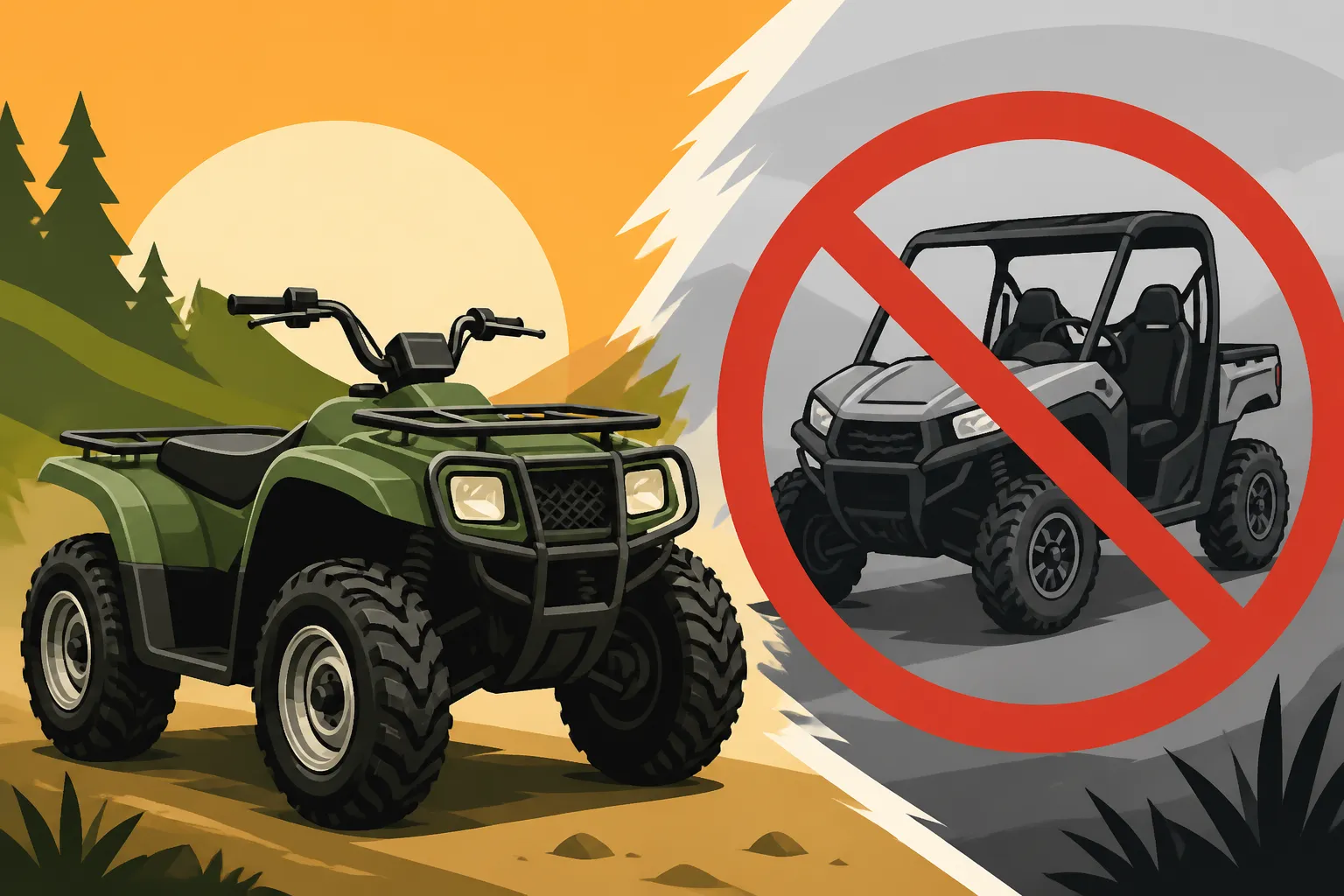
One of the most impactful criteria for MPOHV registration is the manufacturing date. Georgia law explicitly states that for a machine to be eligible, it must have been manufactured on or after January 1, 2000. This is a hard and fast rule, an immovable line in the sand that immediately disqualifies any machine built even a single day before that date. So, if you're the proud owner of a 1998 machine, regardless of its condition, how well it runs, or any aftermarket safety upgrades you've installed, it simply does not meet this fundamental requirement. This specific cutoff is discussed further in [Machines Built Before 2000 and Georgia Registration] and [The January 1, 2000 Build-Date Cutoff].
This isn't an arbitrary rule without reason. The state likely implemented this date to ensure a baseline of manufacturing standards, safety features, and possibly even emission controls that became more prevalent in the early 2000s. Older machines might not have the same structural integrity, braking capabilities, or lighting systems that a newer model would, which are all critical considerations for public road safety. To determine your machine's manufacturing date, you typically need to check the VIN plate or a manufacturer's sticker, usually found on the frame, under the seat, or in the engine bay. It will clearly state the month and year of manufacture.
Why a 1998 Machine Cannot Get a Georgia Plate for Road Use
The disappointment of learning your machine is too old for a road plate can be significant, especially if you had visions of connecting your hunting grounds or popping down the street to a neighbor's house. But understanding the reasoning behind this date restriction helps clarify why a 1998 model, despite its personal value, is excluded from Georgia's MPOHV program. It comes down to a blend of assumed safety standards, technological advancements, and the administrative simplicity of drawing a clear line.
The "Newer" Technology Expectation
When Georgia crafted the MPOHV legislation, it wasn't just about allowing any off-road vehicle onto the pavement. The intent was to permit vehicles that, while still off-highway in design, possessed certain characteristics that made them safer for limited public road use. Machines manufactured post-2000 are generally expected to incorporate more advanced braking systems, more robust chassis designs, and more reliable lighting and electrical systems compared to their predecessors. Think about the evolution of vehicle design:
- Braking Systems: Newer machines often feature more powerful disc brakes on all four wheels, compared to older models that might have drum brakes or less effective hydraulic systems, especially important for stopping quickly on paved surfaces.
- Lighting and Visibility: While you can add aftermarket lights to an older machine, newer models often come equipped from the factory with brighter headlights, more visible brake lights, and turn signals, even if they aren't fully street-legal. The MPOHV program then adds requirements like [Headlights, Brake Lights and Mirrors on the Checklist].
- Engine and Transmission Reliability: While a well-maintained 1998 engine can run forever, the reliability of seals, hoses, and electronic components can vary widely in older designs, potentially leading to roadside breakdowns that pose a hazard on public thoroughfares.
The January 1, 2000 cutoff serves as a practical, albeit sometimes frustrating, benchmark for these assumed improvements. It's an administrative shortcut to ensure a certain level of inherent safety without requiring individual vehicle inspections to assess every single component, which would be an enormous and costly undertaking for the state.
The Specific Disqualifiers for Older Models
Beyond the manufacturing date, the MPOHV program has several other eligibility criteria, often referred to as the [Georgia MPOHV Eligibility: The Eight-Point Test]. While a 1998 machine might potentially meet some of these points, such as having a steering wheel (if it's an older UTV) or being within the speed limits, the manufacturing date acts as an immediate and absolute disqualifier. It doesn't matter if your vintage Polaris Ranger or Yamaha Wolverine is meticulously maintained; if its birth certificate reads 1998, it’s out for an MPOHV plate.
Here's a quick look at why this date is so critical:
| Feature/Requirement | Pre-Jan 1, 2000 Machine (e.g., 1998) | Post-Jan 1, 2000 Machine (e.g., 2005) | Impact on MPOHV Registration |
|---|---|---|---|
| Manufacturing Date | Disqualifies by law | Meets minimum requirement | Absolute Disqualifier |
| Required Safety Features | Often lacks modern integrated systems | More likely to have required features | Influences other eligibility checks |
| Emissions Standards | Less likely to meet contemporary standards | More likely to meet evolving standards | Not a direct MPOHV check, but influences manufacturing choices |
| Structural Design | Older designs, potentially less robust | Newer designs, often stronger frames | Relates to overall safety and durability |
This strict adherence to the manufacturing date simplifies the process for county tag offices, who otherwise would have to become experts in historic OHV specifications. While it seems unfair to those who keep their older machines in pristine condition, it's a measure designed for broad public safety and administrative efficiency.
What a 1998 Machine Can Still Do in Georgia
Just because your vintage machine can't get a shiny new Georgia MPOHV plate for county road use doesn't mean it's relegated to being a garage ornament. Far from it! These older machines still have a vital role to play, particularly for recreational, utility, and agricultural purposes. The key distinction is that their legal use remains primarily off public paved roads.
Private Land Use and Trail Riding
The vast majority of off-highway vehicle activities in Georgia happen on private land, and this is where your 1998 machine can truly shine.
- Your Own Property: Whether you have five acres or five hundred, your machine can be used freely on your own land for chores, hunting, or pure recreation. There are no state restrictions on machine age or type when riding on private property, as long as you're the owner or have explicit permission. This is often the primary use for many Georgia ATV and UTV owners.
- Designated OHV Parks and Trails: Georgia boasts a fantastic network of public and private off-road parks and trail systems. Places like Iron Mountain Resort, Highland Park, and the various trails within the Chattahoochee-Oconee National Forest are perfect for a 1998 machine. These trails are specifically designed for off-road vehicles, and age is not typically a barrier for entry, as long as your machine meets general safety requirements (like having a spark arrestor) and you pay any necessary fees, such as those detailed in [Georgia OHV Permits: What You Need Before You Ride]. Before heading out, always check the specific park or trail rules, as some may have width restrictions or other limitations, but generally, a 1998 model is perfectly welcome on these dedicated riding areas. You can explore many options under [Georgia ATV Trails: Where You Can Legally Ride].
- Hunting and Wildlife Management Areas (WMAs): Many hunters rely on ATVs and UTVs to access remote parts of WMAs. While WMAs have their own specific rules regarding machine use, including designated roads and operational hours, your 1998 machine will likely be allowed as long as it adheres to those WMA rules. Typically, machines are restricted to existing roads, and there's often a two-hour window around sunrise and sunset on hunt days. Always consult the specific WMA regulations before you go, as outlined in [Georgia WMA Rules for ATV Riders].
On private land and designated trails, the focus shifts from public road legality to safe operation and adherence to specific site rules. This means you still get to enjoy the utility and thrill of your machine without the worry of road-use regulations.
Agricultural and Commercial Exemptions (Where Applicable)
Georgia law also makes provisions for certain agricultural and commercial uses of off-highway vehicles, which are separate from the MPOHV road-use program. These exemptions are typically about how the machine is used, not if it's registered for general road access.
- Farm Use: If your 1998 ATV or UTV is primarily used for agricultural purposes on a farm, such as hauling feed, checking fences, or transporting equipment, it often falls under specific farm-use exemptions. These exemptions generally allow for incidental crossing of public roads to move from one part of the farm to another, or to access fields, provided the machine is operating in a clear farm-related capacity and appropriate signage may be displayed. This doesn't mean you can drive it to the store, but it acknowledges the practical necessities of farm life.
- Commercial Activities: Similarly, machines used in commercial operations like logging, construction, or landscaping may have specific allowances for limited road use related to their work. These are typically highly specific circumstances and require careful understanding of the law.
It's crucial to distinguish these operational exemptions from the MPOHV registration. The MPOHV program grants general county road access for eligible vehicles. Agricultural and commercial exemptions typically permit very limited, incidental road crossings directly related to the work being performed, and usually don't involve obtaining a standard license plate. Always double-check current Georgia statutes or consult with local law enforcement or agricultural extension offices for the precise rules regarding farm or commercial use of your specific machine.
Navigating Ownership and Sales for Older Machines
Owning or selling a pre-2000 ATV or UTV in Georgia comes with its own set of considerations, largely because these machines do not typically have a state-issued title. Unlike cars or trucks, Georgia does not title ATVs, as discussed in [Why Georgia Does Not Title an ATV]. This lack of a formal title can sometimes make ownership transfers feel a bit less official, but there are standard practices to ensure everything is above board.
Proving Ownership Without a Title
Since there's no official title document for your 1998 machine in Georgia, establishing and proving ownership primarily relies on other forms of documentation. This is especially important whether you're buying, selling, or simply want to show that the machine legitimately belongs to you.
- Bill of Sale: This is the absolute cornerstone of proving ownership for an untitled machine. A well-drafted bill of sale should include:
- The full names and addresses of both the buyer and seller.
- A clear description of the machine (make, model, year, VIN or serial number).
- The purchase price and date of sale.
- Signatures of both parties.
Creating a thorough bill of sale is critical for both the buyer and the seller. Services like LawDepot offer templates and guidance for creating legally sound bills of sale, which can be invaluable for ensuring all necessary details are included. Keep multiple copies of this document!
- Prior Registration or Sales Documents: If the machine was previously registered in another state that did title ATVs (which is rare for these types of machines) or if you have a chain of previous bills of sale, these can further strengthen your proof of ownership. Any original purchase receipts from a dealer, even if decades old, are also helpful.
- Ownership Affidavit: In some cases, particularly if you lack a comprehensive bill of sale, an ownership affidavit might be used to declare your legitimate possession of the machine. While this isn't a substitute for a bill of sale, it can be a supporting document. The form [Georgia Ownership Affidavit for an MPOHV] is specifically for the MPOHV program, but the concept of an affidavit to declare ownership can be useful even if you're not registering for the road.
- Insurance Documents: Having your 1998 machine insured in your name also serves as strong evidence of ownership, as insurance companies typically require proof of insurable interest.
Always keep these documents in a safe place. If you ever need to sell the machine or if its ownership is questioned, these papers are your best defence. When buying a used machine, always insist on a clear bill of sale and check the VIN to ensure it's not reported stolen.
The Implications for Buying or Selling a Vintage Machine
The fact that a 1998 machine cannot be registered for county road use in Georgia significantly impacts its market value and the buying/selling process.
- For Buyers: If you're looking at [Buying a Used Side-by-Side in Georgia] or an ATV, and you encounter a machine from before January 1, 2000, understand upfront that it will never qualify for an MPOHV plate for legal road use in Georgia. This should be reflected in the price. Don't pay a premium for a "road-ready" older machine in Georgia, because legally, it simply isn't. Your intention for the machine should dictate whether an older model is a good fit. If you only plan to ride on private land or dedicated trails, a pre-2000 model can be a fantastic, often more affordable, option. Always ask for a bill of sale, ideally one prepared using a reputable service like LawDepot, to ensure a smooth ownership transfer. Check the serial number against stolen vehicle databases before handing over any cash.
- For Sellers: When selling your 1998 ATV or UTV, be transparent with potential buyers about its ineligibility for Georgia MPOHV registration. Emphasize its suitability for private land, farm work, or trail riding. Price it accordingly, recognizing that the lack of road-legal potential will likely reduce its market value compared to a newer, MPOHV-eligible machine. A clear, comprehensive bill of sale is crucial for protecting yourself and the buyer, establishing a clean transfer of ownership. If you have any old registration documents or repair records, these can add value and credibility to your listing. Even if you're selling to a friend or family member, it's a good practice to use a formal bill of sale to prevent future misunderstandings.
In essence, while the lack of a title can seem daunting, a well-documented bill of sale, combined with clear communication between buyer and seller, makes transactions for older off-highway vehicles perfectly straightforward in Georgia.
Disclaimer
This article is for general informational purposes only and does not constitute professional advice. Laws, prices and regulations vary by location and change over time. Consult a qualified professional for guidance on your specific situation.