Voluntary Registration and Why Anyone Bothers
It can feel a bit confusing, can't it? You own an ATV or a side-by-side, and for years, the understanding in Georgia was pretty clear: these machines are for off-road use only. Then, the state introduces a "voluntary" registration program for what they call Multi-purpose Off-Highway Vehicles (MPOHVs), and many riders are left scratching their heads. Why would you go through the hassle of registering something you mostly ride in the woods or on your own land, especially if it's not legally required? This guide is here to shed some light on why many Georgia riders are, in fact, choosing to opt in for this voluntary registration, and how it can make your life a whole lot easier.
Understanding Georgia's Voluntary MPOHV Registration
Before we dive into the "why bother," let's clarify what this voluntary registration actually is. For the longest time, Georgia did not have a specific registration or titling process for off-road vehicles. This left a lot of gray areas, especially for those who needed to move their machines beyond private property. The new MPOHV program, which [Georgia MPOHV Registration Started December 2023], aims to create a legal framework for specific types of off-highway vehicles to gain limited access to public roads.
What "Voluntary" Really Means
When the state calls something "voluntary," it essentially means you're not breaking the law by not doing it, especially if your machine never leaves private land or approved trails. You won't face penalties just for owning an unregistered off-highway vehicle if you're only using it where it's always been allowed. However, "voluntary" in this context is less about avoiding a fine and more about unlocking new possibilities. It's an invitation to participate in a system that grants specific privileges. Think of it like a membership – you don't have to join a club, but if you want access to the club's facilities, then joining becomes necessary. The "club facilities" here are those county roads you might need to use.
The Specifics of the MPOHV Program
The Multi-purpose Off-Highway Vehicle (MPOHV) program is quite specific about what machines qualify and what purpose they serve. It’s designed for machines that bridge the gap between purely off-road vehicles and traditional street-legal vehicles. This means it's not a free-for-all for every quad or dirt bike out there; certain criteria must be met, which we'll touch on later. The core idea is to allow certain UTVs and side-by-sides – typically those with a steering wheel and non-straddle seating – to operate legally on designated county roads. For more on what it actually means, check out [What MPOHV Actually Stands For]. Without this voluntary registration, your off-highway vehicle remains restricted to private land and designated off-road trails, even if you just need to cross a short stretch of pavement to get from one field to another.
The Practical Perks of Getting Your Machine Registered
So, with the basics out of the way, let's get into the real meat of it: why are people actually going through the motions to register their machines? It boils down to a blend of convenience, security, and expanded usability that wasn't previously available.
Gaining Limited Road Access
This is, without a doubt, the biggest draw for most riders. Imagine you live on a large property, but to get from one section to another, you have to drive a few miles down a county road. Or perhaps your favorite hunting spot is accessible via a short stretch of paved or dirt county road from your home or camp. Before the MPOHV program, making these trips meant risking a citation for illegal road use.
With voluntary registration, your eligible side-by-side can now legally traverse these county roads. This doesn't mean you can hop on a state highway or zip down the interstate; [Georgia MPOHV Road Rules: County Roads Only] are very strict about that. But for local travel, farm-to-field access, or connecting to trails, it's a game-changer. It allows you to use your machine as a truly multi-purpose vehicle, saving you the hassle and cost of trailering it for every short hop. If you're wondering [Can You Drive a UTV on the Road in Georgia?], the answer is now a conditional "yes" with this registration.
Proof of Ownership and Theft Deterrence
Even though Georgia does not title ATVs in the traditional sense, obtaining an MPOHV registration provides you with official, state-issued documentation directly linking you to your specific machine. In a world where off-road vehicle theft is a real and frustrating problem, having this official record can be invaluable. If your side-by-side goes missing, the registration provides a clear, verifiable record for law enforcement. It helps them trace the vehicle and helps you prove that it's yours.
Think about it: many people buy used ATVs or UTVs with just a bill of sale. While a strong bill of sale, perhaps drafted through a service like LawDepot, is a great start, a state registration adds another layer of official recognition. For more on how to establish ownership without a title, you can look into [Proving You Own an ATV in Georgia Without a Title]. The registration also means your machine's Vehicle Identification Number (VIN) is formally entered into a state database, making it easier for law enforcement to conduct a [Georgia Stolen Vehicle Check Before Registration] if they encounter the machine. This added layer of official documentation can be a silent deterrent to thieves and a powerful tool for recovery.
Insurance and Liability Benefits
For years, insuring an off-road vehicle in Georgia was primarily about protecting it against damage or theft while on private land. The moment you took it onto a public road, even briefly, you often ventured into a gray area regarding liability coverage. Now, with MPOHV registration explicitly allowing limited road use, securing the appropriate liability insurance becomes not just possible, but often mandatory.
[Georgia Liability Insurance Tied to Registration] is a key component here. If you're going to use your machine on public roads, even county roads, having liability coverage is essential to protect yourself financially in case of an accident. The MPOHV program clarifies this, often requiring proof of insurance as part of the registration process. This means you're not only complying with the law, but you're also protecting your assets and others in the event of an incident. It’s peace of mind that goes beyond just property damage; it covers potential medical costs and other liabilities that could arise on public thoroughfares. Understanding [Georgia Insurance Minimums for Road Use] is crucial once your machine is registered.
Scenarios Where Voluntary Registration Becomes a Must-Have
While some benefits are universally appealing, there are specific situations where the voluntary MPOHV registration transforms from a "nice-to-have" into a genuine necessity. These are the moments when the convenience and legality truly shine.
Farm and Commercial Use
Georgia is an agricultural state, and many farmers rely heavily on ATVs and UTVs for daily tasks. Imagine needing to move equipment or check fences across a large property that is bisected by a county road. Previously, this meant trailering your machine, driving a farm truck, or simply risking a ticket. With MPOHV registration, that side-by-side can legally traverse the necessary county road to get from one field to another, making operations significantly more efficient. This is particularly relevant for those who utilize their machines for purposes that extend beyond pure recreation, fitting perfectly into the intent behind the [Georgia MPOHV Registration and Farm Use] provisions. The ability to legally drive from a barn to a distant pasture without loading up a trailer is a massive time-saver for agricultural businesses.
Similarly, commercial entities, such as landscaping companies, survey teams, or even event organizers, often need to move their utility vehicles between job sites, sometimes involving short stretches of county roads. For these businesses, the MPOHV registration provides the legal framework to operate efficiently without constant loading and unloading, or the fear of fines.
Hunting and Recreational Transport
For hunters, the voluntary registration can be a game-changer. Many hunting properties are spread out, or require access via county roads to reach specific gates or food plots. Imagine a scenario where your hunting club leases several tracts of land, and moving between them means a quick drive down a quiet county road. Before, this was technically illegal. Now, with a registered MPOHV, you can legally drive your side-by-side to your deer stand, transport equipment, or retrieve game without worry. For instance, [Riding a Quad to a Georgia Deer Stand] becomes a perfectly legal and convenient option on county roads. This also extends to general recreationalists who might need to access trailheads or campgrounds that are located just off a county road. It simplifies access and expands the utility of your machine, allowing for more seamless transitions between your home, staging areas, and actual riding or hunting spots. It empowers you to maximize your time outdoors without legal worries, tying directly into [Georgia Hunting Access by ATV] guidelines.
The Resale Advantage
When it comes time to sell your off-highway vehicle, having it registered, even voluntarily, can significantly enhance its appeal and streamline the transaction for both you and the buyer. An MPOHV registration provides official documentation that can reassure potential buyers, especially if they plan to utilize the machine's newfound road access capabilities. While a bill of sale is crucial for any private transaction, a state registration adds an official layer of legitimacy.
A buyer looking to use the machine on county roads will likely value a registered MPOHV more than an unregistered one, knowing they won't have to go through the initial paperwork themselves. This can sometimes lead to a quicker sale or even a slightly higher asking price. When you're ready for [Selling a Registered MPOHV in Georgia], providing a comprehensive sales agreement, perhaps one generated through a platform like LawDepot, alongside proof of registration, makes the transaction incredibly smooth. This combination provides irrefutable evidence of the machine's history and legal status, instilling confidence in the buyer.
The Requirements and Considerations
Deciding to pursue voluntary MPOHV registration is one thing; actually getting through the process is another. It requires understanding the specific criteria your machine must meet and the paperwork you'll need to submit.
What Your Machine Needs to Qualify
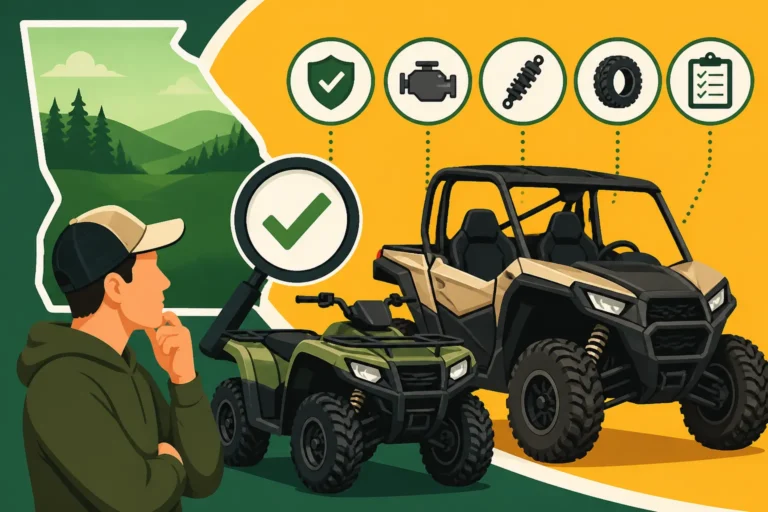
Not just any off-road vehicle can become a registered MPOHV. Georgia has laid out clear guidelines for what constitutes an eligible machine, focusing on safety and design features that make them more suitable for road use than traditional ATVs. Key requirements include:
- Width: The machine must not exceed [Georgia's 80-Inch Width Limit for Registration]. This keeps them reasonably sized for county roads.
- Weight: There's a [Georgia's 4,000-Pound Gross Weight Ceiling] for the vehicle.
- Payload Capacity: It needs to have a [Georgia's 350-Pound Payload Requirement].
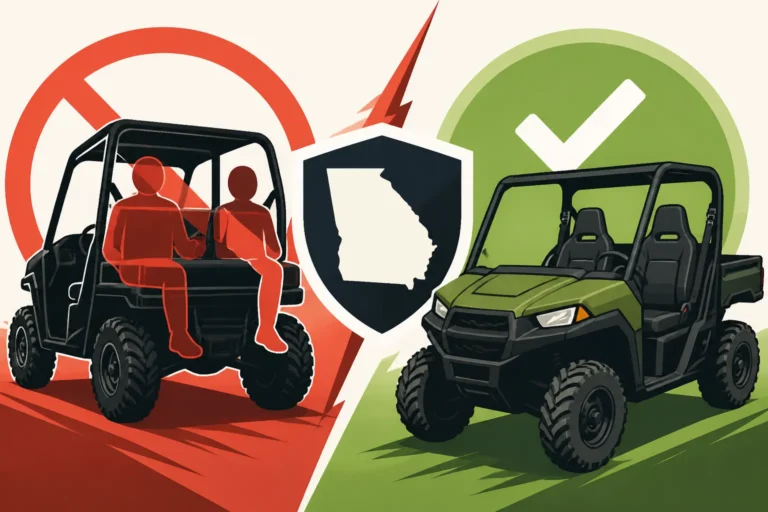
- Steering: The machine must have [Georgia Requires a Steering Wheel, Not Handlebars], which immediately excludes most traditional ATVs and dirt bikes.
- Seating: It must be designed for a non-straddle seat, meaning you sit in it, not on it.
- Speed: It must be capable of 25 mph but not exceed 65 mph.
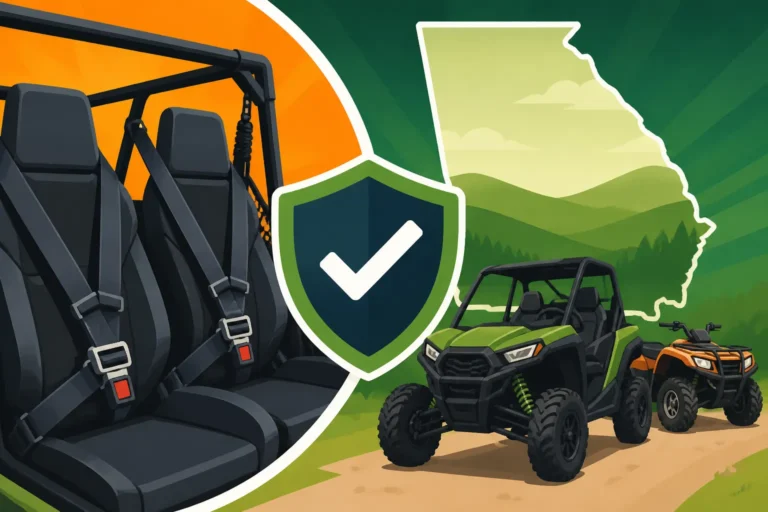
- Safety Features: Your MPOHV must have factory-installed seat belts, headlights, brake lights, and rearview mirrors. [Georgia Requires Seat Belts on a Registered Machine] for occupant safety on public roads.
- Manufacture Date: Machines built before January 1, 2000, are generally excluded.
These requirements ensure that MPOHVs allowed on county roads have basic safety features and handling characteristics similar to small cars, rather than high-performance off-road machines.
The Paperwork Journey
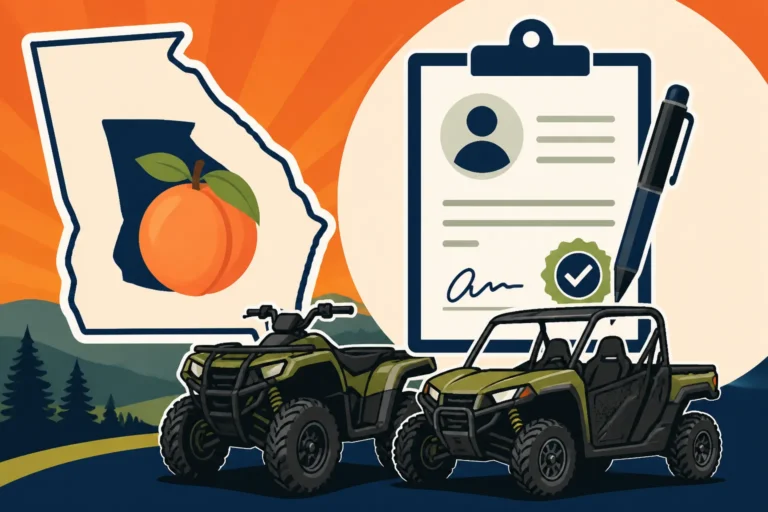
Gathering the correct paperwork is often the most daunting part of any registration process. For an MPOHV, you'll generally need proof of ownership, proof of Georgia residency, and evidence that your machine meets the eligibility requirements. Since many off-road vehicles don't have traditional titles, an [Georgia Ownership Affidavit for an MPOHV] is a common document used to establish ownership. This affidavit might be something you draft yourself or use a template from a service like LawDepot to ensure it's legally sound and complete.
You’ll also need to be prepared to show proof of insurance that meets Georgia's minimum liability requirements, and potentially undergo a physical inspection to verify your machine meets the MPOHV criteria. Having a detailed [Georgia MPOHV Registration Paperwork Checklist] from your county tag office can make the process much smoother, ensuring you don't miss any critical documents. Remember, the goal is to present a clear, documented case for your machine's eligibility and your ownership.
Cost and Renewal
While the benefits are clear, there is an associated cost. The [Georgia MPOHV Registration Cost] is a relatively small annual fee. This fee contributes to the administrative costs of the program and helps maintain the system that allows you these new privileges. Like regular vehicle tags, MPOHV registration must be renewed each year. Staying on top of your [Georgia MPOHV Renewal Each Year] ensures that your machine remains legally compliant for road use, preventing any lapses that could lead to citations or issues with insurance. It’s a small ongoing investment for the significant flexibility and peace of mind it provides.
Below is a quick comparison to highlight the difference between an unregistered and a registered off-highway vehicle in Georgia:
| Feature | Unregistered Off-Highway Vehicle (OHV) | Registered Multi-purpose Off-Highway Vehicle (MPOHV) |
|---|---|---|
| Public Road Access | Generally restricted to private land & designated OHV trails. Risk of citation on public roads. | Limited access to county roads only. State highways and interstates remain prohibited. |
| Proof of Ownership | Typically via Bill of Sale, Manufacturer's Statement of Origin (MSO), or affidavit. No state record. | State-issued registration document linked to VIN, providing official proof of ownership. |
| Liability Insurance | Primarily for private land use, theft, or damage. Road liability often not covered. | Often required for registration; provides liability coverage for legal road use. |
| Theft Deterrence | Primarily relies on physical security and private records. | VIN entered into state database; aids in recovery and proving ownership to law enforcement. |
| Resale Value/Ease | Buyer relies heavily on private paperwork. May limit buyer pool to those only using off-road. | Enhanced by state documentation; attractive to buyers seeking road access and added legitimacy. |
| Farm/Commercial Use | Restricted movement between properties if county roads are involved. | Allows legal and efficient transit on county roads for agricultural and business purposes. |
| Required Equipment | Varies by private land/trail rules; often minimal. | Requires steering wheel, non-straddle seat, seat belts, headlights, brake lights, mirrors, speed limits. |
| Annual Fee | None | Small annual registration fee. |
This article is for general informational purposes only and does not constitute professional advice. Laws, prices and regulations vary by location and change over time. Consult a qualified professional for guidance on your specific situation.