Georgia Plate Placement on a Side-by-Side
When you've finally navigated the exciting, and sometimes confusing, process of getting your side-by-side registered as a Motorized Play Vehicle or Off-Highway Vehicle (MPOHV) here in Georgia, there's a real sense of accomplishment. You've done the paperwork, met the criteria, and now you have that shiny new plate in your hand. But then the questions start: Where on earth does this plate actually go? Unlike a car with a clear spot, many side-by-sides weren't designed with a specific license plate bracket in mind. This guide is here to walk you through the nuances of Georgia plate placement on your side-by-side, helping you stay compliant and avoid any headaches on those designated county roads.
Understanding Georgia's MPOHV Plate Requirements for Side-by-Sides
Getting your MPOHV plate is a significant step, signaling that your side-by-side is now recognized for limited road use under Georgia law. But simply having the plate isn't enough; it's how you display it that truly matters. Many owners pour over the application forms, worry about [Georgia MPOHV Eligibility: The Eight-Point Test], and diligently collect their paperwork, only to realize that the physical act of attaching the plate comes with its own set of considerations.
Why Plate Placement Matters for Compliance
The primary reason Georgia requires an MPOHV plate is for identification. Just like any other registered vehicle on the road, your side-by-side needs to be easily identifiable by law enforcement and the public. Imagine a scenario where you're enjoying a ride on a designated county road, and a local sheriff's deputy needs to verify your registration status or identify your vehicle for any reason. If your plate is obscured, unreadable, or missing, it defeats the entire purpose of the registration process.
Incorrect placement can lead to unnecessary stops, warnings, or even citations. It's a simple, yet critical, detail that often gets overlooked in the excitement of getting that plate. The whole point of going through the [Georgia MPOHV Registration Explained] process is to ensure you can legally access those county roads without worry. Improper plate display essentially puts you back in a position of potential non-compliance, undermining all the effort you put into getting legal in the first place. You want to confidently ride knowing you've met every requirement.
The Letter of the Law: What Georgia Specifies
Georgia law is quite clear that registered MPOHVs require a license plate. However, like many statutes, it tends to be broad in its application rather than providing highly specific, prescriptive instructions for every conceivable vehicle type. For a standard passenger car, the expectation is implicitly understood: rear bumper, clearly visible, well-lit. For a side-by-side, the unique design characteristics mean a "standard" placement might not exist right off the assembly line.
What the law does emphasize, generally, is that any license plate must be securely attached, clearly legible, and unobstructed. This means no mud caked over it, no gear hanging in front of it, and no part of the vehicle itself making it difficult to read. Since side-by-sides are relatively new to the formal registration landscape, having only been an option since [Georgia MPOHV Registration Started December 2023], some of the finer points are still being interpreted by owners and law enforcement alike. The key takeaway is to use common sense and aim for maximum visibility and adherence to the spirit of the law, even if your machine doesn't have a factory-designated spot for a car-sized plate.
Practical Considerations for Mounting Your Georgia MPOHV Plate
Once you have your Georgia MPOHV plate, the practical challenge of where and how to mount it effectively comes into play. Most side-by-sides, unlike cars or even many motorcycles, aren't designed with a standard license plate bracket from the factory. This means you, the owner, often need to get a little creative while still adhering to the principles of legality.
Common Mounting Locations on Side-by-Sides
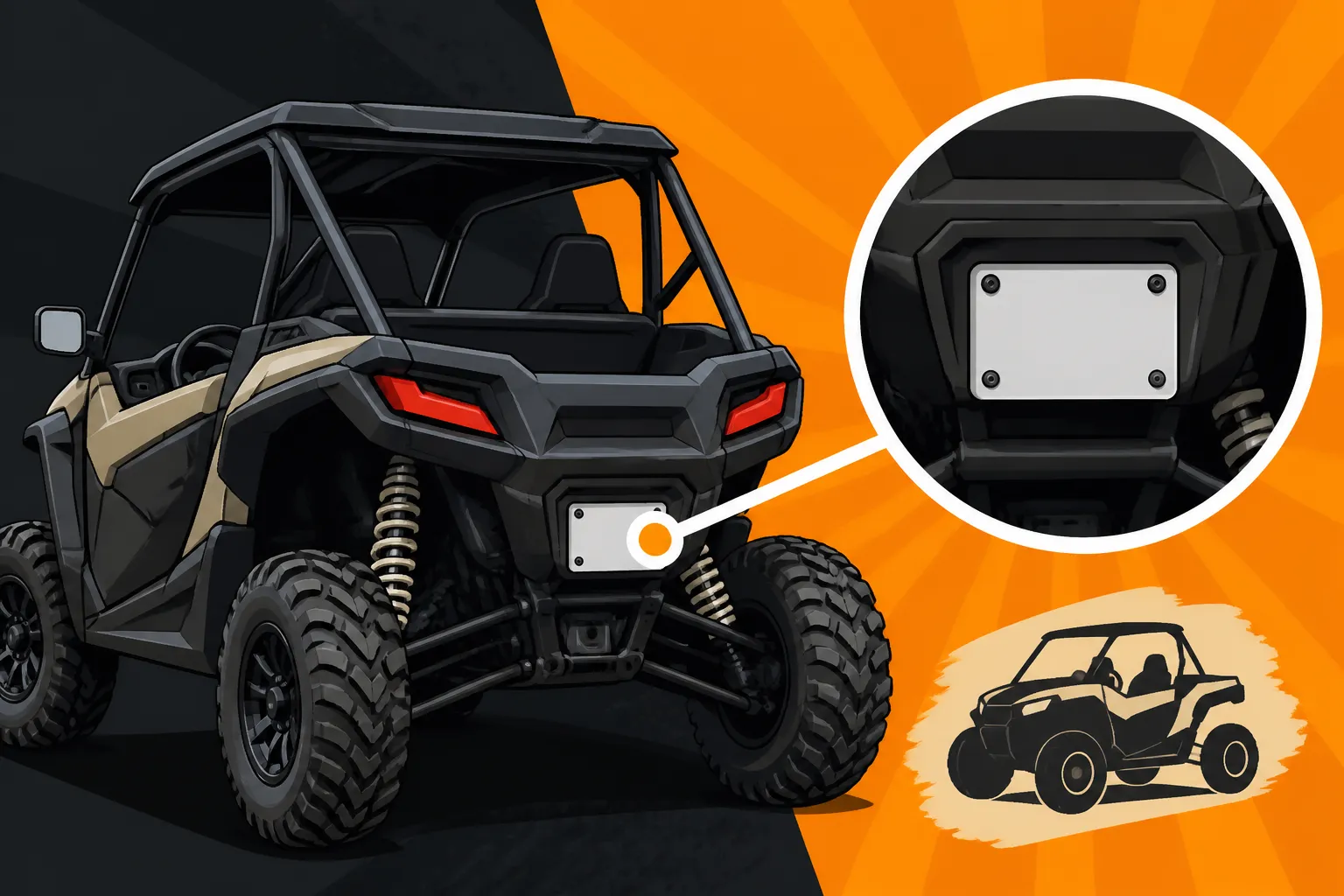
For side-by-sides, the rear of the vehicle is almost universally the most appropriate and expected location for your MPOHV plate. Think of it like any other vehicle on the road: the identifier is at the back. When a law enforcement officer pulls up behind you, or when another driver observes your machine, their first point of reference for identification will be the rear.
Many owners opt to mount their plates directly to the rear bumper, if sturdy enough, or to a part of the roll cage structure that offers a flat, vertical surface. Aftermarket plate brackets are also widely available, designed to attach to various points on popular models like a [Georgia Registration for a Polaris Ranger] or a [Can-Am Defender Owners at a Georgia Tag Office]. These brackets often extend off the frame or roll bar, providing a dedicated, flat surface for the plate. It’s rare to see, or be required to have, a front plate on a side-by-side for MPOHV registration, keeping the focus squarely on the rear for visibility and compliance.
Ensuring Visibility and Legibility
Visibility isn't just about where you put the plate; it's also about how easily it can be seen and read. Consider the height: you don't want your plate mounted so low that it's constantly splashed with mud, obscured by tall grass, or easily damaged by terrain features. Conversely, mounting it excessively high, where it’s difficult to discern from typical road height, isn't ideal either. A good rule of thumb is to place it roughly at the same height range as a car's rear plate.
Lighting is another crucial aspect, especially if you plan on riding during permissible hours after dark on county roads. While many side-by-sides come with taillights, a dedicated license plate light is often an accessory that needs to be added. Check your machine's wiring and consider integrating a small LED plate light that illuminates the plate at night. This ensures that even in low-light conditions, your registration number remains legible, which is a key part of [Georgia Night Riding on a County Road] compliance. Beyond lighting, regularly cleaning your plate after rides, especially after venturing through muddy trails, is vital to maintain its legibility. A clean plate shows you're taking your responsibilities seriously.
Security and Durability
Side-by-sides are often subjected to rough terrain, vibrations, and occasional impacts. This means your plate mounting needs to be incredibly secure and durable. Flimsy zip ties or weak screws simply won't cut it. Imagine hitting a series of washboards or jostling over a rocky section; you don't want your plate rattling loose or worse, falling off entirely.
Invest in good quality hardware: stainless steel bolts, lock washers, and perhaps even nylon lock nuts. If you're using an aftermarket bracket, make sure it's robust and designed to withstand off-road conditions. Some owners even consider anti-theft screws or specialized plate covers to protect against theft or damage. Protecting your plate from impacts, such as low-hanging branches or rocks kicked up by your own tires, is also a wise move. A well-placed, sturdy bracket can act as a shield, ensuring your plate stays put and readable through all your adventures. This kind of attention to detail not only ensures compliance but also reflects responsible ownership.
Avoiding Common Plate Placement Pitfalls and Staying Legal
Once you've gone through the effort to legally register your side-by-side as an MPOHV in Georgia, the last thing you want is to inadvertently run afoul of the law due to a simple oversight in plate placement. There are some common mistakes that can lead to issues, and understanding them can help you avoid unnecessary hassle. The overall goal is to demonstrate that you are a responsible operator who respects the rules that allow you to enjoy [Georgia MPOHV Road Rules: County Roads Only].
The Dangers of Obstruction and Concealment
One of the most frequent errors side-by-side owners make is allowing something to obstruct or conceal their license plate. This can happen innocently enough. Perhaps you've loaded up the cargo bed with a cooler and some hunting gear, only to realize that the cooler now completely blocks the view of your plate. Or maybe you've installed a new spare tire carrier or a rear hunting rack that, while practical, now sits directly in front of your registration plate.
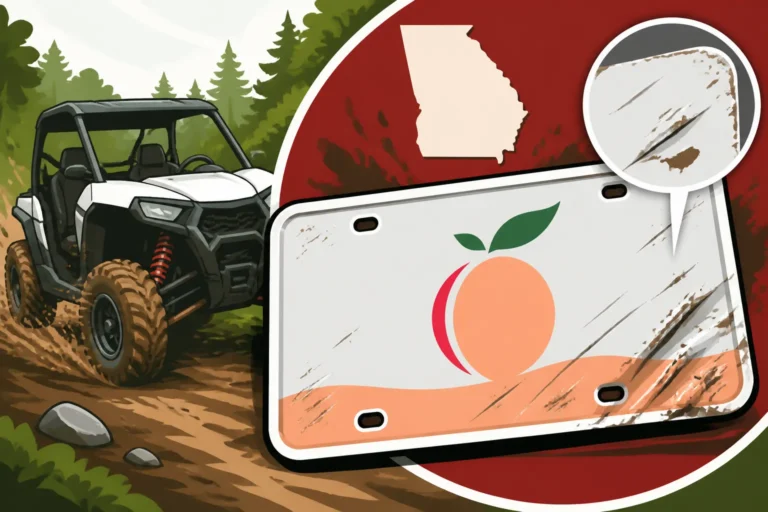
The rule is clear: the plate must be clearly visible and legible at all times. This means no equipment, no mud flaps, no cargo, and certainly no deliberate coverings that would prevent someone from reading the numbers and letters. Law enforcement officers are trained to spot these types of obstructions, and what might seem like a minor inconvenience to you can be interpreted as an attempt to evade identification. Always do a quick visual check before heading out on a county road, especially after loading your machine, to ensure your plate is fully exposed from all angles a deputy might approach from the rear. It's a small step that can save you a big headache down the road.
Homemade Brackets and DIY Solutions
Given that many side-by-sides aren't factory-equipped with a dedicated license plate mount, many owners turn to homemade brackets or creative DIY solutions. This is perfectly acceptable, provided the solution is effective and safe. The key is to ensure that any custom bracket you create is robust, securely attached to the machine, and positions the plate correctly.
When designing your own mounting solution, think about sturdy materials like steel or thick aluminum that won't flex or break under vibration and stress. Use appropriate fasteners that will hold tight, such as bolts with lock nuts or self-tapping screws designed for metal. The bracket should present the plate in a flat, vertical orientation, not at an extreme angle that makes it difficult to read. Remember, the goal is not just to hold the plate, but to display it clearly and legally. And speaking of keeping things official, when you eventually decide to sell your registered side-by-side, having clear and well-documented paperwork, like a comprehensive bill of sale, is just as crucial as having your plate properly displayed. Tools like those offered by LawDepot can really simplify creating those essential documents, ensuring a smooth transfer of ownership and reinforcing the legitimacy of your well-cared-for and registered machine. A solid [Georgia Bill of Sale for a Cash Deal] can be just as important as a securely mounted plate.
What Happens If Your Plate Isn't Properly Displayed
While the initial goal of MPOHV registration is to legitimize road use, failing to properly display your plate can lead to issues. If a law enforcement officer observes your side-by-side on a county road with an obstructed, unlit, or missing plate, they have every right to pull you over. Depending on the officer's discretion and the severity of the issue, you might receive a verbal warning, a written warning, or even a citation.
A citation for improper display, while perhaps not as severe as [Georgia Penalties for an Unregistered Road Machine], still means potential fines and court costs. It's an unnecessary complication that can easily be avoided by taking a few extra minutes to ensure your plate is installed correctly and kept clear. Deputies conducting [What Georgia Deputies Check on a County Road] will certainly include plate visibility on their checklist. Always remember that the plate is your side-by-side's identification on public roads; ensuring it's always visible is a fundamental part of responsible MPOHV ownership and compliance with Georgia's rules.
Here's a quick comparison of effective versus problematic plate placement practices:
| Feature/Practice | Effective Plate Placement | Problematic Plate Placement |
|---|---|---|
| Location | Rear of vehicle, often on bumper or roll cage | Too far forward, on the side, or completely hidden |
| Visibility | Fully exposed, no obstructions from cargo, accessories | Obscured by spare tires, hunting racks, gear, mud |
| Legibility | Clean, well-lit at night, not excessively angled | Caked with mud, unlit for night riding, extreme angles |
| Mounting Security | Sturdy bolts, lock washers, robust aftermarket brackets | Zip ties, flimsy screws, weak homemade brackets |
| Maintenance | Regularly cleaned, checked for tightness | Ignored, allowed to get dirty or loose |
| Compliance Perception | Demonstrates responsible, legal operation | Raises suspicion, invites law enforcement scrutiny |
Disclaimer
This article is for general informational purposes only and does not constitute professional advice. Laws, prices and regulations vary by location and change over time. Consult a qualified professional for guidance on your specific situation.