Georgia Dirt Bikes and Three-Wheelers Are Excluded
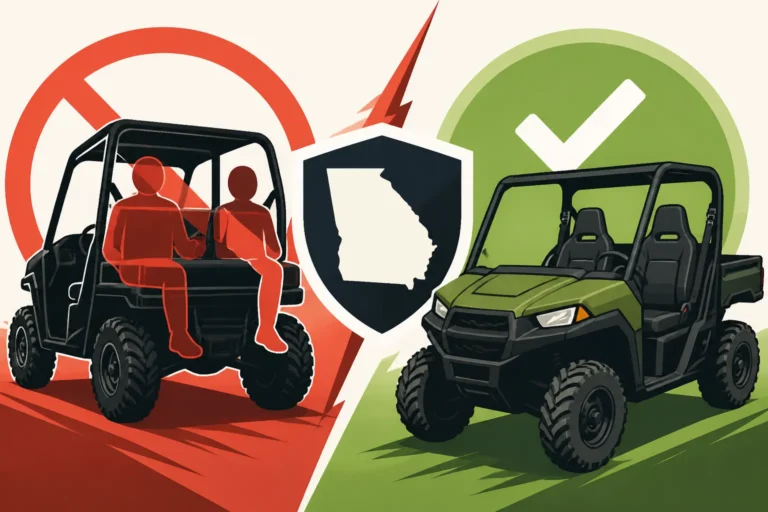
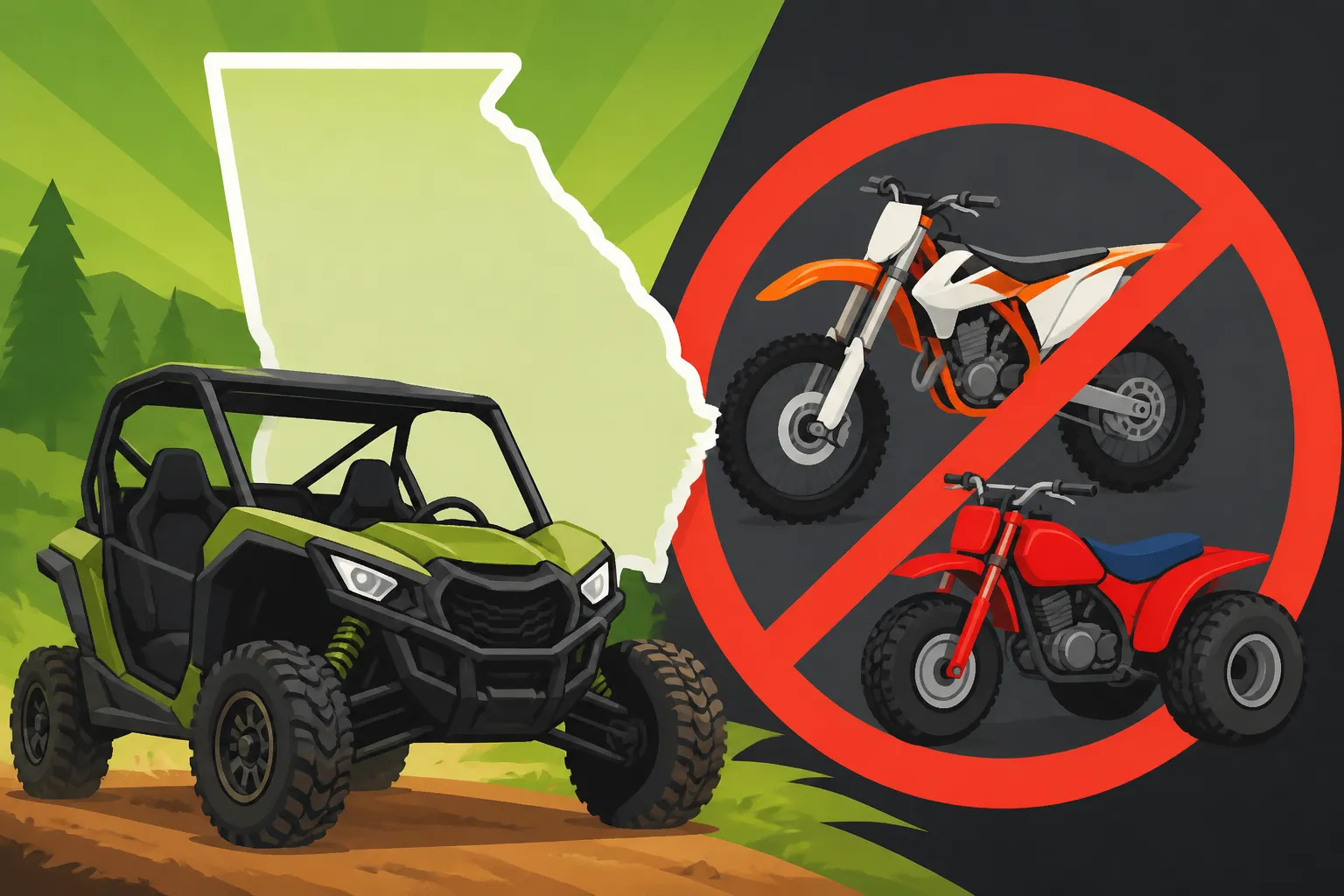
It can be incredibly frustrating to see a growing number of side-by-sides cruising down designated Georgia county roads, sporting official plates, only to realize your trusty dirt bike or classic three-wheeler isn't eligible for the same privilege. Many riders in Georgia scratch their heads, wondering why their perfectly good off-road machines are excluded from the state's MPOHV (Multipurpose Off-Highway Vehicle) registration program. This guide aims to clear up that confusion, diving deep into the specific requirements of Georgia law and explaining precisely why dirt bikes and three-wheelers, despite being popular off-road vehicles, simply don't make the cut for a license plate in the Peach State.
The Heart of the Matter: What MPOHV Really Means in Georgia
When Georgia introduced its MPOHV registration in late 2023, it wasn't a blanket invitation for all off-highway vehicles to hit county roads. Instead, the legislation was very specific about the types of machines that could qualify. The intention was to create a pathway for certain utility-focused, multi-passenger off-road vehicles to gain limited road access, primarily for agricultural, recreational, or general transportation needs on specific local roads. It wasn't designed to make every off-road machine street-legal, and that's where the exclusion of dirt bikes and three-wheelers begins.
Defining a Multipurpose Off-Highway Vehicle
At its core, a Multipurpose Off-Highway Vehicle, or MPOHV, is defined by a very particular set of characteristics in Georgia law. These aren't just arbitrary rules; they're designed to distinguish these machines from traditional ATVs, dirt bikes, or even golf carts. For starters, an MPOHV must be "primarily designed for recreational or utility use and not for use on public streets, roads, or highways." This might sound counterintuitive since we're talking about road registration, but it's crucial: the primary design intent isn't road travel, but the state has carved out a limited exception for specific types. This distinction is key to understanding why many common off-road vehicles simply don't fit the mold.
The law then lays out a series of physical and operational requirements that narrow the field considerably. These requirements act as a checklist, and if a machine fails even one item, it's out. Understanding these specific criteria is the first step in unraveling why your dirt bike or three-wheeler is left out in the cold. You can learn more about the broader definition in [What MPOHV Actually Stands For].
The Intent Behind the Exclusions
The exclusions aren't personal; they're rooted in legislative intent around safety and vehicle classification. The Georgia General Assembly, when crafting the MPOHV rules, made deliberate choices about what types of machines they felt could safely operate on county roads, even with limited access. Their focus was largely on machines that offered more stability, operator protection, and features commonly associated with passenger vehicles, even if scaled down. This meant prioritizing machines with roll-over protection, side-by-side seating, and conventional steering.
Dirt bikes and three-wheelers, while incredibly popular and fun for off-road use, present different safety profiles and operational characteristics that diverge from this legislative intent. They are often built for agility, speed, and navigating challenging terrain, requiring different rider skills and offering less passive protection than an enclosed cab or a roll-over protection structure (ROPS) found on many side-by-sides. These differences, from a lawmaker's perspective, made them unsuitable for the public road access that MPOHVs were granted.
Disqualifying Features: Why Dirt Bikes Don't Make the Cut
For anyone who loves the thrill of two wheels on a dirt trail, it's a bummer to find out your dirt bike can't get a Georgia MPOHV plate. The reasons are pretty clear-cut, stemming directly from the specific eligibility criteria laid out in Georgia law. These aren't hurdles you can simply modify your bike to overcome; they are fundamental design aspects that immediately disqualify them.
The Handlebar Hurdle
One of the most significant and non-negotiable disqualifiers for dirt bikes (and traditional ATVs, for that matter) is the steering mechanism. Georgia's MPOHV law explicitly states that a qualifying machine must have a "steering wheel." This immediately rules out any vehicle operated with handlebars. It's a black-and-white rule that leaves no room for interpretation.
Think about it: a steering wheel provides a different kind of control and stability than handlebars, especially at the speeds that are allowed on county roads. Legislators likely considered the difference in control dynamics, especially in situations where a quick, stable maneuver might be needed. While dirt bike riders are incredibly skilled with handlebars, the law simply prioritizes the more car-like steering wheel for any machine operating on public thoroughfares. This specific requirement is a primary reason for the exclusion. You can delve deeper into this particular restriction by reading [Why Handlebars Disqualify a Machine].
The Straddle Seat Stipulation
Another critical factor that excludes dirt bikes is their seating arrangement. The MPOHV definition requires machines to have "non-straddle seating." This means that you sit in the vehicle, typically side-by-side, rather than on it, straddling the engine or frame. Dirt bikes, by their very nature, are designed for the rider to straddle the seat, allowing for dynamic body positioning and weight shifting crucial for off-road control.
This seating requirement is directly tied to the perceived safety and stability of the vehicle for limited road use. Non-straddle seating is more akin to what you'd find in a car or even a golf cart, where occupants are seated within the vehicle's frame. It's considered to offer more protection and stability, particularly in the event of a sudden stop or collision. Because dirt bikes are inherently straddle-seat vehicles, they automatically fall outside the MPOHV classification. This distinction is also covered in [Why a Straddle Seat Disqualifies a Machine].
Lack of Factory-Installed Seat Belts
Finally, the MPOHV statute demands that qualifying machines be equipped with "factory-installed seat belts." This is another major point where dirt bikes simply cannot comply. While riders wear helmets and often other protective gear, dirt bikes do not come with seat belts because they are designed for a riding posture that wouldn't accommodate them, nor would they be practical or safe in their intended off-road environment.
The inclusion of factory-installed seat belts highlights the legislative emphasis on passenger safety for vehicles intended for any public road use, no matter how limited. It’s a standard safety feature in automobiles, and its requirement for MPOHVs shows an intent to extend a similar level of passive restraint to these specific off-road machines when they venture onto county roads. This again underscores the lawmakers' focus on a more conventional passenger safety setup, which is fundamentally at odds with the design of a dirt bike.
The Curious Case of Three-Wheelers
While dirt bikes have a clear set of disqualifiers, three-wheelers, particularly the older ATV-style machines, present a slightly different but equally definitive set of challenges when it comes to Georgia's MPOHV registration. Many folks might think, "Well, it's not a two-wheeler, so maybe it fits!" But alas, the specific language of the law still pushes these machines to the sidelines.
Stability and Design Concerns
The history of three-wheelers is complex. While they were once popular, concerns about their stability led to their phased out production decades ago. From a legislative standpoint, when considering road access, these inherent design characteristics become a major roadblock. Georgia's MPOHV law, by focusing on a specific vehicle class, implicitly avoids machines with known stability challenges that could pose a greater risk on public roads, even county roads with lower speed limits.
The MPOHV requirements lean heavily towards four-wheeled or more stable multi-wheeled configurations that exhibit predictable handling traits. Three-wheelers, especially older models, are often more prone to rollovers and can be challenging to control, particularly for inexperienced riders or at higher speeds. While a skilled rider might handle one expertly off-road, the state's concern is about general public safety on shared roadways, making their exclusion a logical extension of risk management.
Steering and Seating Revisited
Much like dirt bikes, many three-wheelers of the classic "ATC" style would also fall afoul of the steering and seating requirements. If a three-wheeler is operated with handlebars and requires the rider to straddle the seat, it runs into the exact same issues as a dirt bike. The steering wheel and non-straddle seating requirements are not specific to four-wheeled vehicles; they apply to any machine seeking MPOHV registration.
Even some more modern three-wheeled vehicles that might have a steering wheel might still struggle with the overall design intent. The MPOHV rules are very specific about the kind of vehicle. For example, a three-wheeled motorcycle (often called a "trike") is a completely different vehicle class with its own specific registration and licensing rules, distinct from the off-highway MPOHV category. The MPOHV definition is tailored for utility-focused side-by-side type machines, not traditional motorcycle variants or older off-road trikes.
Age and Safety Standards
Many three-wheelers still in circulation are quite old, predating many modern safety standards. While age isn't a direct disqualifier for all MPOHVs (machines built before 2000 can still register under certain conditions, as detailed in [Machines Built Before 2000 and Georgia Registration]), the combination of older design, inherent stability challenges, and the lack of modern safety features like roll-over protection or integrated seat belts makes them unsuitable for the MPOHV category.
The legislative decision to exclude them likely factored in the overall safety profile of these machines, especially when compared to modern side-by-sides that often boast significant safety enhancements. The Georgia Department of Driver Services (DDS) and county tag offices are tasked with upholding these standards, and without meeting the defined criteria, three-wheelers simply cannot be approved for MPOHV registration.
The Bigger Picture: What Georgia's Law Does Allow
Understanding what dirt bikes and three-wheelers cannot do under the MPOHV registration system becomes clearer when we look at what the law does allow. The intent was never to open all public roads to all off-road vehicles. Instead, it was a very specific pathway for a particular class of machine to gain limited access to Georgia's vast network of county roads.
Defining an Eligible MPOHV
An eligible MPOHV in Georgia must meet a very specific eight-point test. This test covers everything from the steering mechanism to seating, weight, width, and speed capabilities. Essentially, it's looking for a machine that resembles a compact utility vehicle more than a traditional ATV or dirt bike. This is why vehicles like Polaris Rangers, Can-Am Defenders, Honda Pioneers, Kawasaki Mules, and John Deere Gators are often good candidates, provided they meet all the other criteria. [Georgia MPOHV Eligibility: The Eight-Point Test] goes into exhaustive detail about these requirements.
Here's a quick rundown of some key requirements that typically differentiate eligible MPOHVs from excluded vehicles like dirt bikes and three-wheelers:
| Feature | Eligible MPOHV Requirement | Dirt Bike / Three-Wheeler Reality |
|---|---|---|
| Steering | Steering Wheel | Handlebars |
| Seating | Non-straddle seating (e.g., side-by-side bench/bucket) | Straddle seating |
| Seat Belts | Factory-installed seat belts | Not typically equipped |
| Minimum Speed | Capable of 25 mph | Generally exceeds 25 mph, but not the primary concern |
| Maximum Speed | Cannot exceed 65 mph | Many models exceed 65 mph, but again, not the primary concern for exclusion |
| Width | 80 inches or less | Generally much narrower |
| Weight | Gross weight 4,000 lbs or less | Much lighter |
| Payload | Payload capacity of 350 lbs or more | Often less, designed for single rider + minimal cargo |
This table clearly illustrates the fundamental differences that place dirt bikes and three-wheelers outside the MPOHV category. The Georgia law is not just about having four wheels; it’s about a comprehensive package of design features that collectively define what can be registered.
The Purpose of Limited Road Access
It’s also important to remember the nature of the road access granted to MPOHVs. This isn't a free pass to hit any road you choose. Registered MPOHVs are specifically limited to [Georgia MPOHV Road Rules: County Roads Only]. They are explicitly prohibited from state highways and interstates, with only limited provisions for crossing state routes at designated intersections.
This restricted access further emphasizes that the MPOHV program isn't about transforming off-road vehicles into street-legal cars. It's about providing a practical solution for folks who live in rural areas or have legitimate needs to use these machines on local county roads for short distances, often related to agriculture, hunting, or accessing property. The legislative focus on utility and controlled access reinforces why machines designed purely for off-road recreation, like dirt bikes and three-wheelers, were not included.
What This Means for Riders: Your Options for Enjoying Your Machine
So, if your dirt bike or three-wheeler can't get an MPOHV plate in Georgia, what does that mean for you? Does it mean you can never ride it? Absolutely not! It just means your options for where and how you ride are different from those with registered side-by-sides. Understanding these limitations and embracing the available avenues is key to enjoying your machine responsibly and legally.
Riding on Private Land
The most common and unrestricted way to enjoy your dirt bike or three-wheeler is on private property with the landowner's permission. This could be your own land, a friend's farm, or a hunting lease. When riding on private land, you generally aren't subject to the same registration and road-use laws that apply to public roads. This freedom is one of the biggest appeals of these machines.
However, even on private land, common sense and safety rules still apply. Always wear appropriate safety gear, including a helmet (especially for riders under 18, as discussed in [Georgia Under-18 Helmet Rule Reaching Private Land]), and be mindful of noise and potential environmental impact. Respecting the property and the surrounding community ensures that private riding opportunities remain available. For any agreements related to riding on private land, such as permission forms or lease agreements, resources like LawDepot can provide templates to ensure everything is clearly documented.
Utilizing Dedicated Off-Road Parks and Trails
Georgia is home to a fantastic network of dedicated off-road parks and trail systems where dirt bikes and three-wheelers are welcome, and in some cases, specifically catered to. These are purpose-built facilities designed for thrilling and safe off-road experiences. From the sprawling network at Iron Mountain Resort to the technical trails at Beasley Knob and Houston Valley (though Houston Valley has width restrictions, dirt bikes are usually fine), there are plenty of places to legally ride.
These parks often have their own rules regarding age, safety gear, and sometimes even sound limits, but they offer the best environment for experiencing your machine's full capabilities. Many of these areas require a day-use or annual permit, such as those for Georgia's National Forests, which you can learn about in [Georgia OHV Permits: What You Need Before You Ride]. Before you haul your bike out, always check the specific park or trail system's rules and requirements, as some might have restrictions on three-wheelers due to their unique handling characteristics.
The Importance of Proof of Ownership
Even without a title or registration for road use, it is absolutely vital to maintain clear proof of ownership for your dirt bike or three-wheeler. This protects you in case of theft, helps when you eventually sell the machine, and can be required if you ever need to transport it across state lines or resolve any disputes. Since Georgia does not title these types of machines, other documents become crucial.
A robust bill of sale from the original purchase, or for a used machine, a detailed bill of sale from the previous owner, is paramount. This document should clearly state the buyer, seller, date, purchase price, and the machine's VIN or serial number. If you bought a machine without a formal bill of sale or need to establish ownership, you might need to create an ownership affidavit. Services like LawDepot can help you generate these important legal documents, providing templates for [Bills of Sale That Hold Up at a Tag Office] or a [Georgia Ownership Affidavit for an MPOHV]. Having this paperwork handy is simply good practice, even if you never intend to register the machine for road use.
Navigating Ownership and Sales Without a Title
Since Georgia does not title dirt bikes and three-wheelers (or traditional ATVs, for that matter, as detailed in [Why Georgia Does Not Title an ATV]), the process of buying, selling, and proving ownership for these machines differs significantly from titled vehicles like cars or registered MPOHVs. This reality can sometimes create anxiety or confusion, but with the right approach, it's perfectly manageable.
The Critical Role of the Bill of Sale
Without a state-issued title, the bill of sale becomes the most important document for establishing a chain of ownership. When you buy a dirt bike or three-wheeler, whether from a dealer or a private seller, insist on a clear, detailed bill of sale. This document should include:
- The full names and addresses of both the buyer and seller.
- The date of the transaction.
- The purchase price.
- A complete description of the machine, including make, model, year, and its unique Vehicle Identification Number (VIN) or serial number.
- Signatures of both parties.
Even for private sales, having a professionally drafted bill of sale can prevent future headaches. Resources like LawDepot offer customizable templates that ensure all the necessary information is included, providing an official-looking document that can hold up as proof of ownership. This is crucial for your peace of mind and for any future transactions. When buying, always ask for [What a Georgia Buyer Should Ask to See] to ensure you're getting all the necessary paperwork.
Proving Ownership for Untitled Machines
If you've owned your dirt bike or three-wheeler for a while and somehow misplaced the original bill of sale, or if you acquired it in a less formal manner, you might find yourself needing to prove ownership without traditional documents. This can be challenging, but not impossible. An ownership affidavit is often the best route here. This is a sworn statement, signed in front of a notary public, detailing how and when you acquired the machine, confirming that you are the rightful owner, and listing the machine's identifying information.
While not a substitute for a title, such an affidavit, especially if supported by other documentation like old registration receipts from an off-road park, maintenance records, or even dated photographs of you with the machine, can be very helpful. Again, LawDepot provides templates for affidavits that can be adapted for situations like [Proving You Own an ATV in Georgia Without a Title], helping you formalize your claim of ownership.
Selling Your Dirt Bike or Three-Wheeler
When it's time to sell your machine, having that clear chain of ownership documented through bills of sale is invaluable. A potential buyer will (and should!) want to see proof that you legitimately own the machine. Presenting a well-documented bill of sale from your purchase, and then providing a similarly detailed bill of sale to the new buyer, instills confidence and helps ensure a smooth transaction.
Be transparent with the buyer that the machine does not have a state title and is not eligible for MPOHV road registration. Explain that its use is restricted to private land or designated off-road trails. Clearly documenting these facts in the bill of sale can prevent misunderstandings down the road and ensure both parties are on the same page about the machine's legal status in Georgia.
Frequently Asked Questions About Exclusions
Many riders have understandable questions when they learn their favorite machines are excluded from Georgia's MPOHV registration. It can feel unfair or confusing, especially when other off-road vehicles are getting plates. Let's tackle some of the most common questions and clarify these points.
Can I Modify My Dirt Bike to Meet the Requirements?
This is a common thought: "If it needs a steering wheel, I'll put one on!" Unfortunately, no. The Georgia MPOHV law is very specific about the original design of the vehicle. Modifying a dirt bike or three-wheeler to add a steering wheel, different seating, or seat belts will not make it eligible for registration as an MPOHV. The statute focuses on factory-installed features and the fundamental vehicle type.
Attempts to "convert" a disqualified machine are highly unlikely to be accepted by the Georgia Department of Driver Services (DDS) or your local county tag office. They are looking for vehicles that naturally meet all eight points of the MPOHV eligibility test as they came from the manufacturer. It's not about what you can make it look like; it's about what it fundamentally is according to the law.
Are There Any Exceptions for Farm Use or Specific Areas?
For dirt bikes and three-wheelers, the MPOHV exclusion is pretty universal across Georgia. While the MPOHV registration itself is often utilized by farmers, farm use does not create an exception for a vehicle that otherwise fails the eligibility criteria. So, a dirt bike used exclusively on a farm is still a dirt bike and cannot be registered as an MPOHV.
Similarly, there are no county-level ordinances or special zones that can grant MPOHV registration to dirt bikes or three-wheelers. The MPOHV program is a statewide initiative managed by the DDS, and the eligibility rules are uniform across all Georgia counties. While some cities might have unique ordinances for golf carts or PTVs (Personal Transportation Vehicles), these do not extend to dirt bikes or three-wheelers, which are classified differently and do not meet the core MPOHV definition.
What About Georgia's ATV Road Access Law?
It's true that Georgia has had specific legislation (O.C.G.A. § 40-7-4) that allows some limited road access for ATVs and side-by-sides on county roads. However, this law is separate from the MPOHV registration program and has a crucial sunset date. Currently, it allows some limited access to county roads for off-road vehicles, often with certain restrictions like a [Georgia ATV Helmet Law for Riders Under 18] and specific times of day. This law is also intended for vehicles that fit the broader ATV definition, which, again, typically excludes dirt bikes due to their two-wheeled nature.
Critically, this older law is set to expire, or "sunset," in [Georgia's July 2027 Sunset on Road Access]. After that date, the MPOHV registration program will likely be the only pathway for off-highway vehicles to gain any form of public road access in Georgia. Since dirt bikes and three-wheelers are excluded from MPOHV registration, this means their ability to operate on any public road will be completely curtailed after the sunset date, if not before. This makes understanding the MPOHV exclusions even more vital for long-term planning.
Disclaimer
This article is for general informational purposes only and does not constitute professional advice. Laws, prices and regulations vary by location and change over time. Consult a qualified professional for guidance on your specific situation.