Repairing a Trail After a Wet Weekend
A wet weekend can turn a Georgia trail into deep ruts, slick clay, and standing water—and a well-meant fix can make the damage worse. This guide explains what riders can safely do after a rainy ride, how to decide whether a trail should stay closed, and when to report damage or ask a land manager before attempting repairs.
Decide Whether the Trail Is Safe to Ride
Look beyond the mud
A trail can look rideable at the entrance and still be unsafe or vulnerable farther in. Check for water running down the trail, soft shoulders, fresh ruts, exposed roots, leaning trees, and places where water has started cutting into the soil. A shallow puddle is not always a problem; a channel of moving water or a rut deep enough to catch a tire is a stronger sign to turn around.
Pay particular attention to slopes and low spots. On a hillside, tires can push wet soil downhill and start an erosion channel. In a hollow, a trail may hold water even when the rest of the route has dried. Red clay can be especially deceptive: the surface may look firm while the layer underneath is slick enough to pull a machine off line.
Do not test a questionable section by repeatedly driving through it. Each pass can widen the trail, deepen the rut, and push more soil into nearby vegetation or a creek. If you cannot cross without spinning, sliding, or leaving the established route, back out carefully and choose another ride.
Check for closures and recent conditions
Before heading out, look for current trail information from the land manager or park operator. Rainfall can affect routes differently across north Georgia, the Piedmont, and the Coastal Plain, so a report from another area may not tell you much about the trail you plan to visit. Review Georgia Trail Conditions Before You Drive and How to Check Georgia Forest Trail Status as part of your planning.
A map can help you understand where a route goes, but it cannot confirm that a trail is open or safe today. Riders may use onX Offroad to review mapped routes and plan alternatives, then check the relevant land manager’s announcements for closures or restrictions. Treat a mapped line as a navigation aid, not permission to ride.
If you are already at a trailhead and see a gate, closure notice, fresh barricade, or damaged entrance, respect it. A closed route may be protecting a wet trail, repairing storm damage, or preventing riders from entering an unsafe area. For more on why conditions can change access, see Georgia Trails That Close After Rain and Georgia Trail Closures After a Storm.
Choose the Right Response to Trail Damage
Know what riders can address themselves
On private property where you have permission, a landowner may ask you to help with simple cleanup. That could mean picking up litter, moving a small loose branch that is not under tension, or reporting a blocked route. Stay within the landowner’s instructions and do not assume permission to operate a saw, move heavy material, reshape the trail, or alter drainage.
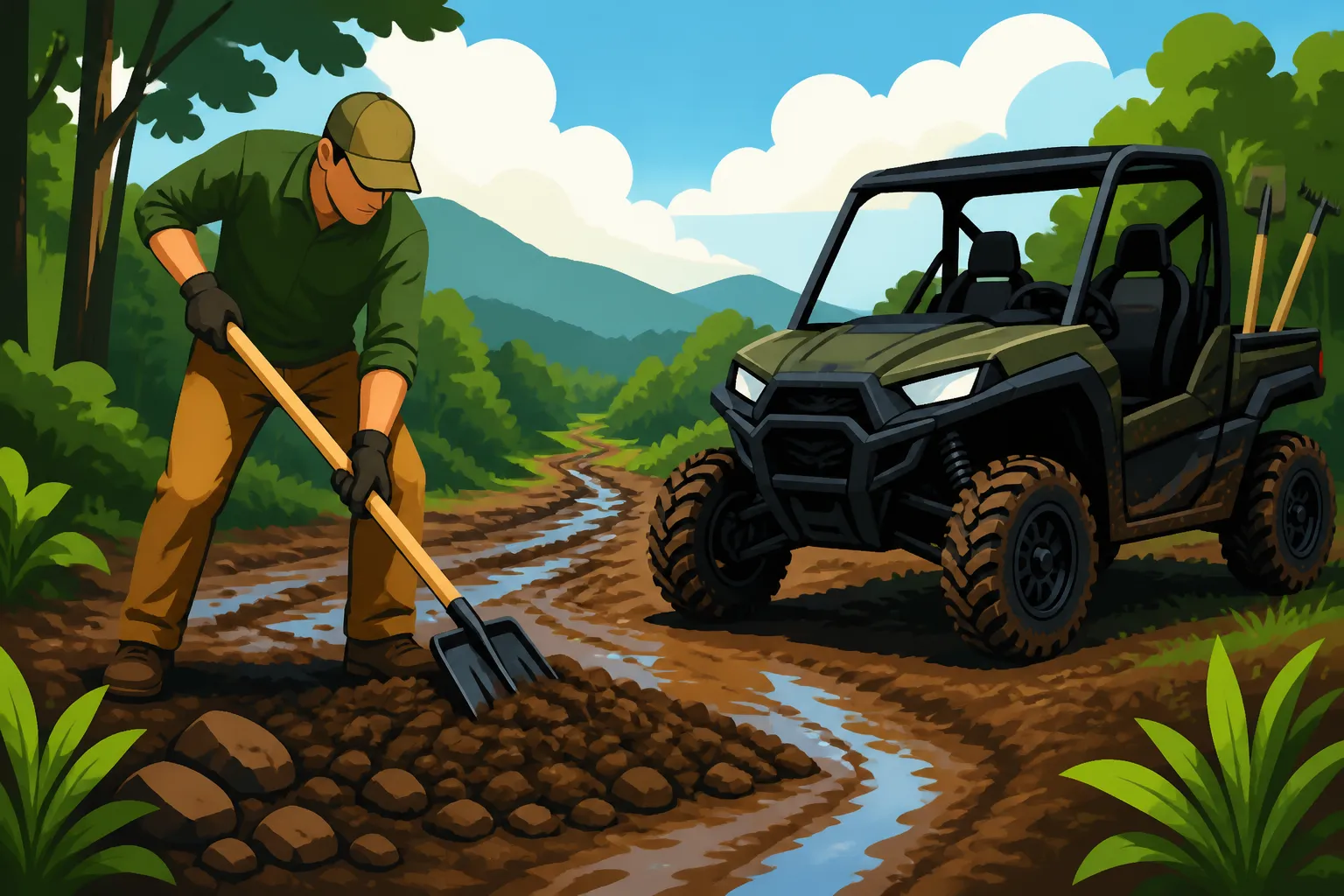
On public land or a managed trail system, do not make repairs on your own. Even a small change—digging a drain, piling branches, filling a rut, or moving a rock—can interfere with a planned repair or send water onto a different part of the trail. Contact the agency, park, or trail organization responsible for the route and ask what help is appropriate.
A useful report is specific and factual. Note the trail name or nearby junction, describe what you saw, and explain whether the issue blocks passage or creates a safety concern. A photo taken from a safe location can help, but do not ride farther into a closed or hazardous area just to document it. If you use onX Offroad to keep track of your route, a saved location can help you describe where the damage occurred; confirm the location with the trail manager’s map or directions.
Avoid repairs that can increase erosion
The instinct to fill a rut or push mud back into place is understandable, especially when you want to help preserve a favorite route. But loose soil placed in a rut may wash away at the next rainfall. A pile of brush can divert runoff toward the trail edge, and a trench cut without a drainage plan can move water into a new erosion path.
Do not ride around a muddy section by making a new bypass. That widens the disturbed area, damages plants, and often creates another path for runoff. If the established route is too soft, turn back rather than creating a second route beside it. Tread Lightly on Erodible Clay offers a useful reminder that restraint during wet conditions is part of trail care.
| Trail condition | Safer response | Avoid |
|---|---|---|
| Shallow mud with a firm, established route | Proceed only if the trail is open and your tires can maintain control | Spinning tires to power through |
| Deep rut or soft shoulder | Turn around and report the location | Creating a bypass around the rut |
| Water flowing down the trail | Leave the section and notify the manager | Digging a drain without authorization |
| Fallen branch on a private route | Ask the landowner before moving it | Cutting or moving a large or tensioned limb |
| Closed gate or posted repair area | Respect the closure and choose another route | Moving signs or riding around a barrier |
Make a Careful Report and Support Proper Repair
Give the trail manager information they can use
A report is most helpful when it identifies the location and describes the problem without guessing at a repair. Include the trail or system name, the closest junction or landmark, the kind of damage, and whether the issue affects safe passage. If the route is on a managed system, use the contact method provided by the agency or operator.
Describe what you observed rather than diagnosing the cause. For example, “water is running down the center of the trail and has cut a channel below the next bend” is more useful than “the trail needs a new water bar.” Trail crews can assess the slope, soil, drainage, and nearby waterways before choosing a fix.
Keep your report calm and practical. If several riders have noticed the same problem, one clear report is generally more useful than a flood of duplicate messages. When the issue is urgent—such as a downed tree blocking the route or a washout that could cause a fall—say so plainly and avoid riding into the hazard.
Volunteer through an organized effort
Some trail systems and riding organizations arrange maintenance days. These are safer ways to contribute because volunteers can receive instructions, use suitable tools, and work on tasks selected by the people responsible for the route. Check Georgia Trail Maintenance Volunteer Days for the kinds of organized opportunities riders may look for.
A volunteer day may involve picking up trash, clearing light brush, maintaining signs, or helping with a task under crew supervision. Work can change with the site and the damage, so do not bring power tools or start work before the coordinator explains what is allowed. Wear sturdy footwear, gloves, eye protection when appropriate, and clothing suited to the terrain. Follow instructions about where to park, which routes are closed, and how to handle tools.
If a wet weekend has left a popular route badly damaged, ask whether the system wants volunteers or would rather receive reports and keep riders away until crews can assess it. Sometimes the most useful contribution is simply not adding more tire damage while the ground recovers.
Prevent More Damage on Your Next Ride
Adjust the ride to the ground
Wet-weather riding requires more than a different line choice. Reduce speed before slick turns, leave extra space between machines, and avoid sudden throttle or braking inputs that can break traction. If a hill is too slick to climb or descend under control, do not keep trying until the surface is churned up. Turn around where it is safe to do so.
Stay on the marked route, even when the trail is crowded or the main line looks messy. On a one-way system, do not reverse along the route unless the operator’s directions allow it and you can do so safely. Review Georgia Trail Etiquette on One-Way Loops before riding a route with directional rules.
Plan a backup option before leaving home. onX Offroad can help you keep a planned route and alternative in view, but verify access and closures through the trail operator before setting out. A saved map does not mean a trail is open, and cell service may be limited in some riding areas. Download or otherwise prepare the information you need before you reach the trailhead.
Clean up without spreading the problem
After riding, remove packed mud from tires, undercarriage areas, and equipment before traveling to another trail system or property. Mud can carry seeds and plant material, and cleaning at a suitable wash area helps keep that material from being transported elsewhere. Avoid washing mud into a ditch, storm drain, creek, or other waterway.
Inspect your machine for damage that may have happened in a rut or water crossing. Check tires, steering, brakes, lights, and underbody components before the next ride. If the machine is pulling to one side, has a damaged tire, or has collected debris near moving parts, address it before returning to the trail.
Finally, make a simple note about the conditions you encountered: where the route was soft, which sections had standing water, and whether signs or barriers were present. onX Offroad may help you remember a route or planned turn, while the official trail source remains the place to confirm access. These notes can help you choose a more suitable ride next time and avoid repeating damage on a still-wet trail.
Disclaimer
This article is for general informational purposes only and does not constitute professional advice. Laws, prices and regulations vary by location and change over time. Consult a qualified professional for guidance on your specific situation.