Georgia Riding Areas With Group Rates
Planning a group ride in Georgia gets complicated when one person wants easy trails, another brings a side-by-side, and nobody knows whether the park offers a group rate. This guide explains where to start, how private-park pricing differs from public-land permits, and what to confirm before your convoy heads for the trailhead.
How group rates work at Georgia riding areas
Private parks and public trails handle groups differently
A private off-road park may set its own admission, camping, rental, and event policies. Some parks may offer group arrangements, but the details can depend on the size of your party, the activities you plan, and whether you want a reserved campsite, rental machines, or a guided outing. A group rate should never be assumed just because you arrive with several vehicles; ask the park directly what it offers and what qualifies.
Public riding areas work differently. At Georgia’s national forest OHV systems, access requirements and permits are set by the managing agency, rather than by a private park selling a package to your club. A shared ride plan does not necessarily mean one permit covers every person. Read [Georgia's Per-Operator Permit, Not Per Vehicle] and confirm the permit rules that apply to each operator before you leave.
That distinction matters when you’re comparing the total cost for a group. A private park may bundle access or amenities in a way that’s convenient for a planned event, while a public trail system may involve separate permits and self-managed logistics. Neither option is automatically cheaper: the answer depends on your group’s size, machines, travel plans, and appetite for amenities.
What to ask before counting on a discount
When you contact a riding area, explain what “group” means in practical terms. A family bringing two machines is different from a club organizing a ride for a dozen operators. Give the park your approximate headcount, the number and type of machines, your preferred dates, and whether you need camping or rentals. Ask whether everyone has to book together or whether individual riders can join later.
Get the rules in writing if the park offers a special arrangement. Clarify what the fee includes, whether it applies to each rider or machine, and what happens if someone cancels. Ask separately about camping, vehicle parking, rentals, and any event or reservation requirements. A discount on trail access may not include a campsite or a rental machine.
Also ask about machine limits and riding conditions before taking deposits or collecting money from the group. A park may have different routes for ATVs and side-by-sides, and some public trails have width limits or other access restrictions. The guide to [Georgia ATV Trails That Allow Side-by-Sides] is a useful starting point when your group is bringing mixed equipment.
Georgia riding areas to consider for a group outing
Private parks for organized rides
Private parks can be a practical choice when your group wants a defined check-in point, posted park rules, and the option to ask about amenities in one conversation. Iron Mountain Off-Road Park and Highland Park Off-Road Resort are two Georgia riding destinations to investigate. Their riding experiences and layouts are not interchangeable, so check each park’s machine rules, route options, opening arrangements, and group policies before you choose.
Don’t treat a park’s general admission information as confirmation of a group package. Ask whether the park offers a group arrangement for your specific plan, what the minimum or maximum party size may be, and whether the offer applies to a club ride, a family outing, or a private event. If you’re organizing a larger gathering, ask whether advance notice or separate event approval is needed. For a broader starting point, compare [Georgia Private Off-Road Parks Compared].
A private park can make coordination easier, but it still pays to arrive prepared. Make sure every rider understands the waiver and safety rules, confirm whether passengers are allowed on each machine, and find out where trailers can park. If you’re renting, ask about the driver requirements, passenger limits, and what gear riders need to bring themselves. Those details can affect the schedule as much as the trail rate.
National forest OHV systems for self-organized groups
Georgia’s national forest OHV systems can suit riders who are comfortable handling their own logistics and following designated trail rules. Systems such as Houston Valley, Beasley Knob, Whissenhunt, Town Creek, Oakey Mountain, and Davenport have distinct access conditions, trail characteristics, and operating information. Check the specific location before you commit, because a trail system that works for a narrow ATV may not work for a wide side-by-side.
For a group, the biggest advantage of a public trail outing may be the flexibility to organize your own ride rather than buy a private event package. The trade-off is that your group must pay close attention to permits, access, trail conditions, and any closure notices. Review [Georgia's Six National Forest OHV Systems] and [How to Check Georgia Forest Trail Status] while deciding which system fits your riders and machines.
Do not assume that the presence of a larger group changes the public-land permit rules. Confirm requirements for each operator, and make sure riders know where to display or carry their permit. [Georgia OHV Permits: What You Need Before You Ride] explains the broader permit considerations, while the trailhead’s posted information and the managing agency’s updates should guide your final plans.
| Riding option | Best fit for a group | What to confirm before you go |
|---|---|---|
| Private off-road park | Groups seeking a managed venue, amenities, or possible event arrangements | Group eligibility, reservations, machine rules, rentals, camping, and cancellation terms |
| National forest OHV system | Riders comfortable planning their own permits, route, and logistics | Permit requirements, trail access, width restrictions, closures, and current conditions |
| Mixed outing with several machine types | Groups with ATVs and side-by-sides or riders of varied experience | Whether each machine is allowed and whether the group can ride compatible routes together |
How to choose the right area for your group
Match the trails to the machines and riders
Start with the least experienced rider and the most restrictive machine in the group. If one person is new to off-road riding, a technical trail chosen by the most confident rider can turn the day into a stressful series of stops and recoveries. Ask the riding area about trail difficulty and whether there are suitable routes for beginners. See [Best Georgia ATV Trails for Beginners] for ideas to investigate.
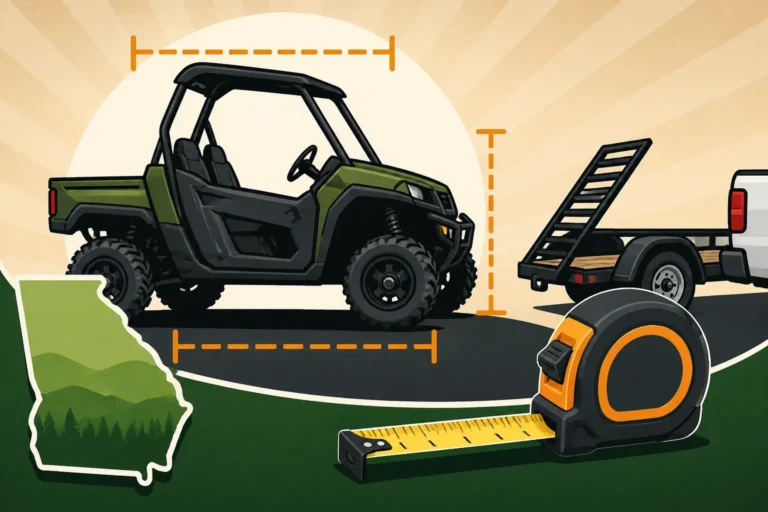
Machine dimensions matter, too. A side-by-side that feels manageable on a wide fire road may be barred from a narrow trail. Before the group travels, check the specific system’s machine limits and measure the widest vehicle if needed. [Georgia Trail Widths and What Fits] can help you think through fit, but the rules for the particular trail system take priority.
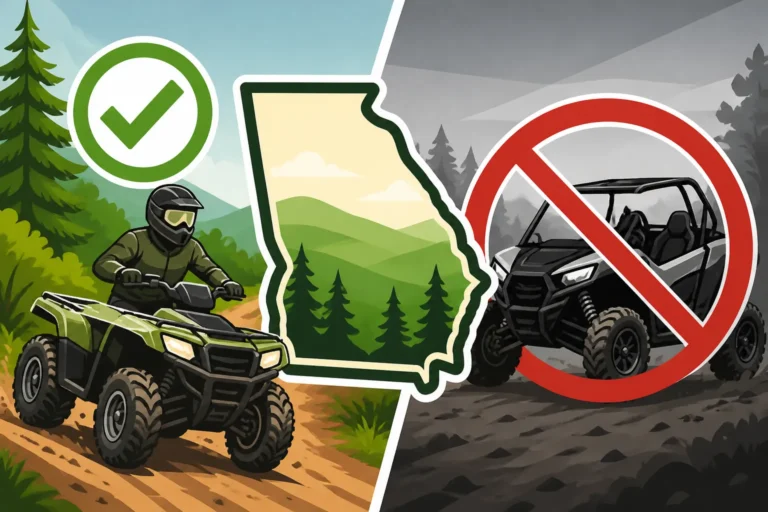
If your group has a mix of ATVs and UTVs, make sure everyone understands whether you can ride together on the same routes. If the answer is no, consider choosing a venue with separate suitable routes or splitting the outing into planned groups. That may be less convenient than one convoy, but it is better than reaching the entrance only to learn that part of the group cannot ride where expected.
Compare the full outing, not just the riding fee
A group’s real budget includes more than admission. Add up permits or access, fuel, food, camping, rentals, trailer costs, and any required gear. If someone is borrowing or renting a machine, confirm whether they need to bring a helmet or other safety equipment. Ask whether the park has food, fuel, water, or repair services onsite rather than assuming they will be available.
Travel time also changes the value of a group rate. A lower access cost can be less appealing if the ride requires a long drive, an overnight stay, or a trailer setup that several members do not have. If riders are traveling from different parts of Georgia, choose a meeting point and a departure plan before reserving anything. [Georgia ATV Camping With Trail Access] may help you compare overnight options near riding areas.
Finally, decide whether your priority is the lowest overall cost, the easiest logistics, or the best fit for the riders. Those goals don’t always point to the same destination. A private park may be attractive for its organized setting, while a forest system may work better for an experienced group that wants to self-manage. Compare the whole plan, not a single advertised fee.
A practical checklist for organizing the ride
Before you book or collect money
Use a short list to keep the details from slipping through the cracks:
- Choose a riding area that allows every machine in the group.
- Confirm the group’s rider count, machine count, and experience levels.
- Ask the park or managing office whether group arrangements, reservations, or event rules apply.
- Verify permits, waivers, age requirements, passenger rules, and required equipment.
- Check trail conditions and closures close to the departure date.
- Confirm whether camping, rentals, parking, and amenities are included or separate.
- Set a clear cancellation and refund plan for the group.
- Share the address, meeting time, emergency contact plan, and riding rules with everyone.
Keep one person responsible for confirming details, but make sure all riders have the essentials themselves. A group leader can share a map and route plan, yet each operator should know the access requirements and carry any required documents. That prevents the familiar trailhead scramble where one rider is searching through a glove box while everyone else waits.
Use onX Offroad to help your group review mapped routes and coordinate a general plan before the ride. It can be handy when riders are coming from separate towns or when you want everyone to understand the intended route. Still, a mapping app is not a substitute for checking official access rules, trail closures, or posted signs.
On the day of the ride
Set a meeting point where trailers can safely park and vehicles can regroup without blocking the entrance. Before anyone unloads, do a quick check that the machines are ready, riders have their permits or other required documents, and everyone understands the day’s route and regrouping points. Agree on a simple plan for a breakdown or a rider who wants to turn back early.
For a large group, use smaller riding pods rather than stretching a long line across the trail. Keep a comfortable distance between machines, wait at agreed junctions, and make sure the last rider is not left guessing where the group went. A map shared through onX Offroad can support that coordination, but phone coverage may be limited, so agree on meeting locations in advance.
Respect closures, posted limits, and other trail users. A group ride is more enjoyable when the riders leave room for faster or slower traffic, avoid blocking narrow sections, and follow the rules around noise, speed, and machine access. If weather changes the trail, be willing to shorten the route. [Georgia Trail Closures After a Storm] is worth reviewing when rain is in the forecast or the area has recently had wet conditions.
A useful group rate is only one part of a successful outing. The best choice is the riding area that fits your machines, your riders, and the kind of day you want—after you’ve confirmed the actual terms directly with the park or land manager. Plan around the details, and the group can spend less time sorting out logistics and more time enjoying Georgia’s trails.
Disclaimer
This article is for general informational purposes only and does not constitute professional advice. Laws, prices and regulations vary by location and change over time. Consult a qualified professional for guidance on your specific situation.