Elevation and Why It Changes the Ride
A ride that feels manageable near Dahlonega can become a very different day when the trail climbs, the air cools, and the surface turns slick. Elevation affects your machine, your traction, your stamina, and how quickly conditions can change. This guide explains what Georgia ATV and UTV riders should expect in the mountains and how to prepare for the climb.
How elevation changes a Georgia trail ride
Elevation gain is more than a number on a map
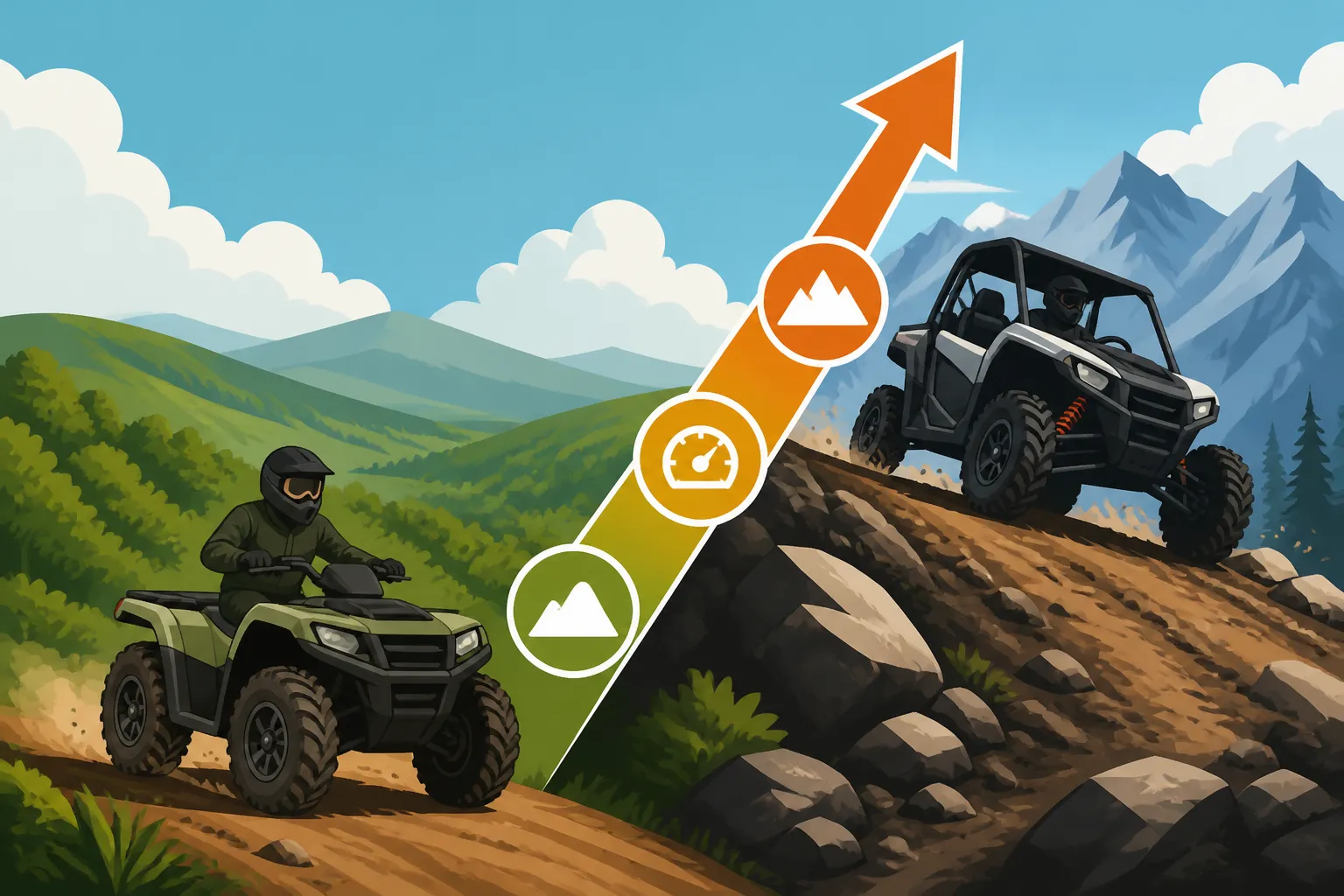
Elevation is the height of a place above sea level. Elevation gain is the total amount of climbing along a route. Those figures describe different things: a trail can start high and stay relatively level, or begin lower and climb sharply. For a rider, the shape of the route often matters more than its highest point.
In North Georgia, routes around the Blue Ridge Mountains and the Chattahoochee-Oconee National Forest can climb and descend repeatedly. You may ride through a shady hollow, cross a ridge, then drop into another low spot. Even without a dramatic peak, that constant up-and-down can work your brakes, suspension, tires, and attention.
On a map, a short route may look like an easy outing. In person, steep grades, loose stones, ruts, and tight turns can make it slow and tiring. The elevation profile in a mapping tool such as onX Offroad can help you anticipate the shape of a route, but treat it as one planning aid rather than a substitute for official trail information or what you see at the trailhead.
The mountains can bring fast-changing conditions
Elevation can change the feel of the weather. A higher, shaded section may be cooler than a sunny valley, and wind or fog can make a ridge feel exposed. After rain, water may run down slopes and collect in low sections, leaving one part of a ride damp while another seems dry.
That variation is easy to underestimate if you leave home in warm, clear weather. A rider heading toward Blairsville or Chatsworth might start in a comfortable T-shirt and reach a breezy, shaded section where a damp jacket feels welcome. A passenger who is sitting still in a side-by-side may feel the temperature drop more quickly than the person working the controls.
Plan for conditions across the whole route, not just at the parking area. Bring a layer you can put on without a long stop, protect electronics from rain, and check trail status before loading up. The guide to Georgia Trail Conditions Before You Drive can help you think through what to check before leaving, while Georgia Trails That Close After Rain explains why a wet-weather plan matters.
What climbing and descending ask of your machine
Engines may feel different on a long climb
At higher elevations, thinner air contains less oxygen in a given volume. That can affect engine performance, particularly for engines that rely on atmospheric air without electronic compensation. The size of the effect depends on the machine, its engine management, its condition, and how steep or sustained the climb is. Georgia’s mountain rides are not high-altitude expeditions, but a long climb still puts a different load on a machine than a flat road.
A UTV loaded with passengers, tools, and hunting gear has more work to do uphill. If the engine feels strained, avoid trying to make up time by holding the throttle down for an extended climb. Choose a suitable gear or drive mode if your machine provides one, use a steady pace, and give the engine a chance to cool when conditions call for a break. Follow the operating guidance in your owner’s manual; a machine’s recommended use and maintenance matter more than a generic rule of thumb.
Pay attention to warning lights, unusual smells, loss of power, or a temperature reading that is outside the normal range for your machine. Stop somewhere safe if you suspect overheating or a mechanical problem. Continuing to climb simply because the trail looks short on the map can turn a manageable delay into a breakdown in an inconvenient spot.
Descending requires control, not momentum
A downhill section can be harder on a rider than it first appears. Gravity pulls the machine forward, and braking too hard or too suddenly can reduce traction, especially on loose gravel, wet clay, or exposed roots. A turn partway down a slope adds another challenge because the tires have to steer while the machine is already managing its descent.
Approach a downhill slowly enough that you can stay in control from the start. Use the braking and engine-braking methods recommended for your machine, and avoid abrupt steering or sudden inputs. If the surface is unfamiliar, pause at a safe location to assess it before committing. Do not stop in a place where another rider cannot see you, or where the machine could roll.
For an inexperienced driver, a steep descent may feel intimidating even when the machine is capable of handling it. If you are riding with a group, give each driver space and avoid crowding the person ahead. On a narrow trail, wait for a clear, safe place before passing. The route descriptions in Georgia Trail Ratings and What They Mean can help you compare difficulty, but ratings do not remove the need to assess the actual slope and surface.
How elevation affects traction, equipment, and rider comfort
Slopes can expose weak traction quickly
A tire that seems fine on a flat gravel road may struggle on a steep, wet climb. North Georgia’s red clay can become slick when wet, and loose stones may shift under the tires. A slope also changes how weight is distributed across the machine. On a climb, the front end may feel lighter; on a descent, braking and steering can feel different from what you are used to on level ground.
Check tire condition before the ride, including tread wear and visible damage. Use the pressure recommended for your machine and intended use rather than making a last-minute adjustment based on a guess. Aggressive throttle can spin tires and dig ruts, making traction worse for you and for riders who follow. If a climb becomes unsafe, backing away carefully or choosing another route is often the better call than repeatedly charging at it.
Route fit matters too. A trail that allows a particular machine’s width may still be uncomfortable if the vehicle is difficult to position on a narrow, off-camber section. Check your machine’s width before towing and compare it with the trail’s restrictions. Georgia Trail Widths and What Fits is useful context when deciding whether a route suits your ATV or side-by-side.
Elevation can make a long ride more tiring
The physical effort of riding does not come only from operating the controls. Riders brace over bumps, watch for changing surfaces, and stay alert through repeated turns and climbs. Passengers may also get tired from holding on, absorbing rough terrain, and sitting through long stretches without a chance to move around.
Fatigue can creep up on you. You may start making slower decisions, missing trail markers, or taking corners more quickly than you intended. Build in breaks before the group is exhausted, drink water, and bring food that is easy to access. Keep a warm or rain-resistant layer available, since a tired rider is more likely to feel chilled when the weather changes.
A route planner such as onX Offroad can help you discuss distance and elevation before the ride, especially when your group includes newer riders. Compare the route against official information and current trail signs, and agree on a turnaround point before you start. The goal is not to finish every mile on the screen; it is to choose a ride that suits the least experienced rider, the machine, and the day’s conditions.
| Trail factor | What elevation can change | A practical response |
|---|---|---|
| Engine load | A sustained climb can work the engine harder, especially with passengers or cargo | Use the machine’s recommended settings and stop if it shows signs of trouble |
| Traction | Slopes magnify the effects of wet clay, loose rock, and worn tires | Ride smoothly, inspect tires, and avoid spinning the wheels |
| Braking | Descents can increase momentum and make sudden braking risky | Reduce speed before the slope and use the braking method in the owner’s manual |
| Weather | Higher or shaded sections may feel cooler, windier, or wetter | Carry a layer and check conditions beyond the trailhead |
| Rider fatigue | Repeated climbs, rough ground, and concentration demands can wear people down | Schedule breaks, hydrate, and set a realistic turnaround time |
How to plan for elevation before you ride
Choose a route that matches your group
Start with the experience and comfort level of everyone riding, not the most capable person in the group. A driver who is comfortable on steep, rocky ground may see a route very differently from a first-time passenger or a new UTV operator. If you are unsure, choose a shorter or less challenging route and leave room to turn back.
Use maps to understand the general layout, but check official land-manager details for access, permitted vehicles, closures, and any required passes. The Georgia’s Six National Forest OHV Systems guide is a useful starting point for learning about the forest riding systems. If you are comparing options, Georgia Trails in the Blue Ridge Mountains can help you focus on the region without assuming every trail is suitable for every vehicle.
Mapping apps, including onX Offroad, may help you visualize route shape and terrain. Still, a displayed route does not guarantee that a road or trail is open, legal for your machine, or passable after recent weather. Look for posted signs when you arrive, obey gates and closures, and do not use a map line as permission to ride somewhere.
Prepare for a slower day than the distance suggests
Mountain miles can take longer than flat-road miles. A short route may include steep grades, narrow turns, photo stops, slow traffic, or a section where the group needs to move one machine at a time. Tell someone where you plan to ride and when you expect to return, and make sure your phone is charged. Cell coverage may be limited in some areas, so do not make a live connection your only safety plan.
Before setting off, check tires, fuel, lights, brakes, and any equipment you rely on for recovery. Carry basic supplies suited to your machine and the ride, and secure cargo so it cannot shift on a slope. If you bring a tow strap, use it only with appropriate recovery points and a clear understanding of safe recovery practices. Carrying a Tow Strap in the Mountains offers more detail on why recovery planning deserves attention before a machine gets stuck.
Weather and trail closures can change the day’s plan. If rain is in the forecast or the ground is already saturated, reconsider steep climbs and vulnerable trails rather than hoping conditions improve along the route. See Georgia Trail Closures After a Storm for why waiting can protect both riders and the trail surface. After a muddy ride, clean off clay and check the machine for trapped debris or damage before the next outing.
Make conservative decisions once you are on the trail
A route plan is a starting point, not a promise to continue regardless of conditions. If the group reaches a slope that feels beyond someone’s ability, stop in a safe place and reassess. Turning around is a sensible riding decision, not a failure. The same applies when visibility drops, the trail becomes slick, a machine starts behaving unusually, or a rider is too tired to continue safely.
Keep spacing between machines on climbs and descents. If a rider stops unexpectedly, the next machine needs room to react. Avoid stopping just below a blind crest, and make sure the group knows how to regroup if it becomes separated. Before riding, agree on simple signals and what to do if someone needs help.
Elevation is one part of the trail experience, alongside surface, weather, vehicle width, and rider skill. With a realistic route, a machine in good condition, and a willingness to adjust plans, Georgia’s mountain terrain can be rewarding without turning every climb into a test. Use maps and trail information to prepare, then let the trail’s actual conditions guide your pace.
Disclaimer
This article is for general informational purposes only and does not constitute professional advice. Laws, prices and regulations vary by location and change over time. Consult a qualified professional for guidance on your specific situation.