Georgia Town Creek OHV Trails
Town Creek OHV Trails can make for a memorable North Georgia ride, but a good day depends on more than finding a trailhead. Riders need to check which machines fit, whether the route is open, what permits apply, and how to reach the system with a trailer. This guide walks through those planning decisions so you can arrive prepared instead of sorting them out at the gate.
Getting to Know Town Creek OHV Trails
Where the trail system fits into a North Georgia trip
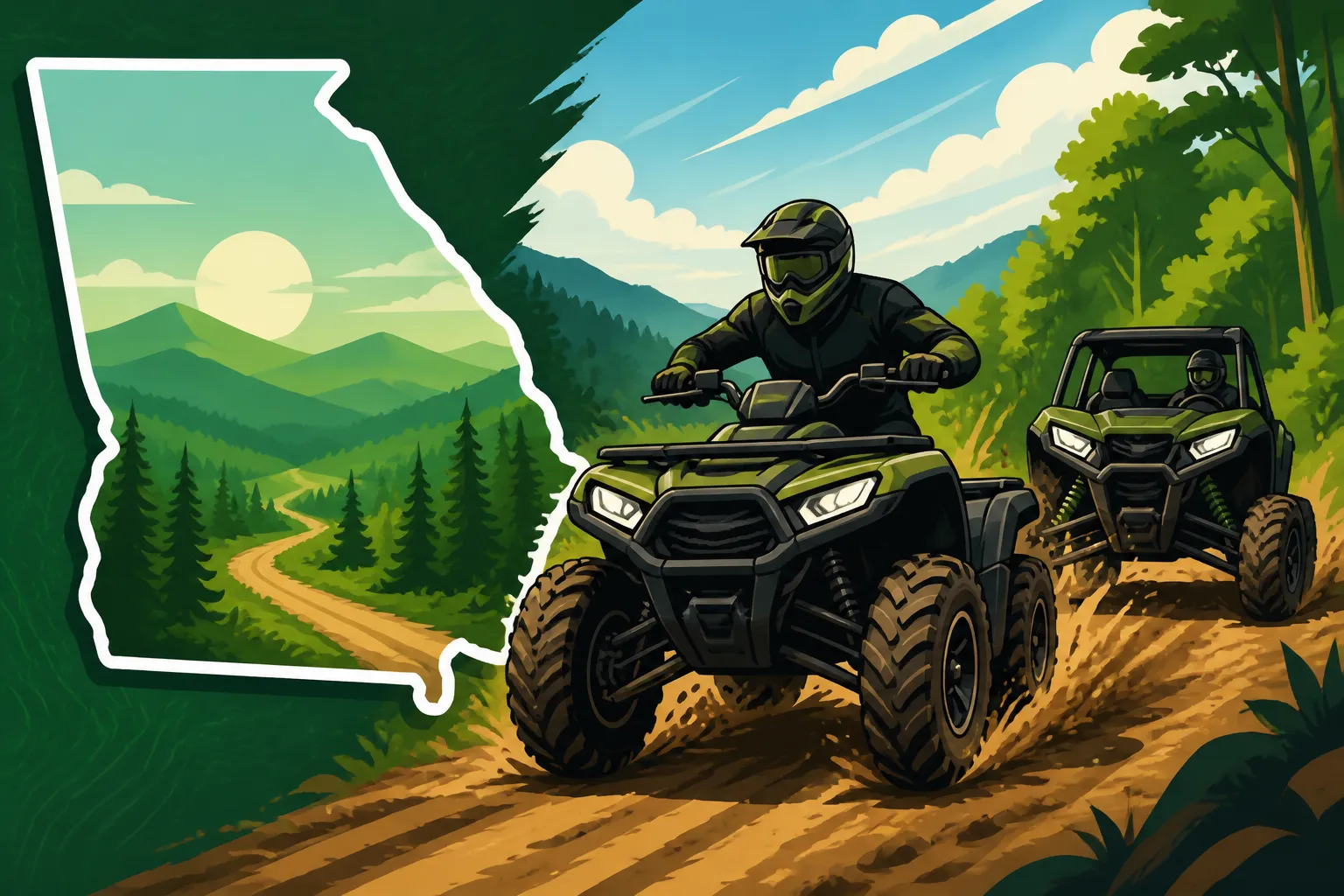
Town Creek is an OHV riding area in the Chattahoochee-Oconee National Forest region of North Georgia. Its forest setting is part of the appeal: the ride can feel like a real escape from town, with wooded routes and mountain terrain rather than a manicured recreational park. That also means conditions and access deserve a little more attention before you leave home.
Use a mapping app to understand the general approach, but don’t treat an app’s route line as proof that every road is open or suitable for your vehicle. Forest roads can have gates, restrictions, rough sections, or changing conditions. Before loading up, confirm the trail system’s official access information and any alerts from the relevant Forest Service office. If you’re comparing Town Creek with other places to ride, [Georgia's Six National Forest OHV Systems] offers helpful context.
A familiar North Georgia town can be useful for planning fuel, food, or an overnight stay, but it may not be right beside the trail entrance. Give yourself time for the final stretch, especially if you’re towing a wide side-by-side or traveling with a group. The last part of a rural drive can take longer than expected, and a tight turn or rough road is much harder to manage when you’re hauling a trailer.
What kind of ride to expect
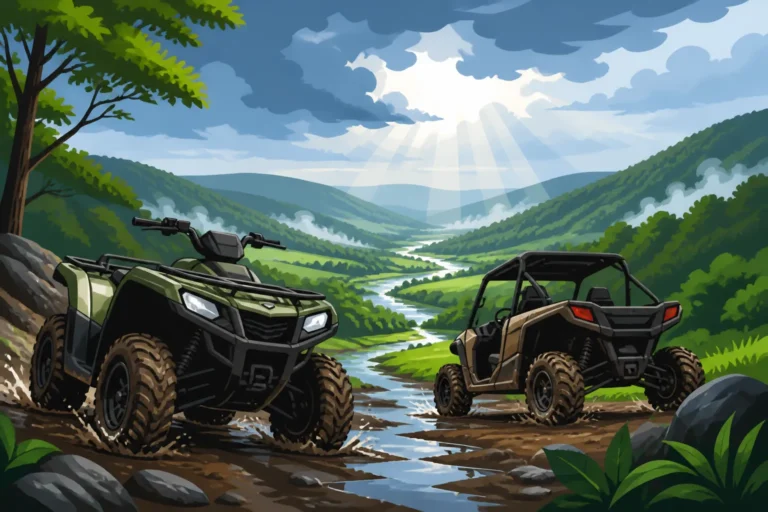
Plan for a forest OHV experience, not a commercial park with a staffed gate, groomed amenities, or guaranteed services. Trail surfaces and difficulty can vary, and recent rain may change how manageable a route feels. Even a rider who is comfortable on dry, familiar trails can find slick clay, uneven ground, or runoff more demanding than expected.
That variability is one reason to bring a realistic range of riding skills to the trip. A newer rider might prefer to take an easy pace, pause at decision points, and avoid following a faster group onto a route they haven’t assessed. Experienced riders should also resist assuming that yesterday’s trail conditions match today’s. A storm can alter traction and visibility, while fallen branches or temporary restrictions may affect access.
The trail system is not a place to improvise around a closure or ride beyond a designated route. Follow signs and barriers, and be willing to change the day’s plan if the forest conditions call for it. For a broader look at terrain and riding options across the state, see [Georgia ATV Trails: Where You Can Legally Ride].
Check Machine Fit and Trail Conditions Before Leaving
Confirm that your machine is allowed
A machine being marketed as an ATV or UTV does not automatically mean it can use every OHV trail. Trail systems may have equipment limits, and the width of a side-by-side can rule out routes that are suitable for narrower machines. Check the applicable rules for Town Creek before you set out, using your exact machine rather than relying on a general model category.
Measure the vehicle at its widest point, including accessories that extend beyond the tires or body. A mirror, wheel offset, or aftermarket setup can make a machine wider than the factory specification suggests. If the official trail information lists a width restriction, compare it with your actual measurement and leave a margin for uncertainty rather than assuming a close fit will work.
Also check whether the system is open to your type of vehicle. Trail designations can distinguish between motorcycles, ATVs, and side-by-sides, and those distinctions matter even when the terrain looks rideable. [Georgia ATV Trails That Allow Side-by-Sides] can help you think through the difference between general ATV access and routes suitable for wider machines. If you need to measure before deciding what to haul, [Measuring Your Machine Before You Tow] is a useful companion.
Look for closures and changing conditions
Trail access can change because of weather, maintenance, seasonal restrictions, fire danger, or other forest-management decisions. A page you saved months ago may not describe the situation on the day you plan to ride. Check official notices close to departure, and check again if a major storm or other disruption occurs between your planning and travel dates.
Pay attention to what a notice actually says. A road closure may affect the approach to a trailhead without closing the entire riding system, while a trail closure may leave nearby access roads open but prohibit riding beyond a marked point. If the wording is unclear, contact the responsible ranger district rather than trying to interpret a map screenshot or an old social-media post.
Wet conditions call for particular care. North Georgia’s red clay can become slippery, and repeated wheelspin can damage trail surfaces. If conditions are poor, turning around is often the better choice than trying to push through and leaving ruts behind. [Georgia Trails That Close After Rain] and [Georgia Trail Conditions Before You Drive] explain why a quick conditions check can save a trip and protect the trail.
| Planning question | What to check | Why it matters |
|---|---|---|
| Is the system open? | Official forest notices and closures | Access can change after weather or maintenance |
| Is my machine permitted? | Vehicle type and trail designation | ATV and side-by-side access may differ |
| Will it fit? | Actual width, including accessories | A wider setup may not fit a restricted route |
| Are conditions suitable? | Recent rain, surface conditions, and warnings | Wet or damaged trails can be unsafe and vulnerable |
| What do I need to carry? | Permit, proof of purchase, and safety gear | Requirements are easier to handle before arrival |
Permits, Rules, and Responsible Riding
Prepare for permit requirements
Before riding a national forest OHV route, check whether a permit is required for your planned use and how it applies to each operator. Don’t assume that paying for access to a vehicle covers every rider in your group. Permit rules can be based on the person operating the machine, so confirm the details for your situation before you travel.
Keep any required permit or proof of purchase accessible, whether you carry it on your phone, print it, or do both. A phone can lose signal or battery in a forest area, so a backup copy can prevent an avoidable headache. Make sure every rider knows where the permit information is and understands any rules attached to it. For a more detailed explanation, read [Georgia's Day and Annual Forest OHV Permits] and [Georgia National Forest Permits Are Per Operator].
A permit is not a substitute for permission to ride wherever you can physically reach. It doesn’t override a closure, authorize travel on an undesignated road, or guarantee that a machine is suitable for a particular trail. Think of permits, vehicle eligibility, and route designations as separate checks. A little preparation avoids the frustrating moment when the group discovers at the trailhead that one piece of the plan doesn’t match the rules.
Ride with trail etiquette in mind
Stay on designated routes and obey posted signs, gates, and temporary barriers. Riding around a closure can damage fragile ground, create new unauthorized tracks, and make future access harder for everyone. If a route is blocked, don’t assume there is a harmless way around it. Turn back and choose an open route instead.
Keep a pace that lets you react to blind corners, loose surfaces, and other trail users. Dust, engine noise, and limited sightlines can make it difficult to anticipate someone coming the other way. Give other riders room, avoid stopping where a machine could surprise you, and make group decisions at safe pullouts rather than in the middle of a narrow section.
Take out everything you bring in, including food wrappers, broken straps, and small pieces of machine equipment. Avoid spinning tires unnecessarily, especially when the trail is wet. Responsible riding includes leaving room for hikers, maintenance crews, and other permitted users where routes or access roads are shared. The best trip is one that doesn’t leave a mess or create a problem for the next person.
Plan the Drive, Gear, and Group
Get the trailer and arrival plan right
A rural trailhead approach can be less forgiving than a paved lot at a commercial park. Before you leave, check that your tow vehicle and trailer are appropriate for the route and that the machine is securely tied down. Confirm that straps, ramps, hitch connections, and trailer lights are ready while you still have space and daylight to fix a problem.
Think through how you’ll turn around or park once you arrive. A long trailer can make a narrow approach or crowded staging area stressful, particularly if several groups reach the area at the same time. When possible, discuss a meeting point with your group before the drive so nobody has to coordinate by phone from a low-signal area. Leave room for other vehicles and do not block gates, roads, or access points.
Mapping tools can help you plan, but use them as one part of the process. onX Offroad can be useful for reviewing route context and saving information for offline reference, especially when cell coverage is unreliable. Compare what you see in an app with official forest guidance and signs on the ground. A map layer should help you prepare, not persuade you to ignore a closure or enter a road you have not confirmed is open.
Pack for a remote riding day
Bring the essentials you’d want if the group were delayed: water, food, a first-aid kit, basic tools, and a way to communicate your plan to someone who isn’t riding with you. Pack for changing weather, since a comfortable start in a North Georgia valley does not guarantee the same conditions later in the day or at higher elevation. A light outer layer and dry storage for important items can make a long ride more manageable.
Inspect the machine before loading it. Check tires, brakes, steering, lights, fuel, and any safety equipment required for your vehicle and riding area. A small mechanical issue is easier to catch at home than at the trailhead. If you’re riding with friends, agree on what to do if a machine breaks down or someone gets separated. Decide who leads, who stays at the back, and where the group stops to regroup.
Avoid relying on a phone as your only navigation or safety plan. Download or save information before leaving, bring a power bank if appropriate, and keep a basic backup plan. onX Offroad may help with offline map access, but it does not replace posted signs, official closure information, or common sense about terrain. Make sure at least one person in the group knows the planned route and when to raise the alarm if the group does not return as expected.
Make Town Creek Part of a Sensible Georgia Riding Plan
Decide whether Town Creek suits your group
Town Creek can be a strong choice for riders who want a forest setting and are comfortable planning ahead. It may be less convenient for someone expecting a staffed park, guaranteed facilities, or a simple drive-up day with no advance checks. The more remote the trip feels, the more important it is to be honest about your group’s machine types, experience, and comfort with changing conditions.
For a mixed group, choose a plan that works for the least experienced rider rather than setting the pace around the most confident person. A newer operator may need more time to assess a descent or negotiate a rough section. If one person is on a wide side-by-side and another is on a narrower ATV, confirm that the routes you intend to use are suitable for both. It’s better to make that decision before the trailers are unloaded.
If you are comparing Town Creek with other North Georgia destinations, look at access, vehicle compatibility, route difficulty, and current conditions—not just a trail’s reputation. [Best Georgia ATV Trails for Beginners] can help newer riders think about fit, while [Georgia ATV Trails That Allow Side-by-Sides] is useful for planning around wider machines. You can also explore [Georgia Trails Near Atlanta] if travel time is a major part of your decision.
Build a flexible itinerary
Give yourself enough time to arrive, unload, review posted information, and make a calm decision about the ride. A rushed start can lead to missed signs, forgotten gear, or pressure to ride a route that doesn’t feel right. Set a realistic turnaround time, especially if you have a long drive home or are traveling with children or newer riders.
Keep a second option in mind. That might mean choosing a different open route, shortening the ride, or postponing the trip if the weather or access situation is poor. Flexibility is not a failure of planning; it is part of planning for a public forest where conditions can change. If you arrive to find a closure or a full staging area, don’t create a new parking problem by blocking an access road.
Before heading home, check that everyone and every machine is accounted for. Look over the trailhead area for dropped gear and secure the machines for the return trip. If the day was wet or muddy, clean the machine where appropriate without washing debris into a stream or sensitive area. A considerate finish matters too: leave the staging area clear and ready for the next group.
Disclaimer
This article is for general informational purposes only and does not constitute professional advice. Laws, prices and regulations vary by location and change over time. Consult a qualified professional for guidance on your specific situation.