Hunters Riding Roads on a Hunt Day
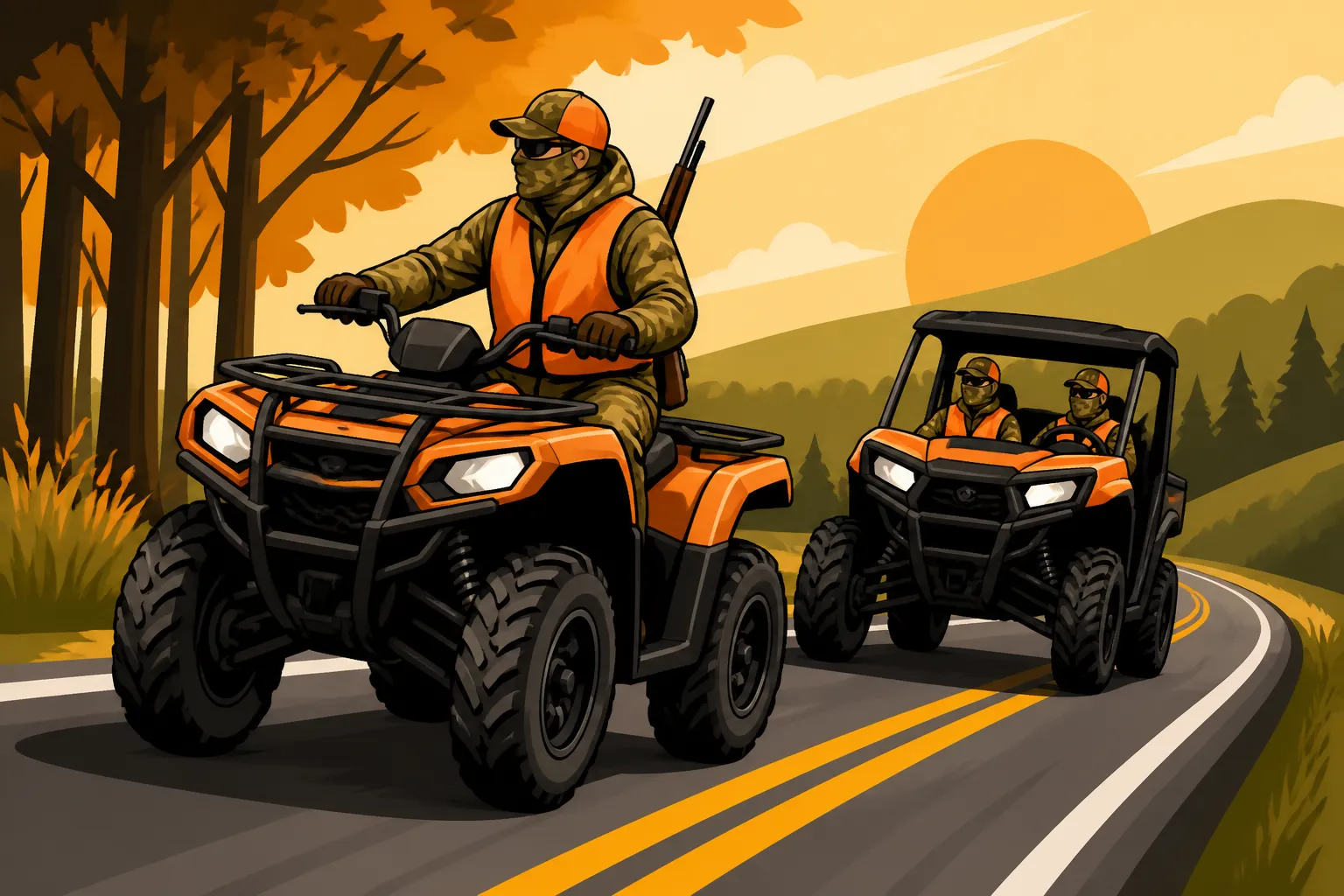
There's a unique frustration many hunters in Georgia face when the seasons open up: you've got your ATV or UTV ready to go, it's perfect for hauling gear and getting deep into the woods, but then you hit a public road. Suddenly, the rules get murky. Can you legally ride your side-by-side down that short stretch of county road to access your hunting spot? What about crossing a state highway? This guide will cut through the confusion and explain exactly when and where hunters can legally operate their off-road vehicles on Georgia's roads, especially on those crucial hunt days.
The Baseline: Georgia's General Rules for ATVs and UTVs on Public Roads
Let's be real, the idea of just hopping on your quad or side-by-side and cruising down the road in Georgia is usually a non-starter. Our state has specific, and sometimes frustratingly strict, rules about what kind of off-highway vehicles can even touch a public road. Understanding these foundational rules is absolutely key before we dive into the nuances of hunting season.
Why Most ATVs Can't Be Street Legal in Georgia
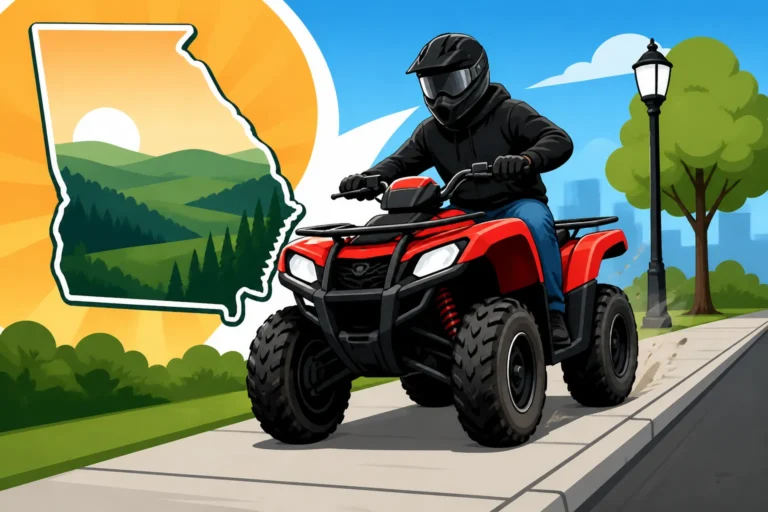
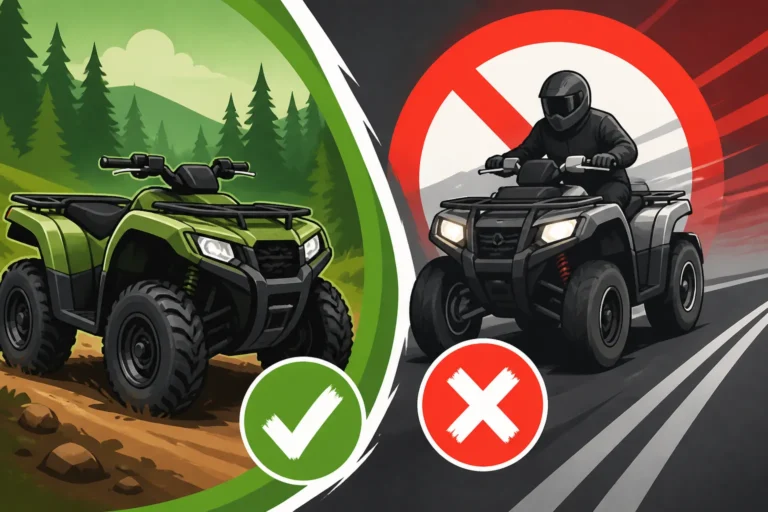
The vast majority of traditional ATVs, the kind you straddle with handlebars, are simply not designed or legally permitted for public road use in Georgia. It’s not just a suggestion; it’s enshrined in law. The Georgia Department of Driver Services (DDS) and county tag offices look for very specific features before they'll even consider allowing an off-road vehicle onto the road system. If your machine has handlebars, it's usually out. The design with a [Why Handlebars Disqualify a Machine] and a [Why a Straddle Seat Disqualifies a Machine] immediately flags it as a recreational off-road vehicle, not one intended for public roadways.
Beyond the seating and steering, there are often issues with speed capabilities, width, and general safety features required for road travel. Many ATVs might struggle to maintain a minimum speed, while others might exceed a maximum speed if modified. Without these fundamental design elements, standard ATVs are relegated to private land, designated trails, or Wildlife Management Areas (WMAs) under specific conditions. They simply do not meet the criteria for a Multi-purpose Off-Highway Vehicle (MPOHV) registration. This is why many hunters who need road access have increasingly turned to UTVs.
MPOHV Registration and Limited Road Access for UTVs
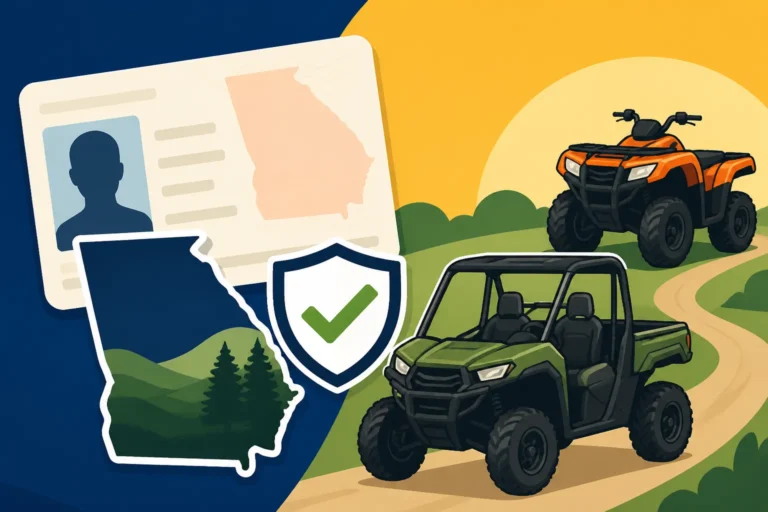
For those who own a UTV (Utility Terrain Vehicle) or side-by-side, there's a different pathway: the MPOHV registration. This is a voluntary registration program that began in December 2023, allowing qualifying UTVs to legally use county roads. When we talk about [Georgia MPOHV Registration Explained], it's important to understand it's not a blanket "street legal" status. This registration specifically grants access to [Georgia MPOHV Road Rules: County Roads Only], meaning you can operate your registered UTV on the county road system. However, it explicitly prohibits use on state routes, interstates, or federal highways, except for crossing at designated points.
This distinction is massive for hunters. It means you can potentially drive your UTV from your cabin to a hunting lease entrance down a county road, but you cannot hop on a state highway to get there. It’s a game-changer for local access but requires careful planning for longer distances. Also, keep in mind that this specific road access provision for MPOHVs has a [Georgia's July 2027 Sunset on Road Access], which means the rules could change down the line. For now, it offers a crucial avenue for hunters needing limited road use.
Essential Requirements for Registered MPOHVs
If you decide to go the MPOHV registration route for your UTV, there are several non-negotiable requirements that you must meet. It’s not just about getting a plate; it’s about ensuring your vehicle is safe and legal for shared road use. First and foremost, you must have [Georgia Liability Insurance Tied to Registration]. Just like with any other vehicle on public roads, you need to prove you can cover potential damages in an accident. Without it, your county tag office won't process the registration.
Secondly, the operator of the registered MPOHV must possess a valid driver's license. There are no exceptions for age or experience here; [Georgia Driver's License Rules for MPOHV Operators] are clear: if you're on a public road, you need a license. This means your 15-year-old hunting buddy with a learner's permit can't legally drive the registered UTV on a county road, even if they're perfectly capable off-road.
Lastly, your UTV needs to meet specific equipment requirements. This includes functional [Headlights, Brake Lights and Mirrors on the Checklist]. These are basic safety features that ensure you can see and be seen by other drivers. While many newer UTVs come factory-equipped with these, older models or those primarily designed for extreme off-road use might require aftermarket additions. Companies like SuperATV offer a range of universal mirrors, turn signal kits, and lighting upgrades that can help bring a UTV up to snuff for MPOHV registration requirements. Ensuring your UTV has these features is not just about compliance; it's about your safety and the safety of others on the road.
Special Considerations for Hunters: WMA and Private Land Road Use
Now that we've covered the general rules for public roads, let's zero in on how these regulations specifically impact hunters and their ATVs or UTVs. The rules can differ significantly depending on whether you're on a Wildlife Management Area (WMA), private land, or needing to cross state highways.
Riding ATVs and UTVs on Wildlife Management Area WMA Roads
Wildlife Management Areas (WMAs) in Georgia are vast public lands managed for hunting, fishing, and other outdoor recreation. These areas have their own set of rules regarding vehicle use, which are often distinct from general county road laws. For hunters, this is particularly important because [Georgia WMA Rules for ATV Riders] often provide specific exceptions or allowances for off-road vehicles. Generally, ATVs and UTVs are permitted on designated WMA roads, but with strict limitations. The primary rule is [Georgia WMA Riding Only on Roads], meaning you cannot go off-road into the woods or fields unless explicitly permitted in very rare circumstances.
Crucially for hunters, many WMAs allow vehicle access during specific hunting seasons, often with time restrictions. For example, some WMAs permit vehicle access only within a [Georgia WMA Two-Hour Window Around Sunrise] and two hours before sunset on hunt days to facilitate access to hunting stands and retrieval of game. This limited window is designed to balance hunter convenience with minimizing disturbance to wildlife and other users. It's essential to check the specific WMA's regulations, as they can vary greatly, but this provision often means your ATV or UTV can be invaluable for accessing remote areas on hunt days, even if it's not MPOHV registered. These allowances are primarily for [Georgia Hunting Access by ATV] and are not for general recreational riding.
Private Land Access and Internal Roads
When you're on private land, whether it's your own property, leased land, or land you have permission to hunt, the rules for ATV and UTV use are largely dictated by the landowner. Generally, on private land, [Georgia Rules for Riding Private Land] allow you to operate your ATV or UTV as long as you have the landowner's permission. This extends to private roads, logging trails, and fields within the property boundaries.
Many hunting clubs lease large tracts of land, and the terms of these leases usually include specific rules for vehicle operation. These [Georgia Hunting Club Lease Riding Rules] might dictate speed limits, areas where vehicles are prohibited, or even specific times when ATVs/UTVs can be used. As long as you remain within the private property boundaries, state road legality (MPOHV registration) does not apply. However, the moment you leave that private property and enter a public road – even just for a few hundred feet to get to another section of your land – you are subject to state laws. If you're planning to use a county road between private parcels, your UTV will need to be MPOHV registered, and your ATV will still likely be prohibited.
Crossing State Routes and Designated Points
This is one of the trickiest areas for hunters. As mentioned, even if your UTV is MPOHV registered, it's generally not allowed on state routes. However, hunters often find themselves needing to get from one side of a state highway to another to access different hunting parcels or WMA sections. Georgia law makes a specific allowance for this: [Georgia Crossing a Georgia State Highway on a UTV] is permitted, but only at designated crossings. These are typically intersections or points where local county roads meet the state route.
You cannot simply pull onto a state route and drive for miles. The purpose of these crossings is to facilitate access between areas, not for continuous travel on the state highway itself. [Georgia Crossings at Designated Points] must be made directly across the road, using the shortest and most direct path possible. You should always yield to traffic on the state route and ensure the crossing is safe before proceeding. For non-MPOHV registered ATVs, even these crossings are typically prohibited unless specific WMA regulations, if the state route runs through a WMA, allow it, which is rare. Always consult WMA regulations and local ordinances for precise rules regarding state route crossings, as they are strictly enforced.
Practical Advice and Safety for Hunters Operating ATVs/UTVs on Roads
Even with the legal avenues for road use, operating an ATV or UTV for hunting purposes on or near public roads requires a heightened sense of awareness and adherence to safety protocols. It's not just about avoiding a ticket; it's about protecting yourself, your passengers, and other drivers.
Understanding Vehicle Eligibility and Road Legality
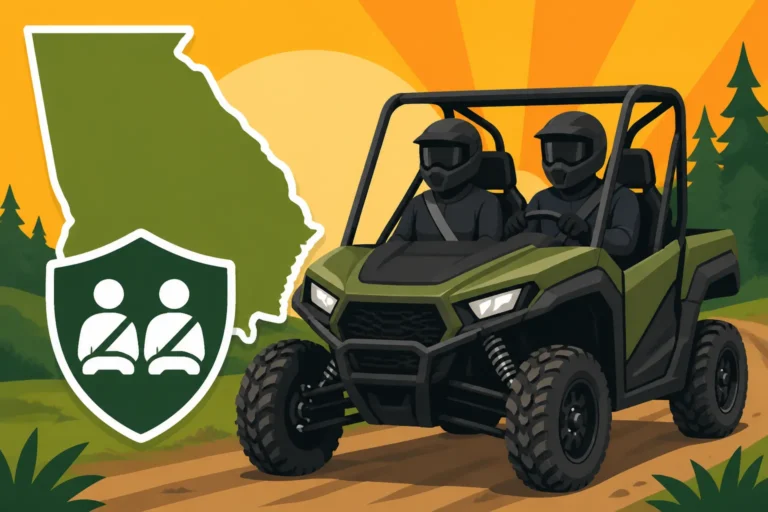
Before you even load your hunting gear, take the time to thoroughly understand if your specific machine can be legally operated on the roads you intend to use. If your goal is to use county roads to access hunting land, and you have a UTV, you absolutely need to check the [Georgia MPOHV Eligibility: The Eight-Point Test]. This checklist covers everything from vehicle width and weight to speed capability and safety features. Many UTVs, especially newer models like a [Georgia Registration for a Polaris Ranger] or a [Can-Am Defender Owners at a Georgia Tag Office], often meet most of these requirements straight from the factory.
However, older models or those bought primarily for hardcore trail riding might be missing crucial elements like proper lighting, mirrors, or even factory-installed seatbelts. If your UTV lacks these, you'll need to install them. This is where companies like SuperATV can be a great resource, providing aftermarket parts such as rearview mirrors, side mirrors, turn signal kits, and DOT-approved windshields that can help your vehicle meet the necessary street-legal criteria. Remember, simply adding these parts isn't enough; you still need to complete the [Georgia MPOHV Registration Processing Time] at your county tag office. Don't assume you're covered until you have that plate and decal.
Safety Gear and Best Practices for Road Use
Safety should always be your top priority, especially when mixing off-road vehicles with public roads. For any rider under the age of 18, [Georgia ATV Helmet Law for Riders Under 18] is clear: a helmet is mandatory, even on private land, but especially when near or on public roads. While adult riders are not always required to wear helmets on MPOHVs on county roads, it is always a wise choice for enhanced protection.
Beyond helmets, consider making your presence on the road as obvious as possible. If you anticipate any [Georgia Night Riding on a County Road] during pre-dawn hunts or after-dark retrieves, ensure all your lights are fully functional, clean, and visible. Wearing bright, reflective clothing – like a hunter orange vest – can significantly improve your visibility to other motorists, even during daylight hours. Always use hand signals for turns if your UTV doesn't have functioning turn signals, and stay alert for other traffic. UTVs handle differently than cars, especially at road speeds, so drive defensively and be prepared for sudden stops or maneuvers from other vehicles.
Navigating Road Closures and Seasonal Restrictions
Hunters often traverse remote and unpaved roads, many of which are subject to environmental or seasonal closures. Forest roads, including those within WMAs, can be closed due to inclement weather, especially heavy rains that make them impassable or cause erosion. [Georgia Trails That Close After Rain] are common, and these closures are enforced for safety and environmental protection. Always check the status of WMA or Forest Service roads before you head out. Websites and phone numbers for specific ranger districts or WMA offices are your best bet for up-to-date information.
Beyond weather, some roads, particularly those leading to sensitive areas, might be subject to [Forest Roads Closed by a Gate] seasonally or permanently. These closures are typically well-marked, and disregarding them can lead to fines and potential wildlife disturbance. During hunting season, always factor in potential road conditions and closures into your travel plans. Having a backup route or confirming access beforehand can save you valuable hunting time and prevent frustration. Always respect these closures, as they are put in place for a good reason, often to protect natural resources or ensure public safety.
Disclaimer
This article is for general informational purposes only and does not constitute professional advice. Laws, prices and regulations vary by location and change over time. Consult a qualified professional for guidance on your specific situation.