Peachtree City’s Path Network
One of the unique challenges many Georgians face, especially those new to certain areas, is understanding the specific local rules that govern how you can use your off-road vehicles. Peachtree City, with its extensive network of golf cart paths, presents a particularly interesting case, leaving many UTV and ATV owners wondering if their machines have a place on these beloved community arteries. This guide will walk you through everything you need to know about navigating Peachtree City's path network, clarifying what vehicles are allowed, who can drive them, and the regulations you absolutely must follow.
Understanding Peachtree City's Unique Path System
Peachtree City stands out in Georgia for its incredible, almost unparalleled, network of multi-use paths. These aren't just sidewalks; they're purpose-built paved trails that weave through neighborhoods, connect commercial centers, and offer a truly distinctive way of life. For many residents, their golf cart isn't just a recreational toy; it's their primary mode of transportation, bypassing regular road traffic entirely.
What is the Peachtree City Path Network?
At its heart, the Peachtree City path network is a system of over 100 miles of paved trails designed primarily for golf carts, pedestrians, and cyclists. Imagine being able to get to the grocery store, school, or a friend's house without ever needing to start your car. That's the reality for many in Peachtree City. These paths are carefully designed to integrate with the urban landscape, often featuring tunnels under busy roads and bridges over natural barriers, creating a seamless travel experience. It's a testament to urban planning focused on community and alternative transportation.
This extensive network isn't just about convenience; it's a core part of the city's identity. Families use them for leisurely rides, kids travel to school, and commuters make their way to work. The paths foster a strong sense of community, encouraging outdoor activity and reducing reliance on traditional automobiles for short to medium-distance trips. Understanding the purpose and design of these paths is the first step in appreciating why the rules governing their use are so specific.
While the paths are expansive and connect a vast array of destinations, they are distinct from public roads. They are managed and maintained by the city, with specific ordinances tailored to ensure the safety and smooth flow of traffic for all users. This distinction is crucial because it means that even if a vehicle is "street legal" on a county road elsewhere in Georgia, it might not automatically be permitted on Peachtree City's paths.
Why Peachtree City Embraced Cart Paths
The story of Peachtree City's path network is one of visionary urban planning dating back decades. The city was designed with a deliberate focus on quality of life, community, and alternative transportation from its inception. Rather than reacting to traffic congestion, leaders proactively built an infrastructure that would encourage walking, biking, and golf cart use, seeing these as essential elements for a sustainable and enjoyable community.
This foresight has resulted in a unique urban environment where golf carts are not a novelty but a staple. The decision to invest heavily in this path system was rooted in a desire to create a more livable, less car-dependent city. It offers residents a quieter, slower-paced alternative to traditional suburban life, reducing noise pollution and fostering a more active lifestyle. It's a model that many other communities, both within Georgia and beyond, have looked to for inspiration.
The ongoing success of the path network reinforces the city's commitment. Residents actively embrace the lifestyle, and the paths contribute significantly to property values and community appeal. This deep integration means that any proposed changes or alternative uses for the paths are met with careful consideration, always with an eye toward preserving the original intent and the established way of life. The paths are more than just pavement; they are the veins of the city's unique heart.
Who Can Use the Paths?
The primary users of Peachtree City's paths are golf carts, pedestrians, and cyclists. This multi-modal approach is fundamental to the network's design and operation. Each user group is expected to share the paths courteously and safely, understanding that children, elderly individuals, and those with disabilities also frequent these routes. The harmony of this shared space relies on everyone following the established rules.
While golf carts are the most common motorized vehicle, not all electric or low-speed vehicles automatically qualify. The city has specific definitions for what constitutes a "Personal Transportation Vehicle" (PTV) under their ordinances, which is the class of vehicle primarily allowed on the paths. These definitions often relate to speed capabilities, safety features, and overall design, distinguishing them from faster or larger off-road machines.
This is where the confusion often arises for owners of UTVs or ATVs. While these machines might offer similar utility to some golf carts, their design, speed capabilities, and safety profiles generally put them outside the definition of a PTV suitable for the path network. The paths are designed for lower-speed vehicles that can easily share space with foot and pedal traffic, and the characteristics of most UTVs and ATVs simply do not align with that intent.
Rules and Regulations for Operating on Peachtree City Paths
Navigating the Peachtree City path network isn't just about finding your way; it's about understanding and adhering to a very specific set of local ordinances. These rules are in place to ensure the safety of all users, from the slowest walker to the fastest golf cart. Failing to understand these regulations can lead to fines, citations, or even more serious consequences.
Vehicle Eligibility: What Can and Cannot Ride?
The critical distinction in Peachtree City is between a "Personal Transportation Vehicle" (PTV), commonly known as a golf cart, and other types of off-road vehicles. PTVs are specifically designed for low-speed travel on designated paths, typically equipped with safety features appropriate for such an environment. These often include headlights, tail lights, brake lights, a horn, and mirrors. Vehicles that exceed certain speed limits or lack these basic safety features are generally not permitted. For more detailed information, you can look up [What Makes a Cart a Personal Transportation Vehicle].
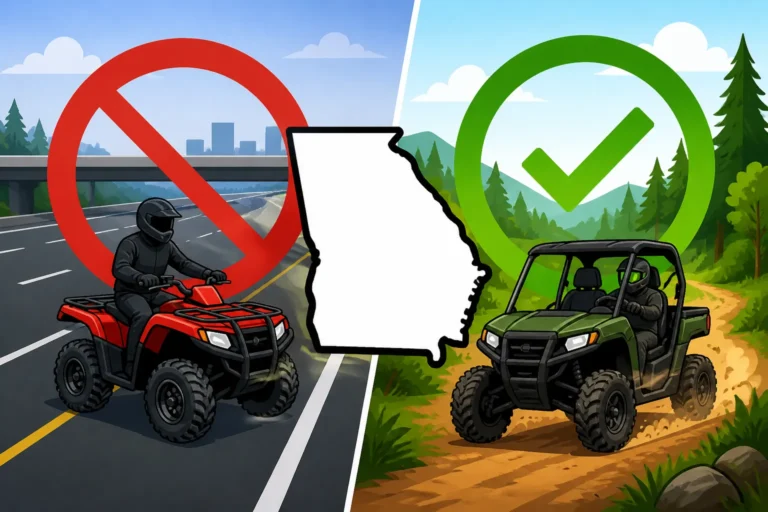
Unfortunately, this typically means that most ATVs (All-Terrain Vehicles) and UTVs (Utility Terrain Vehicles), also known as side-by-sides, are not allowed on Peachtree City's path network. While some UTVs might resemble larger golf carts, their primary design often involves higher speeds, more aggressive tires, and a different safety profile unsuitable for shared-use paths. The city's ordinances are very clear about what constitutes an eligible PTV, and common off-road machines generally fall outside those parameters. Even if a UTV owner has invested in accessories from a company like SuperATV to enhance their machine's utility or appearance, these upgrades do not automatically grant access to the city's path system.
The rationale behind these restrictions is simple: safety. The paths are busy, multi-use areas where pedestrians, children, and slower vehicles coexist. Introducing faster, heavier, or more aggressively tired off-road vehicles would significantly increase the risk of accidents and detract from the peaceful nature of the paths. Therefore, before you consider taking your side-by-side or quad onto any Peachtree City path, assume it's prohibited unless you have explicit confirmation from the city's official regulations that it meets the PTV definition.
Driver Age and Licensing Requirements
Peachtree City has specific rules regarding who can legally operate a golf cart or PTV on its path network, aiming to ensure that drivers have the necessary maturity and understanding of the rules. While the exact age can vary by local ordinance, generally, a driver must be at least 15 years old and possess a valid Georgia driver's license or learner's permit. This requirement ensures that operators have at least some basic knowledge of road rules and responsibilities, even if they're not driving a full-sized car. Referencing [Georgia Cart Driver Ages by Ordinance] can provide more granular details.
For those under 15, the rules become more restrictive. Typically, a minor between the ages of 12 and 14 may be permitted to operate a PTV if they are under the direct supervision of a licensed adult (18 years or older) who is also present in the vehicle. Children under 12 are generally not allowed to operate PTVs on the paths at all, regardless of supervision. These age restrictions are paramount for safety, especially given the shared nature of the path network with pedestrians and cyclists.
It’s crucial to remember that these age and licensing requirements are specific to Peachtree City's path network and might differ from general [Georgia Golf Cart Laws and PTV Ordinances] for other parts of the state. Simply having an ATV or UTV and being old enough to operate it on private land doesn't mean you can drive it on the Peachtree City paths. The city's focus is on ensuring responsible and capable drivers are at the helm of vehicles sharing this vital community resource.
Registration and Fees for Path Use
Unlike general [Georgia MPOHV Registration Explained] for side-by-sides for limited county road use, operating a golf cart or PTV on Peachtree City's path network generally requires local registration. This isn't a state registration through the county tag office, but rather a city-level registration that grants permission to use the specific path system. This process helps the city manage the volume of vehicles, ensure compliance with local ordinances, and generate funds for path maintenance.
Residents of Peachtree City typically pay an annual or multi-year fee to register their golf carts. This fee contributes directly to the upkeep of the expansive path network, ensuring that the trails remain safe, clean, and well-maintained for all users. The cost can vary, so it's always best to check with the Peachtree City municipal offices for the most current figures. Information on [Peachtree City Cart Registration Fees in Georgia] can provide current specifics.
For non-residents who wish to use the path network with their own golf cart, there may be different regulations and potentially higher fees. [Peachtree City Non-Resident Path User Fees at Peachtree City] highlights that visitors often have options for short-term permits, but the cost is generally designed to reflect the non-contributing status to local taxes. It’s essential for anyone, resident or visitor, to ensure their vehicle is properly registered before hitting the paths to avoid potential citations or penalties.
| Peachtree City Path Network Key Rules | Details |
|---|---|
| Allowed Vehicles | Personal Transportation Vehicles (PTVs)/Golf Carts meeting city definitions (low speed, specific safety features). |
| Prohibited Vehicles | Most ATVs, UTVs (side-by-sides), dirt bikes, and other high-speed off-road vehicles. |
| Driver Age (Licensed) | Generally 15 years old with a valid Georgia driver's license or learner's permit. |
| Driver Age (Supervised) | 12-14 years old with a licensed adult (18+) present in the vehicle. |
| Registration | Required local city registration (not state). Fees apply for residents and may differ for non-residents. |
| Speed Limit | Strict speed limits apply, typically around 15-20 mph, to ensure safety for all path users. |
| Safety Features | Headlights, tail lights, brake lights, horn, and rearview mirror are typically mandatory. |
| Hours of Operation | Generally permitted during daylight hours; specific rules for night riding with proper lighting. |
| Alcohol/Drugs | Operating a PTV under the influence is illegal and carries penalties similar to DUI on public roads. |
Navigating the Peachtree City Path Network Safely and Responsibly
Riding on the Peachtree City path network is a privilege that comes with significant responsibilities. Because these paths are shared by so many different types of users—from families with strollers to avid cyclists—everyone must commit to safe and courteous practices. It's about respecting the space and ensuring a pleasant experience for all.
Essential Safety Gear and Practices
While the path network is generally low-speed, safety should still be a top priority for golf cart operators. Although Georgia doesn't have a universal helmet law for golf cart operators of all ages, it's always a good practice, especially for younger riders. For passengers, ensuring everyone remains seated with limbs inside the vehicle is crucial, particularly when turning. The paths have varying grades and curves, and unsecured passengers can easily be injured in a sudden stop or maneuver.
Visibility is another key safety aspect. While PTVs are required to have basic lighting, additional reflectors or reflective tape can significantly improve how visible your cart is, especially around dusk or dawn. Many residents choose to upgrade their lighting or add unique features, and while aftermarket accessories from companies like SuperATV aren't specifically for path access, general UTV owners might consider high-quality lighting or mirrors from them to enhance visibility on private property or permissible county roads, carrying those good habits into other riding environments.
Finally, just like driving a car, avoiding distractions is paramount. Keep your phone tucked away, pay attention to your surroundings, and be aware of pedestrians, cyclists, and other carts. The path network can be quite busy, particularly during peak hours, and even a moment of inattention can lead to a collision. Remember, everyone deserves to feel safe on the paths.
Etiquette and Common Courtesy on the Paths
The golden rule of the Peachtree City path network is common courtesy. These are shared spaces, and mutual respect is essential for harmonious use. Always yield to pedestrians and cyclists, as they are often more vulnerable. When approaching from behind, give a polite "on your left" or "on your right" warning before passing, and pass with ample space. Aggressive driving, weaving through traffic, or excessive speed is not only dangerous but also a direct violation of the community spirit of the paths.
Maintaining a reasonable speed is also critical. While PTVs have a maximum speed, many situations warrant driving slower. Sharp turns, blind spots, tunnels, or areas with high pedestrian traffic all demand reduced speed. Remember, these are not race tracks; they are leisurely transportation routes. The city's ordinances, such as [Peachtree City's 100 Miles of Georgia Cart Paths], are designed to promote a specific type of experience, and driving too fast undermines that intent.
Lastly, be mindful of noise and litter. Keep music at a respectful volume, and always dispose of trash properly. The paths are a beautiful asset to the community, and keeping them clean and peaceful is everyone's responsibility. Being a good steward of the path network ensures that it remains an enjoyable and safe resource for generations to come.
Connecting to the Wider Georgia Road Rules
It's vital to understand that Peachtree City's path rules exist somewhat independently of general [Georgia ATV Road Law Explained] or [Georgia UTV Road Rules by County]. While some UTVs might be registered as MPOHVs (Multi-purpose Off-Highway Vehicles) for limited use on certain county roads in Georgia, this state-level registration does not automatically grant access to Peachtree City's golf cart path system. The city's ordinances are specifically tailored to its unique infrastructure and vehicle definitions.
For instance, while a side-by-side might legally cross a state route at designated points in some parts of Georgia, [Georgia UTV Rules Crossing a State Route], that doesn't mean it can cruise leisurely on the Peachtree City path network. The distinction is about the type of vehicle and the specific local jurisdiction. Think of it this way: a car is street legal on state highways, but you wouldn't drive it on a designated bike path. The same principle applies here.
Therefore, if you own an ATV or UTV, assume it is not permitted on Peachtree City's golf cart paths. If you wish to operate any type of off-road vehicle in Peachtree City, you must consult the specific city ordinances and definitions for PTVs. Do not rely solely on general state laws for off-highway vehicles, as they do not supersede local regulations for specialized path systems. Always err on the side of caution and verify eligibility directly with the Peachtree City municipal authorities.
Disclaimer
This article is for general informational purposes only and does not constitute professional advice. Laws, prices and regulations vary by location and change over time. Consult a qualified professional for guidance on your specific situation.