Georgia Rules for a Visiting Florida Rider
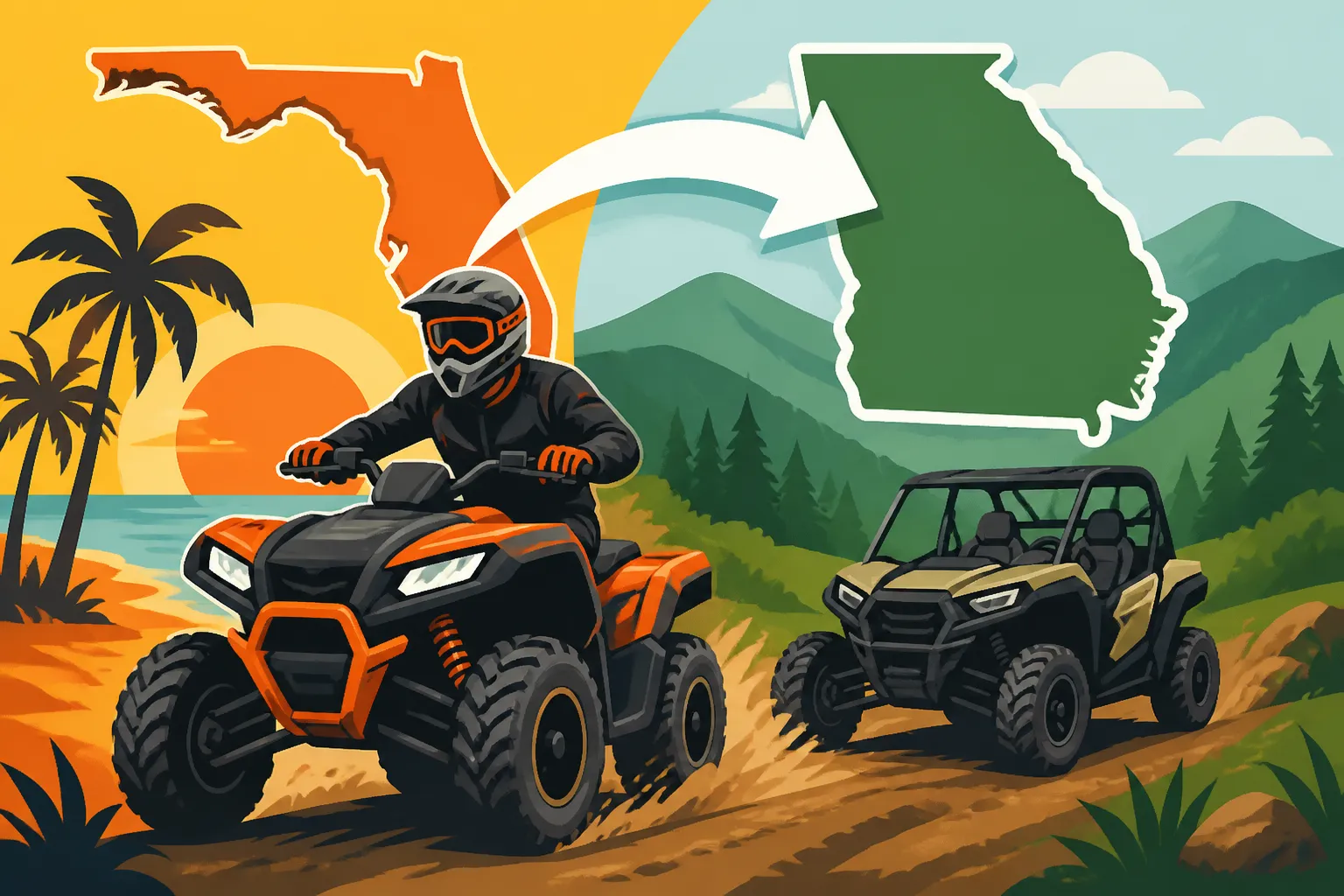
Rolling your side-by-side or ATV up from Florida for a Georgia adventure sounds absolutely amazing, doesn't it? Our Peach State has some incredible riding, but the rules for off-road vehicles, especially when it comes to road access, are quite specific and can definitely trip up even experienced riders from out of state. This guide is here to help Florida riders understand Georgia's distinct laws, what they mean for your machine, and how you can avoid any unexpected headaches (or tickets!) while visiting.
Understanding Georgia's Unique Approach to Off-Road Vehicles for Visitors
When you're crossing state lines, one of the biggest challenges is understanding how different states classify and regulate what might seem like the same machine. Georgia has its own system, and it's quite different from what you might be used to in Florida, particularly regarding road use and registration.
The Key Difference: MPOHV vs. Traditional ATVs
In Georgia, the term you'll hear for a road-legal off-highway vehicle is "Multi-Purpose Off-Highway Vehicle," or MPOHV. This isn't just a fancy name; it's a specific legal classification with a strict set of criteria that most traditional, straddle-seat ATVs simply cannot meet. While Florida has its own ATV/UTV definitions and some varying county ordinances for golf cart or utility vehicle use, Georgia's MPOHV law is a statewide framework for limited road access.
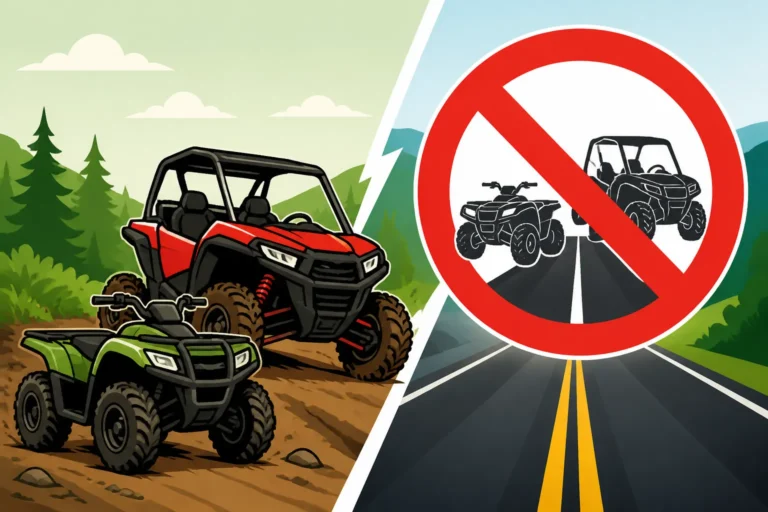
The core distinction that will immediately impact most Florida visitors is that traditional ATVs with handlebars and straddle seats are generally not eligible for MPOHV registration in Georgia. This means that if you're bringing up a typical sport quad or utility ATV, you won't be able to legally register it for road use here, even if it might be allowed on certain roads in parts of Florida. Georgia explicitly requires a non-straddle seat and a steering wheel, among other things, to qualify. So, if your machine is a side-by-side (like a Polaris Ranger, Can-Am Defender, or John Deere Gator) and meets all the specific requirements, it might be eligible. But for most conventional ATVs, road access is virtually nonexistent. You can read more about [Why Georgia Does Not Title an ATV] which explains the history behind this.
Why Georgia's Registration Matters Even for Visitors
You might think, "I'm just visiting; my Florida registration or lack thereof shouldn't matter." However, if your intention is to ride your machine on any public roads in Georgia, even county roads, you absolutely need to understand Georgia's registration system. The MPOHV registration, which started in December 2023, is what grants some off-highway vehicles limited road access.
Even though it's technically [Georgia MPOHV Registration Is Voluntary], for a visiting rider who wants to legally traverse county roads, it becomes a de facto requirement. Your machine needs a Georgia MPOHV plate to signal to local law enforcement that it meets the state's criteria for road use. Without it, your off-road vehicle is treated just like any other non-street-legal off-highway vehicle on public roads: illegal. This can lead to fines, impoundment, and a very unpleasant interruption to your vacation. The plates themselves come with a special "branded" designation, and understanding [What a Branded Registration Warns You About] can be helpful.
What If Your Machine Isn't an MPOHV?
For many Florida riders bringing a quad or a side-by-side that doesn't fit Georgia's MPOHV criteria, your options for riding are primarily confined to private property or designated off-road parks and trail systems. This is a critical point to understand. If your machine doesn't have a steering wheel and a non-straddle seat, if it exceeds certain weight or width limits, or if it doesn't have factory-installed seat belts, it simply won't qualify for an MPOHV registration.
This means that for the vast majority of traditional ATVs, and even many utility side-by-sides, road-legal use in Georgia is simply not an option. You cannot ride them on county roads, state highways, or any public right-of-way. This is a common point of confusion and frustration for riders from states with more lenient road access laws, and it's important to set your expectations accordingly. For those seeking to register a UTV, knowing [Georgia MPOHV Eligibility: The Eight-Point Test] is crucial. If your side-by-side does meet the criteria, you'll be looking at how to successfully complete [Georgia MPOHV Registration Explained].
Riding on Georgia's Roads: What a Florida Rider Needs to Know
Let's say your side-by-side does qualify as an MPOHV and you've gone through the process to obtain a Georgia MPOHV registration (yes, even as a visitor, if you intend to ride on Georgia's roads). Even then, road access is far from limitless.
County Roads Are Your Primary (Limited) Option
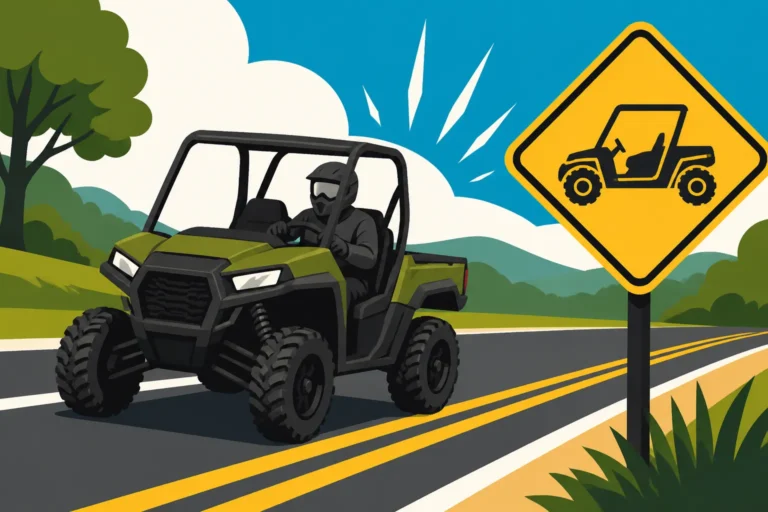
The MPOHV registration in Georgia primarily grants you access to county roads. This means you are generally permitted on unpaved or paved roads maintained by a county, typically found in rural areas. It's important to distinguish these from state highways or city streets, which are almost universally off-limits. Understanding [Georgia County Road Systems and Where They Run] is essential, as these are very different from Florida's more liberal interpretation of public road access for off-highway vehicles in some areas.
Even on county roads, you need to ride responsibly. Always adhere to posted speed limits, yield to other traffic, and be aware of your surroundings. These aren't private trails; they are shared public thoroughfares. You should also ensure your machine is equipped with all necessary safety features, like headlights, brake lights, and mirrors. If your machine doesn't meet these requirements, you might need to add accessories like rearview mirrors or brake lights – many riders turn to brands like SuperATV for high-quality, durable options that are designed to withstand off-road use.
Crossing State Routes and the Sunset Clause
While you might be able to ride on county roads, crossing state routes is a different beast entirely. You are generally allowed to cross a state highway or road at a designated intersection, but you cannot ride along a state highway. Think of it as crossing a busy street on foot; you only cross, you don't walk down the middle of it. This applies to your MPOHV as well. For detailed information, review [Georgia UTV Rules Crossing a State Route].
Another critical piece of information for any rider considering road use in Georgia is the sunset clause. [Georgia's ATV Road Access Law Sunsets in July 2027]. This means that the current laws allowing MPOVHs on county roads are not permanent. While it's still some time away, it's an important consideration for long-term planning or if you anticipate making Georgia a regular riding destination. Always stay informed about legislative changes that could impact your ability to ride on public roads.
Driver's License, Age, and Helmet Rules
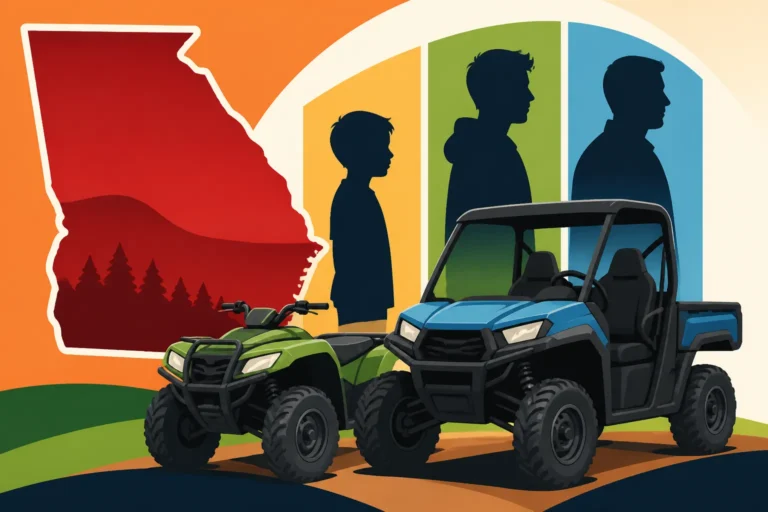
Just like driving a car, operating an MPOHV on Georgia's public roads comes with specific requirements for the operator. You'll need a valid driver's license to operate an MPOHV on any public road. This means that if you're a Florida resident, your valid Florida driver's license will typically suffice. However, Georgia has specific rules about age and supervision for younger riders. [Georgia Driver's License Rules for MPOHV Operators] explains this in detail.
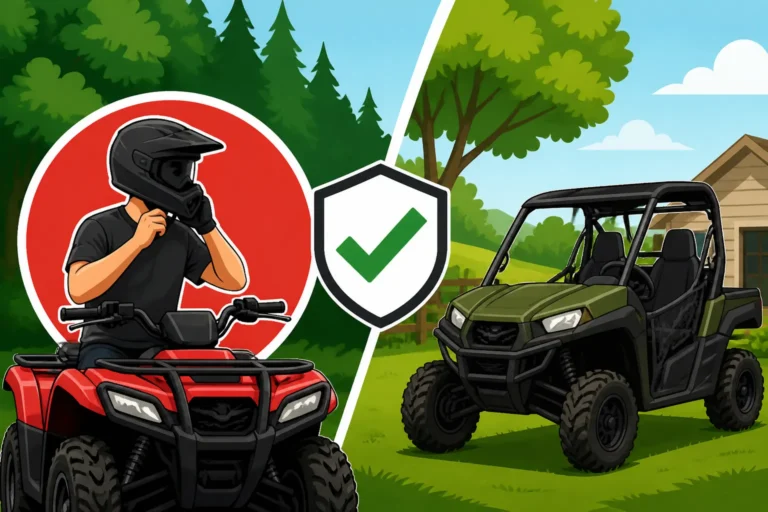
For helmets, Georgia has a strict [Georgia ATV Helmet Law for Riders Under 18]. Any operator or passenger under the age of 18 must wear a DOT-approved helmet when riding an off-road vehicle, even on private land, with limited exceptions for certain agricultural or commercial activities. This is a rule that applies universally, whether you're registered as an MPOHV or not, and whether you're on public or private land. Florida has similar helmet laws for minors, so this might be familiar, but it's important to remember in Georgia.
Finally, you must carry proof of liability insurance for your registered MPOHV. [Georgia UTV Insurance Minimums] outlines the required coverage amounts. Law enforcement can (and often will) ask for this proof if they stop you on a county road.
Here's a quick comparison for visiting Florida riders:
| Feature | Georgia MPOHV Rules (for Road Access) | General Florida ATV/UTV Rules (can vary by county) |
|---|---|---|
| Road Access | Primarily county roads only. Strict crossing of state routes. | Varies significantly by county/city; some allow limited road use for UTVs/golf carts. |
| Machine Type | Steering wheel, non-straddle seat, seat belts, specific size/weight. Traditional ATVs (handlebars) excluded. | ATVs often restricted to off-road. UTVs/golf carts may have local road access. |
| Registration | Georgia MPOHV plate required for road use (voluntary, but necessary for legal road riding). | Off-road vehicles generally not titled/registered for road use; some county permits for PTVs. |
| Driver's License | Valid driver's license required for public road operation. | Varies; often required for road-legal use. |
| Helmet (Under 18) | Required for all riders under 18 (with limited exemptions). | Required for all riders under 16 (on ATVs, varies for other vehicles). |
| Insurance | Liability insurance required for registered MPOHV road use. | Generally required for road-legal vehicles; recommended for off-road. |
| Sunset Clause | Road access laws for MPOHV expire in July 2027. | No similar statewide sunset clause for ATVs/UTVs. |
Where Florida Riders Can Truly Unleash Their Machines in Georgia
Now that we've covered the nuances of Georgia's road laws, let's talk about where you can truly enjoy your ATV or side-by-side without the worry of specific road-access regulations. Georgia boasts fantastic opportunities for off-road enthusiasts, whether you prefer sprawling private parks or scenic national forest trails.
Private Land: The Easiest Path to Riding
Without a doubt, the simplest way for a Florida rider to enjoy their off-road vehicle in Georgia is on private land with the owner's permission. If you're visiting friends or family who own land, or if you've arranged access to private property, you can ride your machine freely (within the bounds of safe operation and local noise ordinances, of course) without needing an MPOHV registration.
Many riders from Florida and beyond choose Georgia for hunting or agricultural purposes. If you're participating in these activities, riding on private farm or timberland is common. Just ensure you always have explicit permission from the landowner to avoid any [Georgia Trespass Law for ATV Riders] issues. This is where many utility side-by-sides truly shine, being used for tasks around a property or for reaching remote hunting stands.
Exploring Georgia's Public OHV Trail Systems
Georgia is home to a robust network of public off-highway vehicle (OHV) trail systems, primarily within the Chattahoochee-Oconee National Forest. These are designated areas where you can ride your ATV or side-by-side on purpose-built trails. This is often the ideal scenario for visitors, as these trails are managed, maintained, and specifically designed for off-road recreation. You can find comprehensive information about [Georgia ATV Trails: Where You Can Legally Ride].
Some popular trail systems include:
- Houston Valley OHV Trails: Located near Dalton in North Georgia, offering miles of challenging terrain. Note that this system has a 50-inch width restriction, which will exclude most side-by-sides. [Houston Valley's 50-Inch Width Cap at Houston Valley] is a key point to remember.
- Beasley Knob OHV Trail System: Also in North Georgia, this system offers varied terrain but often has seasonal closures, so always check conditions before you go. [Beasley Knob's January to April Closure in Georgia] is a common one.
- Whissenhunt, Town Creek, Oakey Mountain, and Davenport OHV Trails: These are other options within the national forest, each offering a unique riding experience.
To ride on these public forest trails, you'll need a Georgia Forest OHV Permit. These permits are per-operator, not per-vehicle, and can be purchased for a day or annually. You can usually get them at ranger district offices or through Recreation.gov. [Georgia OHV Permits: What You Need Before You Ride] details how to acquire these. For serious trail riding, consider upgrading your machine's protection with items like skid plates or A-arm guards from SuperATV, which are invaluable against Georgia's rocky and root-filled terrain.
The Thrill of Private Off-Road Parks
For a truly dedicated off-road experience, Georgia has several fantastic private off-road parks that cater to ATVs and side-by-sides. These parks offer a controlled environment with extensive trail networks, often ranging from beginner-friendly to extreme challenges, as well as amenities like camping, cabins, and wash stations.
Some of the most well-known private parks include:
- Iron Mountain Resort: Near Dahlonega, this massive park boasts hundreds of miles of trails for all skill levels. They often have different areas for specific vehicle types and offer night riding on certain days. [Iron Mountain Resort: Georgia's Biggest Private Park] highlights its features.
- Highland Park Off-Road Resort: Near Cedartown, this park focuses on one-way trails, which enhances safety and flow. They also have motocross tracks for dirt bikes and more aggressive riders.
- Durhamtown Off-Road Resort: Located in Union Point, this park offers thousands of acres with diverse terrain, including mud pits, rock crawling, and extensive trail systems.
These private parks are excellent options for Florida riders because they typically have their own set of rules and waivers, eliminating the complexities of state road laws. You pay an entrance fee, sign a waiver, and you're good to go. The diverse terrain from the North Georgia mountains to the Coastal Plain means varied riding conditions, and some riders look to SuperATV for suspension upgrades or wider tire options that can handle it all comfortably. Many UTV owners, whether from Georgia or just visiting, often customize their machines with accessories, and brands like SuperATV offer a vast selection from winches to windshields, making them ready for any adventure. Always check a park's website for their specific rules, hours, and any requirements for your machine before you make the drive.
Disclaimer
This article is for general informational purposes only and does not constitute professional advice. Laws, prices and regulations vary by location and change over time. Consult a qualified professional for guidance on your specific situation.