Georgia’s July 2027 Sunset on Road Access
It's incredibly frustrating when you invest in a side-by-side or ATV, thinking about all the ways it can make your life easier or more fun, only to hit a brick wall of confusing rules about where you can actually ride it. Many Georgia riders have been enjoying the limited road access granted to their machines, but there's a significant date looming on the horizon: July 2027, when these allowances are set to expire. This guide will walk you through everything you need to know about Georgia's MPOHV road access law, what the sunset date means for you, and how to navigate these rules today and in the future.
Understanding the MPOHV Law and Its Purpose
For years, the idea of legally riding an ATV or UTV on public roads in Georgia felt like a pipe dream for many enthusiasts. The laws were clear: these were off-highway vehicles, meant for private land, trails, or specific designated areas, not for commuting to the store or cruising down a county road. This left many owners feeling restricted, especially those who used their machines for farm work, property maintenance, or simply wanted to connect trails without trailering everywhere. The demand for some form of limited road access grew, reflecting a practical need for many residents.
What is an MPOHV Anyway?
The state of Georgia eventually responded to this demand by creating a specific classification for certain types of off-highway vehicles: the Multi-purpose Off-highway Vehicle, or MPOHV. It’s not just any ATV or UTV that qualifies, though. The law is quite particular about what fits this description. An MPOHV generally refers to a side-by-side that meets a very specific set of criteria, including things like having a steering wheel (not handlebars), a non-straddle seat, certain speed capabilities, and safety features like seat belts. This distinct classification differentiates them from traditional ATVs or even golf carts, which have their own separate sets of rules. If you're wondering about the nitty-gritty details, exploring [What MPOHV Actually Stands For] can give you a deeper dive into the specific language.
Why Georgia Created This Special Category
The MPOHV category wasn't just pulled out of thin air; it was a legislative effort to balance the desires of off-highway vehicle owners with public safety concerns on shared roadways. Lawmakers recognized that modern side-by-sides, particularly those with more car-like controls and safety features, could potentially operate more safely on certain public roads than traditional ATVs. The idea was to provide a legal pathway for these machines to use county roads, primarily in rural areas where such vehicles are often integral to daily life for farmers, hunters, and large property owners. It aimed to bridge a gap between entirely off-road use and full street legality, which many UTVs simply weren't designed for, without making every quad bike eligible for a tag.
The Limited Scope of Road Access
It’s crucial to understand that even with MPOHV registration, your machine isn't "street legal" in the same way a car or truck is. The road access granted by the MPOHV law is strictly limited. We're talking about very specific types of roads, and the restrictions are not to be taken lightly. The intention was never to allow these machines onto major thoroughfares, bustling city streets, or state highways. Instead, the focus was squarely on what the law refers to as "county roads," which are often lower-speed, less-trafficked routes, especially common in Georgia's expansive rural landscapes. Understanding [Georgia MPOHV Road Rules: County Roads Only] is paramount for any registered owner.
The distinction between different types of roads is not merely a suggestion; it's a hard legal line. Riding on prohibited roads, even accidentally, can lead to significant penalties. This limited scope is a constant source of confusion and frustration for many riders who wish they could simply drive their machine wherever they please.
The Looming July 2027 Sunset Date
This is the big one, the detail that often catches people off guard or leaves them scratching their heads. The MPOHV law, for all its benefits, was never intended to be a permanent fixture in Georgia's legal landscape. From its inception, it included a "sunset clause," a provision that dictates when the law will automatically expire unless further legislative action is taken. And that date is fast approaching, causing a fair bit of anxiety and uncertainty among current MPOHV owners.
What the Sunset Clause Means for Riders
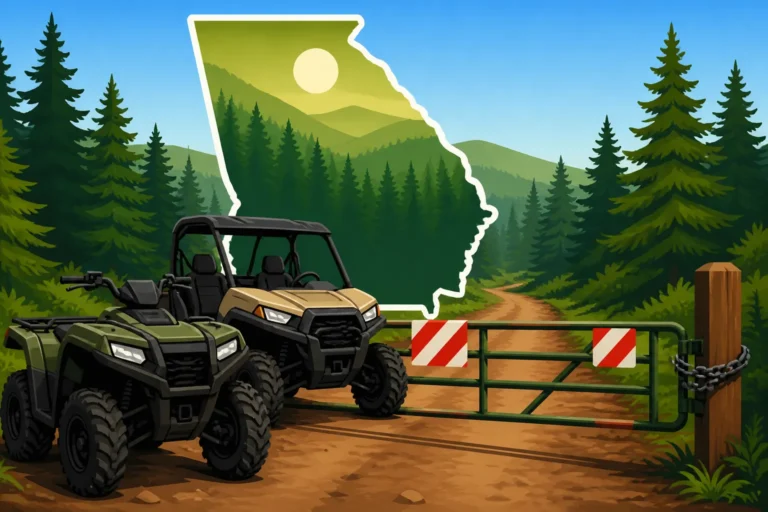
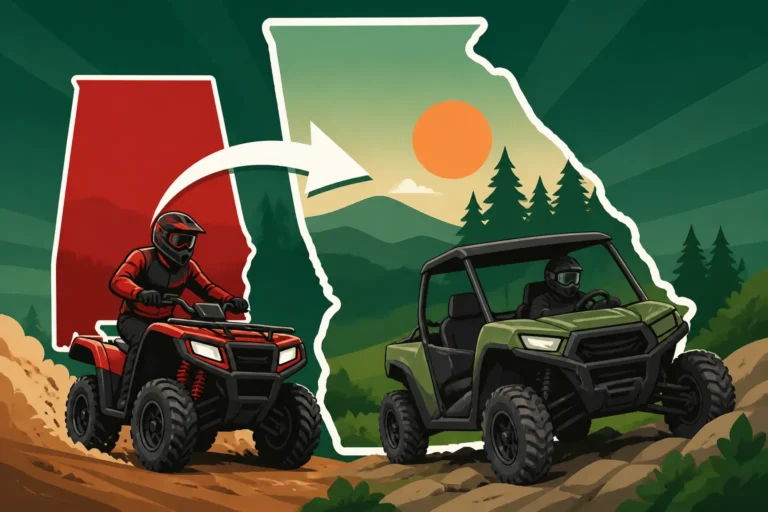
The sunset clause means that as of July 1, 2027, the provisions of the law allowing MPOHVs to be registered and operated on county roads will cease to be in effect. In plain English, unless the Georgia General Assembly passes new legislation to extend, modify, or make permanent the MPOHV road access, the ability to legally ride your registered side-by-side on county roads will disappear. This means that after that date, your MPOHV will revert to its original status as an off-highway vehicle, confined to private property or designated off-road trails, just like a traditional ATV that never qualified for road use. It's a hard deadline that every MPOHV owner needs to be aware of and plan for. This expiration date is specifically highlighted in [Georgia's ATV Road Access Law Sunsets in July 2027].
Why the Sunset Clause Was Included
The inclusion of a sunset clause is fairly common in new or experimental legislation, especially when dealing with public safety and road use. It essentially acts as a trial period. Lawmakers can observe how the new rules function in practice, assess their impact on public safety, traffic flow, and enforcement, and gather data before deciding whether to make the changes permanent. It gives them an opportunity to review the law's effectiveness and address any unforeseen issues that might arise.
From a legislative perspective, it allows for a conservative approach to a novel concept, ensuring that if things don't go as planned, the law can simply expire without needing a complicated repeal process. For riders, however, it creates a sense of impermanence and a future filled with "what ifs," making it hard to make long-term plans about their machine's utility.
What Happens to Registrations at Sunset
So, what exactly happens to your MPOHV registration when July 2027 rolls around? If the law is allowed to sunset, existing MPOHV registrations will effectively become null and void for road use purposes. You won't be able to renew them for road access, and the special MPOHV plates will no longer signify legal permission to operate on county roads. It’s not that your machine suddenly becomes illegal to own, but its ability to legally traverse public county roads will end.
This means you'd once again need to trailer your machine to private land or designated trail systems. The state Department of Revenue and local county tag offices would likely issue guidance closer to the date, but the current understanding is a return to off-road only status for these machines. It's a significant consideration for anyone who purchased an MPOHV with the expectation of utilizing its limited road access for years to come.
Current Road Access Rules Before the Sunset
Before the July 2027 sunset date arrives, it's vital to strictly adhere to the current rules governing MPOHV operation on public roads in Georgia. Misunderstanding these regulations can lead to tickets, fines, and even impoundment of your machine. The MPOHV program was created with specific limitations for a reason, and ignoring them won't end well for any rider.
Permitted Roads: County Roads Only
The cornerstone of Georgia’s MPOHV law is the clear designation of where these machines can and cannot be ridden. For now, registered MPOHVs are permitted on "county roads." But what exactly does that mean? Generally, county roads are those maintained by the county government, often marked with signs indicating their county route number. These are distinct from state routes, U.S. highways, or interstate highways, which fall under different jurisdictions. Many rural areas in Georgia have extensive networks of county roads, both paved and unpaved, that can be utilized. However, it’s critical to confirm whether a specific road truly is a county road before riding on it. If you're uncertain, it's always safer to assume it's not permitted. For a clearer picture of what constitutes a county road, check out [What a County Road System Includes].
Prohibited Roads: State Routes, Interstates, and City Streets
While county roads offer some access, the list of prohibited roads is much longer and more encompassing. You absolutely cannot operate a registered MPOHV on state routes, U.S. highways, or interstate highways. These are higher-speed, higher-volume roads that MPOHVs are simply not designed or legally equipped to handle. Furthermore, the MPOHV law does not grant automatic access to city streets within incorporated municipalities. Cities often have their own ordinances regarding off-highway vehicles, and in most cases, they prohibit MPOHVs from their streets, even if those streets might technically be county-maintained roads passing through the city. This can create a patchwork of rules, making it essential to know local ordinances in addition to state law. This is where you'll hear the question, [Are Side-by-Sides Street Legal in Georgia?], and the answer is "sometimes, with very specific limits."
Crossing State Highways and Interstates
Even though direct operation on state highways and interstates is forbidden, the law does make provisions for crossing them. This is a practical necessity for riders needing to connect from one county road segment to another that is separated by a state route. An MPOHV is permitted to cross a state highway or interstate at a designated intersection, provided the crossing is made in the most direct manner possible. This is not an invitation to drive alongside a state highway for any distance; it is strictly for crossing from one side to the other. You must yield to all traffic on the state highway and exercise extreme caution. Safety is paramount during these crossings, as MPOHVs accelerate and handle differently than conventional vehicles, and drivers on state routes may not expect to see an MPOHV in the intersection.
To ensure you're compliant, make sure your machine is set up correctly. Many riders consider accessories from brands like SuperATV to enhance visibility, adding brighter lights or mirrors, which can be particularly useful when preparing for a crossing where quick detection is key.
Equipment and Operator Requirements for Road Use
Beyond knowing where you can ride, it’s equally critical to understand how your MPOHV must be equipped and who can operate it on Georgia’s county roads. The MPOHV registration isn’t just a simple tag; it comes with a checklist of mandatory features designed to enhance safety and ensure the machine is somewhat comparable to a low-speed vehicle when sharing the road with traditional traffic.
Essential Safety Equipment for Your Machine
For an MPOHV to be registered and legally operated on county roads, it must possess specific safety equipment. This isn't optional; these are requirements enforced during the registration process and by law enforcement on the road. The list typically includes:
- Headlights: Functional headlights are a must, ensuring you can see and be seen, especially at dawn, dusk, or in inclement weather.
- Brake Lights: Just like any other vehicle, working brake lights are crucial to signal your intentions to drivers behind you.
- Taillights: Rear lighting is necessary for visibility from the back.
- Rearview Mirrors: At least one rearview mirror, typically mounted on the left side of the machine, is required to allow the operator to see traffic approaching from behind. Many riders choose to add a second mirror for even greater visibility, and aftermarket options from companies like SuperATV can provide excellent field of view.
- Seat Belts: All designated seating positions must be equipped with working seat belts. This is a key distinguishing feature for MPOHVs, highlighting their move away from the "straddle seat" design of traditional ATVs.
- Speed Capability: The machine must be capable of traveling at least 25 miles per hour but no more than 65 miles per hour. This speed range aims to prevent them from being too slow for county roads, which could impede traffic, or too fast, which could pose a safety risk given their design. This is clearly outlined in [Georgia's 25 to 65 mph Speed Requirement].
Without these items, your machine won't pass the initial eligibility check for an MPOHV plate, and operating it on a county road would be a violation.
Driver's License and Age Restrictions
Just because you're riding an MPOHV doesn't mean you can skip the basic requirements of driving on a public road. Anyone operating a registered MPOHV on a Georgia county road must possess a valid driver's license. This means a regular Class C driver's license, just like you'd need to drive a car or truck. Learner's permits or other restricted licenses typically do not qualify for independent operation of an MPOHV on public roads.
Furthermore, there are age restrictions. The minimum age for operating an MPOHV on a county road aligns with the driver's license requirement. Generally, this means you must be at least 16 years old to obtain a Class C driver's license in Georgia, and therefore, at least 16 to legally operate a registered MPOHV on public roads. There are no special exceptions for younger riders, even with adult supervision, when it comes to public road use. For more details on this, refer to [Georgia Driver's License Rules for MPOHV Operators].
Insurance Minimums for Road-Legal Operation
Another crucial requirement for MPOHV road access is proper insurance coverage. Just like any other registered motor vehicle, an MPOHV operated on Georgia's public roads must carry liability insurance. This is non-negotiable and is a condition for both initial registration and annual renewal. The minimum liability coverage required is typically the same as for passenger vehicles in Georgia, which includes specific amounts for bodily injury per person, bodily injury per accident, and property damage.
Proof of insurance must be presented at the county tag office when you apply for your MPOHV registration, and it's something law enforcement can ask for during a traffic stop. Operating an MPOHV without the required insurance is a serious offense that can lead to significant fines and penalties. It’s not just about avoiding trouble; it's about protecting yourself and others in the event of an accident. Exploring [Georgia UTV Insurance Minimums] can give you a clear picture of what's expected.
Navigating Georgia's Complex Landscape of ATV/UTV Rules
The world of off-highway vehicle regulations in Georgia can feel like a labyrinth, with different rules applying to different types of machines, different locations, and even different activities. Understanding the MPOHV category is just one piece of the puzzle, and it's essential not to confuse it with other vehicle types or exemptions.
The Difference Between MPOHV and Golf Carts/PTVs
One of the most common sources of confusion for Georgia riders is the distinction between an MPOHV and a golf cart or Personal Transportation Vehicle (PTV). While all three might look somewhat similar to the untrained eye and can sometimes be seen on public roads, their legal classifications and operating rules are distinct. Golf carts and PTVs are generally lower-speed vehicles (often capped at 20 mph) with very specific legal frameworks that allow their use on certain designated paths, sidewalks, or municipal streets where local ordinances permit. They often have different registration or permitting requirements, if any, and different equipment standards.
An MPOHV, by contrast, is a higher-performance vehicle designed for off-road terrain, with speed capabilities up to 65 mph, making it fundamentally different from a slow-moving golf cart. You cannot simply put an MPOHV plate on a golf cart, nor can you expect an MPOHV to have the same access privileges as a PTV. If you're looking to understand the nuances, [Georgia Golf Cart Laws and PTV Ordinances] offers a great comparison.
Local Ordinances and Their Impact
Even with a state MPOHV registration, you're not entirely free from local rules. While state law dictates what roads an MPOHV can access, local governments, particularly incorporated cities, often have ordinances that prohibit the use of off-highway vehicles on their streets. This means that while a county road might run directly through the middle of a small town, that town's local ordinance could make it illegal to ride your MPOHV on that specific segment of the road within city limits.
It’s a patchwork system that requires diligence from riders. Always check with the specific city or county you plan to ride in to understand their local regulations. Some counties might have additional rules or restrictions beyond the state's minimums, though they generally cannot override the state's permission for county road access without specific legislative authority. This layered approach adds another layer of complexity to an already intricate set of rules.
Farm and Commercial Use Exemptions
Georgia law does provide some exemptions for off-highway vehicles used for agricultural purposes or in specific commercial activities. These exemptions often relate to things like helmet requirements or the ability to cross roads, but they generally do not grant broad road access in the same way an MPOHV registration does. For example, a farmer might be able to move an ATV across a public road directly from one field to another without full MPOHV registration, provided certain conditions are met, such as having a slow-moving vehicle sign and only crossing at designated points.
However, these exemptions are very narrow in scope and are tied directly to the specific activity being performed (e.g., actively farming or logging). They are not a loophole for general recreational road use. It's important not to confuse these limited, purpose-specific exemptions with the broader, albeit still restricted, road access granted by an MPOHV registration.
Potential Future Scenarios Post-2027
The July 2027 sunset date casts a long shadow over the future of MPOHV road access in Georgia. It raises critical questions for current owners and for those considering purchasing a side-by-side with the intent of using it on county roads. While no one has a crystal ball, we can consider a few likely scenarios based on legislative patterns and public interest.
Legislative Action
The most hopeful scenario for current MPOHV owners is that the Georgia General Assembly will take legislative action before the July 2027 deadline. This could take several forms:
- Extension: The simplest action would be to extend the sunset date for another few years, allowing the "trial period" to continue. This would give lawmakers more time to assess the law's impact and consider a more permanent solution.
- Permanent Legislation: The General Assembly could decide to make the MPOHV road access law permanent, perhaps with minor tweaks based on observed issues or feedback. This would offer the most stability for riders.
- Modification: Lawmakers might also choose to modify the law significantly. This could involve stricter equipment requirements, new speed limits, or even expanding or further restricting the types of roads MPOHVs can use. For instance, they might consider allowing limited access to certain state routes in extremely rural areas, or conversely, making it harder to qualify for MPOHV status. There could even be discussions about what specific SuperATV aftermarket components might enhance safety enough to warrant broader considerations.
Such legislative changes would typically come about through lobbying efforts from rider groups, agricultural associations, and industry representatives highlighting the practical benefits of MPOHV road access.
What Happens Without New Legislation
If no legislative action is taken, the law will simply expire as written on July 1, 2027. This means that from that date forward, it would be illegal to operate an MPOHV on any public road in Georgia, including county roads, regardless of whether it has a current MPOHV registration plate. The existing registrations would become obsolete for road use, and any MPOHV ridden on a county road would be subject to citations and penalties, essentially reverting to the pre-MPOHV era where all off-highway vehicles were confined to private property or designated trails.
This scenario would undoubtedly cause considerable disruption and frustration for thousands of Georgia residents who rely on their MPOHVs for various purposes that involve county road travel. It would mean a significant loss of utility for these machines, potentially impacting resale values and future purchasing decisions.
Preparing for the Change
Given the uncertainty, it's wise for current MPOHV owners to start thinking about how they will adapt if the sunset occurs as scheduled.
- Stay Informed: Keep an eye on legislative developments. Rider associations, industry news, and local tag offices are good sources of information regarding any proposed changes to the law.
- Assess Your Needs: Evaluate how much you truly rely on county road access. If it's critical for your farm or property, you might need to explore alternative transportation methods for those tasks, such as purchasing a street-legal utility vehicle or relying more on trucks and trailers.
- Plan for Trailering: If road access is revoked, you'll need a reliable way to transport your MPOHV to designated riding areas. This might mean investing in a trailer, if you don't already have one, and ensuring your tow vehicle is up to the task.
- Consider Resale Value: If the ability to ride on county roads significantly impacts your machine's value or utility to you, factor the sunset date into any long-term ownership or resale plans.
| Road Type | Current MPOHV Access (Pre-July 2027) | Potential Access Post-July 2027 (No Legislative Action) |
|---|---|---|
| County Roads | Permitted (with MPOHV registration) | Prohibited |
| State Routes | Crossing at designated intersections | Crossing at designated intersections (for non-MPOHV reasons, if allowed by other laws) |
| U.S. Highways | Crossing at designated intersections | Crossing at designated intersections (for non-MPOHV reasons, if allowed by other laws) |
| Interstate Highways | Crossing at designated intersections | Crossing at designated intersections (for non-MPOHV reasons, if allowed by other laws) |
| City Streets | Generally Prohibited (check local ordinances) | Generally Prohibited (check local ordinances) |
| Private Property | Permitted | Permitted |
| Designated OHV Trails | Permitted | Permitted |
Penalties for Non-Compliance and Enforcement
Understanding the rules and the approaching sunset is one thing; abiding by them is another. Georgia law enforcement agencies, particularly county sheriff's offices, are tasked with enforcing MPOHV regulations on county roads. Non-compliance can lead to a range of penalties, none of which are pleasant for the rider.
Georgia Sheriff Enforcement on County Roads
When you're out riding your MPOHV on a county road, you should expect that a Georgia Deputy Sheriff may pull you over to verify compliance. They are looking for several key things. First and foremost, they'll check for your valid MPOHV registration plate and current decal. Next, they'll verify that the operator has a valid driver's license. They will also inquire about proof of insurance, which is mandatory for road use. Finally, they may do a quick visual check of your machine to ensure it has all the required safety equipment—working headlights, brake lights, taillights, a rearview mirror, and visible seat belts.
Law enforcement agencies understand that many riders are still learning the nuances of the MPOHV law, but ignorance of the law is generally not considered an excuse. Deputies are within their rights to issue citations for violations, just as they would for any other motor vehicle. For more on what to expect, refer to [Georgia Sheriff Enforcement on County Roads].
Consequences of Illegal Road Use
Operating an MPOHV illegally on a public road in Georgia can lead to a variety of penalties. These can include:
- Fines: Violations such as operating without a valid driver's license, no insurance, improper equipment, or riding on prohibited roads can result in significant monetary fines. These can quickly add up, especially if multiple infractions are cited during a single stop.
- Court Costs: In addition to the fine itself, you'll likely be responsible for court costs associated with the citation.
- Points on Your Driving Record: Many moving violations associated with MPOHV operation, such as reckless driving or operating without a license, can result in points being added to your Georgia driver's license, potentially affecting your insurance rates or even leading to license suspension if too many points accumulate.
- Impoundment: In more severe cases, such as operating an unregistered machine or driving under the influence, your MPOHV could be impounded, leading to towing fees, storage fees, and the hassle of retrieving your machine.
- Criminal Charges: Depending on the nature of the violation, particularly for serious offenses like DUI, you could face criminal charges in addition to traffic citations.
These consequences are a stark reminder of the importance of adhering to the letter of the law. If you're concerned about the financial impact of a ticket, reading [Georgia Penalties for an Unregistered Road Machine] can provide some clarity.
Protecting Yourself and Your Investment
Given the complexities and the impending sunset, protecting yourself and your investment means being proactive and informed.
- Know the Rules: Continuously educate yourself on Georgia's MPOHV laws and any local ordinances in your riding area. Don't rely on hearsay; consult official state and county resources.
- Keep Paperwork Handy: Always carry your driver's license, proof of insurance, and MPOHV registration document when riding on public roads. Consider using a weather-proof pouch for these items.
- Maintain Your Machine: Ensure all required safety equipment is in good working order. Regular checks of your lights, brakes, and mirrors are essential. If you’re enhancing your machine, remember that quality aftermarket parts, like those from SuperATV, should always meet or exceed safety standards.
- Ride Responsibly: Even on permitted county roads, drive defensively, be aware of other traffic, and adhere to speed limits. MPOHVs handle differently than cars, and their smaller profile can make them harder for other drivers to see.
- Plan for 2027: Start thinking now about how the sunset date will impact your use of your MPOHV. Having a plan B in place will save you a lot of stress if the law isn't extended.
By staying informed and riding responsibly, you can enjoy your MPOHV on Georgia's county roads for as long as the law permits, while also being prepared for future changes.
Disclaimer
This article is for general informational purposes only and does not constitute professional advice. Laws, prices and regulations vary by location and change over time. Consult a qualified professional for guidance on your specific situation.