Georgia Ticket Cost for Illegal Road Riding
It’s a scenario no off-road enthusiast wants to face: you’re out enjoying your ATV or UTV, perhaps on a stretch of road you thought was okay, only to see flashing lights in your rearview mirror. The sinking feeling in your stomach is all too real, followed by the immediate worry about what this stop means for your wallet. Getting a ticket for illegal road riding in Georgia can be confusing and costly, and this guide is here to break down the potential financial hits and other consequences, helping you understand exactly what to expect.
The Reality of Getting Caught: What Happens First
The moment a law enforcement officer pulls you over while you're operating your ATV or UTV on a prohibited road in Georgia, a chain of events is set into motion that can quickly turn a fun day into a frustrating ordeal. It's not just about the immediate conversation; it's about the legal and financial ripples that follow.
The Initial Stop and Citation
When a Georgia sheriff's deputy or state patrol officer spots an ATV or UTV on a road where it shouldn't be, the first thing that usually happens is a traffic stop. They might have been watching for specific violations, or perhaps you just happened to be in the wrong place at the wrong time. Deputies are increasingly aware of the rules surrounding these machines, especially with the introduction of Georgia’s MPOHV registration, which still has very strict limits on where you can ride.
During the stop, the officer will typically ask for your identification and inquire about your understanding of the road rules for your machine. This is where your frustrations can really start, especially if you genuinely believed you were in the clear, or if you've heard conflicting information. The officer will then assess the situation, verify your machine's identification, and, if a violation is confirmed, issue a citation. This piece of paper is more than just a warning; it's a summons to appear in court and the beginning of your financial burden. The citation will outline the specific offense, such as "operating an off-road vehicle on a state highway" or "unlicensed operation of an ATV on a public road." The gravity of this initial paperwork is often underestimated until the costs start piling up.
Common Offenses That Lead to a Ticket
Understanding what gets you in trouble is the first step in avoiding it. Many riders find themselves ticketed not out of malicious intent, but often due to a misunderstanding of Georgia's nuanced laws. The most frequent reasons for an ATV or UTV ticket on Georgia roads stem from a few core violations:
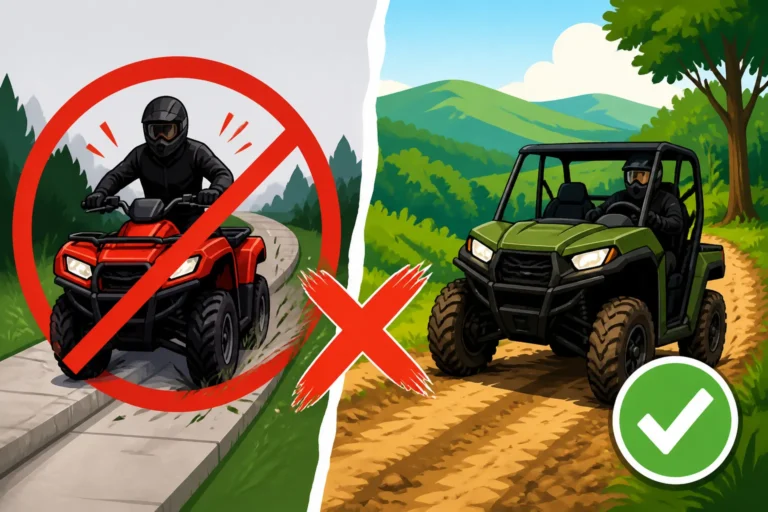
- Riding on State Highways: This is perhaps the most absolute prohibition. ATVs and UTVs are generally never allowed on state highways, period. Even a quick crossing can lead to a ticket. Many people confuse county roads with state routes, but the distinction is crucial. [Why Georgia State Highways Stay Off Limits] is a critical read to understand this boundary.
- Riding in Prohibited Municipal Areas: While some cities have passed specific ordinances for golf carts or other personal transportation vehicles, these generally do not extend to ATVs or most UTVs. Trying to ride through a town or city on an unauthorized machine is a surefire way to attract law enforcement's attention. [Georgia City Streets Open to Carts but Not Quads] highlights this important difference.
- Riding an Unregistered Machine on an Authorized County Road: If you're fortunate enough to live in a county that allows MPOHVs on its roads, you still need to ensure your machine is properly registered through the state's voluntary program. Operating a machine on these county roads without valid registration and a plate is a violation. [Georgia Penalties for an Unregistered Road Machine] can provide more detail on this specific issue. Remember, just because it's a dirt road in your county doesn't mean it's a free-for-all.
- Operating Under the Influence: Just like with any motor vehicle, operating an ATV or UTV while impaired by alcohol or drugs on public land or roads is a serious offense that can lead to a DUI, significant fines, license suspension, and even jail time. [Georgia DUI Law and Off-Road Machines] explains the severe consequences.
- Underage Operation Without Supervision or Proper Helmet Use: Georgia has clear rules about who can operate these machines and under what conditions, especially concerning minors. If a rider under 18 is caught operating without a helmet on public land, or if they are too young to be driving on a county road, a ticket can be issued. [Georgia ATV Helmet Law for Riders Under 18] outlines these important safety regulations.
These common pitfalls illustrate that while the thrill of the ride is strong, the need to understand and respect Georgia's laws is even stronger. Ignorance of the law is rarely an acceptable defense in court.
Breaking Down the Financial Fallout of a Georgia ATV/UTV Ticket
When you receive a ticket for illegal road riding in Georgia, the initial shock of being pulled over quickly gives way to the dread of the potential costs. It's rarely just one flat fine; instead, it’s often a combination of charges that can add up quickly, leaving you with a significant financial burden. Let's peel back the layers of these expenses.
Understanding the Base Fine
The first thing you'll see on that dreaded ticket is typically the base fine amount. However, this figure is rarely a concrete, fixed number across the board. Instead, it's often a guideline, and the actual amount can vary widely depending on several factors. It's not like buying a product where the price is clearly marked; it’s more like an estimation, and the final bill often surprises people.
Factors that commonly influence the base fine include:
- The specific ordinance or statute violated: Some violations carry higher statutory penalties than others. Riding on a state highway might have a different baseline fine than, say, riding on a county road without the proper MPOHV registration.
- The county where the offense occurred: Each county in Georgia, and even some municipalities, can have its own fee schedule and interpretation of state laws. What might be a few hundred dollars in one county could be significantly more in another.
- The discretion of the issuing officer and the judge: While there are guidelines, officers and judges often have a degree of discretion. This is where the circumstances of your stop, your demeanor, and any prior offenses can play a role. A polite interaction might not get you out of a ticket, but it certainly won't hurt your case if you decide to contest it.
- Repeat Offenses: If this isn't your first rodeo, expect the fines to be considerably higher. The legal system isn't particularly forgiving of repeat offenders, especially when it comes to public safety and adherence to vehicle laws.
It’s crucial to understand that there isn't a universally published "Georgia ATV/UTV illegal road riding ticket cost" that applies to everyone. Your best bet is to check the specific statute or ordinance cited on your ticket and research the local court's fee schedule, or simply wait for your court appearance for the exact figure. The immediate financial hit can range from a few hundred dollars to well over a thousand, even before other costs are factored in.
Court Costs and Administrative Fees
Beyond the base fine, you'll almost certainly face a collection of court costs and administrative fees. These are the unavoidable additions that every citation typically carries, regardless of the severity of the offense. Think of them as the operating expenses of the legal system, passed directly onto the individual who received the ticket.
These fees cover a variety of administrative functions, such as:
- Clerk of Court Fees: For processing your paperwork, scheduling your hearing, and maintaining records.
- Judicial Operation Fees: Contributing to the salaries and resources of the court system.
- Victim’s Compensation Funds: Certain surcharges may go towards state-mandated victim assistance programs.
- Technology Surcharges: Some courts charge for the use and maintenance of their digital systems.
These fees, while often individually small, can quickly accumulate. They are usually non-negotiable and are added on top of your base fine. So, if you were mentally preparing for a $300 fine, you might find yourself looking at a total bill closer to $500 or more once all these administrative charges are tallied up. They represent a significant portion of the "hidden" cost of a ticket and are a stark reminder that even seemingly minor infractions carry a hefty price tag when navigating the legal system.
Impound and Storage Fees: A Hidden Expense
For many riders, the most shocking and frustrating financial consequence of getting caught riding illegally on Georgia roads isn't the fine itself, but the impound and storage fees for their machine. This is where the costs can truly spiral out of control, quickly turning a manageable fine into an astronomical expense.
When a deputy determines that your ATV or UTV is being operated illegally on a public road, they often have the authority to impound the vehicle. This means it will be towed away by a private towing company and stored at their lot. The immediate pain point is the towing fee, which can be several hundred dollars right off the bat, especially if your machine requires specialized equipment to move. But the real gut punch comes with the daily storage rates. These can range anywhere from $25 to $75 (or more) per day, and they start accumulating immediately. If your court date is weeks away, or if there are delays in getting your paperwork in order, these fees can stack up shockingly fast. Imagine your machine sitting in a tow yard for two weeks; at $50 a day, that's an extra $700 on top of the tow fee, fine, and court costs.
Getting your machine back isn't always straightforward, either. You’ll typically need to prove ownership, pay all outstanding impound and storage fees directly to the towing company, and sometimes even present proof that the citation has been resolved before the tow yard will release your machine. This can be particularly challenging if you’re trying to gather documents to [Proving You Own an ATV in Georgia Without a Title] or if your machine was damaged during the tow or while in storage. If you find parts are missing or damaged after an impound, reputable aftermarket suppliers like SuperATV can be a good resource for replacements, but that’s yet another cost on top of everything else. The lesson here is clear: the costs associated with impound and storage can easily overshadow the initial fine, making legal riding a much more appealing (and affordable) option. [Georgia Impound Rules After a Violation] can help you navigate this difficult process.
Legal Representation Costs
While many basic traffic tickets might not warrant legal representation, an ATV/UTV ticket for illegal road riding in Georgia can sometimes escalate to a point where consulting an attorney becomes a wise, albeit additional, expense. This is particularly true if you're facing severe penalties, have prior offenses, or if the situation is complex.
Consider these scenarios where a lawyer might be beneficial:
- Serious Violations: If the ticket is combined with charges like DUI, reckless driving, or if there was an accident involving injuries or significant property damage, legal counsel is almost essential. The implications on your driving record, insurance, and even potential criminal charges are far too high to navigate alone. [Georgia Accident Reporting for a UTV Crash] details some of the complexities.
- Contesting the Citation: If you genuinely believe you were cited in error, or if there are mitigating circumstances, an attorney can help you build a defense, understand the local laws and ordinances, and present your case effectively in court. They can often negotiate with prosecutors for reduced charges or alternative sentencing.
- Avoiding Driver's License Impact: Depending on the nature of the offense, some ATV/UTV tickets could potentially impact your regular driver's license, leading to points, suspension, or increased insurance rates. A lawyer can work to minimize these consequences. [Georgia Driver's License Rules for MPOHV Operators] specifies these requirements.
- Property Recovery Issues: If your machine has been impounded and there are disputes over ownership, fees, or damages, an attorney can help facilitate its release.
The cost of legal representation varies widely based on the attorney's experience, the complexity of your case, and the amount of time involved. It can range from a few hundred dollars for a basic consultation or a simple court appearance to several thousand for a more involved defense. While it adds another layer to the financial burden, for some, the long-term benefits of avoiding severe penalties or clearing their name can outweigh the upfront legal fees. It’s a cost-benefit analysis that each rider must consider based on their specific situation.
| Cost Type | Description | Potential Impact |
|---|---|---|
| Base Fine | Penalty for the specific violation (e.g., riding on state highway, unregistered machine). | Varies by county, offense, and judge's discretion; can range from hundreds to over a thousand dollars. |
| Court/Admin Fees | Mandatory fees for processing paperwork, court operations, and various surcharges. | Typically an additional $100-$300 on top of the base fine. |
| Towing Fee | Initial charge to transport your impounded machine from the roadside to a storage facility. | Can be $150-$500 or more, depending on distance and specialized equipment needed. |
| Storage Fees | Daily charges for keeping your machine at the impound lot. | $25-$75+ per day; can accumulate rapidly if not retrieved quickly. |
| Legal Representation | Cost to hire an attorney to advise, negotiate, or represent you in court. | Varies widely ($500-$5,000+) based on case complexity and attorney's fees. |
| Insurance Increase | Potential hike in your off-road or personal vehicle insurance premiums due to the citation. | Can add hundreds of dollars annually for several years. |
| Machine Damage/Repair | Costs if your machine is damaged during towing, impound, or the incident itself. | Highly variable; could be minor cosmetic repairs or major mechanical work. |
Beyond the Dollars and Cents: Other Consequences
While the financial hit from a Georgia ATV/UTV ticket for illegal road riding can be substantial, the repercussions often extend far beyond just the immediate fines and fees. There are long-term consequences that can affect your insurance, your driving record, and even your ability to own or operate your machine in the future. It’s a sobering reminder that actions on the road, even on a recreational vehicle, have lasting impacts.
Insurance Ramifications
One of the often-overlooked yet significant consequences of an ATV/UTV ticket is its effect on your insurance. It's not just about paying for the ticket; it's about potentially paying more for your coverage for years to come.
- Increased Premiums: Insurance companies view citations, especially for illegal road use or reckless operation, as indicators of higher risk. When your policy comes up for renewal, or even mid-term, you could see a substantial increase in your premiums. This isn't just a one-time charge; it's an ongoing cost that can add hundreds of dollars annually to your expenses for several years.
- Policy Cancellations: In more severe cases, or if you have a history of multiple violations, your insurance provider might decide to cancel your policy altogether. This leaves you in a difficult position, as finding new coverage can be challenging and significantly more expensive.
- Difficulty Getting New Coverage: If your policy is canceled or if you're deemed a high-risk driver, obtaining new insurance, whether for your off-road vehicle or even your personal automobile, can become a daunting task. Some insurers might outright refuse to cover you, or they might offer policies with extremely high deductibles and premiums.
- Impact on Liability: Even if your machine is only used off-road, a road-riding citation can flag you in the insurance system. If you were considering registering an MPOHV for legal county road use, demonstrating [Georgia Liability Insurance Tied to Registration] would be mandatory, and a poor driving record could make it harder or more expensive to meet these minimums.
The long-term impact on your insurance can quickly make the initial ticket seem like a minor expense. It's a compounding cost that serves as a continuous reminder of that single moment you were pulled over.
Driving Record and License Impact
Many riders assume that an ATV or UTV ticket won't affect their regular driver's license or driving record since these machines aren't traditional road vehicles. However, this assumption can be a costly mistake, as some violations can indeed have a direct impact on your ability to legally operate a car or truck.
- Points on Your License: Depending on the specific violation and the Georgia statute cited, some ATV/UTV offenses can result in points being added to your standard driver's license. Accumulating too many points can lead to license suspension or revocation. This is especially true for offenses like reckless driving, DUI, or operating without proper care, even if committed on an off-road machine on a public road.
- License Suspension/Revocation: Beyond points, certain serious violations can lead to an immediate suspension or even revocation of your driver's license. Imagine not being able to drive your car to work because of an ATV ticket. This can have devastating effects on your daily life, employment, and overall independence.
- Impact on Underage Riders: For minors, the consequences can be particularly severe. A ticket could delay their ability to obtain a learner's permit or a full driver's license. Courts and the Department of Driver Services take violations by young operators very seriously, recognizing the importance of establishing a clean driving history early on.
- Criminal Record: While many ATV tickets are civil infractions, some, especially those involving DUI, serious accidents, or evasion, can be classified as misdemeanors or even felonies. A criminal record can have far-reaching implications, affecting employment opportunities, housing, and even educational prospects.
It's critical not to dismiss an ATV/UTV ticket as "just an off-road thing." Depending on the specific charge, it can have serious and lasting ramifications for your legal driving privileges and your personal record.
Machine Confiscation and Branded Registrations
In certain severe or repeated instances of illegal road riding, the consequences can go beyond fines and license points, potentially affecting your ownership of the machine itself. The state of Georgia has mechanisms in place to deal with persistent offenders or machines involved in serious violations.
- Permanent Confiscation: While rare for a first-time, minor offense, repeated violations, or those involving serious criminal activity like drug trafficking, can lead to the permanent confiscation of your ATV or UTV. This means you could lose your valuable machine entirely, with no compensation. It's a stark reminder that the state takes illegal activity on its roads seriously, regardless of the vehicle type.
- Branded Registrations: For those machines that are eligible for MPOHV registration in Georgia, a history of violations could lead to a "branded certificate of registration." This brand, which might indicate a history of impoundment, a rebuilt status, or a salvage title, acts as a warning to future owners and can significantly decrease the machine's resale value. [What a Branded Registration Warns You About] delves into this in more detail. This might not be a direct consequence of an illegal road riding ticket if the machine was never registered, but it highlights the state's tracking capabilities.
- Proving Ownership Challenges: If your machine is impounded and you lack proper documentation like a bill of sale or previous registration, getting it back can be a nightmare. The authorities want to ensure the machine isn't stolen and belongs to you. If you can't provide sufficient proof, you might face significant delays or even permanently lose your machine. [Proving You Own an ATV in Georgia Without a Title] is a vital resource if you find yourself in this situation.
The thought of losing your cherished ATV or UTV is enough to make any rider reconsider cutting corners on road rules. These long-term, non-financial consequences serve as powerful incentives to ride responsibly and legally within the designated areas.
Strategies to Avoid a Ticket and Ride Legally in Georgia
The best way to deal with the costs and consequences of an illegal road riding ticket in Georgia is to avoid getting one in the first place. This isn't about stifling your fun, but about channeling your passion for off-road riding into safe, legal, and ultimately more enjoyable avenues. Education, smart choices, and proper machine preparation are your strongest defenses.
Know the Rules: Education is Your Best Defense
The number one strategy to avoid a ticket is to be intimately familiar with Georgia's specific laws regarding ATVs and UTVs. Many riders get into trouble not because they're intentionally breaking the law, but because they're simply unaware of what the law actually says. It's easy to assume, or to listen to outdated advice from friends, but the legal landscape for off-road vehicles is constantly evolving.
- Understand Local and State Laws: Georgia's laws differentiate significantly between various types of off-road vehicles (ATVs, UTVs, dirt bikes, golf carts) and where they can be operated. Don't assume that rules for golf carts apply to your UTV. It’s crucial to know that while some counties allow certain MPOHVs on designated county roads, this is a specific, voluntary registration program with strict criteria. [Georgia MPOHV Road Rules: County Roads Only] explains these nuances. Always remember that [Are Side-by-Sides Street Legal in Georgia?] isn't a simple yes or no; it depends heavily on the machine, the road, and local ordinances.
- Be Aware of Exclusions: Dirt bikes and three-wheelers, for example, are generally excluded from the MPOHV registration program that allows some UTVs on county roads. [Georgia Dirt Bikes and Three-Wheelers Are Excluded] outlines these important distinctions.
- Check the Sunset Clause: Be mindful of the [Georgia's ATV Road Access Law Sunsets in July 2027]. Laws can change, and what's permissible today might not be tomorrow. Staying informed is key.
- Utilize Official Resources: When in doubt, consult official sources like the Georgia Department of Revenue's Motor Vehicle Division or your local county tag office. They are the definitive authorities on current regulations. Many tag offices also provide information on [Georgia MPOHV Registration Questions Tag Offices Hear Most].
Taking the time to research and understand these rules isn't just about avoiding a ticket; it's about being a responsible and informed member of the off-road community.
Choose Your Riding Location Wisely
After knowing the rules, the next crucial step is applying that knowledge by choosing appropriate and legal places to ride your ATV or UTV. The temptation to "just take a quick spin" down a prohibited road can be strong, but the risks far outweigh the momentary convenience.
- Stick to Private Land with Permission: The safest and most common place to ride an ATV or UTV legally is on private property with the landowner's explicit permission. This eliminates almost all concerns about road legality. Always get permission in writing if possible, to avoid any misunderstandings or trespassing issues. This includes places like hunting clubs, where [Georgia Hunting Club Lease Riding Rules] should be followed closely.
- Utilize Designated Off-Road Parks and Trails: Georgia is home to a fantastic network of off-road parks and trail systems specifically designed for ATVs and UTVs. Places like [Iron Mountain Resort: Georgia's Biggest Private Park] or the [Chattahoochee-Oconee National Forest Riding] areas offer hundreds of miles of trails where you can ride legally and safely. These areas are created for your enjoyment and are often well-maintained. Always check specific park rules and permit requirements, such as [Georgia OHV Permits: What You Need Before You Ride], before you go.
- Explore Wildlife Management Areas (WMAs): Some WMAs in Georgia allow ATV/UTV access on designated roads, particularly during hunting seasons. However, these areas come with very strict rules regarding dates, times, and permit requirements. [Georgia WMA Riding Rules Explained] provides essential details, but always verify with the specific WMA before heading out.
- Avoid Roads Marked for Other Vehicles: Just because a road is unpaved doesn't mean it's open season for ATVs. Many dirt roads are still part of the public road system and fall under the same restrictions. Look for signs, and when in doubt, turn around. [Georgia County Road Systems and Where They Run] can help you understand the difference.
By proactively choosing legal riding locations, you not only avoid potential tickets and fines but also contribute to a positive image of the off-road riding community.
Ensure Your Machine is Compliant (If Riding Legally on Roads)
If you intend to operate a UTV on legally designated county roads under Georgia's MPOHV registration, ensuring your machine meets all compliance requirements is non-negotiable. This isn't just about having a license plate; it's about your machine being fully equipped to state standards.
- Meet All Eligibility Criteria: The MPOHV registration is very specific. Your machine must meet requirements for width ([Georgia's 80-Inch Width Limit for Registration]), weight ([Georgia's 4,000-Pound Gross Weight Ceiling]), payload ([Georgia's 350-Pound Payload Requirement]), speed ([Georgia's 25 to 65 mph Speed Requirement]), and other physical attributes like having a steering wheel (not handlebars) and a non-straddle seat. [Georgia MPOHV Eligibility: The Eight-Point Test] outlines all the specifics.
- Required Safety Equipment: For a registered MPOHV, your machine must have specific safety equipment, including headlights, brake lights, taillights, turn signals, mirrors, a horn, and factory-installed seat belts. [Headlights, Brake Lights and Mirrors on the Checklist] is a good starting point for ensuring you have what's needed. For many riders looking to meet these criteria, especially for lighting and mirrors, quality aftermarket parts from trusted brands like SuperATV can be a reliable option.
- Proper Registration and Plate: Once compliant, you must complete the registration process through your [Georgia County Tag Office Steps for an MPOHV] and display your [Georgia Plates for Off-Highway Vehicles] clearly on the machine. This includes timely renewal.
- Insurance: Adequate liability insurance is a strict requirement for any registered MPOHV. [Georgia Liability Insurance Tied to Registration] is not optional.
- Stay Updated: Regulations can change. It's your responsibility to ensure your machine remains compliant with current laws, especially as the [July 1, 2027 Expiration Date] approaches, which might bring new rules or restrictions.
Even if you're only riding on private land, outfitting your machine with quality, reliable parts for safety and performance (like those offered by SuperATV) is just good practice. It enhances your riding experience and ensures your machine is ready for any adventure, whether on a private trail or a legally designated county road. By taking these steps, you safeguard your wallet, your driving record, and your ability to continue enjoying the thrill of off-road riding in Georgia.
Disclaimer
This article is for general informational purposes only and does not constitute professional advice. Laws, prices and regulations vary by location and change over time. Consult a qualified professional for guidance on your specific situation.