Signs That Mark a Cart Path
It can be incredibly confusing to navigate Georgia's diverse landscape, especially when you see what looks like a perfectly good path alongside a road, marked with signs, and you’re riding an ATV or UTV. Many riders get frustrated, wondering if they can use these convenient routes only to find themselves unsure about what the signs truly mean for their specific type of machine. This guide aims to clear up that confusion by diving deep into the signage you'll encounter on Georgia's cart paths, explaining precisely what they signify and how they relate to operating your off-highway vehicle (OHV) in the Peach State.
The Georgia Landscape of Cart Paths and OHVs
Georgia is unique in many ways, and its approach to local transportation infrastructure is certainly one of them. While we might think of paths and trails as open season for all kinds of recreational vehicles, the reality is far more nuanced, especially when comparing golf carts to robust ATVs and side-by-sides. Understanding these distinctions is crucial for staying on the right side of the law and ensuring a safe riding experience.
What Exactly is a "Cart Path" in Georgia?
When we talk about a "cart path" in Georgia, we're generally referring to a specially designated pathway designed and maintained for the use of golf carts and other small, low-speed personal transportation vehicles (PTVs). These paths are common in planned communities, retirement villages, and specific cities like Peachtree City, which is famous for its extensive network. These paths are built to offer an alternative, safer mode of travel for residents to get to shops, schools, or recreational facilities without mixing with automobile traffic on major roads. They are often paved, well-maintained, and typically much narrower than a standard road.
The key distinction here is that these paths are not designed for, nor do they legally permit, the operation of most ATVs or UTVs. They are built for the lighter weight, slower speeds, and specific design of golf carts. The infrastructure, the signage, and the underlying ordinances are all geared towards this specific type of vehicle. Even if your UTV seems small enough to fit, the legal and safety considerations are entirely different.
Why ATVs and UTVs Are Different from Golf Carts
The core difference between ATVs/UTVs and golf carts, in the eyes of Georgia law and local ordinances, comes down to their design, purpose, and capability. Golf carts are typically slow-moving, open-air vehicles designed for short-distance, low-speed travel, often around a golf course or within a residential community. They rarely exceed 20 mph, are lightweight, and typically don't have the robust suspension or power of an off-highway vehicle.
ATVs (All-Terrain Vehicles) and UTVs (Utility Task Vehicles), on the other hand, are designed for off-road performance, rugged terrain, and often higher speeds. Even a utility-focused side-by-side like a Polaris Ranger or a Kawasaki Mule, while perhaps appearing similar to a beefed-up golf cart, has a completely different power train, suspension, and overall build. These machines are built for demanding environments, whether it's hauling gear on a farm, traversing challenging trails, or covering vast tracts of land. Because of their design and intended use, the state of Georgia generally classifies them as off-highway vehicles, with specific rules for where and how they can be operated. This difference is why [Georgia ATV Helmet Law for Riders Under 18] exists, for instance, distinguishing them from the less stringent rules for golf carts.
Deciphering the Signs: What to Look For
Navigating any road or pathway legally means paying close attention to the signs that govern its use. On Georgia's cart paths, these signs are not just suggestions; they are directives that dictate who can use the path and under what conditions. Understanding the visual cues and textual information on these signs is paramount for any rider, especially those operating ATVs and UTVs, to avoid inadvertently breaking local laws.
The Standard 24×30 Inch Signage Rule
One of the most defining characteristics of official cart path signage in Georgia, particularly in areas like Peachtree City, is its standardized size. Local ordinances, such as those that guide cities in establishing Personal Transportation Vehicle (PTV) paths, often stipulate specific dimensions for these signs. Typically, you'll encounter signs that are 24 by 30 inches. This isn't just an arbitrary measurement; it's a size chosen for visibility and uniformity, ensuring that riders and pedestrians can easily spot and read the regulations from a reasonable distance.
These signs are strategically placed at entry points to the cart path network, at intersections with public roads, and at other critical junctures. Their consistent size and placement are intended to provide clear, unmistakable guidance. If you're on your side-by-side and see a sign of this dimension, it's a strong indicator that you're entering a regulated zone specifically for golf carts or PTVs, not typically for your type of off-highway vehicle. This standardization helps avoid confusion, ensuring that everyone using these paths understands the rules of engagement. You might wonder, [What a 24 by 30 Sign Looks Like], and it's typically a rectangular sign, often green or blue, with white lettering and symbols.
Symbols and Text on Cart Path Signs
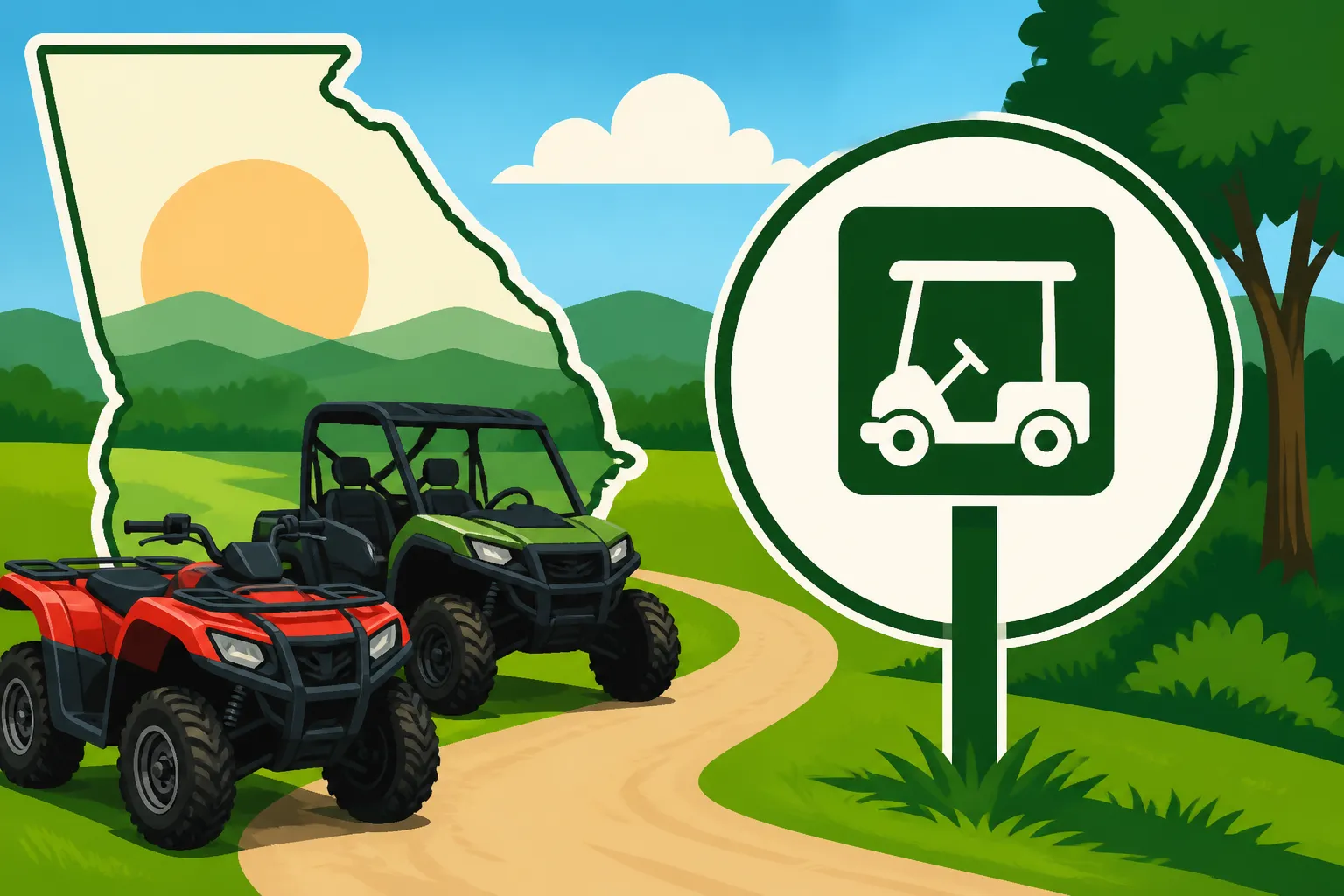
Beyond their standardized size, the content of cart path signs is equally important. They often combine universally recognized symbols with explicit text to convey their message. You'll frequently see a pictogram of a golf cart, sometimes alongside a pedestrian or bicycle symbol, indicating shared use. These symbols are powerful visual cues that immediately tell you the intended users of the path. If you see a golf cart symbol, it’s a direct message about the type of vehicle permitted.
The accompanying text will usually clarify restrictions, permitted hours, and sometimes even specific local ordinances. For example, a sign might state "GOLF CARTS ONLY," "NO MOTORIZED VEHICLES," or "PERSONAL TRANSPORTATION VEHICLES ONLY." It might also include speed limits, age restrictions for drivers ([Georgia Golf Cart Age Rules] are often posted), or rules about passengers. Crucially for ATV and UTV riders, these signs rarely, if ever, feature symbols or text that explicitly permit ATVs or side-by-sides. If anything, the text often implicitly or explicitly excludes them by limiting usage to specific vehicle types that do not encompass typical OHVs. Taking the time to read these signs, rather than just glance at them, can save you from a potential citation or accident.
How Signs Differentiate Permitted Vehicles
The primary function of cart path signage is to clearly differentiate between permitted and prohibited vehicles. These signs act as gatekeepers, defining the legal boundaries for various modes of transportation. For instance, a sign that reads "Golf Cart Path" or "PTVs Only" inherently excludes vehicles like ATVs, UTVs, motorcycles, and automobiles. The language is often very specific, tailored to the local ordinances that govern these paths.
Some signs might also detail other vehicles allowed, such as bicycles or pedestrians, reinforcing the idea of a shared, low-speed environment. What you won't typically see are exceptions for off-highway vehicles, even if they are street-legal under Georgia's MPOHV (Multipurpose Off-Highway Vehicle) registration. The MPOHV designation, which allows certain UTVs to operate on county roads, does not extend to golf cart paths. This is a critical distinction, as the rules for [Georgia MPOHV Road Rules: County Roads Only] are distinct from those governing dedicated cart paths. The intent of cart paths is to create a safe, specific corridor, and ATVs and UTVs, with their different operational characteristics, are simply not part of that vision.
Legal Implications of Cart Path Signage for OHV Riders
For ATV and UTV enthusiasts in Georgia, understanding cart path signs is not just about courtesy; it's about legality. The presence and wording of these signs carry significant weight, directly impacting where you can and cannot operate your machine. Misinterpreting or ignoring them can lead to serious consequences, highlighting the importance of knowing the rules of the road – or, in this case, the path.
Why You Can't Take Your ATV on a Cart Path
Simply put, you cannot take your ATV on a cart path because these paths are legislatively and infrastructurally designed for a very specific type of low-speed vehicle: golf carts and personal transportation vehicles (PTVs). Georgia state law and local ordinances explicitly define what a golf cart is and where it can operate. ATVs, by their very nature and legal classification as off-highway vehicles, do not fall into this category. They are built for different purposes and possess different capabilities than a typical golf cart.
Even if a cart path appears wide enough or remote enough, the signage is a clear directive from the governing authority that your ATV is not permitted. Attempting to ride your ATV on one of these paths is akin to driving a car on a pedestrian walkway – it’s a violation of the intended use and the law. This distinction is fundamental to [Georgia ATV Road Law Explained], which clearly delineates where ATVs are and are not permitted, with cart paths firmly in the "not permitted" category.
Consequences of Ignoring Cart Path Restrictions
Ignoring cart path restrictions can lead to a variety of undesirable consequences, ranging from minor inconveniences to significant legal troubles. If a local law enforcement officer, such as a city police officer or a county deputy, observes you operating an ATV or UTV on a designated cart path, you could face a citation. These citations often carry fines that can quickly add up, and repeat offenses might lead to more severe penalties.
In some jurisdictions, prolonged or egregious violations could even result in your machine being impounded. This means not only paying a fine but also dealing with impoundment fees, storage costs, and the hassle of retrieving your vehicle. Beyond the legal ramifications, there are safety concerns. Cart paths are not engineered for the weight, speed, or maneuverability of ATVs and UTVs, potentially creating hazardous situations for both you and other path users, such as pedestrians and golf cart operators. The general rule of thumb is: if the sign doesn't explicitly permit your vehicle type, assume it's prohibited. For the full picture on fines, you might look into [Georgia Ticket Cost for Illegal Road Riding].
The Role of Local Ordinances in Signage
Local ordinances play an absolutely critical role in the establishment and enforcement of cart path signage. While Georgia has overarching state laws regarding ATVs and UTVs, it's the cities and counties that pass the specific ordinances allowing and regulating cart paths. Peachtree City, for instance, has a comprehensive set of ordinances governing its extensive golf cart path network, including rules on registration, age limits for drivers, and what types of vehicles are permitted. These local laws dictate the precise wording and symbols found on the signs you encounter.
This means that while the general concept of a cart path might be similar across different Georgia communities, the specific details can vary. Some cities might be more restrictive than others. Therefore, if you are visiting an area known for its cart paths, it's always wise to check that specific municipality's local ordinances beforehand, even if you are operating a legally registered [Georgia MPOHV Registration Explained] for county roads. The signs are merely the visible representation of these underlying local laws, and understanding the legislative framework behind them clarifies why certain vehicles are prohibited.
Where ATVs and UTVs Can Legally Ride in Georgia
While cart paths are off-limits, it's not all doom and gloom for ATV and UTV enthusiasts in Georgia. There are plenty of fantastic, legal places to ride your machine, offering diverse terrains and experiences. Understanding these legitimate riding areas is key to enjoying your OHV responsibly and without legal worry. The distinction between where you can ride and where you can't is crucial for every rider in Georgia.
Designated OHV Trails in National Forests
Georgia is blessed with vast natural beauty, and a significant portion of it falls within national forests, like the Chattahoochee-Oconee National Forest. Within these forests, specific areas are designated as Off-Highway Vehicle (OHV) trail systems, offering miles of challenging and scenic riding opportunities. Places like [Houston Valley OHV Trails in Georgia], Beasley Knob OHV Trail System, and Whissenhunt OHV Trails are prime examples. These trails are explicitly designed, maintained, and signed for the use of ATVs, UTVs, and dirt bikes, often with width restrictions (e.g., [Georgia's 50-Inch Width Cap at Houston Valley]).
Riding on these designated trails typically requires a Georgia National Forest OHV permit, which can be purchased for a day or annually. These areas are managed by the U.S. Forest Service, and they often have rules regarding operating hours, spark arrestors, and environmental protection. For many riders, these national forest trails represent the purest form of off-road adventure, far removed from the urban sprawl and the restrictions of cart paths or public roads. It's a completely different environment, built specifically for your machine.
Private Off-Road Parks and Their Own Rules
Beyond the national forests, Georgia also boasts a number of privately owned and operated off-road parks. These parks are fantastic options for riders looking for diverse terrain, specific challenges, or amenities like camping, cabins, and wash stations. [Iron Mountain Resort: Georgia's Biggest Private Park] and Highland Park Off-Road Resort are popular destinations, offering extensive networks of trails, mud pits, rock crawling sections, and even motocross tracks.
The beauty of private parks is that they set their own rules, which are typically more permissive than public lands, as long as they comply with state law. You'll still need to follow their specific guidelines, which might include helmet requirements (even for adults), age restrictions, waiver signatures, and designated riding areas for different skill levels. Many of these parks cater to both ATVs and UTVs, sometimes with separate trails or zones. These private facilities offer a controlled and often safer environment for riders to push their limits and enjoy their machines without the strict public road or cart path regulations.
Exploring Limited County Road Access for MPOHVs
In a significant development, Georgia now allows certain UTVs, classified as Multipurpose Off-Highway Vehicles (MPOHVs), to be registered for limited use on county roads. This is a game-changer for UTV owners who need to traverse short distances on public roads to access trails, hunting land, or simply connect pieces of their property. However, this privilege comes with strict requirements and limitations, including a sunset date.
To qualify as an MPOHV, a UTV must meet specific criteria, such as having a steering wheel (not handlebars), seat belts, a minimum and maximum speed, certain dimensions, and factory-installed safety features. You'll need to go through a registration process at your county tag office, obtain a specialized license plate, and carry liability insurance. It's important to stress that this MPOHV registration only applies to county roads (excluding state highways and interstates) and explicitly does not permit access to golf cart paths. This is a crucial distinction that many riders misunderstand. You can explore topics like [Georgia MPOHV Registration Explained] and [Are Side-by-Sides Street Legal in Georgia?] for more details on these new regulations. When outfitting a UTV for legal county road use, quality accessories from brands like SuperATV can be beneficial, ensuring your machine meets all necessary safety and visibility requirements.
| Feature | Golf Cart on Cart Path | ATV/UTV on Cart Path | MPOHV on County Road (UTV) |
|---|---|---|---|
| Legal Status | Permitted with local ordinance compliance | Prohibited | Permitted if registered & compliant with state law |
| Signage | "Golf Carts Only," "PTVs Only," Golf Cart Symbol | Explicitly or implicitly excluded by signs | No specific signage for MPOHVs, standard road signs apply |
| Intended Use | Low-speed local transport, recreation | Off-road recreation, utility, farm work | Limited road access, connecting trails/land |
| Vehicle Type | Golf cart, Personal Transportation Vehicle (PTV) | All-Terrain Vehicle (ATV), Utility Task Vehicle (UTV) | UTV meeting MPOHV criteria (steering wheel, seatbelts, etc.) |
| Speed | Generally < 20 mph | Often > 25 mph, designed for off-road speeds | 25-65 mph requirement for registration |
| Insurance | May be required by local ordinance | Not typically required for off-road use, but advised | Required liability insurance for registration |
| Penalties | Minor traffic citations for violations | Fines, impoundment, misdemeanor charges | Traffic citations for violations, uninsured operation fines |
Navigating Shared-Use Paths and Crossings
While cart paths themselves are largely off-limits to ATVs and UTVs, the reality of Georgia's diverse infrastructure means that you'll often encounter situations where cart paths, pedestrian walkways, or designated crossings intersect with or run parallel to public roads. Understanding how to navigate these shared spaces legally and safely is essential for all riders, regardless of their machine. This often involves paying close attention to specific signage and right-of-way rules.
Understanding Crossings at State Routes and Highways
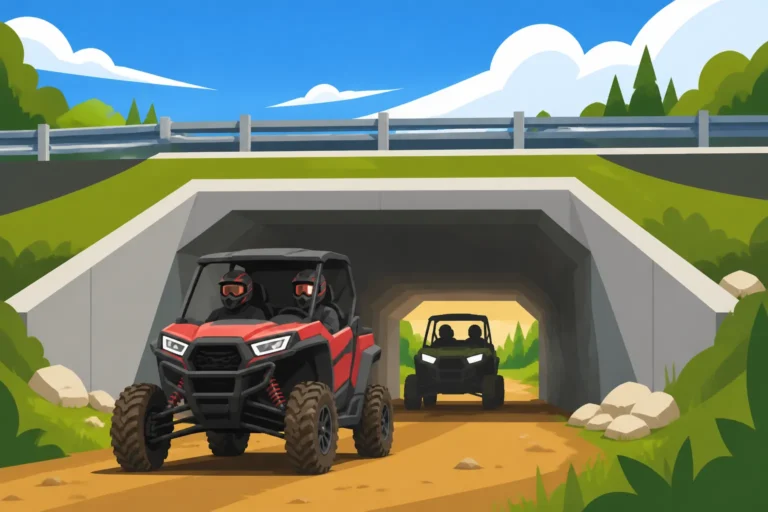
Even in areas with extensive cart path networks, these paths inevitably need to cross over or under larger state routes and highways. For golf carts and PTVs, these crossings are often well-marked and designed, sometimes involving tunnels, bridges, or clearly designated at-grade intersections with traffic signals specifically timed for cart path users. The signage at these points is crucial, indicating the appropriate crossing procedures and reminding users of right-of-way rules. For instance, a sign might indicate [Georgia Crossings at Designated Points].
However, for ATV and UTV riders, these crossing points are not an invitation to join the cart path network. Even if your MPOHV is registered for county road use, state highways remain largely off-limits, save for very specific and brief crossings. [Why Georgia State Highways Stay Off Limits] is a critical piece of information for all OHV riders. You must always adhere to the specific rules of the road you are on, and a cart path crossing is not a gateway for your off-highway vehicle to enter areas it is otherwise prohibited from.
Signs Indicating Shared Pedestrian and Bicycle Use
Many cart paths, especially in residential or recreational areas, are not solely for golf carts. They are often multi-use paths, meaning they are shared with pedestrians, joggers, and bicyclists. Signs will frequently display symbols for these different user groups, emphasizing the need for caution and shared responsibility. You might see pictograms of walkers and cyclists alongside the golf cart symbol, often accompanied by text advising a slower pace, yielding to others, or staying to one side.
The presence of these shared-use signs further reinforces the idea that these paths are not suitable for ATVs or UTVs. The speed, weight, and noise of off-highway vehicles are simply incompatible with an environment designed for quiet, low-impact, non-motorized recreation. Even if you're riding a quiet electric UTV, the legal classification and designated use of the path prohibit your vehicle. When you see these signs, it's a clear signal to maintain a safe distance and seek out appropriate riding zones for your machine. Safety is paramount, and these signs are there to protect all users of the path.
Best Practices for Identifying Appropriate Riding Zones
As an ATV or UTV owner in Georgia, the responsibility of knowing where you can and cannot legally ride ultimately rests with you. While cart path signs are clear about their restrictions, there are broader best practices that can help you confidently identify appropriate riding zones, ensuring you always stay compliant with state and local laws. This proactive approach not only keeps you out of trouble but also contributes to a positive perception of the OHV community.
Checking Local Ordinances Before You Ride
One of the most important things you can do before embarking on a ride in an unfamiliar area is to check the local ordinances of that specific city or county. What might be permissible in one part of Georgia, especially concerning local road access or specific trail systems, might be strictly prohibited just a few miles down the road. Local governments have the authority to pass ordinances that regulate the use of various vehicles within their jurisdiction, including designating specific areas for golf carts or banning certain vehicles from certain roads.
A quick search on the city or county government website, or even a call to their public works department or local law enforcement, can provide invaluable information. For example, if you're planning a trip to a city known for its cart paths, researching [Peachtree City Cart Registration Fees in Georgia] might lead you to details about their specific path usage rules. This proactive research can prevent misunderstandings and ensure your riding plans align with local legal frameworks, saving you from potential fines or confrontations.
Trusting the Signage and When to Turn Around
The most straightforward and often overlooked best practice is simply to trust the signage you encounter. If a sign explicitly or implicitly prohibits your ATV or UTV from a particular path or road, then that's your cue to turn around and find an alternative route. Do not try to interpret the signs creatively or assume that "they don't really mean my side-by-side." The signs are there for a reason, backed by law and designed for public safety.
If you are riding on a county road with an MPOHV plate and encounter signs marking a state highway crossing, understand that the rules for [Georgia Crossings at Designated Points] are very specific, and continuous travel on a state route is generally forbidden. If you're on a path and see a sign with a golf cart symbol and text like "PTVs Only," you should immediately understand that your ATV or UTV is not permitted. It's far better to turn around, find a legal trail system, a private park, or a designated county road than to risk a citation or, worse, an accident. This respect for signage fosters a positive relationship between riders and local communities.
Equipping Your UTV for Proper Road Use (Where Permitted)
For those UTV owners who choose to register their machines as MPOHVs for county road use in Georgia, proper equipment is not just an option—it's a legal requirement. When your UTV leaves the trail and touches a public road, even a county road, it needs to meet certain safety and visibility standards. This includes things like working headlights, brake lights, turn signals, a horn, and rearview mirrors. While your UTV might be a beast on the trails, it needs to be civil and visible on public thoroughfares.
Many riders turn to reputable aftermarket companies to ensure their UTVs are up to snuff. For example, SuperATV offers a wide range of accessories designed to enhance both the performance and legality of your machine. From street-legal kits that add turn signals and horns to robust mirrors that improve visibility, products from companies like SuperATV can help you meet the stringent requirements for MPOHV registration. Investing in quality parts ensures not only compliance but also your safety and the safety of others on the road. Remember, even with the right equipment, MPOHV registration does not grant you access to golf cart paths; it's strictly for approved county roads.
Disclaimer
This article is for general informational purposes only and does not constitute professional advice. Laws, prices and regulations vary by location and change over time. Consult a qualified professional for guidance on your specific situation.