Georgia’s $500 Helmet Violation Penalty
Riding an ATV or UTV in Georgia is an incredible way to experience the state's diverse landscapes, from dense forests to open fields. But for many families, navigating the rules and regulations can feel like tackling a muddy trail without 4-wheel drive. One of the most critical, and often misunderstood, rules revolves around helmets, especially for younger riders. This guide will cut through the confusion and explain Georgia's helmet violation penalty, outlining who needs to wear one, where, and what could happen if you don't.
Understanding Georgia's Helmet Laws for Off-Roaders
It's easy to assume that once you leave the paved highways, the rules disappear. Unfortunately, that's not always the case, especially when it comes to safety gear like helmets. Georgia has specific, legally binding requirements for helmet use on off-road vehicles, and they come with real consequences if ignored.
Who Needs a Helmet: Age Requirements on Public vs. Private Land
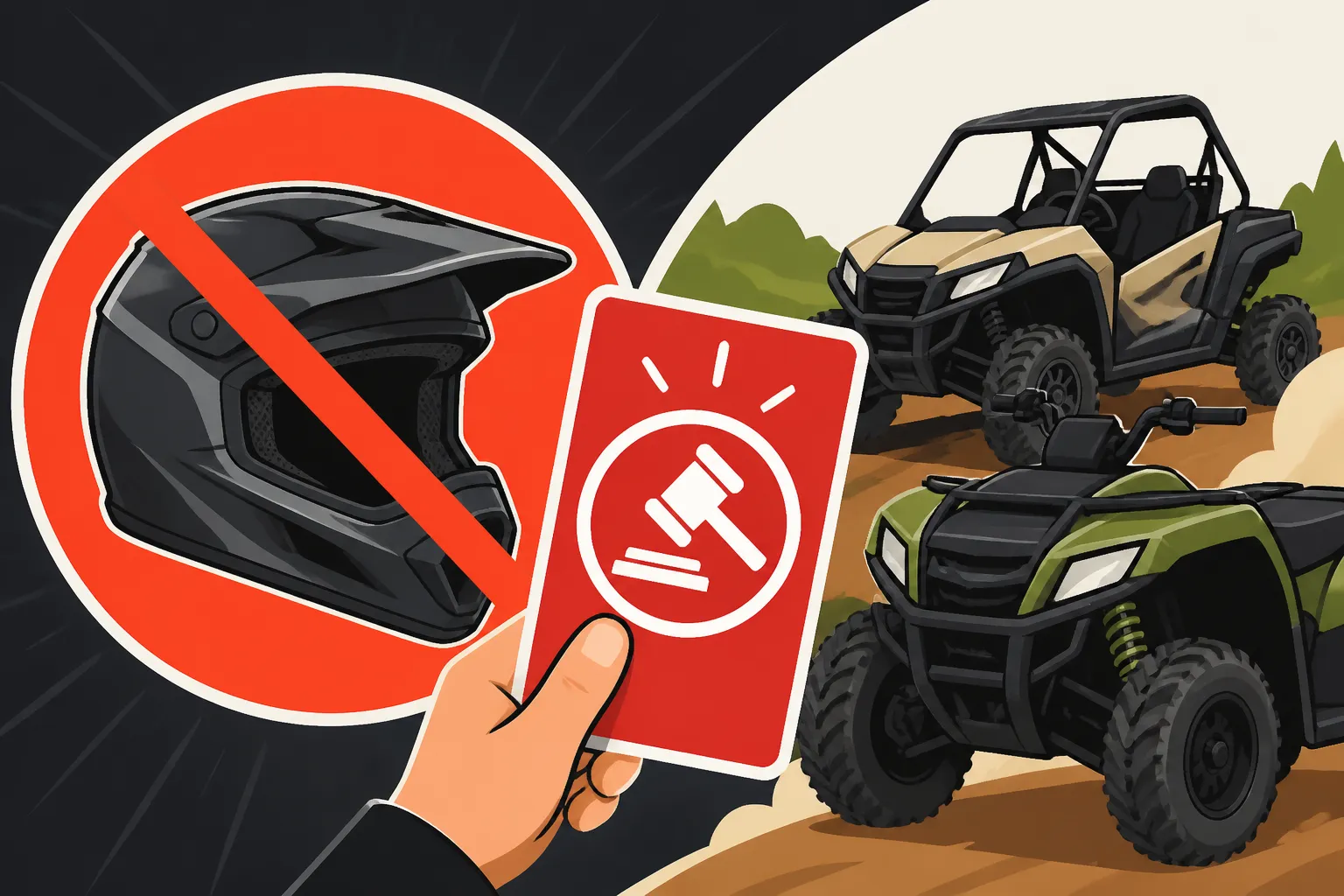
The core of Georgia's helmet law for ATV and UTV riders centers around age. The law is quite clear: any person under the age of 18 operating or riding as a passenger on an all-terrain vehicle (ATV) or a multipurpose off-highway vehicle (MPOHV) must wear a protective helmet. This isn't just a suggestion; it's a mandate.
Now, this is where many riders get tripped up. There's a common misconception that helmet laws only apply to public roads or designated trails. However, Georgia's code specifically extends this requirement to all terrain, including private property. Yes, you read that right. Even if your child is riding a quad in your own backyard, they are legally required to wear a helmet if they are under 18. This particular aspect can be frustrating for parents who feel they should have full discretion on their own land, but the law's intent is to protect minors from serious head injuries, regardless of the riding location. It also means that a well-meaning parent allowing their child to ride without a helmet on their own land could still face legal repercussions if an incident occurs and law enforcement becomes involved.
The Specifics of the $500 Penalty
So, what happens if this rule isn't followed? Georgia doesn't mince words when it comes to the penalty for a helmet violation. If a person under 18 is found riding an ATV or MPOHV without a helmet, the operator (who could be the minor themselves if of a certain age, or more likely, the adult supervising or allowing the ride) can face a misdemeanor charge. And here's the kicker: the accompanying fine is $500.
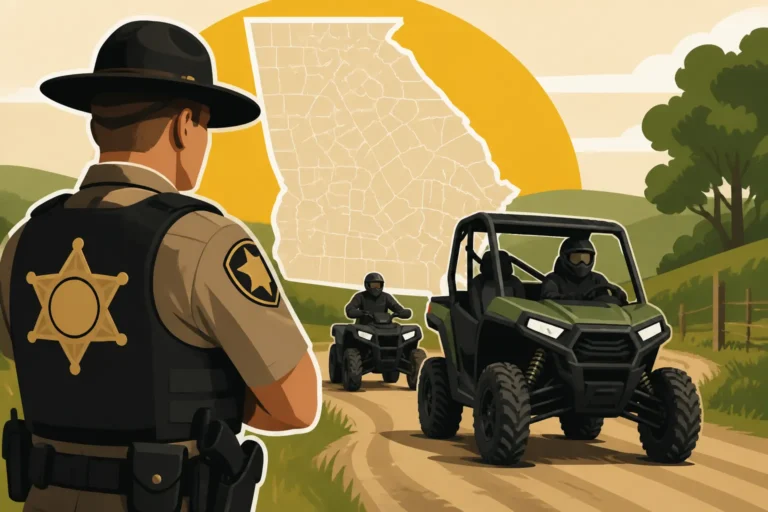
This isn't a minor traffic ticket that you can easily forget about. A misdemeanor charge goes on your record and can carry additional court costs beyond the initial $500 fine. Imagine a scenario where a local deputy observes a group of kids riding side-by-sides on a dirt county road near your property. If one of your children, who is 16, isn't wearing a helmet, that deputy is within their rights to stop them. Not only could the child face immediate consequences, but you, as the parent or legal guardian, might be held responsible, leading to that hefty $500 fine and a court appearance. It's a stark reminder that these laws are taken seriously, aiming to deter risky behavior and protect young riders from preventable injuries. This applies whether they're on a registered machine on a county road or simply on private land, as outlined in [Georgia Under-18 Helmet Rule on Private Land].
Where the Helmet Rules Apply in Georgia
Understanding that the helmet rule for minors applies across the board is crucial, but it helps to break down the different environments where you might encounter enforcement or simply need to be extra vigilant. The applicability isn't limited to a single type of riding area.
County Roads and Registered MPOHVs
Georgia has specific provisions that allow certain MPOHVs to be registered and legally operated on county roads. If you've gone through the process of getting a plate for your side-by-side, such as a Polaris Ranger or a Can-Am Defender, you're embracing the opportunity to use these machines for practical purposes, like accessing hunting land or reaching remote property. However, with the privilege of road access comes the responsibility of adhering to all applicable traffic and safety laws.
When a registered MPOHV, like a UTV, is being operated on a county road, the helmet law for those under 18 is strictly enforced. A local sheriff's deputy, who regularly patrols these roads, has every right to pull over an MPOHV if they observe an underage rider or passenger without a helmet. It's no different than pulling over a car for a seatbelt violation. The goal is safety, and the rules are designed to protect the most vulnerable. This is why it's vital that if your family is enjoying a ride on a county road, perhaps heading to a local fishing spot or exploring the backcountry, every rider under 18 is properly helmeted. You can learn more about where these roads operate in [Georgia County Road Systems and Where They Run].
Designated OHV Trails and Forest Lands
Georgia is home to a fantastic network of designated OHV trails, many within the Chattahoochee-Oconee National Forest. Places like Houston Valley, Beasley Knob, and Whissenhunt offer miles of riding opportunities. These areas are managed by state and federal agencies and, as such, have their own set of rules and regulations designed to ensure safety and preserve the natural environment.
Within these designated OHV trail systems and on forest roads open to vehicular traffic, the under-18 helmet rule is absolutely in effect. Forest rangers and law enforcement personnel regularly patrol these areas, and they will enforce safety regulations, including helmet use. Imagine planning a fun family weekend at a place like Iron Mountain Resort or Houston Valley OHV Trails. It's easy to get caught up in the excitement, but forgetting a helmet for your 14-year-old could quickly turn a great trip into a costly one. Even if you've purchased your [Georgia National Forest Permits Are Per Operator], that permit doesn't grant an exemption from the helmet law. Always check trail-specific rules, but assume the state's helmet law for minors is a baseline requirement in all public riding areas.
Private Property Considerations (and the Misconception)
This is perhaps the most surprising aspect of Georgia's helmet law for many off-road enthusiasts. The common belief is that "my land, my rules" applies universally. While you have significant autonomy on your private property, the state's helmet law for minors on ATVs and MPOHVs does not stop at your property line.
As stated in [Georgia Under-18 Helmet Rule on Private Land], the law clearly applies to "any person under 18 years of age operating or riding as a passenger on an all-terrain vehicle" regardless of whether it's on public or private land. This means if you have a sprawling farm or a large wooded tract where your kids love to ride their quads or side-by-sides, they are still legally required to wear helmets until they turn 18. This provision is designed to provide consistent protection for minors and minimizes the legal ambiguities that could arise if an accident were to occur. It also means that in the unfortunate event of a serious accident on private property involving an unhelmeted minor, law enforcement could still investigate and potentially issue a citation, even if no other parties were involved. It’s a tough pill for some landowners to swallow, but the intention is clear: child safety above all.
Exemptions to Georgia's Helmet Laws
While Georgia's helmet law for riders under 18 is quite broad, there are specific circumstances where the requirement is lifted. These exemptions are generally tied to the utilitarian nature of the vehicle's use, particularly in agricultural or commercial settings. It's important to understand these specific carve-outs to ensure you're both safe and compliant.
Agricultural and Commercial Use
Georgia law recognizes that ATVs and UTVs are often invaluable tools for work, especially in rural communities. Because of this, the helmet requirement for individuals under 18 is waived when the machine is being used for legitimate agricultural or commercial purposes. This is detailed in [Georgia Farm and Logging Helmet Exemption] and [Georgia Commercial Use Helmet Exemption].
So, what exactly falls under this umbrella?
- Agricultural Work: Think about a 16-year-old driving a UTV across a pasture to feed cattle, hauling fencing supplies, or checking irrigation lines. A 17-year-old using a quad to scout fields for pest control, transport tools to a broken piece of equipment, or assist with a harvest. These are all examples of agricultural activities where the primary purpose of the ATV or UTV is farm work. The machine isn't being used for recreation; it's a piece of farm machinery.
- Logging Operations: Similar to agriculture, logging is an industry where off-road vehicles play a crucial role. A minor working on a logging crew, perhaps transporting equipment or surveying timberland, would likely fall under this exemption.
- Commercial Use: This category is a bit broader but generally refers to any legitimate business activity where the ATV or UTV is essential for the job. This could include, for example, a landscaper's assistant using a side-by-side to transport tools around a large property, or an employee at an outdoor events venue moving supplies with a UTV. The key here is that the machine is being utilized in a work capacity as part of a commercial enterprise, not for leisure.
It's critical to remember that these exemptions are not a loophole for recreational riding. If your child finishes feeding the cows and then decides to go joyriding through the woods with friends, the exemption no longer applies. The use must be directly related to the agricultural or commercial task at hand. Law enforcement, if they encounter a situation, will look at the primary purpose of the ride at that moment.
When a Helmet Is Just Good Sense (Beyond the Law)
Even if an exemption applies, or if you're an adult over 18 for whom Georgia has no mandatory helmet law, wearing a helmet is almost always a smart decision. The statistics on head injuries in ATV and UTV accidents are sobering, and the reality is that an unforeseen mishap can happen to anyone, regardless of age or experience.
Think about the sheer unpredictability of off-road riding. You might hit an unexpected rut, encounter a hidden tree root, or have another rider in your group make an abrupt stop. A simple rollover, even at low speeds, can result in your head hitting the ground, a roll bar, or a tree branch with significant force. A helmet provides crucial protection against traumatic brain injury, which can have lifelong consequences. Even a minor concussion can impact cognitive function, and more severe injuries can be devastating.
Many experienced riders, even those well over 18, choose to wear helmets every time they ride, whether it's for an intense trail run or a casual cruise around the property. They understand that a helmet is a relatively small investment for peace of mind and significantly reduced risk of serious injury. Companies like SuperATV, known for their extensive range of off-road accessories and parts, also advocate for comprehensive safety gear, understanding the inherent risks of the sport. While Georgia's law specifically targets minors, the wisdom of wearing a helmet extends to every single rider, regardless of age or legal requirement. It's about personal safety, and that's something no one should compromise on.
Equipping for Safety and Compliance
Beyond just understanding the law, actually putting safety into practice means equipping yourself and your young riders properly. This isn't just about avoiding a fine; it's about preventing life-altering injuries. Choosing the right gear is as important as choosing the right machine.
Choosing the Right Helmet (DOT-Approved)
When it comes to helmets, not all are created equal, and simply having "a helmet" isn't always enough for maximum protection. The absolute minimum standard you should look for, and what law enforcement will expect to see, is a DOT-approved helmet. DOT stands for the U.S. Department of Transportation, and this certification signifies that the helmet has met rigorous safety standards designed to protect against impact. Always look for the DOT sticker on the back of the helmet.
There are various styles of helmets, each with its own advantages for off-road riding:
- Full-Face Helmets: These offer the most comprehensive protection, covering your entire head, face, and chin. They're excellent for high-speed riding, dusty conditions, or areas with flying debris. Many come with built-in visors for eye protection.
- Open-Face Helmets: These cover the top, back, and sides of your head, but leave the face exposed. While not offering chin protection, they can be cooler and offer a wider field of vision. If choosing an open-face, dedicated goggles or eye protection are absolutely essential.
- Motocross/Off-Road Helmets: These typically have an extended chin bar and a visor, designed to deflect roost and provide airflow. They are usually worn with separate goggles. This style is very popular among ATV and UTV riders due to its aggressive styling and ventilation.
Regardless of the style, proper fit is paramount. A helmet that is too loose can shift during an impact, failing to protect effectively. One that's too tight can be uncomfortable and distracting. When trying on a helmet, it should feel snug around your entire head, with no pressure points. It shouldn't move easily when you shake your head, and the chin strap should be securely fastened. For growing children, regularly check their helmet fit, as they may outgrow it quickly. Investing in a quality, well-fitting, DOT-approved helmet from a reputable brand is the single most important safety decision you can make for any rider, especially those under 18.
Other Essential Safety Gear (Beyond the Helmet)
While the helmet is the only piece of safety gear explicitly mandated by Georgia law for underage riders on ATVs/MPOHVs, a comprehensive approach to safety extends far beyond just head protection. Smart riders understand that the trail environment presents numerous other risks that can lead to injury.
Consider these additional pieces of gear, often found at retailers specializing in off-road accessories:
- Eye Protection: Whether it's a helmet visor or dedicated goggles, protecting your eyes from dust, debris, insects, and low-hanging branches is critical. Even a small piece of grit in the eye can cause a momentary lapse in attention, leading to a serious accident.
- Gloves: Gloves protect your hands from blisters, abrasions, and impacts from branches. They also provide better grip on the handlebars, especially in wet or muddy conditions.
- Long Sleeves and Pants: While it might seem counterintuitive in Georgia's heat, wearing long-sleeved shirts and sturdy pants (like denim or specialized riding pants) can prevent scrapes, cuts, and burns from exhaust pipes.
- Over-the-Ankle Boots: Proper riding boots protect your feet and ankles from impacts, crushing injuries, and provide grip on footpegs. Sneakers or sandals simply don't offer adequate protection in an off-road environment.
- Chest Protectors/Body Armor: For more aggressive riding or younger, more vulnerable riders, a chest protector or body armor can offer significant protection for the torso, shoulders, and back against impacts with objects or during falls.
While not legally required for adults or those exempt from the helmet rule, equipping riders with these additional items demonstrates a strong commitment to safety. Many of these items are readily available from providers like SuperATV, which offers a wide array of aftermarket accessories and safety products designed for the demands of off-road adventure. Prioritizing this full suite of protective gear reduces the risk of injury and ensures a more enjoyable and confident riding experience for everyone.
Enforcement, Penalties, and What to Do If Stopped
Knowing the law is one thing; understanding how it's enforced and what to do if you find yourself on the wrong side of it is another. Georgia's law enforcement takes safety seriously, and being prepared for potential encounters can make a significant difference in the outcome.
How Law Enforcement Identifies Violations
Local deputies, state troopers, and forest rangers are the primary enforcers of Georgia's ATV and UTV laws, especially on county roads and designated public trails. They are specifically trained to look for common violations, and an unhelmeted minor is often one of the most obvious.
When law enforcement observes an ATV or UTV, especially one with multiple riders or young people, they are typically looking for a few key things:
- Visual Inspection for Helmets: This is the most straightforward. If a rider or passenger appears to be under 18 and is not wearing a helmet, it immediately catches their eye.
- Age Assessment: Officers are trained to estimate age. If there's any doubt, they may stop the machine to verify the age of the rider or passenger. Remember, the law is specific to "under 18."
- Road Usage: On county roads, officers will also be checking for valid MPOHV registration, appropriate lighting, and other road-legal equipment. An unhelmeted minor on a registered machine is a clear violation that stands out. You can learn more about what they check in [What Georgia Deputies Check on a County Road].
- Riding Behavior: Reckless riding or operating the machine in an unsafe manner, especially with minors onboard, can also draw attention and lead to a stop where other violations, like helmet non-compliance, might then be discovered.
It's important to remember that officers are not just looking to issue tickets; their primary goal is public safety. However, they are also bound by law to enforce violations they witness.
Beyond the Fine: Other Ramifications
While the $500 fine is substantial, it's not the only potential consequence of a helmet violation. Because it's classified as a misdemeanor, there are other, often more significant, ramifications:
- Court Appearance: A misdemeanor typically requires a court appearance, which means taking time off work and potentially incurring additional court costs beyond the fine itself. This process can be stressful and time-consuming, as discussed in [Georgia Court Costs for a UTV Citation].
- Criminal Record: A misdemeanor conviction goes on your criminal record. While perhaps not as severe as a felony, it can still have implications for future employment, background checks, or even certain licensing requirements.
- Parental Responsibility: If the violation involves a minor, the parent or legal guardian is often held responsible. This can include being the one to face the fine and court appearance. It underscores the importance of parental supervision and ensuring all safety rules are followed.
- Vehicle Impoundment: In some cases, especially if there are multiple violations, or if the minor is operating the machine unsafely without proper supervision, law enforcement has the authority to impound the ATV or UTV. Getting a machine out of impound can be a costly and complicated process, adding another layer of expense and hassle, as outlined in [Georgia Impound Rules After a Violation].
- Insurance Implications: An accident involving an unhelmeted minor could potentially complicate insurance claims. While liability insurance is required for registered MPOHVs, some policies might have clauses related to illegal activity or non-compliance with safety laws that could affect payouts or future premiums.
What to Do if Stopped
Facing law enforcement can be intimidating, but knowing how to react can help manage the situation effectively.
- Pull Over Safely: As soon as you realize an officer is signaling you, safely pull your ATV or UTV to the side of the road or trail. Turn off the engine.
- Remain Calm and Cooperative: Keep your hands visible, ideally on the handlebars or steering wheel. Avoid any sudden movements. Politeness goes a long way.
- Provide Requested Documents: The officer will likely ask for your identification, proof of MPOHV registration (if applicable), and proof of insurance. Have these readily accessible. If a minor is driving, they may ask for their ID as well, or for you to verify their age.
- Answer Questions Truthfully, But Concisely: You are generally required to provide your name and identification. If asked about the helmet, simply state the facts. Avoid arguing the law or becoming defensive. The side of the road or trail is not the place to debate legal interpretations.
- Address the Issue Later: If you feel the citation is unwarranted or wish to contest it, you'll have the opportunity to do so in court. Accept the citation gracefully, gather any information the officer provides, and consult with legal counsel if you decide to fight it.
The best approach, of course, is proactive compliance. By ensuring all riders under 18 always wear a DOT-approved helmet, you not only avoid the $500 penalty and its associated headaches but, more importantly, you protect the well-being of young riders.
Georgia Helmet Law Summary
Here's a quick overview of Georgia's helmet regulations for ATV and UTV riders:
| Feature | Details |
|---|---|
| Mandatory Age | Any person under 18 years of age (operator or passenger). |
| Applicability | Applies on all terrain – public roads, designated OHV trails, and private property. |
| Penalty for Violation | Misdemeanor charge with a $500 fine. |
| Enforcement | Local sheriff's deputies, state troopers, and forest rangers. |
| Required Helmet Type | Must be a DOT-approved protective helmet. |
| Key Exemptions | Riding for agricultural, commercial, or logging purposes. The use must be directly related to the work. (No exemption for recreational riding, even on private land, if under 18). |
| Beyond the Fine | Potential for court appearance, criminal record, parental responsibility, and vehicle impoundment. |
| Recommended for All | While not legally mandated for adults or those with exemptions, wearing a helmet is highly recommended for all riders due to the inherent risks of off-road operation. Consider other safety gear like eye protection, gloves, and boots. |
Disclaimer
This article is for general informational purposes only and does not constitute professional advice. Laws, prices and regulations vary by location and change over time. Consult a qualified professional for guidance on your specific situation.