Why a Straddle Seat Disqualifies a Machine
One of the most common head-scratchers for folks looking to bring their off-highway vehicle onto Georgia's county roads is understanding why some machines just don't make the cut. Specifically, if your beloved ride features a "straddle seat," you're likely facing a roadblock for registration, which can be incredibly frustrating if you just want to get from your property to a fishing spot down the road. This guide will walk you through exactly why that straddle seat is a deal-breaker for Georgia's Motorized PTV and Off-Highway Vehicle (MPOHV) registration and what it means for your riding adventures.
Understanding Georgia's MPOHV Classification
Georgia introduced MPOHV registration to address a growing demand from residents who wanted to legally operate certain utility and recreational vehicles on designated county roads. Before this, the rules were a bit of a gray area, leading to confusion and potential run-ins with law enforcement. The MPOHV classification carves out a specific niche for machines that aren't quite cars but aren't traditional ATVs either, creating a pathway for limited road use.
What is an MPOHV, Anyway?
An MPOHV, or Motorized Personal Off-Highway Vehicle, is a specific type of machine that meets a detailed list of criteria set by the state of Georgia. Think of it as a hybrid category designed for machines that blur the lines between off-road recreational vehicles and actual street-legal cars. It's not a free-for-all for every off-road machine, but rather a carefully defined class that allows for some restricted road access. This includes machines often referred to as side-by-sides or UTVs, but the exact characteristics are key. The goal was to provide a legal framework for these increasingly popular vehicles to be used responsibly on certain public thoroughfares, mainly county roads, without turning every dirt bike into a street motorcycle.
The Core Difference: Vehicles vs. ATVs
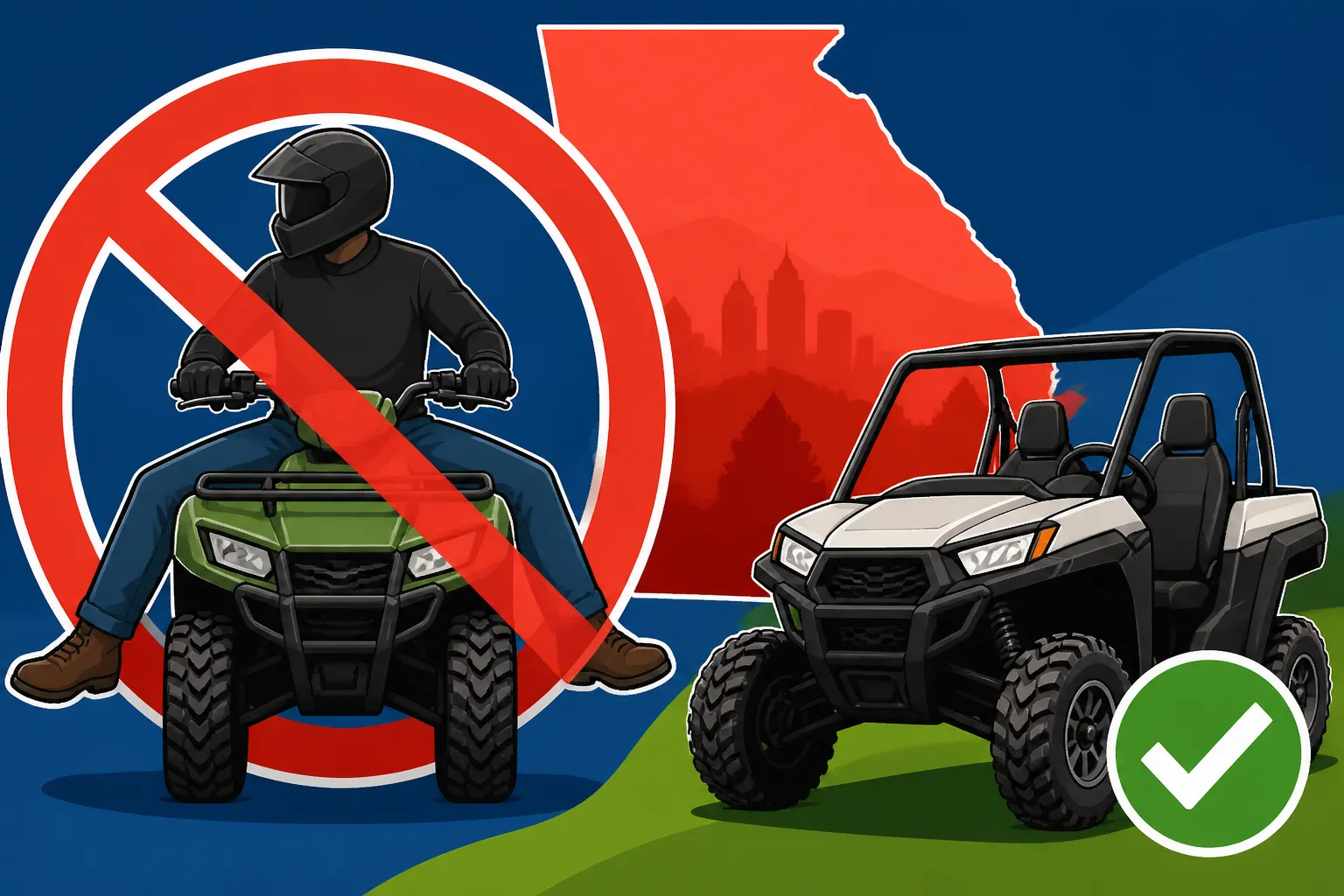
The fundamental distinction Georgia makes often comes down to how you sit in or on the machine, and how it’s controlled. A traditional "motor vehicle" in Georgia implies a seating position where you are typically in the vehicle, often secured by seat belts, and you operate it with a steering wheel. This is a very different experience from an All-Terrain Vehicle (ATV) or dirt bike. ATVs, by their very design, require the operator to straddle the engine and frame, much like a motorcycle. This riding position, combined with handlebar steering, is considered inherent to off-road operation and generally not suited for public road safety by Georgia's current regulations. This critical difference is why you might hear the question: Why a Straddle Seat Disqualifies a Machine.
The "Straddle Seat" Rule Explained
This rule is a cornerstone of Georgia's MPOHV registration requirements. It's not just a minor detail; it's a fundamental aspect of how the state categorizes these vehicles for road use. The intention behind it is rooted in safety and the traditional design of what's considered a "road-worthy" vehicle versus an "off-road" one.
Why the Seat Type Matters for Registration
For a machine to qualify for MPOHV registration in Georgia, it absolutely cannot have a straddle seat. Why? It largely comes down to the control, stability, and operator safety considerations the state deems necessary for any vehicle allowed on public roads, even limited county roads. When you straddle a machine, your legs are positioned on either side of the engine, and your balance is critical for control. This is ideal for agile off-road maneuvering, navigating uneven terrain, and shifting your weight to maintain stability. However, this posture is generally seen as less secure and offers less protection than sitting in a vehicle with a bench or bucket seat, especially in the event of a collision with another vehicle. The state's reasoning suggests that a seated position within a vehicle, often accompanied by seat belts, offers a higher degree of occupant containment and predictable control for road environments. It's a critical point, and one that often catches ATV owners by surprise, leading to questions like [Why Georgia Will Not Register an Ordinary Quad].
Common Machines with Straddle Seats
When we talk about straddle seats, we're primarily looking at machines like traditional ATVs (quads) and dirt bikes. These are purpose-built for off-road excitement, trails, and utility work on private land, where the straddle position allows for dynamic rider input and control.
- Traditional ATVs (Quads): These are the four-wheelers you typically see on trails. The rider sits astride the machine, uses handlebars for steering, and often shifts their body weight significantly during operation. This setup is fantastic for navigating rough terrain but is explicitly excluded from MPOHV registration.
- Dirt Bikes: Similarly, dirt bikes are designed for a straddle riding position, optimal for motocross tracks, trails, and rough terrain. Their design for speed and agility on unpaved surfaces, coupled with the straddle seat, also means they won't meet Georgia's MPOHV criteria. [Georgia Dirt Bikes and Three-Wheelers Are Excluded] from registration for this very reason.
- Three-Wheelers: While less common today, any three-wheeled machine requiring a straddle seat would also be disqualified.
This rule means that if your machine fits this description, you won't be able to get a Georgia MPOHV plate for it, regardless of any other features it might have.
The Impact on Your Riding Plans
So, your machine has a straddle seat, and you can't get an MPOHV registration. Does that mean your riding days in Georgia are over? Absolutely not! It just means you need to be very clear about where and how you can legally operate your machine.
Where Can You Ride a Straddle-Seat Machine?
The good news is that Georgia offers plenty of opportunities for ATV and dirt bike riders, even without MPOHV registration. The key is to understand the distinction between public road use and designated off-road areas.
- Private Land: This is the most straightforward option. If you own private land, or have permission from a landowner, you can ride your straddle-seat ATV or dirt bike freely on that property. This is where most off-road enthusiasts get their kicks, whether it's for recreation, hunting, or farm work. Always ensure you have explicit permission if it's not your land to avoid [Georgia Trespass Law for ATV Riders].
- Designated OHV Trails and Parks: Georgia boasts a number of excellent off-road parks and trail systems, both public and private, specifically designed for ATVs and dirt bikes. Places like [Iron Mountain Resort: Georgia's Biggest Private Park], [Houston Valley OHV Trails in Georgia], and [Beasley Knob OHV Trail System in Georgia] offer miles of challenging and fun trails. These areas are managed specifically for off-highway vehicles, and your straddle-seat machine is welcome, provided you adhere to the park's specific rules, safety gear requirements, and permit fees. Remember, [Georgia OHV Permits: What You Need Before You Ride] for national forest trails.
- Wildlife Management Areas (WMAs): Some WMAs in Georgia allow ATV use on designated roads, often during specific hunting seasons or for access purposes. However, these rules can be very strict regarding when and where you can ride, and often specify that machines must remain on roads, not trails. Always check the specific WMA regulations before heading out, as they vary greatly. You'll need to know [Georgia WMA Rules for ATV Riders].
The crucial takeaway is that while MPOHV registration expands road access for certain machines, the absence of it doesn't limit your ability to enjoy off-road riding in appropriate environments.
The Limitations of "No Registration"
If your straddle-seat machine doesn't qualify for MPOHV registration, it means you cannot legally operate it on public roads in Georgia. This is a big one and often the source of frustration.
- County Roads are Out (Mostly): Without MPOHV registration, you generally cannot ride your ATV or dirt bike on Georgia's county roads. This is a common misunderstanding, as some states have more lenient rules. Georgia's law is quite clear: a straddle-seat machine is not considered a road-worthy vehicle under the MPOHV framework. There are very limited exceptions, such as crossing a county road at a designated point to access private property, but sustained riding on a public thoroughfare is prohibited.
- No State Highways or Interstates Ever: This almost goes without saying, but it's worth reiterating. Even with MPOHV registration, no off-highway vehicle is permitted on state highways or interstates. For a straddle-seat machine, this prohibition is absolute. This often requires careful planning when trailering your machine to a riding spot, as you'll need to consider [Georgia UTV Road Rules by County] if you were able to register.
- Potential Penalties: Operating an unregistered, unqualified off-highway vehicle on public roads can lead to citations, fines, and potentially even impoundment of your machine. Law enforcement takes these rules seriously to ensure public safety. Understanding [Georgia Penalties for an Unregistered Road Machine] is important. It's always best to be informed and comply with the law to avoid any unpleasant surprises.
What Machines Do Qualify for Georgia MPOHV Registration?
So, if straddle seats are out, what kind of machine does meet Georgia's MPOHV requirements? The answer lies in a combination of seating, controls, and other specific dimensions and features designed for a safer, more predictable experience on public roads.
The Non-Straddle Seat Requirement
The most critical distinction for MPOHV eligibility is the seating arrangement. Instead of a straddle seat, a qualifying machine must have a non-straddle seat. This generally means a bench-style seat or individual bucket seats, similar to what you'd find in a car or truck. The idea is to have the operator and any passengers seated in the vehicle, rather than on it. This type of seating provides a more stable and contained environment, especially when combined with the requirement for seat belts.
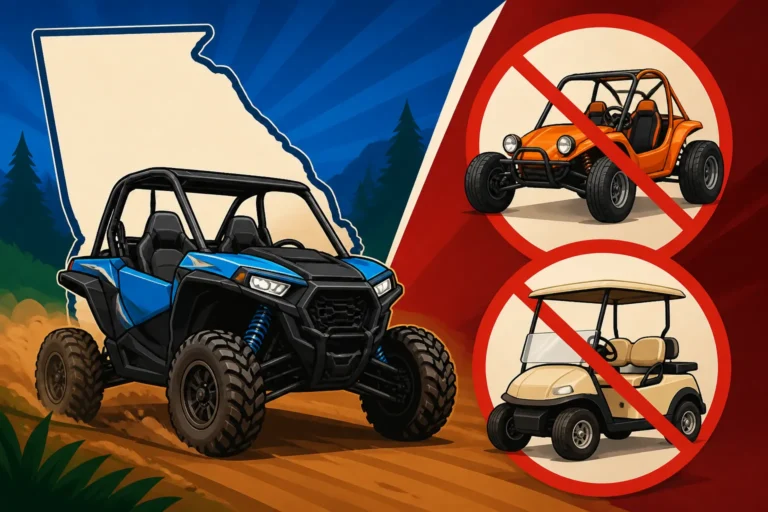
Think of common side-by-sides or UTVs – like a Polaris Ranger, Kawasaki Mule, or John Deere Gator. These vehicles typically feature a bench seat across the front, sometimes with additional seating in the rear, and they almost universally include seat belts. This design makes them fundamentally different from ATVs in the eyes of Georgia's MPOHV law. The rule directly impacts Why a Straddle Seat Disqualifies a Machine.
Other Key MPOHV Eligibility Criteria
Beyond the non-straddle seat, MPOHV registration in Georgia has several other important hurdles that a machine must clear. It's a comprehensive list designed to ensure only suitable vehicles gain limited road access.
- Steering Wheel, Not Handlebars: Just as important as the seat is the control mechanism. MPOHVs must be equipped with a steering wheel, not handlebars. This reinforces the "car-like" control aspect preferred for road use. This is why [Why Handlebars Disqualify a Machine] from registration.
- Width Limits: The machine must not exceed 80 inches in width. This prevents overly wide vehicles from taking up too much of the road. You'll need to be [Measuring Width Against the 80-Inch Limit].
- Weight Limits: There's a gross vehicle weight (GVW) ceiling of 4,000 pounds. This limits the size and bulk of vehicles allowed. Understanding [Weighing a Machine Against the 4,000-Pound Limit] is crucial.
- Payload Capacity: The machine must have a minimum payload capacity of 350 pounds. This speaks to its utility design. [Measuring Payload Capacity Against 350 Pounds] will be part of the checklist.
- Speed Requirements: MPOHVs must be capable of speeds between 25 mph and 65 mph. This excludes both very slow utility vehicles and extremely fast recreational machines. Therefore, [A Machine That Tops Out Below 25 mph] or [A Machine That Exceeds 65 mph] will not qualify.
- Safety Features: Working headlights, brake lights, and rearview mirrors are mandatory for road safety. [Headlights, Brake Lights and Mirrors on the Checklist] are non-negotiable.
- Seat Belts: All designated seating positions must have seat belts. [Factory Seat Belts and the Eligibility Check] will be performed at the tag office.
- Manufacture Date: The machine must have been manufactured on or after January 1, 2000. Older machines are generally excluded. [The January 1, 2000 Build-Date Cutoff] is a hard rule.
Successfully navigating all these requirements is key to getting your UTV registered. When you're ready, having a [Georgia Side-by-Side Registration Checklist] will be invaluable.
Navigating Ownership and Sales Without MPOHV Registration
Since many off-highway vehicles, especially those with straddle seats, don't have titles in Georgia, the process of proving ownership and selling them can be a little different from a titled car or truck. It's crucial to have your ducks in a row to avoid issues.
Proving Ownership for ATVs
In Georgia, ATVs are generally not titled. This means there isn't a single official document like a car title that definitively proves who owns the machine. This can create a bit of a quandary, especially if you buy a used machine or need to demonstrate ownership for insurance purposes.
- Bill of Sale: For most ATV transactions, a comprehensive bill of sale is your primary proof of ownership. This document should include the seller's and buyer's information, the machine's make, model, year, and Vehicle Identification Number (VIN) or serial number, the sale date, and the purchase price. Both parties should sign and date it. It's always a good idea to have this notarized if possible. Even for gifts, a [Gift Letters Between Family Members] document is wise.
- Ownership Affidavit: In some cases, if a bill of sale is missing or insufficient, you might need to complete an ownership affidavit. This is a sworn statement affirming you are the rightful owner. [Georgia Ownership Affidavit for an MPOHV] is a specific form, but the principle applies more broadly for untitled machines.
- Manufacturer's Statement of Origin (MSO/MCO): For new machines, the dealer provides a Manufacturer's Statement of Origin (MSO) or Manufacturer's Certificate of Origin (MCO). This document is like the "birth certificate" for the vehicle and proves its initial ownership from the manufacturer. It's incredibly important and should be kept safe.
It's a common concern, but there are ways of [Proving You Own an ATV in Georgia Without a Title]. Always keep these documents in a safe place, as they are vital for future sales or resolving any disputes.
The Reality of Selling an Unregistered Machine
When you're ready to sell an ATV or other straddle-seat machine that cannot be MPOHV registered, the process is generally straightforward but relies heavily on good documentation.
- Clear Bill of Sale is Key: Just as it's crucial for buying, a detailed bill of sale is paramount when selling. Provide all the relevant details about the machine and ensure both you and the buyer sign it. This protects both parties and establishes a clear chain of ownership. You can find reliable templates for these documents, often through services like LawDepot, which can help you create a legally sound bill of sale.
- Be Transparent About Registration Status: Make it clear to any potential buyer that the machine does not qualify for MPOHV registration in Georgia and therefore cannot be legally operated on public roads. This manages expectations and prevents future disputes.
- Value and Market: The market for unregistered ATVs and dirt bikes is strong for private land use, hunting, farm work, and dedicated trail riding. Understand that while the lack of road legality might affect some buyers, there's a dedicated segment of buyers who only intend to use these machines off-road.
The table below summarizes the key distinctions related to straddle seats and MPOHV registration in Georgia.
| Feature / Category | Straddle-Seat Machine (e.g., ATV, Dirt Bike) | Non-Straddle-Seat Machine (e.g., UTV, Side-by-Side) |
|---|---|---|
| Seating Type | Operator straddles the machine | Operator sits in a bench or bucket seat |
| Steering Mechanism | Handlebars | Steering wheel |
| Georgia MPOHV Registration | NOT Eligible | Potentially Eligible (if all criteria met) |
| Road Use (Georgia) | Generally NOT permitted on public roads | Permitted on designated county roads (with MPOHV reg) |
| Primary Use | Off-road recreation, hunting, farm work on private land/trails | Utility, recreation, limited county road access |
| Typical Legal Ownership Proof | Bill of Sale, MSO/MCO, Ownership Affidavit | Bill of Sale, MSO/MCO, Certificate of Registration (after MPOHV reg) |
Disclaimer
This article is for general informational purposes only and does not constitute professional advice. Laws, prices and regulations vary by location and change over time. Consult a qualified professional for guidance on your specific situation.