Why Georgia’s MPOHV Rules Demand a Non-Straddle Seat
It's easy to get lost in the alphabet soup of Georgia's off-highway vehicle rules, and nothing seems to cause more head-scratching than the requirement for a "non-straddle seat" for a machine to qualify as a Motorized Play Vehicle (MPOHV). Many folks who just want to legally use their side-by-side on approved county roads find themselves scratching their heads over this seemingly specific detail. This guide will thoroughly explain why Georgia's MPOHV regulations specifically demand a non-straddle seat, how it impacts what you can register, and what this means for your machine.
Understanding Georgia's MPOHV Designation
Before we dive into the specifics of seating, it’s really helpful to grasp why Georgia created the MPOHV category in the first place. For years, folks with side-by-sides, commonly known as UTVs, found themselves in a legal gray area when it came to using their machines anywhere but private land or designated off-road parks. Traditional ATVs (all-terrain vehicles) were pretty clearly excluded from public road use, but UTVs, with their car-like seating and controls, seemed different. The MPOHV designation was a direct response to this need, creating a specific class for certain utility and recreational vehicles that could be registered and, under strict conditions, legally operated on Georgia's county roads.
The Legislative Goal Behind MPOHV
The primary goal behind establishing the MPOHV category was to create a pathway for vehicles that offered a greater degree of stability and safety features than conventional ATVs, making them more suitable for limited road use. Lawmakers in Georgia recognized that many residents, especially in rural areas, relied on these types of machines for everything from farm work to accessing hunting leases, and sometimes, a short hop on a county road was unavoidable. By setting clear criteria, the state aimed to permit this limited road access while prioritizing public safety. It wasn't about making every off-road machine street-legal, but about identifying a subset that could meet a higher bar for roadworthiness. You can learn more about this by reading [Georgia MPOHV Registration Explained].
This legislative intent focused heavily on features that distinguish UTVs from ATVs, making the former more akin to a small utility vehicle than a recreational dirt bike. Think about the basic design principles: a UTV typically has a roll cage, seatbelts, and seating arranged side-by-side, much like a small car. These aren't just cosmetic differences; they fundamentally alter the dynamics of the vehicle and the safety of its occupants, particularly in the event of a rollover or collision. The rules were crafted to acknowledge these inherent safety advantages, hence the very specific requirements for features like steering wheels, seat belts, and, crucially, the non-straddle seat.
Differentiating MPOHVs from Traditional ATVs
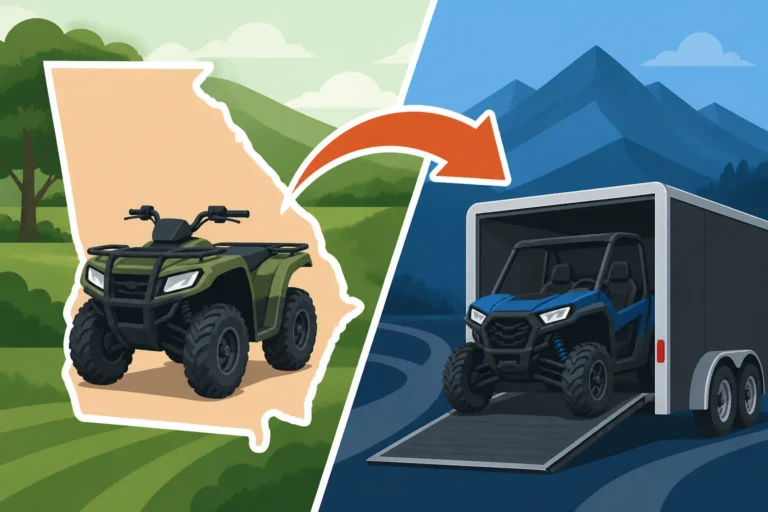
The non-straddle seat requirement is one of the most significant ways Georgia differentiates a registrable MPOHV from a traditional ATV. When you picture a typical ATV, you immediately think of a rider straddling the engine and seat, much like a motorcycle. This riding position is central to how an ATV is controlled—the rider uses their body weight to shift and balance, leaning into turns, and absorbing bumps with their legs. It’s an active and engaged style of riding that is highly effective for off-road maneuvering but presents different safety considerations on a paved road surface, especially when sharing it with larger vehicles.
In contrast, an MPOHV, by design, features bucket seats or bench seating, where the operator (and any passenger) sits in the vehicle rather than on it. This seemingly simple difference has profound implications for how the machine is operated and how it behaves. The non-straddle seat is usually accompanied by a steering wheel, foot pedals for acceleration and braking, and often a full roll-over protective structure (ROPS) and seatbelts. These elements combine to create a driving experience much closer to that of a small car or utility truck, which is deemed more predictable and safer for limited road use than the dynamic, body-controlled operation of an ATV. Understanding [What MPOHV Actually Stands For] helps clarify this distinction even further.
The Core Requirement: Non-Straddle Seating
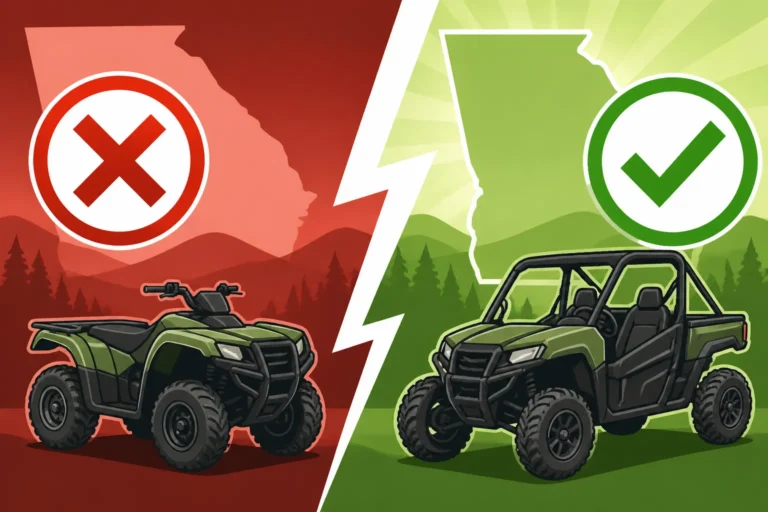
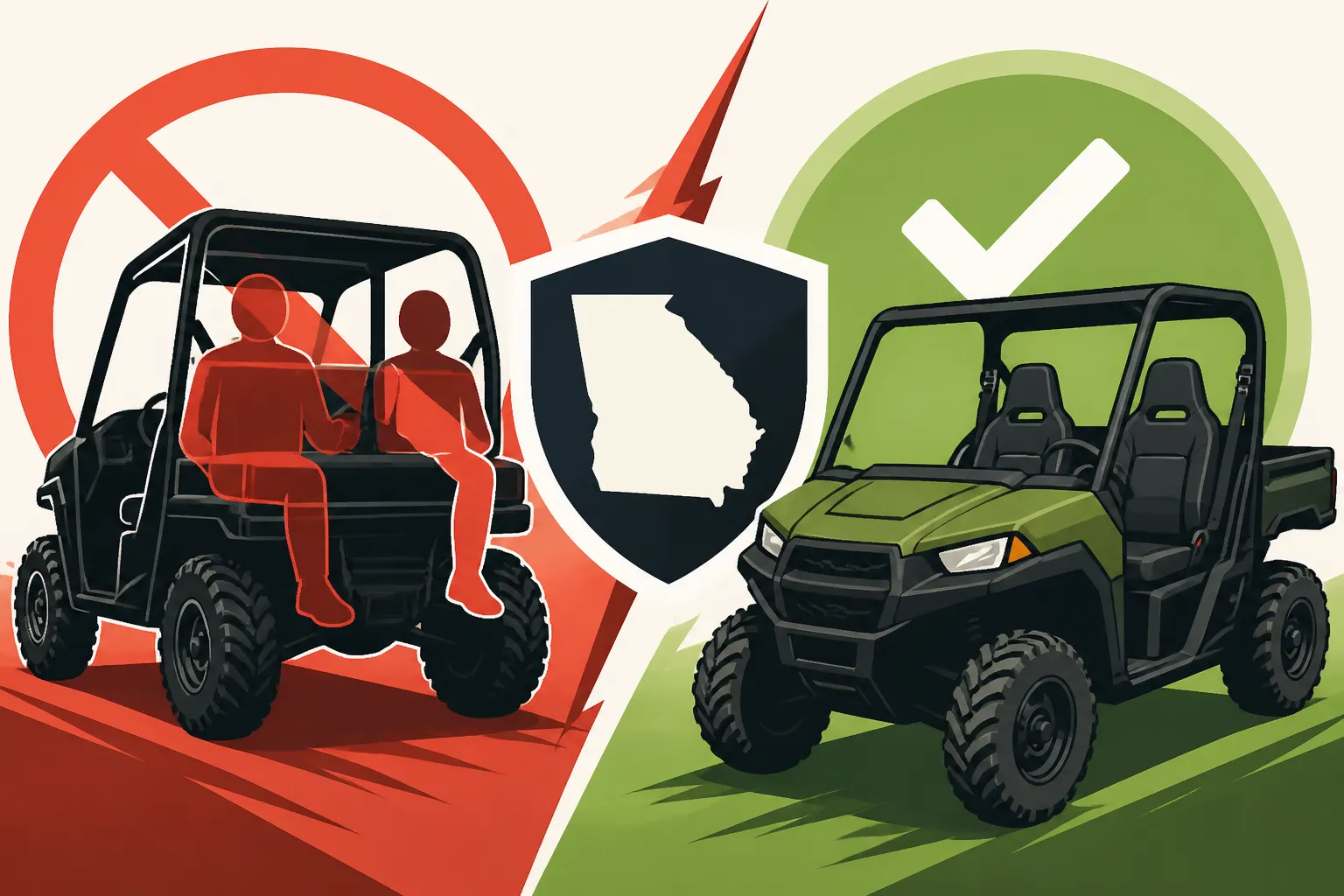
So, let's get right to the heart of the matter: Georgia's MPOHV rules explicitly state that a machine must have a non-straddle seat to be eligible for registration. This isn't just a suggestion; it's a hard and fast rule that will be checked at the county tag office. If your machine requires you to sit on it with a leg on either side of the engine or frame, like a horse, it simply won't qualify. This immediately excludes the vast majority of traditional quad-style ATVs, even those with four wheels and similar engine sizes to eligible side-by-sides.
What Constitutes a "Non-Straddle" Seat?
A "non-straddle" seat, in the context of Georgia's MPOHV rules, means seating that allows the operator and passengers to sit within the confines of the vehicle, typically with their legs positioned in front of them, rather than astride the vehicle's body. Think of a car, a truck, or even a golf cart. The most common configuration you'll see meeting this requirement is a side-by-side seating arrangement, which can be individual bucket seats or a continuous bench seat. The key is that the rider is seated in a passenger compartment, secured by a seatbelt, and operating the machine with a steering wheel and pedals.
This design intention is clear: to mimic the safer, more stable environment of a small automobile rather than the dynamic, exposed nature of an ATV. Even if a vehicle has four wheels and is used off-road, if it has a seat that you straddle, it's out. This includes many smaller "sport" quads, utility ATVs, and even some three-wheeled vehicles. The rule is strictly applied because it directly correlates to the fundamental safety philosophy underpinning the MPOHV designation, prioritizing occupant containment and a familiar driving interface for road use.
The Safety Philosophy Behind the Design
The demand for a non-straddle seat isn't arbitrary; it's deeply rooted in safety engineering and road use dynamics. When you operate a vehicle with a straddle seat, your body acts as a significant part of the suspension and steering system. Your legs absorb bumps, your hips shift your weight, and your arms and shoulders actively control handlebars. This works brilliantly in dynamic off-road environments where agility and rider input are paramount. However, on a paved or gravel county road, particularly when interacting with other traffic, this type of control can be less predictable and potentially more prone to instability.
A non-straddle seat, combined with a steering wheel and often a roll cage, fundamentally changes the vehicle's safety profile. In a side-by-side (UTV), the operator and passengers are contained within a protective structure, often held in place by multi-point seatbelts. This containment significantly reduces the risk of ejection in a rollover or collision, which is a major concern with straddle-seat vehicles. The more stable, car-like driving position and controls also contribute to a more predictable driving experience on public roads, where sudden shifts in weight or balance might be unexpected by other drivers. This is the core reason [Why a Straddle Seat Disqualifies a Machine] from MPOHV registration.
Why Straddle Seats Are Excluded
The exclusion of straddle-seat vehicles from Georgia's MPOHV registration is a deliberate policy choice, not an oversight. It's about drawing a clear line between vehicles designed for highly dynamic, rider-active off-road use and those considered more suitable for limited, slower-speed road operations. The differences in rider posture, control mechanisms, and passenger capabilities are all key factors in this distinction.
Rider Posture and Control Differences
The riding posture on a straddle-seat vehicle is inherently different and leads to a distinct method of control. On a traditional ATV, the rider's legs are typically used to grip the machine, helping to maintain balance and provide feedback. The handlebars require active upper body engagement to steer and manage the vehicle over varied terrain. This provides incredible agility and allows the rider to react quickly to obstacles or changes in traction. However, this active posture means the rider is more exposed and relies heavily on their personal skill and reflexes to manage the machine, especially at speed or in unexpected situations.
For an MPOHV with non-straddle seating, the rider's posture is more relaxed and contained. They sit upright, secured by a seatbelt, with their hands on a steering wheel. This setup offers a more stable and less physically demanding operation. While it might reduce the raw, visceral connection to the terrain that an ATV provides, it enhances stability and predictability on a road surface. The steering wheel offers a more familiar and less sensitive control input compared to handlebars, which can be advantageous when navigating road hazards or maintaining a straight line at modest speeds alongside other traffic. This fundamental difference in control and posture is a cornerstone of the MPOHV eligibility rules.
Passenger Capacity and Safety
Another critical aspect of the non-straddle seat requirement revolves around passenger capacity and safety. Most traditional ATVs are designed for a single rider, or sometimes a second rider on a specially designed "two-up" model where the passenger still straddles the machine behind the operator. In both cases, the passenger is largely exposed and relies on handholds and the operator's skill to stay safely aboard. Adding a passenger to a straddle-seat vehicle significantly alters its balance and handling characteristics, especially for inexperienced riders or on uneven terrain.
MPOHVs, on the other hand, are often designed from the ground up to carry multiple passengers, typically two, three, or even four, seated side-by-side or in rows. Each passenger has their own designated seat and, crucially, their own seatbelt. The non-straddle seating allows for a safer, more stable way to transport multiple people, much like a car. The roll-over protective structure (ROPS) that usually accompanies these seating arrangements provides an additional layer of protection, something generally absent on a straddle-seat ATV. This focus on safer, more contained multi-passenger transport aligns directly with the intent of allowing MPOHVs limited road access, where the safety of all occupants, including children, is a higher priority.
Impact on Machine Types and Road Access
The non-straddle seat rule, along with other MPOHV criteria like a steering wheel and seatbelts, has a direct impact on which types of off-highway vehicles can gain legal access to Georgia's county roads. This means that if you've been eyeing a particular machine for both trail riding and occasional errands on rural roads, you need to understand how its design stacks up against these regulations.
Common Vehicles That Meet the Seat Rule
When you think of vehicles that naturally meet the non-straddle seat requirement, side-by-sides (UTVs) immediately come to mind. Machines like the Polaris Ranger, Kawasaki Mule, John Deere Gator, Can-Am Defender, and Honda Pioneer are perfect examples. These utility-focused or recreational machines are built with bench or bucket seating, a steering wheel, foot pedals, and often a robust roll cage. They are designed for occupants to sit side-by-side, much like in a small car or pickup, and usually come equipped with factory-installed seatbelts for all seating positions.
Many modern UTVs also come with other features that align with MPOHV eligibility, such as headlights, brake lights, and rearview mirrors, making them well-suited for the limited road use permitted by the designation. These are the machines that Georgia's MPOHV rules were largely intended to cover, providing a clear path for their registration and use on county road systems, which you can read more about in [Registering a Side-by-Side in Georgia]. If you're considering a new purchase specifically for this purpose, these types of vehicles should be at the top of your list.
Connecting Seat Type to Road Operation
The connection between the seat type and eligibility for road operation is fundamental to Georgia's MPOHV framework. It's not just about what kind of seat is present, but what that seat implies about the vehicle's overall design, stability, and control. A non-straddle seat signifies a more contained vehicle with a lower center of gravity (often due to the wider stance of a UTV), and a driving interface that is more familiar to typical automobile drivers. These characteristics are perceived to reduce the risk associated with operating these machines on public roads where they might encounter cars, trucks, and other standard vehicles.
For instance, consider a scenario where you're driving your registered side-by-side on a county road to get to a hunting spot. The non-straddle seat, coupled with a steering wheel and seatbelt, means you're operating the machine in a manner similar to a small vehicle. This predictability is crucial for road safety. In contrast, operating a straddle-seat ATV, which relies on dynamic body shifts for control, could be less intuitive and potentially more hazardous in a mixed-traffic environment. The regulations surrounding the non-straddle seat, therefore, directly support the goal of creating a safer environment for MPOHV operators and other road users. This also links to broader discussions around [Georgia UTV Road Rules by County].
Navigating the Registration Process with This Rule
Understanding the non-straddle seat requirement is absolutely essential before you even think about heading to your local county tag office. It’s one of the first things they'll look for, and if your machine doesn't meet this specific criterion, your journey to an MPOHV registration plate will end there. Taking the time to verify this and other eligibility points beforehand will save you a lot of frustration and wasted effort.
Verifying Your Machine's Seat Type for MPOHV
The best way to verify if your machine has a non-straddle seat is to simply sit on it. Does it feel like you're sitting in a chair, with your legs forward, or are you straddling a central component, like the engine or frame? If your legs are positioned to the sides of the main body, it's a straddle seat, and your machine won't qualify. If you're seated with legs together, and there's usually a floorboard, then it's a non-straddle seat. Most side-by-sides will clearly fit the non-straddle definition, while all traditional ATVs will not.
Beyond just the seat, consider the other features that typically accompany a non-straddle seat, such as a steering wheel (not handlebars), foot pedals (not hand controls for brakes and throttle, except sometimes a foot brake), and factory-installed seatbelts. These are all part of the larger MPOHV eligibility checklist. If you're unsure, consult your owner's manual or look up your specific model online. This thorough check is a critical part of the [Georgia MPOHV Eligibility: The Eight-Point Test] which your machine must pass. For those needing to document their machine's features, especially if buying or selling privately, platforms like LawDepot can provide customizable bill of sale templates that allow you to clearly detail these characteristics.
What Happens If Your Machine Doesn't Qualify
If your machine has a straddle seat, it simply cannot be registered as an MPOHV in Georgia. This means it will not be issued an MPOHV plate or decal, and you will not be able to legally operate it on county roads. While this might be disappointing, it's a firm rule that the county tag office must enforce. There's no workaround, no special waiver for straddle-seat vehicles, and no amount of additional accessories will change its fundamental design characteristic in the eyes of the law. This is the core reason [Why a Four-Wheeler Cannot Be Registered in Georgia] if it's a traditional ATV.
For owners of straddle-seat ATVs, your riding will continue to be restricted to private land, designated off-road parks, or approved trails within national forests where such machines are permitted. These vehicles remain excellent for their intended purpose of off-road recreation and utility, but they just aren't the type of machine Georgia has deemed suitable for public road use. This distinction is paramount for both safety and legal compliance. Should you decide to sell your non-qualifying ATV and purchase an MPOHV, having clear documentation like a bill of sale, perhaps generated using a service like LawDepot, can smooth the transaction.
Operational Distinctions for Registered MPOHVs
Once your MPOHV is successfully registered, the non-straddle seat continues to play a role in how you should operate your machine, particularly concerning passengers and general road behavior. The design choices that allowed your vehicle to qualify are also those that guide its safe and legal use on Georgia's county roads.
Passenger Guidelines and Seatbelt Use
With a non-straddle seat, MPOHVs are designed to safely accommodate passengers, often more than one. However, it's crucial to adhere to the manufacturer's specified seating capacity and always ensure that every occupant is properly secured with a seatbelt. Georgia's MPOHV rules generally require the use of seatbelts when operating on public roads, mirroring automotive safety standards. This means if your MPOHV has three seating positions, all three occupants must be buckled in. You should never allow more passengers than there are designated seats with seatbelts, even if it seems like there's "extra room."
This emphasis on seatbelts and designated seating is a direct benefit of the non-straddle seat design. Unlike ATVs where passengers are more exposed, MPOHVs offer a more contained environment. However, this protection is only fully realized when seatbelts are used correctly. Ignoring seatbelt use not only puts occupants at severe risk in a collision or rollover but could also result in citations from law enforcement. The presence of factory seatbelts is, in fact, one of the eligibility criteria your machine will be checked for during the MPOHV registration process.
Driving Behavior and Road Responsibilities
Operating a registered MPOHV on Georgia county roads comes with significant responsibilities, and the non-straddle seat design underpins some of these. Because the vehicle is driven more like a car, drivers are expected to operate it with the same caution and adherence to traffic laws as any other vehicle on the road. This includes obeying speed limits, traffic signs, and signals, yielding right-of-way, and signaling turns. The stability offered by the non-straddle seat and wider stance is meant to make these machines more predictable in traffic, but it does not make them impervious to typical road hazards.
Even though MPOHVs are allowed on county roads, they are still considered specialized vehicles and should be operated defensively. Remember that other drivers may not be accustomed to seeing side-by-sides on the road. The car-like controls and seating of an MPOHV are intended to facilitate a safe and predictable driving experience, but it’s up to the operator to exercise good judgment and maintain awareness of their surroundings. For any official paperwork related to vehicle use or ownership, such as a detailed affidavit for proving ownership without a title, reliable document services like LawDepot can be very helpful to ensure all legal aspects are covered.
The Future of MPOHV Registration and Seating Rules
Georgia's MPOHV registration began in December 2023, marking a significant change for off-highway vehicle owners. While the non-straddle seat rule is firmly in place now, it's always good to understand that regulations can evolve. However, given the safety-centric nature of this specific rule, it's highly likely to remain a cornerstone of MPOHV eligibility.
Why This Rule Will Likely Endure
The non-straddle seat requirement isn't just a random detail; it's fundamental to distinguishing MPOHVs from traditional ATVs, which are widely recognized as having different safety profiles for road use. The state's intent was to carve out a specific category for machines that, by their design, offer more stability and occupant protection on paved surfaces. This includes the containment offered by bucket or bench seats, the predictable control of a steering wheel, and the crucial protection of seatbelts and a roll cage. These elements are inherently tied to the non-straddle seat design.
Given that road safety was the primary driver for creating the MPOHV category, it's highly improbable that Georgia would relax a rule as fundamental as the non-straddle seat. Doing so would effectively blur the lines between ATVs and UTVs for road-legal purposes, potentially reintroducing the very safety concerns the legislation sought to mitigate. Therefore, if you are looking to purchase a machine with the intent of registering it as an MPOHV, you can be confident that the non-straddle seat will remain a non-negotiable requirement. You can see when this all began by checking out [Georgia MPOHV Registration Started December 2023].
What to Expect at the County Tag Office
When you visit your [Georgia County Tag Office Steps for an MPOHV], the staff will meticulously review your vehicle against all the eligibility criteria, and the seating configuration will be high on that list. They will visually inspect the machine to ensure it has a non-straddle seat, a steering wheel, seatbelts, and other required safety equipment. This isn't just a paper check; in many cases, they will need to physically verify these features.
It's absolutely critical to arrive prepared with a machine that undeniably meets this and all other criteria. If your machine fails the visual inspection on the non-straddle seat, the registration process will halt. Don't try to argue the point; the rules are explicit. Instead, focus on bringing a compliant vehicle and all the necessary paperwork. This includes proof of ownership, insurance, and identification. Understanding all aspects of [Georgia MPOHV Eligibility: The Eight-Point Test] will greatly assist you in preparing for this visit and ensuring a smooth registration experience.
| Feature Type | Straddle-Seat Vehicle (ATV) | Non-Straddle Seat Vehicle (MPOHV/UTV) |
|---|---|---|
| Seating Type | Rider sits astride, like a motorcycle | Rider sits in a seat (bench/bucket) |
| Control Interface | Handlebars, hand throttles & brakes | Steering wheel, foot pedals |
| Passenger Capacity | Typically single rider, limited 2-up | Often 2+ passengers (side-by-side) |
| Occupant Protection | Open, rider exposed | Often roll cage, seatbelts standard |
| Riding Posture | Active, body-weight dependent | Contained, car-like |
| Road Legality (GA) | Generally not street legal | Registrable for county roads (MPOHV) |
Disclaimer
This article is for general informational purposes only and does not constitute professional advice. Laws, prices and regulations vary by location and change over time. Consult a qualified professional for guidance on your specific situation.