Georgia Requires Seat Belts on a Registered Machine
So, you've heard about the new MPOHV registration in Georgia and you're dreaming of legally taking your side-by-side or UTV on those county roads. It’s an exciting prospect, but as you start digging into the rules, you might hit a snag – specifically, the requirement for seat belts. This can be a real head-scratcher, especially if your machine isn't quite configured for it, or if you're trying to understand what kind of seat belts Georgia actually wants. This guide is here to walk you through exactly why seat belts are non-negotiable for registering your machine in Georgia and what this means for your hopes of hitting the open road.
Understanding Georgia's Seat Belt Requirement for MPOHVs
It's easy to think of your utility task vehicle (UTV) or side-by-side primarily as an off-road beast, built for trails, fields, and tough jobs. But the moment you consider registering it as a Multi-Purpose Off-Highway Vehicle (MPOHV) in Georgia, the state views it differently. Suddenly, your machine is taking on a new persona – one that involves sharing the road with passenger cars, trucks, and other conventional vehicles. And when you’re talking about road use, safety features become paramount, which is precisely why seat belts are at the top of the list for MPOHV eligibility.
Why Seat Belts Are Non-Negotiable for Registration
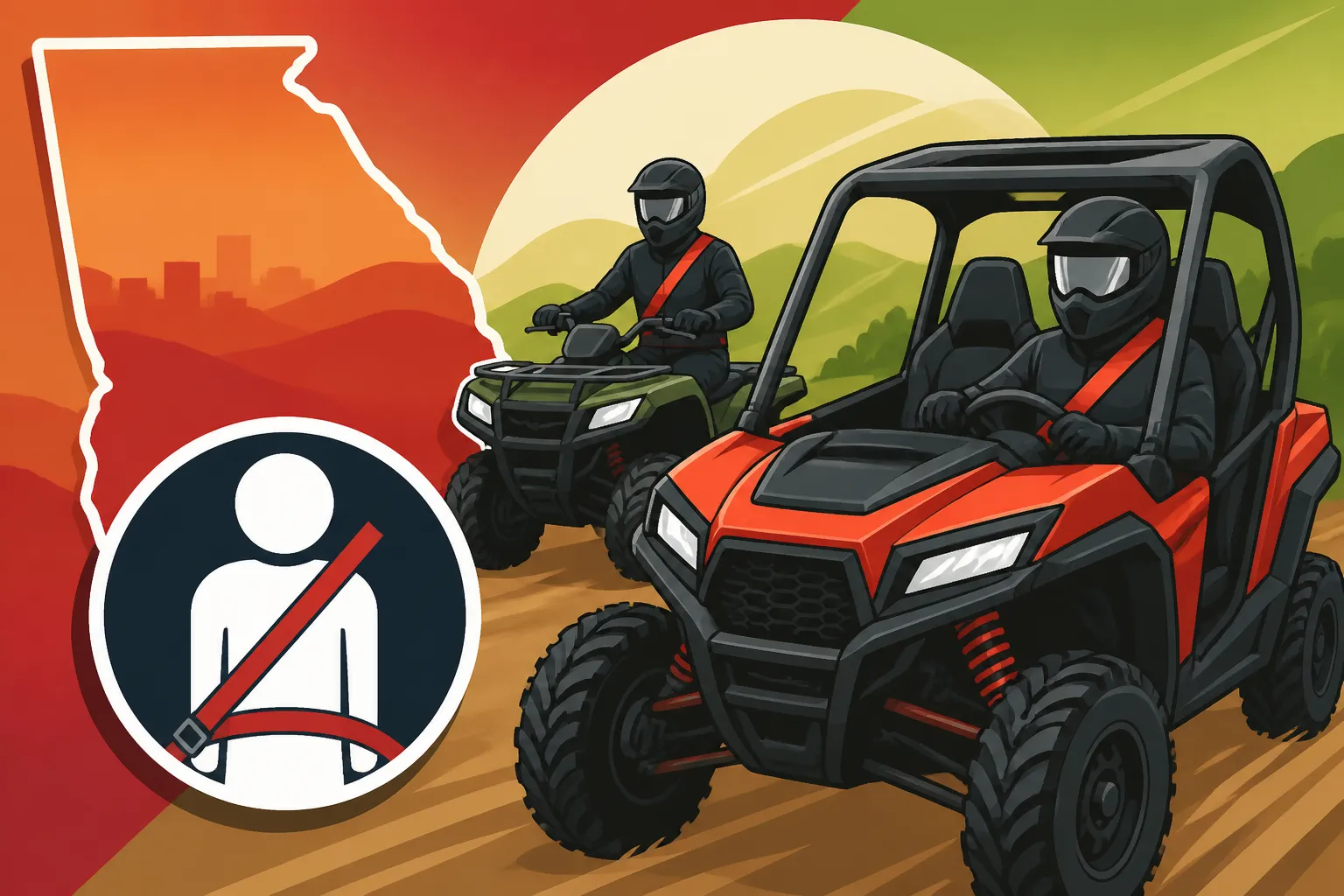
The state of Georgia isn't just throwing random rules at us; there's a clear intent behind requiring seat belts for MPOHV registration. It boils down to public safety. When you venture onto a county road, even at lower speeds, you're exposing yourself and your passengers to traffic. In the event of an impact, a rollover, or even just a sudden stop, a seat belt is your first line of defense against being ejected from the vehicle or thrown around inside the cab. Without this crucial restraint, the risk of serious injury dramatically increases.
This requirement really underscores the fundamental difference between an unregistered, purely off-road machine and one that gains limited road-legal status. For decades, many of us have ridden ATVs and UTVs without thinking about seat belts, because our riding environment was typically isolated from public roads. But with the introduction of MPOHV registration, Georgia is essentially saying, "If you want to operate this type of machine on roads, it needs to meet a baseline of safety comparable to other road-going vehicles." It's a shift from the wild freedom of the trails to the regulated environment of public thoroughfares.
Imagine you're driving your side-by-side on a county road, and suddenly a deer jumps out. You slam on the brakes, or swerve. If you or your passenger aren't properly secured, you could be seriously hurt. The state's legislation, detailed in various parts of the Georgia Code, aims to mitigate these risks by mandating a common-sense safety feature that most of us associate with car travel. So, while it might feel like an extra hoop to jump through, it's firmly rooted in the desire to keep you and your loved ones safer when you're using your registered machine on designated public ways.
Factory-Installed vs. Aftermarket Seat Belts
When the Georgia Department of Revenue (DOR) looks at your MPOHV for registration, they're generally looking for standard, manufacturer-installed safety equipment. This includes seat belts that were part of the original vehicle design and assembly. These are typically robust, properly anchored, and designed to meet specific safety standards. If your side-by-side or UTV came from the factory with seat belts already in place, you’re usually in good shape in this regard. This shows that the manufacturer engineered the vehicle with occupant restraint in mind.
The waters get a bit murkier when it comes to aftermarket seat belt installations. While many riders add upgraded harnesses or additional restraints for extreme off-road use, the state's MPOHV registration requirements are focused on factory-level compliance. The challenge with aftermarket additions is proving their integrity and proper installation to the satisfaction of the county tag office. It’s not just about having a seat belt; it’s about having one that is securely mounted, functional, and appears to be an integrated part of the vehicle’s design as intended for passenger safety on a public road.
If you have a machine that didn't originally come with seat belts, or if they've been modified significantly, you might face some hurdles. The spirit of the law leans towards machines that were designed with these features from the start, rather than those retrofitted later without official certification. Trying to simply bolt in some universal seat belts yourself might not cut it, as the tag office personnel are looking for visible evidence of factory-level safety provisions. It’s always best to check with your specific county tag office if you have any doubts about your machine’s seat belt setup, as their interpretation and inspection processes can sometimes vary slightly.
The Broader Eligibility Checklist: Beyond Seat Belts
While seat belts are a critical piece of the MPOHV puzzle, they're just one item on a much longer checklist that Georgia has established for these machines. The state wants to ensure that any vehicle given limited road access can function safely within the flow of traffic, even if it's only on county roads. This means a suite of other features must also be present and operational, painting a comprehensive picture of road-readiness. You can find many of these requirements detailed in the article [Georgia MPOHV Eligibility: The Eight-Point Test].
A Quick Look at Other Key Road-Use Safety Features
Beyond the seat belts, Georgia's MPOHV eligibility criteria include several other essential safety components that are standard on most street-legal vehicles. For instance, your machine needs to have proper [Headlights, Brake Lights and Mirrors on the Checklist]. Imagine driving at dusk or dawn, or needing to signal a stop; these are crucial for communication with other drivers and for your own visibility. Just like in a car, working headlights are vital for seeing and being seen, and functioning brake lights clearly signal your intentions to anyone behind you. Rearview mirrors are also a must, allowing you to monitor traffic without having to constantly turn your head, which is especially important in dynamic road environments.
Moreover, the law also specifies requirements for the machine's speed capabilities. It needs to be able to go at least 25 mph, but not exceed 65 mph. This [Georgia's 25 to 65 mph Speed Requirement] helps ensure that MPOHVs can keep up with the typical flow of traffic on lower-speed county roads without being a hazard, but also prevents them from being high-speed vehicles that belong on state routes or interstates. The combination of these features – adequate lighting, visibility, appropriate speed, and, of course, seat belts – forms the baseline of safety that Georgia expects from any MPOHV. Without all of these working in concert, your machine simply won't qualify for that precious MPOHV registration.
Machines That Don't Fit the Mold: ATVs and Dune Buggies
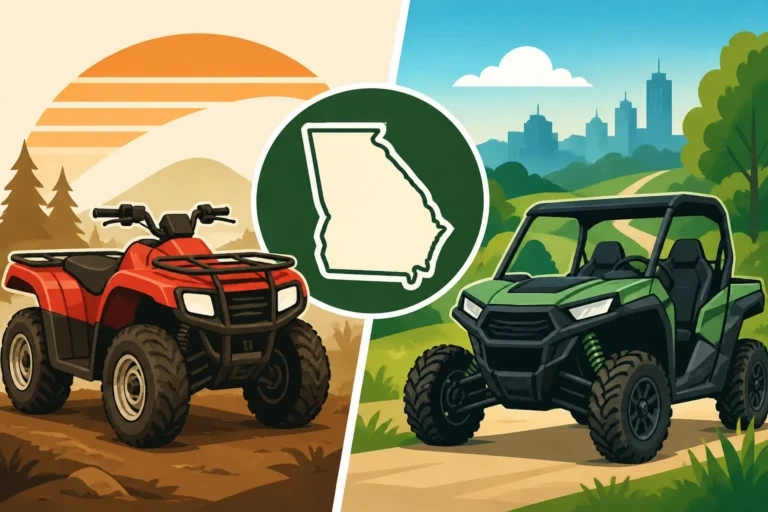
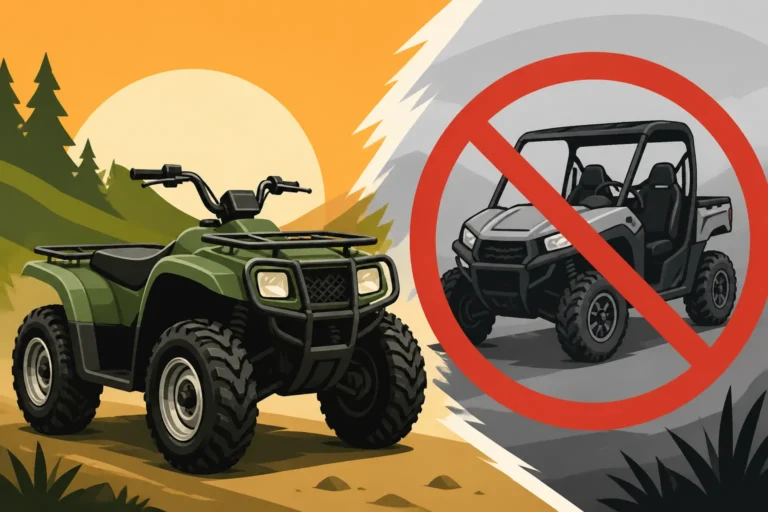
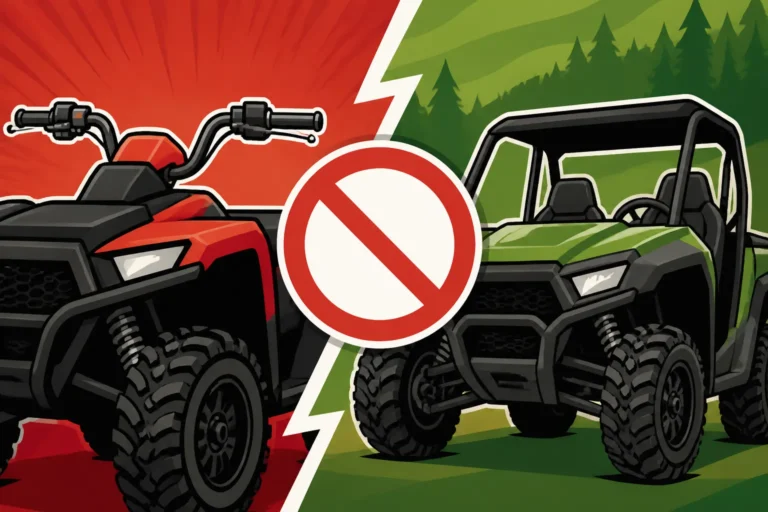
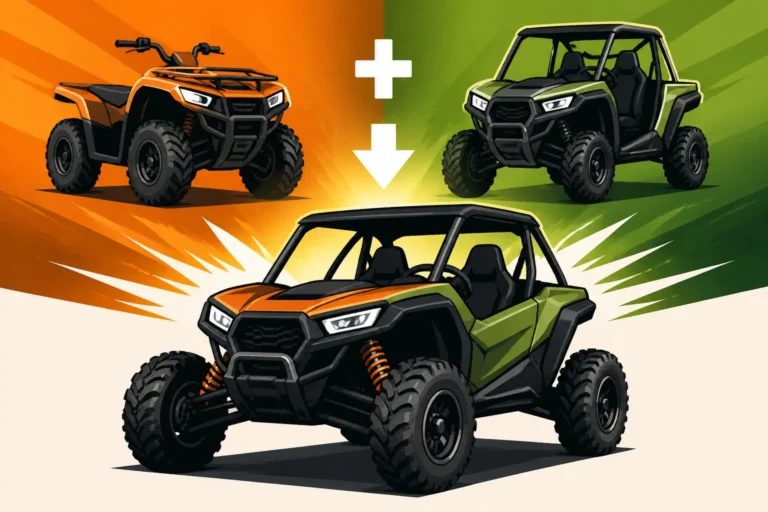
It's important to clarify that not all off-highway vehicles can become MPOHVs, and many popular types simply don't make the cut, regardless of whether you try to add seat belts or not. Traditional ATVs, or "quads," are a prime example. While incredibly popular for recreation and utility, their fundamental design prevents them from meeting Georgia's MPOHV criteria. One major reason is the straddle seat. The law specifically states that an MPOHV must have a non-straddle seat. This means you sit in it, like a car, not on it, like a motorcycle or traditional ATV. This design difference is why a traditional quad will never be able to meet the MPOHV definition, as explained further in [Why a Straddle Seat Disqualifies a Machine].
Similarly, handlebars are another disqualifying factor for conventional ATVs. Georgia's MPOHV definition requires a steering wheel, not handlebars. This is another key distinction that separates machines like side-by-sides from traditional ATVs, and you can learn more about it in [Why Handlebars Disqualify a Machine]. These two features alone immediately exclude the vast majority of four-wheelers and dirt bikes from MPOHV eligibility. Furthermore, other types of off-road vehicles like dune buggies (unless they meet the specific MPOHV criteria, which few do) and even golf carts (which often have their own separate registration and road use rules) are generally excluded from MPOHV classification. This ensures that the MPOHV category is specifically for machines like UTVs and side-by-sides that closely resemble small utility vehicles, rather than traditional recreational off-roaders. For further clarity on specific exclusions, you might look into articles like [Georgia Dirt Bikes and Three-Wheelers Are Excluded] and [Georgia Dune Buggies and Golf Carts Are Excluded].
Navigating the Registration Process with Seat Belt Compliance
Okay, so you understand why seat belts are necessary and that your machine needs them. Now, let's talk about the practical side of getting your MPOHV registered and demonstrating that your seat belts (and everything else) meet the state's expectations. This isn't just about having the features; it's about proving to the Department of Revenue and your county tag office that you've checked all the boxes.
Documentation You'll Need to Prove Compliance
When you head to your county tag office to register your MPOHV, you'll need a stack of paperwork. While there isn't usually a specific "seat belt certificate" you'll provide, the entire application process and the forms involved implicitly confirm your machine's compliance. The primary form you'll interact with is the Georgia Form MV-OHV. This application asks for various details about your machine and, by submitting it, you're essentially attesting that your vehicle meets all the eligibility criteria, including having seat belts. Understanding [Georgia Form MV-OHV and What It Asks] is crucial, as it’s the gateway to registration.
Beyond the application itself, you'll need proof of ownership, such as a bill of sale or manufacturer's statement of origin, to verify the machine's make, model, and year, which can indirectly confirm its factory features. If you bought your machine privately and are missing formal documentation, you might need to create an ownership affidavit. Resources like LawDepot can provide templates for these types of legal documents, ensuring you have the proper paperwork in order for the tag office. This overall documentation package helps the state verify that your MPOHV is what it claims to be and that it was manufactured with the necessary features, including those vital seat belts.
Here’s a quick overview of the key MPOHV eligibility criteria that your machine's design and features, including seat belts, help you meet:
| Feature/Requirement | Description | Why it matters for MPOHV Registration |
|---|---|---|
| Non-Straddle Seat | Designed so the operator and any passenger sit in the vehicle, similar to a car, not on it. | Differentiates MPOHVs from traditional ATVs/motorcycles, emphasizing a more car-like, stable driving position for road use. |
| Steering Wheel | Uses a steering wheel for control, rather than handlebars. | Another key distinction from traditional ATVs, aligning with conventional road vehicle controls. |
| Seat Belts | Equipped with manufacturer-installed or equivalent occupant restraint systems for all seating positions. | Essential for occupant safety, preventing ejection or injury in case of collision or sudden stop on public roads. |
| Headlights & Brake Lights | Functional headlights for visibility and brake lights to signal stopping. | Crucial for safe operation during varying light conditions and for communicating with other drivers. |
| Rearview Mirrors | At least one functional rearview mirror (usually two are expected) to monitor traffic behind the vehicle. | Enhances situational awareness and safety on public roads. |
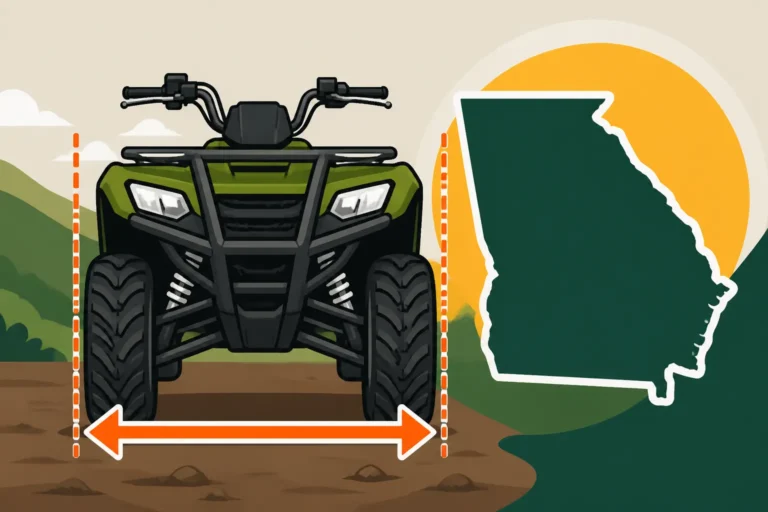
| Width Limit | Must not exceed 80 inches in width. | Ensures the machine fits safely within standard road lanes and shoulders. |
| Speed Capabilities | Capable of exceeding 25 mph but not exceeding 65 mph. | Allows the MPOHV to integrate safely into county road traffic speeds without being too slow or too fast. |
| Weight/Payload Limits | Gross Vehicle Weight (GVW) not exceeding 4,000 lbs, and payload capacity not less than 350 lbs. | Ensures the vehicle is substantial enough for road use but still within the defined "off-highway" class. |
| Manufacture Date | Must have been manufactured on or after January 1, 2000. | Ensures compliance with more modern safety and emissions standards, further differentiating from older, less-regulated machines. |
The Role of the County Tag Office and Inspections
Your local county tag office is where the rubber meets the road, so to speak, for MPOHV registration. This is where you'll submit all your paperwork, pay any applicable fees, and where your application will be reviewed. The staff at these offices are trained to process these registrations and will be looking to ensure that your machine appears to meet all the requirements. You can learn more about the steps involved by looking up [Georgia County Tag Office Steps for an MPOHV].
While many MPOHV registrations can be processed based on the submitted paperwork and the applicant's attestation, some counties or specific situations might trigger a physical inspection. This is particularly true if there are any ambiguities in your documentation or if the tag office staff have a reason to question a particular feature. During an inspection, they would visually confirm the presence and apparent functionality of key safety features, including the seat belts. They want to see that the seat belts are installed for all designated seating positions and that they are in good working order, properly anchored, and appear to be part of the original design or a professionally installed equivalent.
For instance, if your vehicle’s manufacturer’s statement of origin clearly lists seat belts, and they are visibly present, the process is generally smooth. However, if your documents are vague, or if your machine looks heavily modified, they might ask you to complete a T-22B Vehicle Inspection Report. While the T-22B is often associated with verifying vehicle identification numbers (VINs) or certain branded certificates of registration, it can sometimes be used to confirm physical characteristics of the machine. It’s always best to be prepared for the possibility of a visual check, ensuring your machine, including its seat belts, is ready for scrutiny.
What Happens If Your Machine Lacks Seat Belts?
It's a common scenario: you've got a fantastic side-by-side that's perfect for your property or private trails, but maybe it's an older model, or one designed for specific utility purposes where seat belts weren't standard. You hear about MPOHV registration and get excited, only to realize your machine doesn't have the required occupant restraints. This can be a disappointing moment, but it's important to understand the implications clearly.
The Immediate Impact on Registration Eligibility
The simplest answer is this: if your machine does not have functional, appropriately installed seat belts for all designated seating positions, it will not be eligible for MPOHV registration in Georgia. This is a hard-and-fast rule, one of the fundamental criteria for qualifying. The county tag office will not process your application if this key safety feature is missing or deemed inadequate. Without registration, your machine cannot legally be operated on Georgia's county roads.
This means that if your primary goal for registration is to gain that limited access to public roads, then a lack of seat belts is a deal-breaker. Your machine will remain solely an off-road vehicle, confined to private property, designated trails, and other approved non-public areas. It's a frustrating reality for many owners who might otherwise meet most of the other criteria. The state's position is clear: road use demands a higher standard of safety equipment, and seat belts are a foundational part of that standard. For more on what happens if you never register, you might find [What Happens If You Never Register] helpful.
Retrofitting and Its Challenges
You might think, "Well, I'll just install some seat belts myself!" And while that's an understandable thought, retrofitting seat belts onto a machine that wasn't designed for them can present significant challenges, especially concerning MPOHV registration. The state isn't just looking for any seat belt; they're looking for seat belts that are integrated safely and securely into the vehicle's frame, typically as they would be from the manufacturer.
Attempting a DIY installation can be problematic for several reasons. First, ensuring proper anchor points that can withstand the forces of an impact is crucial, and not all frames are designed for this. Second, the tag office might view uncertified, aftermarket installations with skepticism. They want assurance that the seat belts are safe and meet reasonable standards, and a homemade setup might not provide that assurance. The spirit of the law targets machines that are inherently suited for limited road use, meaning they were built with these safety features in mind from the ground up, or had them professionally installed to manufacturer specifications. While you can certainly add seat belts for your own safety on private land, trying to do so solely to gain MPOHV registration for a machine that was never designed with them will likely lead to rejection at the tag office. It’s often more practical to consider a different machine that already meets the MPOHV criteria if road access is a priority.
The Upside of Seat Belt Compliance: Road Access and Safety
It’s easy to focus on the hurdles and requirements of MPOHV registration, especially when it comes to specific features like seat belts. However, it’s important to remember the significant benefits that come with meeting these standards. Compliance isn't just about avoiding rejection at the tag office; it's about unlocking new opportunities and enhancing safety for you and your passengers.
Unlocking Legal County Road Access
The biggest, most tangible benefit of ensuring your MPOHV has proper seat belts and meets all other eligibility criteria is gaining legal access to Georgia’s county roads. Imagine the freedom of being able to take your side-by-side from your property directly to a nearby store, a friend's house, or simply out for a scenic drive without the hassle of trailering it. This limited road access, detailed in [Georgia MPOHV Road Rules: County Roads Only], fundamentally changes how you can use your machine.
No longer are you strictly confined to private land or designated off-road parks. You can traverse those less-trafficked county roads, connecting properties, accessing hunting grounds, or simply enjoying the countryside in a way that unregistered machines cannot. This newfound flexibility is a game-changer for many owners, making their investment even more versatile. And, of course, the presence of seat belts directly contributes to your peace of mind while enjoying this access. Knowing that you and your passengers are properly restrained adds a layer of confidence when you're sharing the road with other vehicles, even on quiet rural routes. It means you're not just legally compliant, but you're also taking a proactive step towards greater safety.
Insurance Implications and Liability Protection
Beyond legal road access, having your MPOHV properly registered with all the required safety features, including seat belts, has significant implications for insurance and liability. When your machine is registered, it becomes eligible for specific types of insurance coverage tailored for road-legal vehicles. This is crucial because [Georgia Liability Insurance Tied to Registration] is a mandatory component for any MPOHV operating on public roads. Without registration, you're unlikely to find an insurer willing to cover your off-road machine for incidents occurring on public thoroughfares.
Having liability insurance protects you financially in case you're at fault in an accident that causes injury or property damage to another party. Furthermore, if you've gone through the process of ensuring your machine meets all MPOHV safety requirements, including seat belts, this can be advantageous in the event of a claim. It demonstrates that you've been a responsible operator, maintaining your vehicle to state standards for road use. In unfortunate situations, documentation that your machine was properly equipped and registered could be an important factor. Should you ever need to prepare documents related to an accident or claim, resources that help standardize legal forms, like LawDepot, might be useful in ensuring all your paperwork is clear and correctly presented. Ultimately, seat belt compliance isn't just a hurdle; it’s an integral part of responsible ownership that safeguards both your right to ride and your financial well-being.
Disclaimer
This article is for general informational purposes only and does not constitute professional advice. Laws, prices and regulations vary by location and change over time. Consult a qualified professional for guidance on your specific situation.