Measuring 50 Inches at Check-In
A machine that looks narrow enough in the garage can be a different story at a trailhead. If you are riding a Georgia OHV system with a 50-inch width limit, measuring the right points before you leave can help you avoid a wasted trip. Here’s how to check your machine, what to ask staff if it is close to the limit, and why a permit does not guarantee that every trail is open to it.
What a 50-inch check is meant to establish
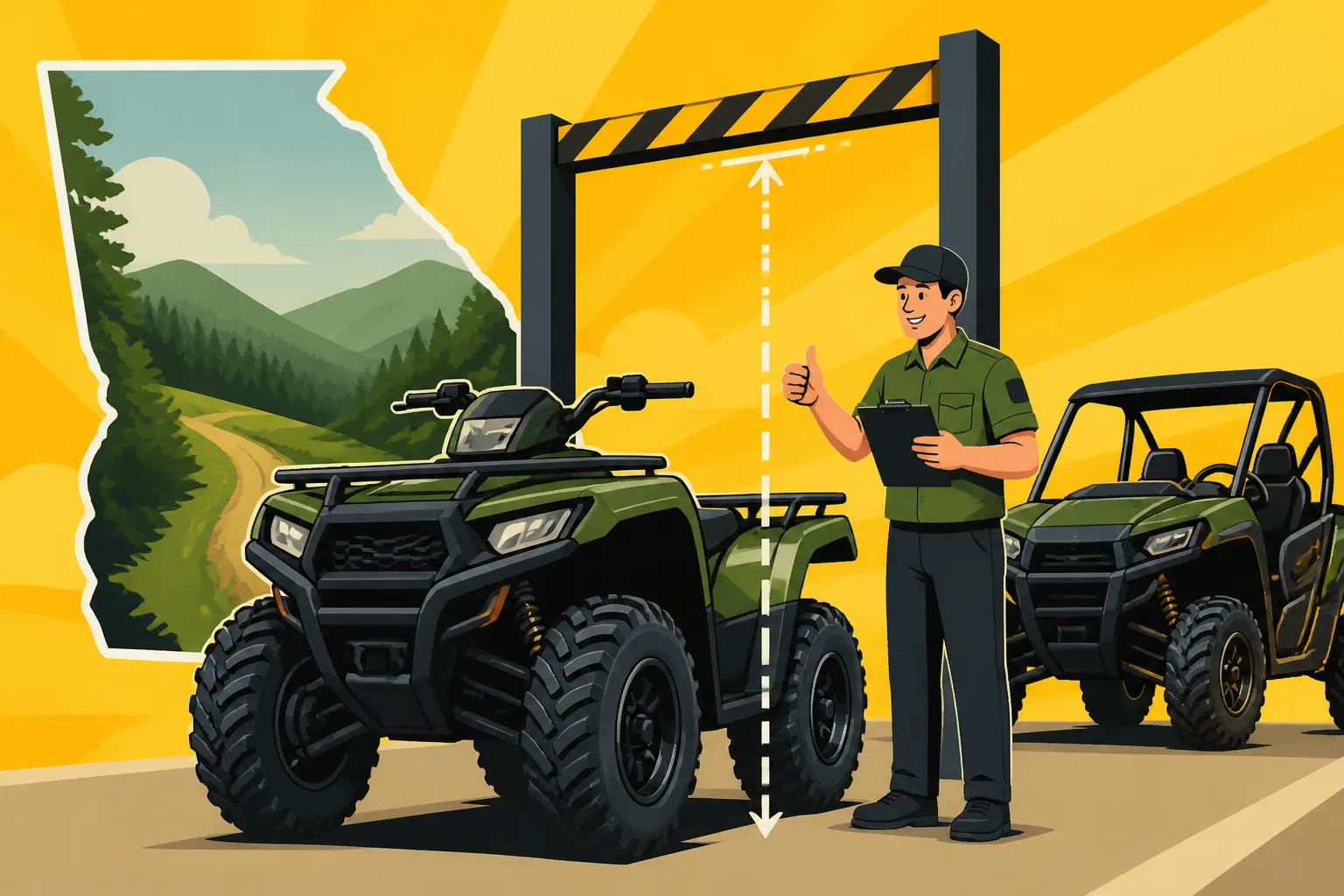
A 50-inch limit is a machine-width restriction, not a measure of the rider, the machine’s length, or the width of its trailer. It determines whether the vehicle fits the system’s allowed size. The limit applies to specific riding areas or trails, not automatically to every OHV destination in Georgia.
For example, Houston Valley is associated with a 50-inch width cap. Other trail systems may have different access rules, different limits, or trails that exclude side-by-sides. Confirm the current rule for your destination before you travel. Georgia’s 50-Inch Width Cap at Houston Valley explains the Houston Valley restriction, while Georgia Trail Widths and What Fits provides broader context for matching a machine to a trail system.
A width limit can be especially important for side-by-sides because they are often wider than quads. But the vehicle’s type alone does not settle the question: two machines in the same general category may have different widths, and tires or accessories can change the overall measurement. A model advertised as a trail machine is not necessarily eligible for every trail.
Nor does a permit settle the width question. A permit may be required for a rider or operator, but it does not make an oversized machine eligible or authorize access to a trail that excludes that type of vehicle. Check the system’s vehicle rules separately from its permit requirements. Georgia’s Day and Annual Forest OHV Permits covers the permit side, and Georgia ATV Trails That Allow Side-by-Sides can help you identify destinations where side-by-side access is relevant.
How to measure your machine before the trip
Do not rely only on a brochure, a dealer listing, or a model name. Published specifications are useful for an initial check, but they may describe a particular trim or factory configuration. Your machine may have different tires, wheels, spacers, fenders, or other modifications.
Use the measurement method specified by the managing agency or trail operator whenever it is available. If the instructions do not say exactly where to measure, ask before you go. A practical preliminary check is to find the widest point of the machine as it is currently equipped, then confirm with the trailhead staff whether that matches their check-in method.
A careful at-home measuring process
-
Park on firm, level ground. Uneven ground can make the measurement harder to repeat. Keep the machine upright and in its normal operating condition.
-
Set the wheels straight. Turned front wheels can make one side appear wider than it is. If your measurement is close to the limit, check more than one position and ask the trail operator how they measure.
-
Identify the widest points. Look at the tires, wheels, fenders, bodywork, mirrors, and any installed accessories. The required measuring points may depend on the destination’s rule, so do not assume that measuring only the body panels—or only the tires—will match the check-in procedure.
-
Measure across the machine, not around it. Use a tape measure to record the straight-line distance between the points the operator specifies. Keep the tape level and perpendicular to the machine’s length. A helper can hold one end while you read the other.
-
Repeat the measurement. Check both the front and rear, and note which point is widest. If the result is close to 50 inches, measure again rather than rounding down.
A basic tape measure is usually enough for a preliminary check; a long tape from a hardware store or Amazon can be handy if you do not already have one. The tool matters less than using it carefully and measuring the correct points.
Write down the result and the machine’s configuration. If you later change tires, install wheel spacers, add wider fenders, or fit other equipment, measure again. A previous measurement is not reliable if the machine has changed.
Compare the result with the rule, not just the label
If the machine measures comfortably below the published limit using the destination’s stated method, you have a useful starting point. If it measures close to 50 inches, do not treat a small difference as permission to ride. Measurement methods, the machine’s setup, and the trail system’s interpretation all matter.
If you cannot find a clear measuring method, contact the ranger district or park before loading the machine. Describe the model and any modifications, and ask which points they measure. Measuring Your Machine Before You Tow offers more preparation tips for checking size before a trip.
What to do at check-in if your machine is close to 50 inches
A measurement near the limit is a reason to resolve the question before you travel, not a reason to hope the check will go your way. Contact the managing office or trail operator with the machine’s make, model, year, tire setup, and any width-related modifications. Ask whether they use the manufacturer’s stated width, a measurement at the tires, or the widest point of the machine.
If staff measure vehicles at check-in, follow their instructions and let them make the determination. Do not try to influence the result by angling the wheels, compressing the suspension, removing a required part, or positioning the tape differently. A check is intended to establish whether the machine meets the system’s rule, not to find a temporary way around it.
If staff say the machine exceeds the limit, do not ride it on the restricted trail. Ask whether the site has a different area or route that permits your machine, but accept the answer you are given. A vehicle that cannot use one trail system may still be suitable for a destination with different access rules. Check the whole system’s restrictions; permission to ride somewhere else at the same destination should not be assumed.
Also keep the permit question separate from vehicle eligibility. In Georgia’s national forest OHV systems, permits are generally associated with operators rather than being a substitute for a vehicle-size check. Review Georgia’s Per-Operator Permit, Not Per Vehicle and One Annual Permit Covers All Six Georgia OHV Systems to understand that distinction. A permit may cover an operator’s required access credential, but it does not expand the trails a machine is allowed to use.
Before leaving, check for current trail notices, closures, and operating conditions. Access information can change, and an eligible machine may still be unable to use a trail that is closed. Georgia Trail Conditions Before You Drive explains why checking status before departure belongs in the trip plan.
Common measuring mistakes and a simple pre-trip checklist
The most common mistake is treating the advertised width as the final answer. A manufacturer’s number can be a useful reference, but it may not reflect your machine’s exact setup or the measuring method used at the trailhead. Another mistake is measuring only the bodywork while overlooking wider tires, mirrors, or installed accessories. Conversely, measuring an accessory that staff do not include can also create confusion. Ask for the site’s method instead of guessing.
Other avoidable problems include measuring with the wheels turned, using a slanted tape, measuring on uneven ground, and rounding a borderline result down. A tape can also bow or sag when one person tries to measure a wide machine alone. Use a helper, keep the tape straight, and repeat the check.
A pre-trip check can be straightforward:
- Confirm the specific trail system’s width rule and which vehicles it allows.
- Find out how the operator defines and measures width.
- Measure the machine in its current configuration, on level ground.
- Record the widest result and check again if it is close to the limit.
- Contact the managing office before hauling a borderline machine.
- Check permits, trail status, and any temporary closures separately.
- Re-measure after changing tires, wheels, spacers, or other equipment.
If the trip involves a group, check each machine individually. A single vehicle that is too wide can create a problem for its rider even if every other machine in the group qualifies. Do not assume that a friend’s machine with the same model name has the same width; modifications and trim differences can matter.
Planning the measurement before the trip is simple, but it can save a long drive and prevent an argument at check-in. When the result is uncertain, ask the trail operator and follow the rules for that specific system. Width limits are about access, and a permit or a successful measurement at another location does not override them.
Disclaimer
This article is for general informational purposes only and does not constitute professional advice. Laws, prices and regulations vary by location and change over time. Consult a qualified professional for guidance on your specific situation.