Passenger Rules on a Rented Machine
Renting an ATV or UTV in Georgia can make a trail day easy, but passenger rules are not the same for every machine or riding area. The key questions are whether the vehicle has an approved passenger seat, what the rental agreement allows, and which park or permit rules apply. Check these details before paying or loading up.
Start With the Machine’s Designed Seating
A passenger should ride only in a seat the machine was built and equipped to carry. An ATV with a single rider seat is not a two-person machine just because another person can hold on. A two-up ATV may have a designated passenger seat and handholds or footrests; verify the rental model and its approved capacity rather than judging by appearance.
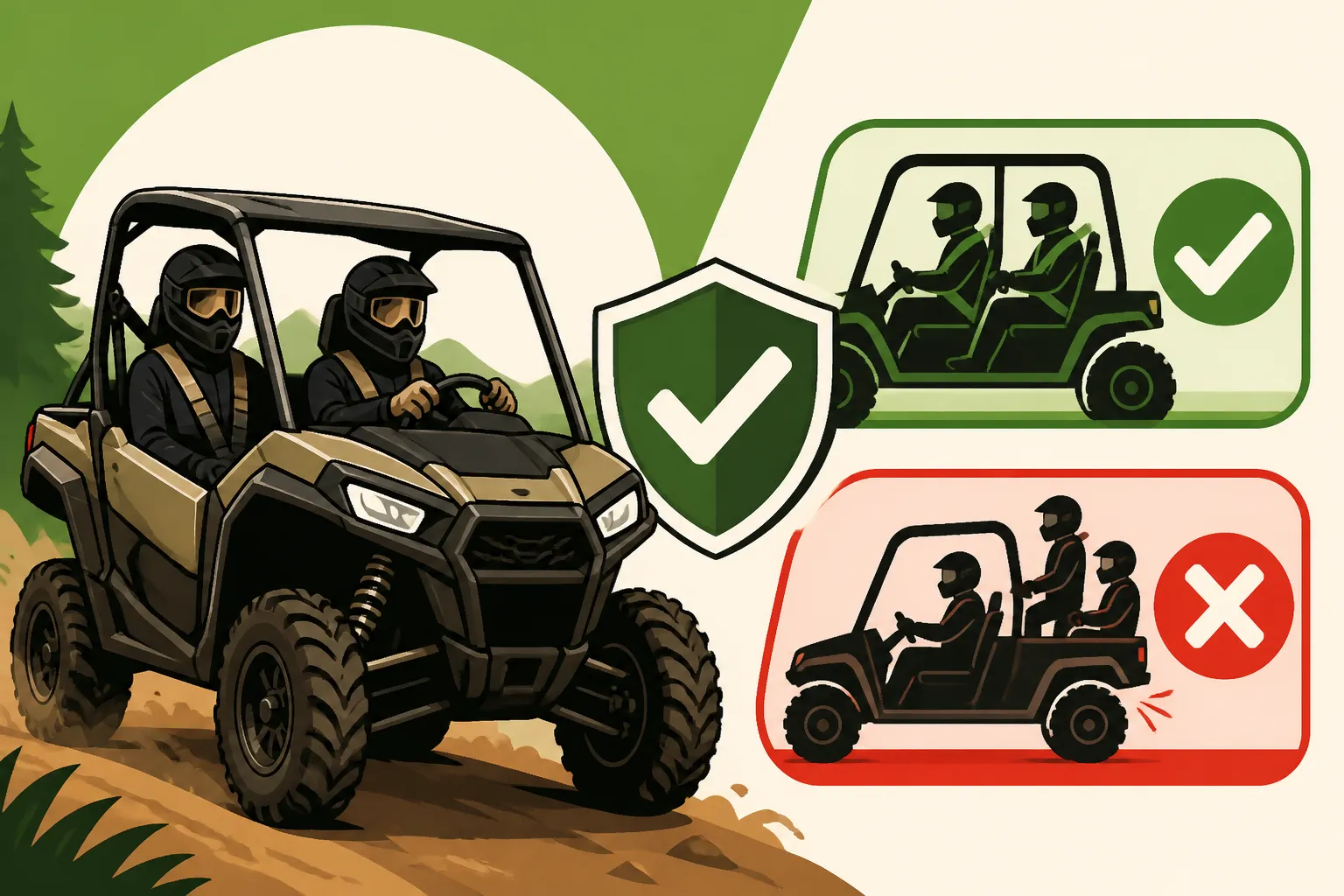
A UTV or side-by-side usually has separate seats and seat belts, but the number of seats still matters. A four-seat machine is not permission to carry extra riders on the floor, cargo bed, or someone’s lap. Use every passenger seat as intended and buckle each rider into the correct restraint. If a belt is missing, damaged, or will not latch, do not take that seat.
| Machine or seating situation | Safer approach |
|---|---|
| Single-seat ATV | Ride one person only |
| ATV built for two | Carry a passenger only in its designated passenger position, and only if the rental provider allows it |
| Two-seat UTV | Carry no more than the stated capacity; use both seats and restraints |
| UTV with more than two seats | Keep every rider in a designated seat with the available restraint secured |
| Cargo bed, fender, or lap | Do not use as a passenger position |
The rental company’s passenger policy may be stricter than what the machine could physically accommodate. For example, a provider may rent an ATV for solo use even if a similar model is sold with a passenger seat. Ask the staff to identify the rented unit’s seating capacity and show you where each passenger should sit.
For more on how a side-by-side passenger should ride, see Georgia Rules for Passengers on a Side-by-Side. A passenger must be able to stay seated and use the machine’s restraints properly. If a child is too small for the belt to fit securely, do not assume that holding the child close is an acceptable alternative. Ask the rental provider whether it allows that passenger and whether it has an approved seating setup.
Never let a passenger ride on the hood, rear rack, cargo bed, or outside a cab. Do not add a second person to a single-seat ATV by having them stand on the footrests or hold the operator. These positions can make a rollover or sudden stop more dangerous, and they may violate both rental rules and the machine’s intended use.
Rental Policies Can Set the Limits
A rental agreement is not just paperwork about damage. It can specify who may operate the machine, whether passengers are permitted, which seats they may use, minimum ages, required supervision, and where the machine can go. Read the passenger section before signing, and ask staff to explain anything that is unclear.
Do not assume every rental provider follows the same policy. A private off-road park may have one set of conditions, while an independent rental operator or another park may set different ones. Some providers may prohibit passengers on certain machines, restrict children from particular vehicles, or require an adult to ride with a minor. The provider’s rules can also change by machine, route, or riding area.
Before the rental starts, ask:
- How many people may ride in this specific machine?
- Which seats are approved for passengers?
- Are passengers allowed on the route or in the riding area we booked?
- What age, height, or supervision rules apply?
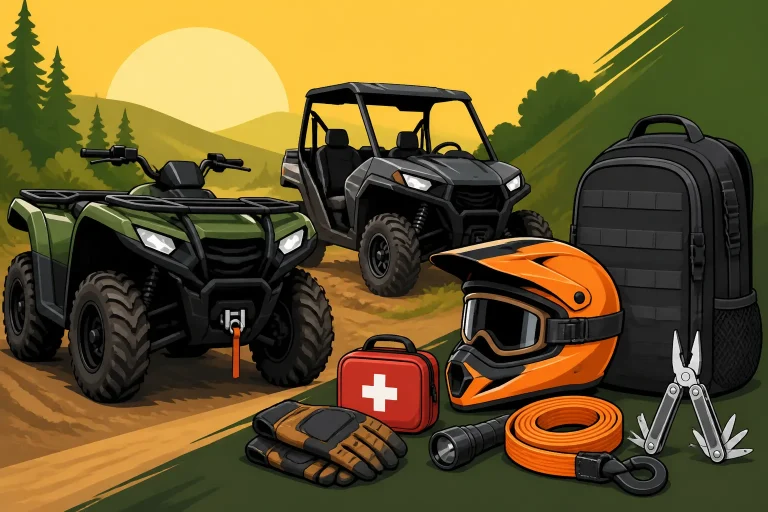
- Does every passenger need a helmet, and does the provider supply one?
- What should we do if a seat belt, helmet, or other safety item does not fit or work?
Follow the instructions staff gives during the orientation, even if you have ridden a similar model elsewhere. Controls, restraint systems, passenger seating, and park procedures can differ. If the operator is told to keep passengers seated, remain on marked routes, or stop before changing riders, those instructions are part of using that rental safely.
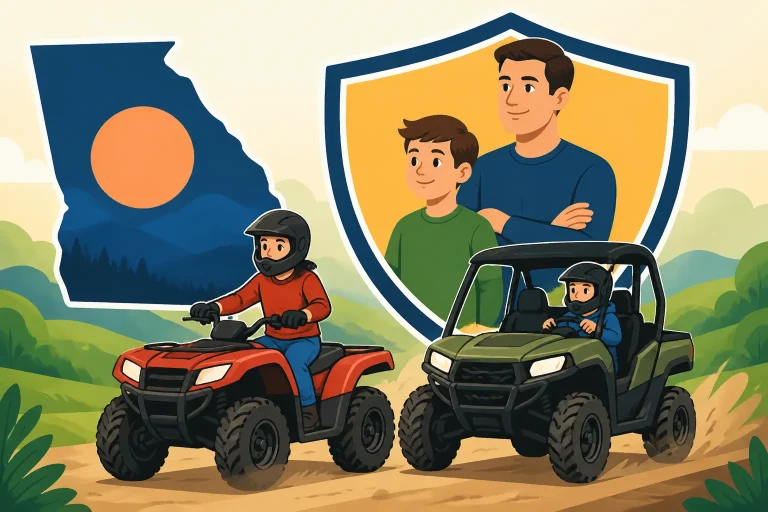
A waiver does not mean the passenger rules are optional. It may explain risks and allocate responsibilities, but it does not turn an unapproved seat into a passenger seat or authorize riding beyond the rental area. Review Georgia Private Park Waiver Forms before signing, especially when a minor is included. A parent or guardian may have to complete documents for a child, and the park may have its own age and supervision policies. See Georgia Private Park Age Minimums for the kinds of restrictions to check.
If a passenger is under 18, do not rely on an adult’s signature as a substitute for the park’s rules or required safety equipment. Georgia’s under-18 helmet requirements are a separate consideration from a rental company’s policy. Check the rules for the location and machine before the trip, and review Georgia Under-18 Riders and the Helmet Rule and Georgia Private Park Helmet Rules when planning.
Permits, Passengers, and Where You Ride
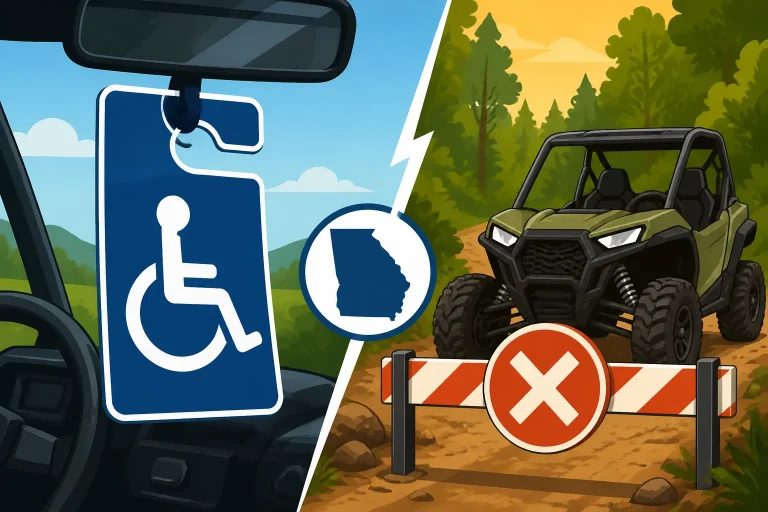
A rental reservation, park admission, vehicle registration, and riding permit are different things. Having one does not automatically provide the others. The first step is to find out whether the rental is for a private riding park, a public trail system, or another area, then ask which access and permit requirements apply to each person.
Georgia Forest OHV permits are generally tied to the operator, not to each vehicle. A person riding only as a passenger should not assume they need the same operator permit as the person driving, but they should confirm requirements for the particular trail system and trip. Does a Passenger Need Their Own Georgia Forest Permit? explains that distinction, while Georgia’s Per-Operator Permit, Not Per Vehicle covers how the permit is organized.
A permit does not override a machine’s passenger capacity or a rental company’s limits. It also does not automatically grant access to a private park, a route closed to that machine, or land where riding is not allowed. If the machine is rented at a private park, ask whether the booking includes the park’s access charge or whether riders must arrange admission separately. If you are riding a forest OHV system, check the system’s current permit and trail requirements before leaving home.
Visitors from another state should confirm the same details rather than assuming an out-of-state registration, permit, or rental booking covers every Georgia requirement. The rental provider or trail manager can clarify what applies at that location. For general visitor questions, see Georgia Visitors From Other States. If the route involves public roads, do not treat a rental or permit as road authorization; road access is a separate issue from passenger seating.
A rental machine should stay within the place and route authorized by the provider. Ask whether the rental is limited to a private park, whether it may be trailered to another location, and what happens if the group leaves the approved area. A passenger riding in a rented vehicle does not make an otherwise restricted route permissible.
Before You Leave the Rental Counter
A short check at pickup can prevent a confusing or unsafe moment on the trail. Make sure everyone knows which machine they are using, where passengers sit, and what to do if a restraint or helmet does not fit.
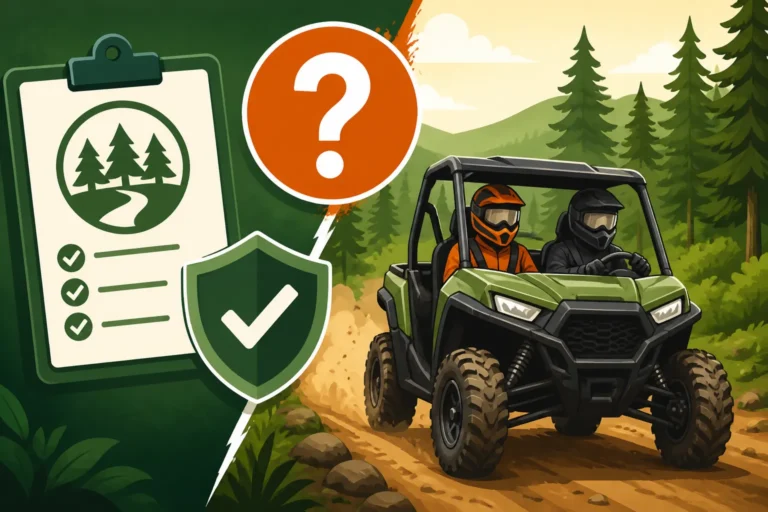
Use this checklist:
- Confirm the machine’s stated passenger capacity with the rental staff.
- Match each passenger to a designated seat; do not improvise a place to ride.
- Check that each seat belt or other restraint works and fits the person using it.
- Ask whether helmets are required, whether the provider supplies them, and whether each helmet fits securely.
- Confirm any age, supervision, or passenger restrictions for minors.
- Review the rental agreement’s rules for routes, riding areas, and passenger changes.
- Ask whether admission or permits are included, and who needs to obtain any required permit.
- Keep the rental provider’s contact information available in case a machine or safety item has a problem.
If anything is unclear, pause before signing or starting the machine. Ask staff to point out each approved passenger seat and explain how its restraint should be used. If the answer does not match the number of people in your group, request a suitable machine or make another plan. Do not solve a seating problem by carrying someone in a cargo area or on a machine that was not built for a passenger.
When riding, keep passengers seated and secured, follow the operator’s directions, and stop if someone needs to adjust a helmet or restraint. A passenger should not distract the driver, reach outside the vehicle, or change seats while it is moving. On an ATV, the passenger should use the designated footrests and handholds where provided, and follow the rental provider’s instructions for that model.
The practical rule is simple: use only approved seats, follow the rental provider’s restrictions, and verify the park and permit requirements for the actual riding area. Those checks matter more than assumptions based on a similar machine, a past rental, or the number of people who can physically fit.
Disclaimer
This article is for general informational purposes only and does not constitute professional advice. Laws, prices and regulations vary by location and change over time. Consult a qualified professional for guidance on your specific situation.