Two Riders and Two Permits on One Machine
Two Riders and Two Permits on One Machine
If two people share one ATV or side-by-side on a Georgia national forest OHV trail, the permit question depends on who drives—not how many machines are in the group. The key is that a forest OHV permit is tied to the operator. Here’s how to plan for a passenger, a driver change, and the permits you need before heading to the trail.
The short answer: permits follow operators, not machines
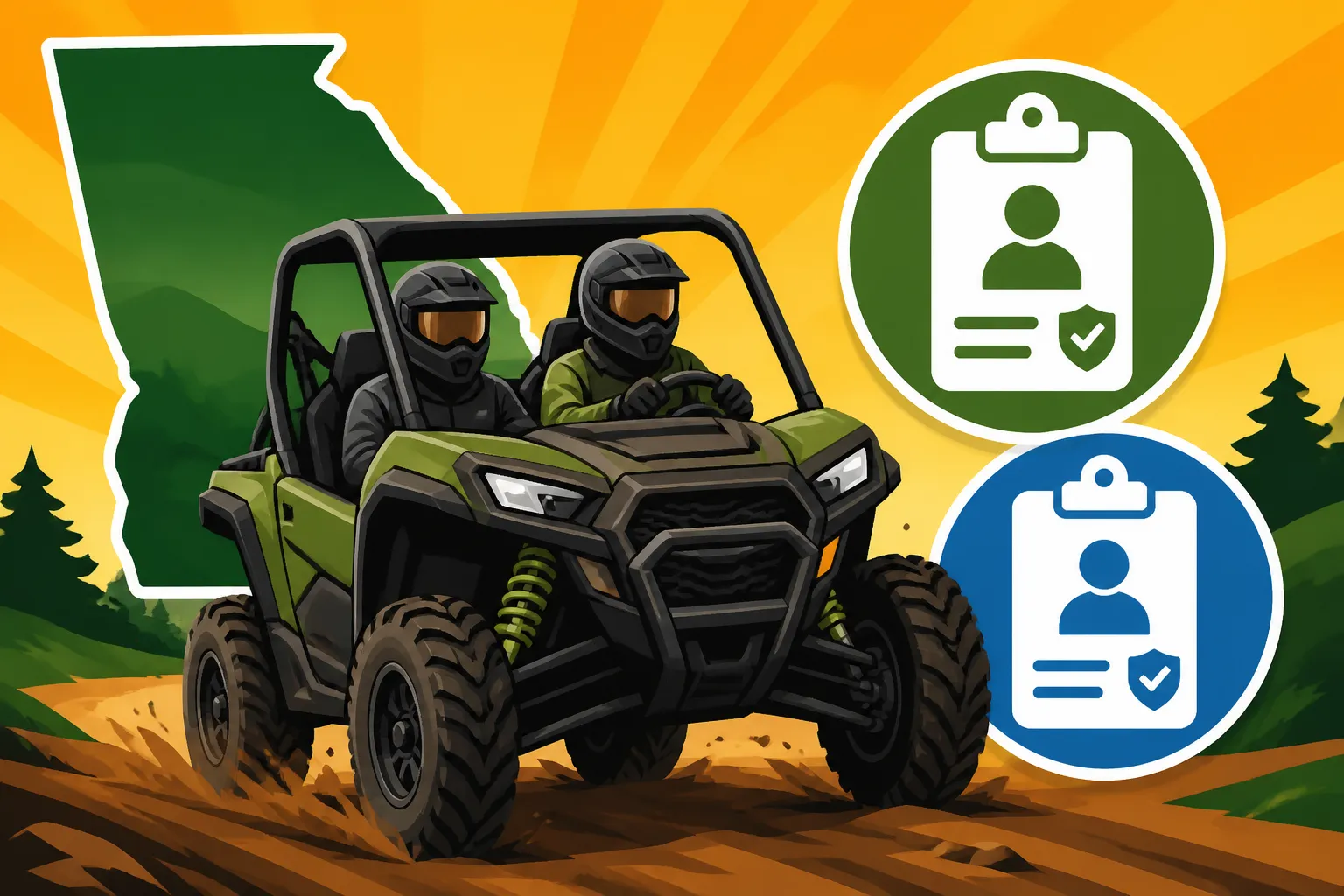
Georgia’s national forest OHV permit is an operator permit, not a vehicle permit. One permit does not automatically cover everyone who takes turns driving the same machine. If two people will each operate it, each needs a valid permit for the riding period.
For example, if one person drives to a stopping point and another takes over for the next section, both people have operated the machine. They should each have their own permit. The number of vehicles does not change that requirement: one operator moving between machines still needs their permit, while two operators sharing one machine need two.
This is different from vehicle registration or a tag tied to a specific machine. A forest OHV permit is about the person operating on the permitted system. It does not register the machine, prove ownership, or make a machine legal on every road or trail.
| Riding arrangement | Permit planning |
|---|---|
| One person drives one machine | The operator needs a valid permit |
| Two people take turns driving one machine | Each operator needs a valid permit |
| One person drives and the other remains a passenger | The driver needs a permit; the passenger generally does not need a separate operator permit just to ride as a passenger |
| One person drives two different machines during a trip | The operator’s permit follows that person, subject to the permit’s conditions |
| Two people each drive their own machine | Each operator needs a permit |
The distinction between an operator and a passenger matters. A person sitting in the passenger seat is not taking over the controls, so they are not operating the machine. But if the passenger becomes the driver—even briefly—they are now an operator and need their own permit. For a closer look at the passenger question, see Does a Passenger Need Their Own Georgia Forest Permit?.
This permit rule applies to the relevant U.S. Forest Service OHV systems in Georgia. It is not a blanket state permit for every place where someone might ride an ATV or UTV. A private park, a wildlife management area, or a locally managed riding area can have separate access and operating rules. Before leaving home, confirm that the permit you have is the one required for the place you plan to ride.
For more background on what the permit does and where it applies, see Georgia OHV Permits: What You Need Before You Ride and Georgia’s Per-Operator Permit, Not Per Vehicle.
Decide who will drive before buying permits
The simplest way to avoid a problem is to decide in advance who will operate each machine. If the plan is for one person to drive all day while another rides as a passenger, the driver should have the required permit. If both people want a turn at the controls, both should get permits before the ride.
That planning is useful even when the intended driver seems obvious. Groups often swap drivers after a break, when someone is tired, or when a rider wants to try a different machine. A quick change can turn a passenger into an operator. Having a permit for each person who may drive avoids relying on a last-minute assumption at the trailhead.
A passenger’s permit status should not be confused with whether the passenger is allowed in that machine. The permit answers whether the operator has the required access permit; it does not decide whether a particular ATV or UTV can carry a passenger. The machine must be designed for the number of occupants, and the trail or riding area may impose additional vehicle or passenger restrictions.
Before allowing a passenger to ride, check the machine’s seating and occupant information, use the designated seat and restraint, and follow the relevant trail system’s rules. Do not treat a permit as permission to add a passenger to a single-rider ATV. A passenger riding on a machine that is not designed for two people can create a serious safety risk and may violate site rules.
If the passenger might drive later
If there is any chance the passenger will take the controls during the trip, arrange a permit for them before setting out. This is especially important for a group sharing a side-by-side, where it can feel natural to swap seats at a scenic stop or after a long stretch of driving.
A passenger who has no intention of driving can still choose to obtain a permit if the group wants flexibility. But do not assume that one permit can be passed between people. Permits are not transferable, and one person’s permit does not become the other person’s when they change seats. Check the current purchase and display instructions to confirm how each permit must be carried or shown.
If the driver changes unexpectedly
A change in plans does not change who the permit belongs to. If the original driver becomes unable to continue, another person should not take the controls unless that person has the required permit and is otherwise allowed to operate the machine on that system.
That does not mean a passenger should continue driving in an emergency when doing so would be unsafe. It means groups should plan for likely changes before they ride, including fatigue, illness, or a machine problem. If an unexpected situation arises, prioritize safety and contact trail staff or emergency services as appropriate. Do not assume that a permit held by someone else in the group covers the new driver.
The operator also has to meet all applicable age, supervision, equipment, and trail rules. A permit alone does not establish that a rider is old enough or otherwise qualified to operate a specific machine. For youth and supervision questions, check the system’s current rules before the trip.
Choose the right permit for the riding area
A Georgia forest OHV permit is not a universal ticket to ride anywhere in the state. It applies only under the permit terms and at the designated areas covered by those terms. Private parks set their own admission and operating requirements, and wildlife management areas can have distinct access rules. A forest permit should not be assumed to satisfy those separate requirements.
Likewise, a forest OHV permit does not make a machine street legal or authorize travel on a county road. It is not a substitute for registration, insurance, a driver’s license, or permission to use land. If the trip includes public-road travel, review the rules for that road separately. Georgia MPOHV Registration Is Voluntary explains a different registration program, while Georgia MPOHV Road Rules: County Roads Only covers the distinction between permitted OHV trails and road access.
Before purchasing, identify the exact trail system and check the current permit details. Confirm whether the permit you are considering covers the intended location, the date of the ride, and the type of riding planned. If a trip includes more than one kind of riding area, ask each site what it requires. A permit valid for a forest OHV system does not automatically cover a private riding park or a separate public-land program.
The main permit options are generally organized around the period of use, such as a day permit or an annual permit. The better choice depends on how often the operator expects to ride and which systems they plan to visit. An annual permit may be convenient for a person who rides regularly at covered systems; a day permit may fit an occasional visit. Check the provider’s current terms, validity dates, purchase options, and any conditions that apply before paying.
| Question to check | Why it matters |
|---|---|
| Is this the correct permit for the specific riding area? | A permit for one program may not cover a different site |
| Does it cover the date or period of the trip? | A permit must be valid when the person operates |
| Is it issued to an individual operator? | Each person who drives needs their own permit |
| How must the permit be carried or displayed? | The operator may need to show proof during the ride |
| Does the route include a separate park, WMA, or road? | Different places can have different access rules |
| Can the machine and passenger use that trail? | A permit does not override equipment or trail restrictions |
Permit purchase availability and instructions can change. Check the current official permit information before making the trip, especially if relying on a phone display, buying close to the ride date, or visiting an area for the first time. The permit is generally non-transferable, so do not buy one under the assumption that a friend can use it if plans change. For more on the purchase process, see How to Buy a Georgia Forest OHV Permit.
Carry proof for each person who may operate
Each operator should be ready to show their own permit as required by the current rules. If two people may drive, each should carry proof connected to their own permit rather than depending on the other person to produce a single document.
Before driving away, make sure each person can retrieve their proof without relying on a weak phone signal. If digital proof is accepted, save or download it in a way that remains available offline. A printed backup can be useful where permitted, particularly if the group expects poor reception or has a long drive to the trailhead. Follow the current permit instructions: a screenshot or printout is not automatically acceptable unless the rules allow it.
Keep proof accessible and legible. If a ranger or other authorized staff member checks permits, a person should be able to show their own without searching through another rider’s email or account. This is a small detail, but it can prevent confusion when a group is separated or when different people arrive at the trailhead in separate vehicles.
For a group leader, a brief check before departure helps:
- List everyone who may drive.
- Match each potential operator to their own valid permit.
- Confirm the permit covers the intended riding area and date.
- Check each machine’s passenger capacity and trail eligibility.
- Make sure each operator knows how to access their proof.
- Review any separate rules for private parks, WMAs, or roads on the route.
A permit does not travel from one person to another when the group switches machines. If a rider operates a second machine, the rider’s permit remains associated with that rider, subject to the permit terms. The vehicle itself does not acquire the operator’s permit, and another person cannot rely on it simply because they are using the same ATV or UTV.
Also, do not mistake a purchase confirmation for complete permission to ride. Check that the permit is valid, that the rider has access to the intended system, and that the machine meets the site’s requirements. See What an Operator Permit Does Not Cover for a broader explanation of what the permit does not replace.
Avoid the common one-per-machine mistake
The most common misunderstanding is treating the permit like a vehicle tag: one machine, one permit, everyone in the group covered. That approach can leave a second driver without the required permit. The opposite mistake is assuming every passenger must buy an operator permit even when they will not drive. Focus on the person who operates, then check the site’s separate passenger rules.
Other mistakes can create trouble even when every driver has a permit:
- Assuming the permit covers all Georgia riding areas. It does not replace a private park’s admission, WMA requirements, or permission to ride on other land.
- Letting a friend borrow a permit. A permit is not a transferable group pass.
- Changing drivers without checking permit status. Before a passenger takes the controls, confirm they have their own valid permit.
- Assuming the machine is allowed because the operator has a permit. Trail systems can restrict vehicle types, widths, or passenger arrangements.
- Relying on a permit as road authorization. Forest OHV access and public-road operation are separate questions.
- Waiting until reaching the trailhead to clarify the rules. Purchase methods, proof requirements, and availability may vary. Verify the current instructions first.
If you are not sure whether a passenger plans to drive, treat them as a potential operator and make a permit plan accordingly. If the person will remain a passenger for the entire ride, focus on whether the machine and system allow that passenger. Those are two separate checks, and passing one does not automatically satisfy the other.
A little coordination also prevents disputes within the group. Agree on the likely drivers before purchasing permits, and make sure everyone understands that permits belong to individual operators. If the group decides to change drivers during the day, only a person with their own valid permit should take over. If nobody else has one, keep the original permitted operator at the controls, provided they can do so safely.
For a trip involving several machines or several stops, plan around the least flexible part of the itinerary. A valid forest OHV permit may cover eligible use at designated systems, but it does not guarantee access when a site is closed, a trail is restricted, or a machine does not meet local requirements. Check current conditions and rules before travel. Georgia OHV Permit for a Group Ride and One Annual Permit Covers All Six Georgia OHV Systems can help with related planning, but confirm the current terms before relying on them.
Frequently Asked Questions
Does a passenger need a separate Georgia forest OHV permit?
A person who only rides as a passenger generally does not need an operator permit just to occupy the passenger seat. If that person takes the controls, they become an operator and need their own valid permit. The machine and trail must also allow a passenger.
Can two people share one permit if they take turns driving?
No. A permit is tied to the individual operator, not shared between drivers or attached to the machine. If two people take turns operating, each should have their own permit.
Can one operator use the same permit on different machines?
The permit follows the operator rather than a specific machine, subject to its conditions. The operator still needs to use a machine that is eligible for the trail system and follow that system’s rules.
Does a forest OHV permit allow road riding in Georgia?
No. The permit covers only the use described by its terms at designated riding areas. It does not provide public-road authorization, vehicle registration, insurance, or permission to ride on land that is not open to the operator.
Disclaimer
This article is for general informational purposes only and does not constitute professional advice. Laws, prices and regulations vary by location and change over time. Consult a qualified professional for guidance on your specific situation.