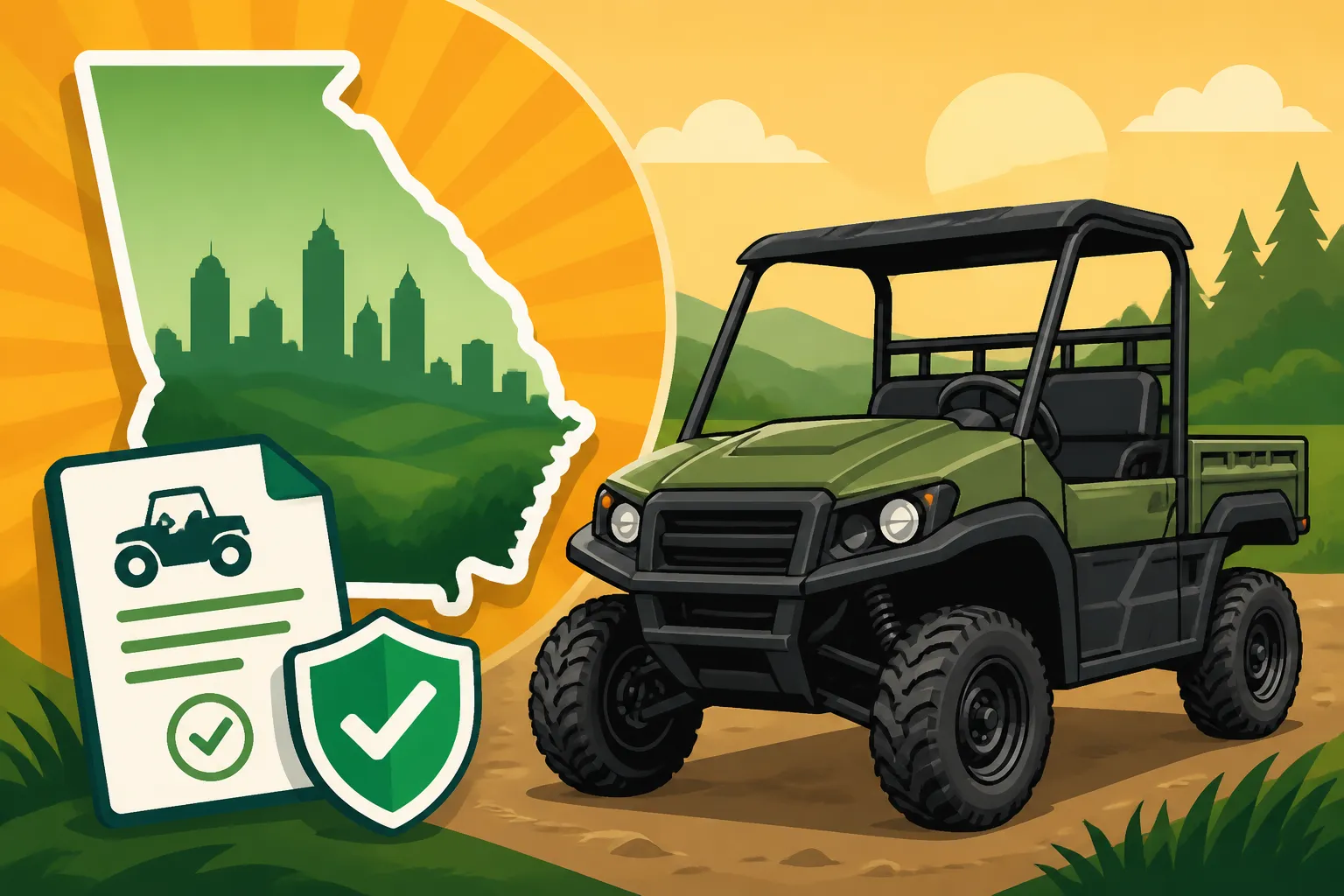
Georgia Registration for a Kawasaki Mule
It can be incredibly confusing trying to figure out if you can actually register your trusty Kawasaki Mule here in Georgia, and more importantly, what that even means for how you can use it. Many folks mistakenly think all off-road vehicles are treated the same, but Georgia has specific rules for "Multi-purpose Off-Highway Vehicles" (MPOHVs) like your Mule. This guide will walk you through exactly what an MPOHV is, the specific criteria your Kawasaki Mule needs to meet for registration, and the steps you'll take at your local tag office to get it legal for limited road use.
Understanding Georgia's MPOHV Classification for Your Kawasaki Mule
When you hear "off-road vehicle" in Georgia, your mind might jump to a variety of machines, from dirt bikes to utility vehicles. However, Georgia law has created a distinct category called a Multi-purpose Off-Highway Vehicle, or MPOHV, which is crucial for understanding how to register your Kawasaki Mule. This isn't just bureaucratic jargon; it's the key to opening up limited road access for your machine. Without meeting this classification, your Mule simply won't qualify for a Georgia tag.
What Makes a Kawasaki Mule an MPOHV?
Your Kawasaki Mule, by its very design, typically falls squarely into the MPOHV category. Unlike traditional ATVs or dirt bikes, which are excluded from registration due to their straddle-seat and handlebar configuration, a Mule is built differently. It's meant for utility, often hauling gear or people, and it possesses features that align with the MPOHV definition. Think of it as a specific set of characteristics that Georgia has decided makes a machine suitable for very limited road use, distinguishing it from machines intended purely for trails.
For instance, the non-straddle seating and steering wheel common in a Kawasaki Mule are immediate indicators that it might fit the MPOHV mold. These aren't just comfort features; they're legal distinctions. The law is trying to differentiate between a purely recreational, high-performance dirt machine and a more stable, utility-focused vehicle that bears some resemblance to a small car or golf cart in its operation. If your Mule looks and feels more like a miniature truck with side-by-side seating than a four-wheeler you straddle, you're likely on the right track for MPOHV classification.
The Purpose of MPOHV Registration in Georgia
So, why bother registering your Kawasaki Mule as an MPOHV if it's primarily an off-highway vehicle? The simple answer is expanded utility and peace of mind. While it doesn't make your Mule "street legal" in the same way your car is, it grants specific, limited access to Georgia's county road systems. This means you can legally drive it on designated county roads, cross state highways at designated points, and potentially use it for farm work, hunting access, or simply getting from your property to a nearby trail without having to trailer it everywhere.
The alternative is strictly private land use, which can be incredibly restrictive. Imagine needing to haul feed to a distant pasture or get to your deer stand on the other side of a county road. Without MPOHV registration, that simple journey would require loading your Mule onto a trailer and transporting it, which is often a huge hassle. [Georgia MPOHV Registration Is Voluntary], but for many owners, the benefits of limited road access far outweigh the effort of going through the process, especially if you live in a rural area with an extensive county road network. It essentially legitimizes certain uses that were previously a gray area or outright illegal on public thoroughfares.
Eligibility Requirements for a Kawasaki Mule in Georgia
Now that we understand what an MPOHV is and why you might want to register your Kawasaki Mule, let's get into the nitty-gritty: the actual requirements your specific machine must meet. Georgia's MPOHV eligibility is determined by an eight-point test, and it's essential that your Kawasaki Mule ticks every single box. Many people get frustrated here because they assume all UTVs are created equal, but the state has very specific physical and performance criteria that must be met.
Navigating the Eight-Point Test with Your Mule
The Georgia MPOHV statute (O.C.G.A. § 40-2-87) lays out eight distinct requirements, and your Kawasaki Mule must pass them all. Here’s a breakdown of how a typical Mule measures up, and what you need to confirm about your specific model:
- Steering Wheel, Not Handlebars: This is a big one. As mentioned, your Mule's traditional steering wheel means it passes this test, immediately distinguishing it from most ATVs. [Georgia Requires a Steering Wheel, Not Handlebars] is a non-negotiable point.
- Non-Straddle Seat: Again, a standard feature of most Kawasaki Mules. The side-by-side seating, where you sit in the vehicle rather than on it like a horse, qualifies. This explicitly excludes traditional quads.
- Gross Vehicle Weight (GVW) Under 4,000 Pounds: Most Kawasaki Mules, especially the utility models, fall well under the [Georgia's 4,000-Pound Gross Weight Ceiling]. You'll want to check your owner's manual or the manufacturer's specs for your specific model's dry weight, and then add the maximum payload. If your Mule is heavily accessorized or modified, always verify the weight.
- Payload Capacity of at Least 350 Pounds: Your Mule is designed for utility, so it almost certainly exceeds the [Georgia's 350-Pound Payload Requirement]. This includes the weight of passengers and cargo. Again, consult your owner's manual to confirm the maximum payload capacity.
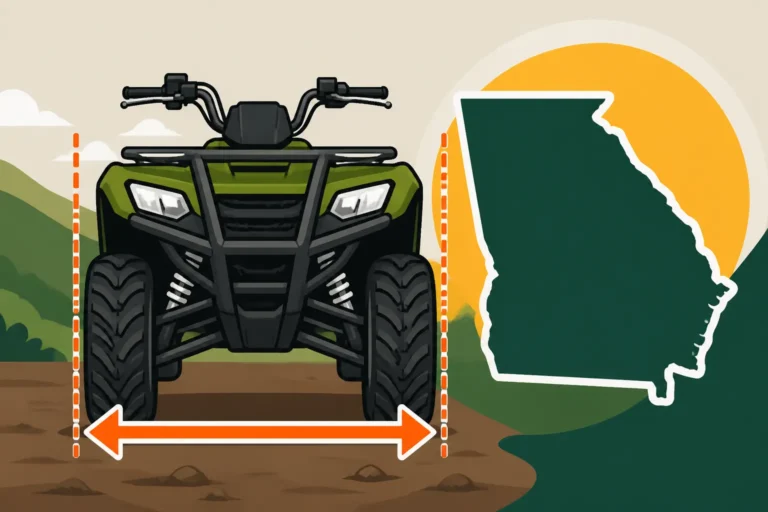
- Width Not Exceeding 80 Inches: The vast majority of Kawasaki Mule models are narrower than 80 inches. This is important for road safety and to prevent oversized vehicles from being registered. Double-check your specific model's width, especially if you've added aftermarket fender flares or wider tires, which could push it over the limit. [Georgia's 80-Inch Width Limit for Registration] is strictly enforced.
- Manufactured After January 1, 2000: Most modern Kawasaki Mules will meet this. If you have an older, classic Mule, you'll need to verify its manufacture date. Machines built before this cutoff date are not eligible for MPOHV registration in Georgia. This is a hard rule to prevent very old, potentially less safe machines from gaining road access.
- Equipped with Seat Belts: Your Kawasaki Mule, especially if it's a multi-passenger model, will typically come standard with seat belts for all designated seating positions. This is a critical safety feature and a mandatory requirement. [Georgia Requires Seat Belts on a Registered Machine] for all occupants.
- Minimum Speed of 25 MPH, Maximum Speed of 65 MPH: This is another point where most Kawasaki Mules fit perfectly. They are generally capable of speeds over 25 mph but do not typically exceed 65 mph, making them suitable for county roads where slow-moving vehicles can be a hazard, but not so fast that they belong on high-speed state routes.
For a full rundown of these points, you might find [Georgia MPOHV Eligibility: The Eight-Point Test] to be a helpful resource.
What About Modifications or Unique Models?
Sometimes owners modify their Kawasaki Mules with lift kits, oversized tires, or custom beds. While many modifications are fine, it’s crucial to re-evaluate the eligibility criteria after any significant changes. For example, wider tires or fender flares could push your Mule past the 80-inch width limit. Heavy accessories might challenge the 4,000-pound GVW. Always measure and weigh your machine after modifications to ensure it still complies.
Another consideration is if you have a highly specialized or custom-built Mule. Even if it's a Kawasaki, if it's been heavily altered, you'll need to ensure every single one of those eight points is still met. The tag office isn't interested in the brand name as much as it is in the physical characteristics that define an MPOHV. If you're unsure about a specific modification, it's always best to consult with your local county tag office before you start the registration process.
The Registration Process for Your Kawasaki Mule
Once you've confirmed your Kawasaki Mule meets all the eligibility requirements, it's time to tackle the actual registration process. While it might seem daunting, it's a fairly straightforward series of steps, primarily handled at your local county tag office. You'll need to gather specific documents and be prepared for a few key inspections.
Gathering Your Paperwork and Essential Documents
The success of your registration largely hinges on having all your ducks in a row when you visit the tag office. Here’s a checklist of what you’ll typically need:
- Proof of Ownership: This is paramount. If you bought your Kawasaki Mule new from a dealer, you’ll have the Manufacturer’s Statement of Origin (MSO) or Manufacturer’s Certificate of Origin (MCO). If you bought it used, you'll need a clear [Bills of Sale That Hold Up at a Tag Office] showing the chain of ownership. In some cases, if a bill of sale is missing or incomplete, you might need a [Georgia Ownership Affidavit for an MPOHV]. Resources like LawDepot can be incredibly useful here for generating a legally sound bill of sale or affidavit if you're dealing with a private sale and want to ensure all the details are correctly captured.
- Proof of Georgia Residency: A valid Georgia driver's license or state ID is usually sufficient.
- Proof of Insurance: You must have current liability insurance coverage for your Kawasaki Mule. This is non-negotiable, as [Georgia Liability Insurance Tied to Registration] is a requirement for any registered road-use vehicle. Make sure your insurance card or declaration page specifically lists your Mule’s VIN.
- Georgia Form MV-OHV Affidavit: This is the form where you, as the owner, attest that your Kawasaki Mule meets all eight of the MPOHV eligibility requirements. You'll sign this under penalty of perjury, so be honest and thorough in your assessment. [Georgia Form MV-OHV and What It Asks] will guide you through each point.
- Proof of Sales Tax Payment: Before you can get your plate, you need to prove you’ve paid the Georgia sales tax on your Kawasaki Mule. If you bought it from a Georgia dealer, they typically handle this. If you purchased it privately, you’ll need to pay the sales tax at the tag office before completing registration. You can find more details on this important step in [Georgia Sales Tax Paid Before Registration].
Having copies of everything, and even preparing a simple folder, can really streamline your visit to the county tag office.
Visiting Your County Tag Office
Once your paperwork is ready, you'll head to the [Georgia County Tag Office Steps for an MPOHV] in the county where you reside. Here’s what to expect:
- Present Your Documents: A clerk will review all your paperwork, including your MSO/bill of sale, proof of insurance, and the MV-OHV affidavit.
- Physical Inspection (Sometimes): While not always required for every MPOHV, the tag office reserves the right to physically inspect your Kawasaki Mule to verify it meets the eligibility criteria, especially the width and features like seat belts and a steering wheel. Be prepared for this, and ensure your Mule is accessible for a quick visual check if requested.
- Pay Fees: You'll pay the applicable registration fee, which is typically an annual charge. This is separate from any sales tax you might still owe.
- Receive Your Branded Certificate and Plate: Upon successful registration, you’ll receive a "Branded Certificate of Registration" instead of a traditional title. This certificate explicitly states that the machine is an MPOHV and is not eligible for a standard highway title. You will also get your MPOHV license plate, which must be displayed on your Kawasaki Mule. It's important to understand the implications of a branded certificate, as it warns future buyers about the vehicle's specific status.
The entire process, while requiring attention to detail, is designed to be manageable. Just remember to be patient, have all your documents organized, and don't hesitate to ask the tag office staff any questions you have. They are there to help you navigate the nuances of [How to Register a UTV in Georgia].
Maintaining Your Kawasaki Mule's Registration in Georgia
Getting your Kawasaki Mule registered is a significant first step, but it's not a one-and-done deal. Like any other registered vehicle, there are ongoing responsibilities to ensure your MPOHV remains legal for county road use. This includes annual renewals, maintaining insurance, and understanding what happens when you decide to sell your registered Mule.
Annual Renewal and Insurance Requirements
Your Georgia MPOHV registration for your Kawasaki Mule is not permanent; it needs to be renewed each year. The process is generally simpler than the initial registration, often allowing for online renewal or a quick visit to the tag office. You'll typically receive a renewal notice, but it's ultimately your responsibility to ensure it's renewed on time. Failure to renew can lead to penalties and could result in your registration lapsing, meaning your Mule would no longer be legal for road use until reinstated. You can learn more about this in [Georgia MPOHV Renewal Each Year].
Furthermore, continuous liability insurance is a cornerstone of MPOHV registration. Just as you need it for the initial registration, you must maintain active coverage throughout the entire period your Kawasaki Mule is registered as an MPOHV. If your insurance lapses, the state's system will be notified, and your registration could be suspended or canceled. This means you could face fines or other legal consequences if caught driving your Mule on a county road without valid insurance. Always keep your insurance card handy when operating your registered Mule.
Selling a Registered Kawasaki Mule
If you decide to sell your registered Kawasaki Mule, there are a few important considerations for both you and the buyer. Since Georgia does not issue a traditional title for MPOHVs, you will be transferring the Branded Certificate of Registration. This certificate acts as your proof of ownership, much like a title would for a car, but it explicitly states the vehicle's MPOHV status.
When selling, you'll need to properly endorse the Branded Certificate of Registration over to the new owner, similar to how you would endorse a vehicle title. It's crucial to include the sale date, purchase price, and both your signature and the buyer's. A comprehensive bill of sale, which you can easily generate through services like LawDepot, is also highly recommended. This document should detail the transaction, the vehicle's VIN, and confirm the transfer of ownership, protecting both parties. The new owner will then take this endorsed certificate and the bill of sale to their county tag office to transfer the registration into their name and obtain a new branded certificate and plate. Be sure to remove your license plate from the Mule upon sale; it does not transfer with the vehicle. The new owner will need to apply for a new plate in their name.
Remember, the "branded" nature of the certificate is a warning to subsequent buyers that the machine cannot be registered as a highway vehicle, only as an MPOHV for limited county road access. It's a key piece of information that [What a Branded Registration Warns You About] helps to clarify. Ensuring a smooth transfer and proper documentation will help both you and the buyer avoid any headaches down the road.
Disclaimer
This article is for general informational purposes only and does not constitute professional advice. Laws, prices and regulations vary by location and change over time. Consult a qualified professional for guidance on your specific situation.