Bridge Crossings on a Path Network
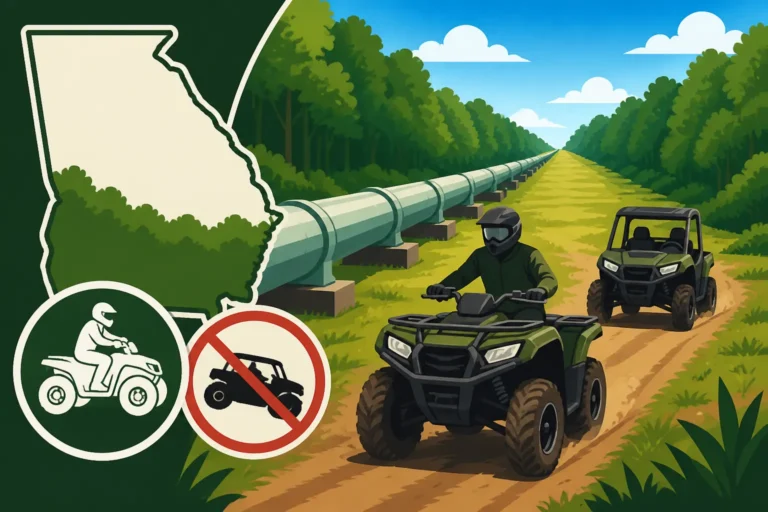
It's completely understandable to wonder about riding your ATV or UTV across bridge crossings that are part of dedicated path networks here in Georgia. You see these paths winding through communities, sometimes over creeks or smaller roadways, and it's natural to think, "Can I take my side-by-side on that, especially to get to the other side?" The truth is, while some UTVs can now be registered for certain public road use in Georgia, these specific path networks and their bridge crossings are a very different animal with their own set of rules, often leading to frustration and confusion for off-road enthusiasts. This guide is here to untangle those distinctions and clarify exactly where your ATV or UTV stands when it comes to bridge crossings on Georgia's recreational path networks.
Understanding Georgia's Path Networks and Their Purpose
Georgia is home to a variety of road and path systems, and it's easy to mistakenly believe that if one type of vehicle is allowed on one, it should be fair game for others. However, each system is designed with specific users and purposes in mind, and this is especially true for the increasingly popular recreational path networks found in many communities.
What Makes a Path Network Different from a Road?
Imagine the bustling streets of downtown Atlanta versus the serene, winding paths of [Peachtree City's 100 Miles of Georgia Cart Paths]. These are two vastly different types of infrastructure, built for entirely different modes of transport and user experiences. A traditional road, whether it's a county road or a state highway, is designed primarily for motor vehicles—cars, trucks, motorcycles, and commercial traffic. They have specific lane widths, speed limits, and safety standards tailored to these vehicles.
Path networks, on the other hand, are often narrower, designed for lower speeds, and intended for a mix of non-vehicular traffic like pedestrians and cyclists, alongside specific types of low-speed vehicles. They often prioritize quiet, environmental integration, and local accessibility over high-speed transit. The engineering behind these paths, including their bridge crossings, reflects this purpose. Bridges on path networks might not be built to withstand the weight, speed, or unique tire pressures of many ATVs and UTVs, or they might not have the clear sight lines and safety barriers necessary for faster, heavier machines to interact safely with pedestrians and golf carts. It's a fundamental difference in design philosophy and intended use.
Common Vehicles Allowed on Path Networks
When you look at path networks, particularly in communities famous for them, you'll quickly notice a common theme: golf carts and Personal Transportation Vehicles (PTVs) are the kings of the road, or rather, the path. These vehicles are specifically manufactured and designated for low-speed recreational use and often come equipped with features like headlights, taillights, seat belts, and sometimes even turn signals, which are mandated by local ordinances. [Georgia Golf Cart Laws and PTV Ordinances] are very distinct from the rules governing ATVs and UTVs.
Cities like Peachtree City have created extensive networks precisely for these types of machines, allowing residents to navigate their communities, run errands, or simply enjoy a leisurely ride without ever needing to get into a car. These paths are designed to accommodate the width, weight, and speed of golf carts and PTVs, ensuring safe passage over their integrated bridge crossings. While you might occasionally see e-bikes or even some very small electric scooters, the general expectation is for quiet, low-impact travel. This is a far cry from the power, speed, and rugged design of most modern ATVs and UTVs, which are typically built for challenging off-road terrain, not shared-use recreational paths.
The Rules for ATVs and UTVs on Path Networks, Especially at Bridge Crossings
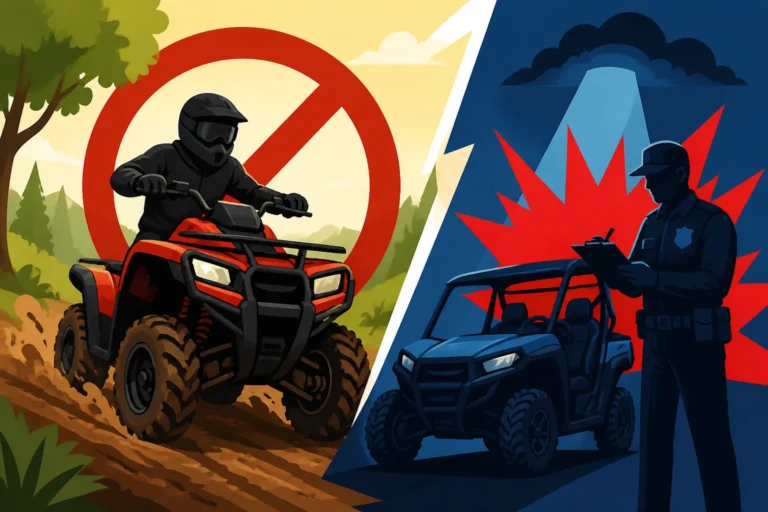
This is where the rubber meets the road—or rather, where the knobby tire meets the paved path, and often finds itself excluded. Despite the growing popularity and versatility of ATVs and UTVs, their access to dedicated path networks, including the critical bridge crossings, is almost universally restricted or outright prohibited in Georgia.
Why ATVs Are Generally Excluded
Let's start with ATVs, or All-Terrain Vehicles. The very name gives a strong hint about their intended environment. These machines are designed for mud, dirt, rocks, and challenging natural landscapes. They typically feature a straddle seat, handlebars, and a high center of gravity, making them inherently less stable and more difficult to control on paved, multi-use paths. As our persona has said before, [Georgia ATVs Are Not Road Machines]. They lack many of the safety features—like enclosed cabs, multiple seat belts, and standard automotive controls—that are common on street-legal vehicles or even many UTVs.
Allowing ATVs on path networks, especially over their bridge crossings, poses significant safety risks. Imagine a high-powered quad, designed for ripping through trails, sharing a narrow path bridge with a parent pushing a stroller or a child riding a bicycle. The speed differential, the noise, the potential for loss of control, and the sheer intimidation factor are all reasons why municipalities consistently prohibit ATVs from these spaces. The infrastructure itself, including the bridge design, isn't built to handle the specific dynamics of an ATV, which could lead to accidents or even damage to the path itself. Ultimately, [Quads on a Cart Path] is a scenario that Georgia laws and local ordinances actively work to prevent.
UTVs and the MPOHV Registration Distinction
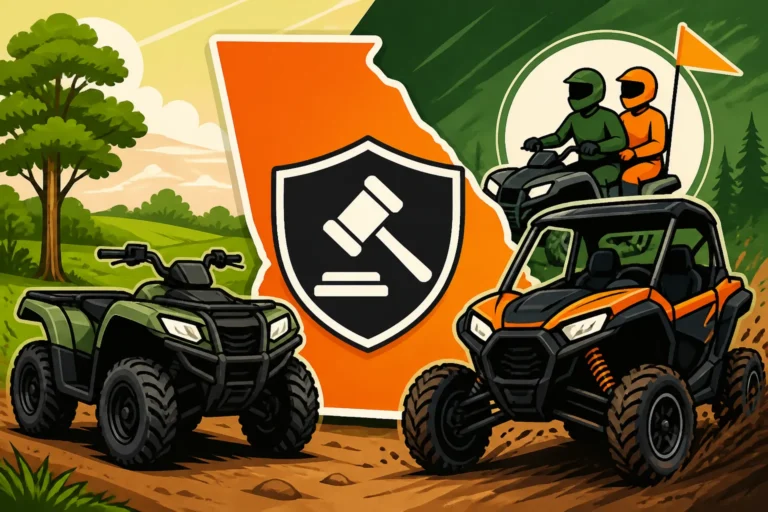
Now, UTVs (Utility Terrain Vehicles), also known as side-by-sides, present a slightly more nuanced, but often equally restrictive, situation. With Georgia's recent MPOHV (Multipurpose Off-Highway Vehicle) registration, certain UTVs can now be legally operated on county roads that are not state highways, provided they meet a strict set of criteria (like having a steering wheel, seat belts, specific speed capabilities, and not exceeding certain width, weight, and payload limits). If you're interested in the requirements, understanding [Georgia MPOHV Registration Explained] can be helpful.
However, it's crucial to understand that MPOHV registration, while granting access to county roads, does not automatically grant access to path networks or their bridge crossings. These path networks are almost always governed by specific local municipal ordinances, which often predate or operate independently of the state's MPOHV registration laws. A city that has invested heavily in a golf cart path system will have its own rules. These local rules typically define what a "Personal Transportation Vehicle" (PTV) is and explicitly state what can and cannot use their path infrastructure. Most MPOHVs, even if they meet the state's road criteria, do not qualify as a PTV under these local ordinances.
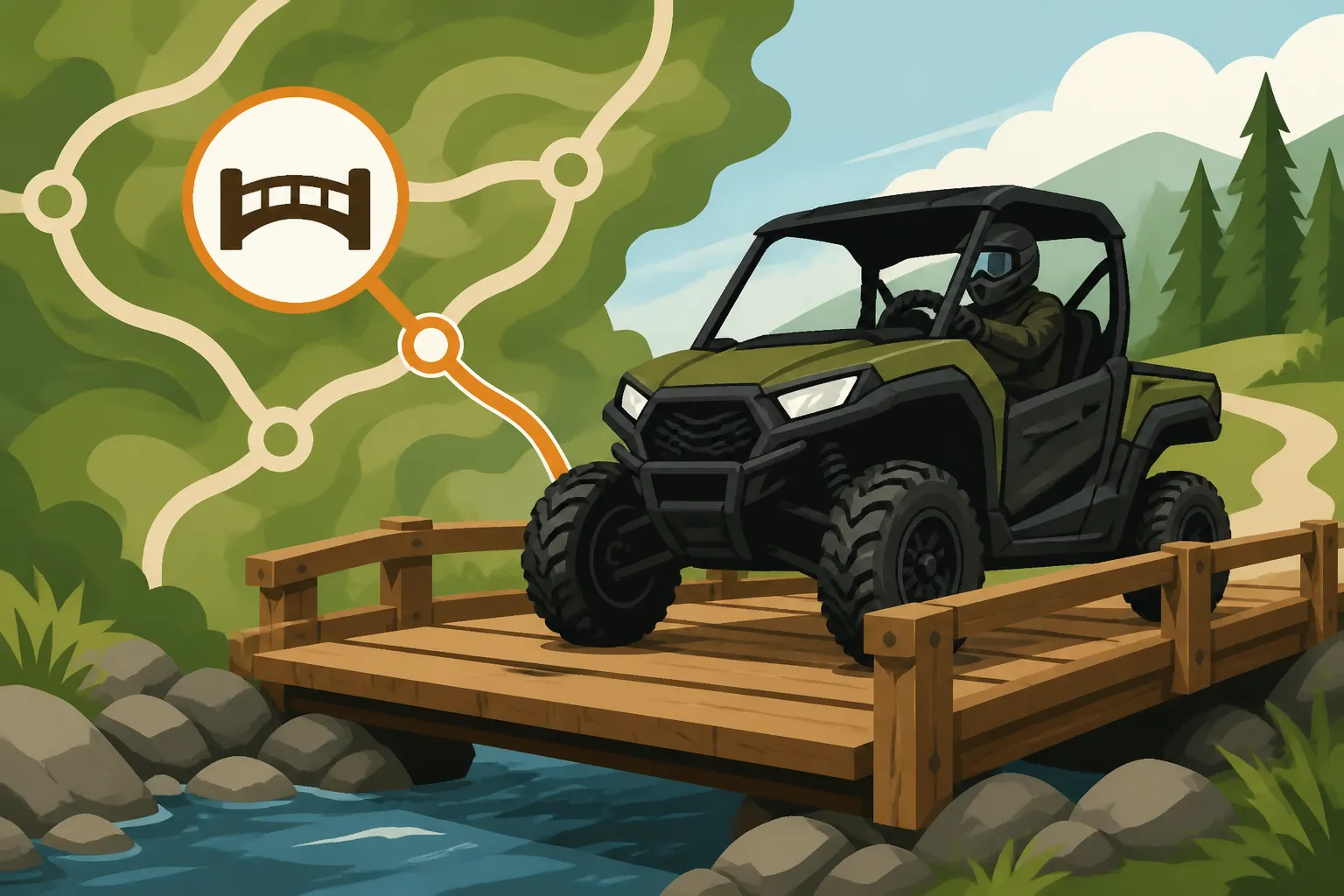
So, while your UTV might be perfectly legal to drive down a specified county road in certain areas, attempting to use it on a recreational path network, even for a short bridge crossing, would likely be a violation of local law. The bridge crossing is an integral part of the path, and if the path itself is off-limits to your UTV, so is any bridge that's part of it. The intent of MPOHV registration is to facilitate travel on roadways, not to expand access to dedicated pedestrian and golf cart paths.
The Specifics of Bridge Crossings
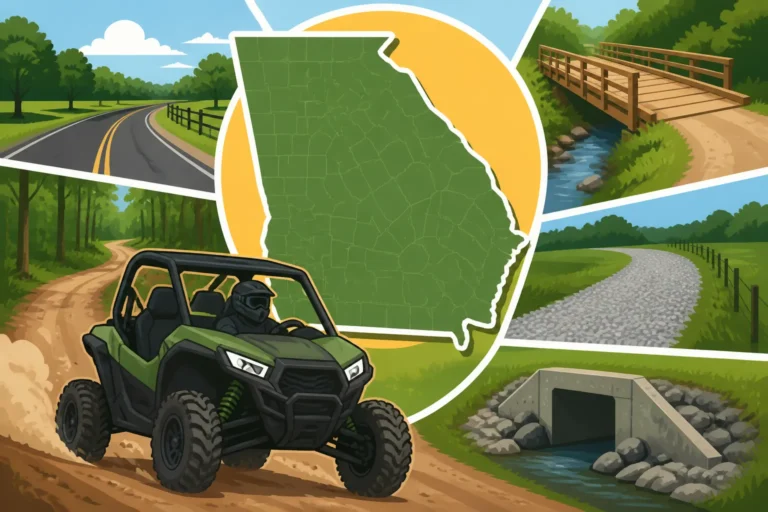
Let's focus squarely on those bridge crossings. When a city or county builds a path network, they engineer the bridges as part of that network. This means the bridges are designed with the same limitations and intended uses as the rest of the path. They are typically narrower than road bridges, often lack shoulders, and may have lower weight tolerances. More importantly, they are built to accommodate the speeds and turning radii of golf carts and the presence of pedestrians and cyclists.
Allowing an MPOHV-registered UTV—which, even at lower speeds, is still a powerful and heavy machine—onto these bridges can introduce several hazards:
- Structural Integrity: While a UTV might not collapse a bridge, repeated use by heavier vehicles over time could cause undue stress and accelerated wear and tear that the bridge wasn't designed for.
- Width Restrictions: Many UTVs, even those that meet the state's 80-inch width limit for MPOHV registration, might still be too wide or feel excessively large for the narrow confines of a path bridge, especially when encountering opposing traffic (like a golf cart) or pedestrians.
- Safety for Other Users: The primary concern. Path users, including children and elderly pedestrians, are not expecting to encounter a UTV. The noise, the size, and the speed capability of a UTV can startle or intimidate, increasing the risk of accidents, especially in confined bridge areas where evasive action is limited.
- Local Ordinance Enforcement: Even if your UTV is registered as an MPOHV, local law enforcement is well within their rights to ticket you if you are operating it on a path network or its associated bridge crossings where UTVs are explicitly prohibited by local ordinance.
In essence, a bridge crossing on a path network is an extension of that path, not a standalone roadway. If your machine isn't permitted on the path itself, it's not permitted on the bridge that carries the path over an obstacle.
Navigating Legally: Alternatives and Best Practices
It's clear that recreational path networks and their bridge crossings are generally off-limits for ATVs and most UTVs, even if your side-by-side meets Georgia's MPOHV registration criteria for county roads. So, where does that leave you as an ATV or UTV owner in Georgia?
Where You Can Legally Ride Your ATV or Registered UTV
The good news is that Georgia offers plenty of fantastic, legal opportunities for off-road enthusiasts to enjoy their machines. You just need to know where to look!
- Dedicated Off-Road Trails and Parks: The state boasts an impressive array of public and private riding areas specifically designed for ATVs and UTVs. Places like the [Georgia National Forest OHV Systems] offer miles of marked trails, and private parks like Iron Mountain Resort or Highland Park provide extensive networks tailored for various skill levels. These are environments where your machine belongs and where you can truly push its capabilities.
- Private Land: If you own private property, or have explicit written permission from a landowner, you can ride your ATV or UTV there, respecting any local noise ordinances or other regulations. This is often the most straightforward way to enjoy your machine without worrying about public access rules. For more on this, check out [Georgia ATV Rules on Private Property].
- County Roads (for Registered MPOHVs): If your UTV meets all the strict requirements for MPOHV registration, you can operate it on designated county roads in Georgia, provided those roads are not state highways and are not explicitly closed to MPOHVs by local ordinance. Remember, the [Georgia ATV Road Law Explained] is for MPOHVs, not ATVs, and it has specific limitations. Make sure you understand [What a County Road System Includes] to avoid state routes.
- Agricultural and Commercial Use Exemptions: If you're using your ATV or UTV for legitimate agricultural purposes on your farm or for specific commercial activities (like logging), there are often exemptions that allow you to operate these vehicles on certain public lands or roads for those work-related tasks.
The key takeaway is to always seek out designated riding areas or confirm local regulations. Never assume that just because a path looks inviting, it's open to your machine.
Local Ordinances and What to Look For
The world of local ordinances can be a labyrinth, but it's critically important when it comes to path networks. Even if your UTV has that coveted MPOHV tag, local control often supersedes state rules for these specific networks.
Here's what you need to understand:
- City-Specific Rules: Many cities have passed their own [Georgia PTV Ordinances Cities Can Pass]. These ordinances define what vehicles are allowed on their specific path systems. They often use terms like "Personal Transportation Vehicle" (PTV) which specifically refer to golf carts or similar low-speed electric vehicles, and they will explicitly exclude ATVs and often UTVs.
- Signs, Signs, Everywhere a Sign: Look for signage at the entry points to path networks and their bridge crossings. These signs will typically indicate what types of vehicles are permitted or prohibited. "Golf Carts and Pedestrians Only" or "No Motorized Vehicles" are common indicators that your ATV or UTV is not welcome.
- The Intent of the Path: Consider the original intent. Was this path built for quiet, recreational transit by golf carts and walkers, or for general vehicular traffic? The design, width, and surrounding environment usually provide clear clues.
- Check with Local Authorities: When in doubt, the best course of action is to contact the local city hall or police department of the municipality where the path network is located. They can provide definitive information on what is allowed on their specific paths and bridge crossings. Ignorance of local ordinances is not a valid defense if you're cited. You might find that [Georgia City Streets Open to Carts but Not Quads] is a common scenario, and path networks fall into a similar, if not more restrictive, category.
Understanding and respecting these local ordinances is not just about avoiding a ticket; it's about ensuring safety for all path users and preserving the integrity of these community assets.
Here's a quick reference table to help clarify the differences:
| Vehicle Type | Primary Use Case | Typically Allowed on GA Path Networks (including bridges)? | Why/Why Not |
|---|---|---|---|
| ATV (Quad) | Off-road recreation | No | Straddle seat, handlebars, high speed/power, safety risk, not designed for paths. |
| UTV (Side-by-Side) | Off-road, utility, sometimes county roads (MPOHV) | No | Too wide/heavy for paths, safety risk for pedestrians, local ordinances prohibit. |
| Golf Cart / PTV | Low-speed recreational/utility | Yes (where permitted by local ordinance) | Specifically designed for paths, low speed, electric, meets local PTV definitions. |
| Bicycle / E-Bike | Human-powered transport | Yes (where not explicitly prohibited) | Light, low impact, often encouraged on shared paths. |
| Pedestrian | Walking | Yes | Path networks are designed to accommodate foot traffic. |
Remember, while your UTV might be a registered MPOHV and perfectly capable of handling the open road, a bridge crossing on a local path network is a completely different jurisdiction. Always err on the side of caution, research local rules, and prioritize safety for yourself and everyone else sharing the paths. If you're looking for ways to make your UTV more versatile for its legal uses, like for improved visibility on county roads or durability on trails, companies like SuperATV offer a range of accessories that can enhance your riding experience within the bounds of the law.
Disclaimer
This article is for general informational purposes only and does not constitute professional advice. Laws, prices and regulations vary by location and change over time. Consult a qualified professional for guidance on your specific situation.